

Achieving consistent cleanliness across thousands of parts per shift is a relentless challenge for production engineers. The right conveyor cleaning system turns this from a bottleneck into a seamless, automated process. This selection guide draws on two decades of designing conveyor cleaning solutions for industries ranging from automotive to precision machining, covering the spray architecture, drying technology, and integration factors that determine whether a system meets your throughput and cleanliness targets, not just on day one, but across years of operation.
How Conveyor Cleaning Systems Work in Industrial Settings
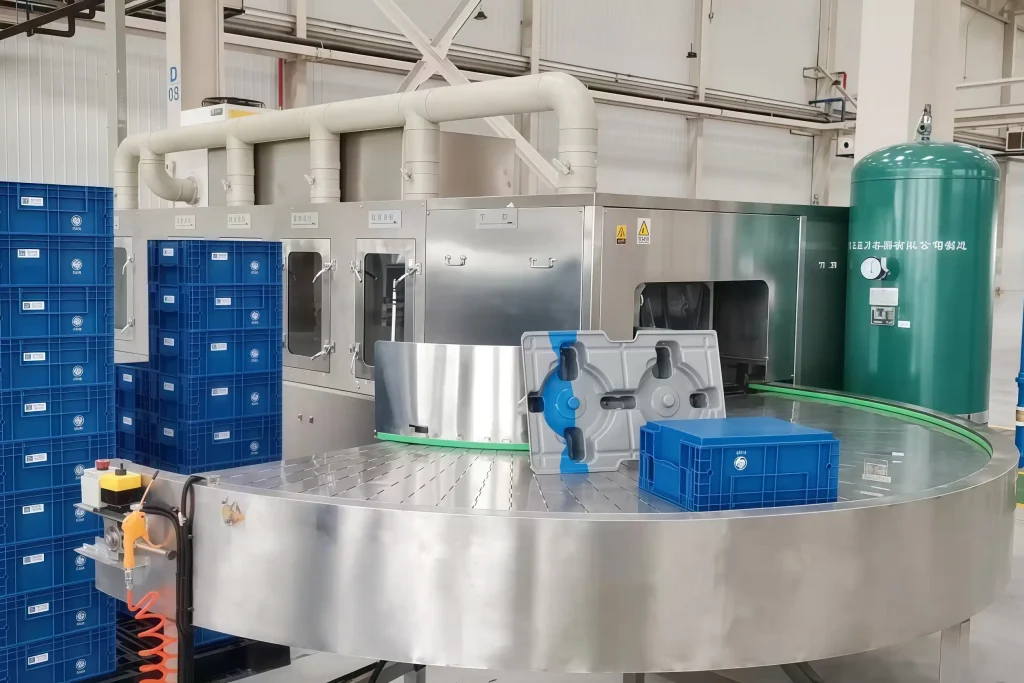
A conveyor cleaning system transports parts on a belt, chain, or roller bed through a series of enclosed stations. Each station performs a dedicated function: a pre‑wash sprays off gross contamination, a main wash applies heated detergent under pressure, a rinse station floods parts with clean water, and a drying zone uses hot air or air knives to remove all moisture. The conveyor speed, spray nozzle placement, and chemical concentration are tuned together so that every part receives the same cleaning energy, regardless of where it sits on the belt.
The physical design of the conveyor itself matters more than most buyers realize. Mesh belts allow solution to drain quickly but can trap small components; roller conveyors handle heavy loads but may shield the bottom surface from spray. The length of each zone determines the dwell time – the seconds a part spends exposed to the cleaning fluid. Too short, and cleaning is incomplete; too long, and you waste floor space and energy. We typically size zones based on the heaviest contaminant load the production line will ever see, not the average, because a system that works only on easy days becomes a quality risk on hard ones.
Key Performance Factors That Determine Cleaning Success
Spray pressure, temperature, and chemical choice interact in ways that are easy to overlook when comparing spec sheets. A 10 bar spray pressure removes loose chips quickly but may drive oil deeper into porous metal; 3–5 bar with a slower conveyor often does a better job on machining coolant because the fluid has time to dissolve the film. Temperature is the multiplier: raising the wash tank from 45 °C to 60 °C can cut cleaning time by half for mineral oils, though it accelerates evaporation loss if the tank hood is not sealed properly.
The cleaning medium – aqueous detergent or solvent – carries the biggest cost and environmental footprint over the system’s life. Aqueous systems require a DI water supply and waste treatment but are safer for operators and most metal alloys. Solvent‑based conveyors, when equipped with vacuum drying and recovery stills, achieve near‑zero carryout and are faster on heavy cutting oils, but demand explosion‑proof construction and VOC monitoring. The table below summarizes the trade‑off for typical conveyor installations.
| Фактор | Aqueous Conveyor | Solvent Conveyor |
|---|---|---|
| Cleaning speed for oil | Moderate (needs dwell) | Fast (low surface tension) |
| Part material sensitivity | Broad; avoid reactive metals | Can soften some plastics |
| Drying complexity | Hot air; risk of water spots | Vacuum drying essential |
| Operational cost driver | Water and waste treatment | Solvent buy‑back and recovery |
| Floor safety | Low hazard | Requires gas detection, ATEX |
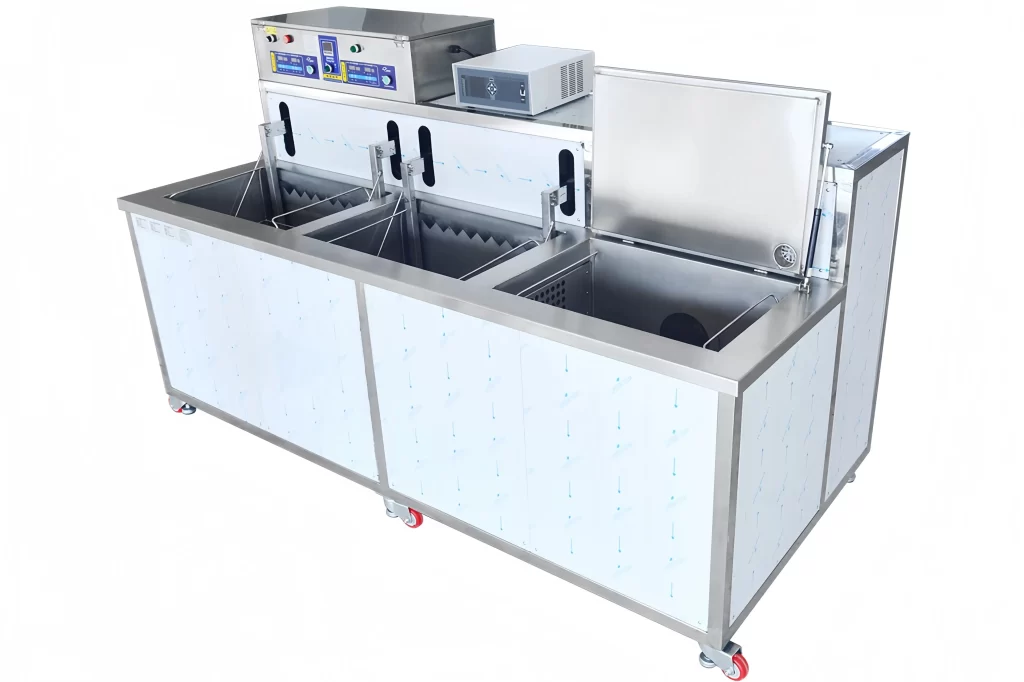
Ultrasonic immersion is sometimes integrated into a conveyor stage for parts with deep holes, threads, or internal cavities where spray alone cannot reach. The ultrasonic transducers couple through the tank wall, and the bath must stay degassed, which adds an air‑removal step to the line. I have seen buyers add an ultrasonic tank to a conveyor without accounting for the extra dwell time it needs, and the result was a line that cleaned no better than spray alone because parts moved through before cavitation had time to work.
Tailoring Conveyor Systems to Part Geometry and Production Volume
Every part shape pushes cleaning fluid differently. A flat stamping drains cleanly; a die‑cast housing with deep pockets traps water, chips, and detergent. The spray nozzles must be positioned so that each jet strikes the part at the angle that will force fluid into – and then out of – every recess. In one project for an electric motor manufacturer, the initial nozzle layout left a ring of residual compound in a bearing seat. Adjusting the nozzle angle by 12° and adding a second rinse bar above the unloading section eliminated the problem entirely.
Throughput dictates conveyor width, speed, and the number of parallel lanes. A system cleaning 500 kg of fasteners per hour demands a different architecture than one processing 50 heavy castings. GTKCLEAN’s Машина для очистки туннеля для крепежа is designed for exactly that scale: a 1000 mm‑wide mesh conveyor running at 0.5‑1 m/min moves over 2 tons per hour, with an oil‑water separator that pulls >98% of free oil from the wash solution and returns it with less than 2% water – a critical feature when you want to reuse oil rather than pay to dispose of it. A buffer zone of high‑pressure air knives between the wash and rinse stages prevents cross‑contamination, so rinse water stays clean and you consume fewer chemicals.
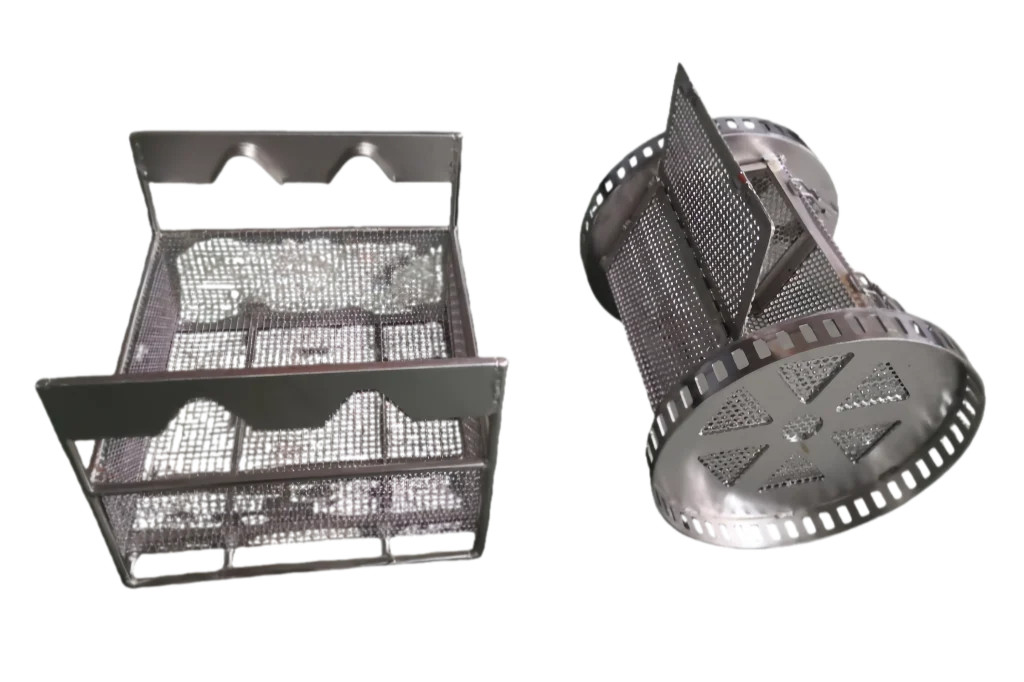
For large, irregular components like CNC‑machined aluminum housings, the conveyor must lift and hold the part without contact that hides spray shadows. GTKCLEAN’s CNC Aluminum Shell Inline Cleaner uses a flat‑chain conveyor with fixture tooling that clamps only at two non‑functional surfaces. Multi‑directional nozzles surround the part, and the drying section combines air knives with a heat‑recovery loop that recycles exhaust warmth back into the rinse pre‑heat, cutting overall electrical load from a nominal 120 kW to an operating average of 40‑65 kW·h.
Evaluating Total Cost of Ownership for Conveyor Cleaning Equipment
The purchase price of a conveyor cleaning system often represents less than half of its ten‑year cost. Water usage, chemical consumption, electrical demand, and maintenance labor compound over time. A high‑pressure spray with poor filtration sends more water to drain and more dirt back onto parts; a dryer without adequate air flow doubles the cycle time and the energy bill. The filtration and recirculation package – multi‑stage bag filters, overflow weirs, and oil skimmers – should be spec’d as aggressively as the pump motor because every liter of fluid saved is a direct cost reduction.
cURL Too many subrequests by single Worker invocation. To configure this limit, refer to https://developers.cloudflare.com/workers/wrangler/configuration/#limits
Questions to Ask When Choosing a Conveyor Cleaning System Supplier
cURL Too many subrequests by single Worker invocation. To configure this limit, refer to https://developers.cloudflare.com/workers/wrangler/configuration/#limits
- cURL Too many subrequests by single Worker invocation. To configure this limit, refer to https://developers.cloudflare.com/workers/wrangler/configuration/#limits
- cURL Too many subrequests by single Worker invocation. To configure this limit, refer to https://developers.cloudflare.com/workers/wrangler/configuration/#limits
- cURL Too many subrequests by single Worker invocation. To configure this limit, refer to https://developers.cloudflare.com/workers/wrangler/configuration/#limits
- cURL Too many subrequests by single Worker invocation. To configure this limit, refer to https://developers.cloudflare.com/workers/wrangler/configuration/#limits
- cURL Too many subrequests by single Worker invocation. To configure this limit, refer to https://developers.cloudflare.com/workers/wrangler/configuration/#limits
cURL Too many subrequests by single Worker invocation. To configure this limit, refer to https://developers.cloudflare.com/workers/wrangler/configuration/#limits
cURL Too many subrequests by single Worker invocation. To configure this limit, refer to https://developers.cloudflare.com/workers/wrangler/configuration/#limits
cURL Too many subrequests by single Worker invocation. To configure this limit, refer to https://developers.cloudflare.com/workers/wrangler/configuration/#limits
Common Questions About Conveyor Cleaning Systems
cURL Too many subrequests by single Worker invocation. To configure this limit, refer to https://developers.cloudflare.com/workers/wrangler/configuration/#limits
cURL Too many subrequests by single Worker invocation. To configure this limit, refer to https://developers.cloudflare.com/workers/wrangler/configuration/#limits
cURL Too many subrequests by single Worker invocation. To configure this limit, refer to https://developers.cloudflare.com/workers/wrangler/configuration/#limits
cURL Too many subrequests by single Worker invocation. To configure this limit, refer to https://developers.cloudflare.com/workers/wrangler/configuration/#limits
cURL Too many subrequests by single Worker invocation. To configure this limit, refer to https://developers.cloudflare.com/workers/wrangler/configuration/#limits
cURL Too many subrequests by single Worker invocation. To configure this limit, refer to https://developers.cloudflare.com/workers/wrangler/configuration/#limits
cURL Too many subrequests by single Worker invocation. To configure this limit, refer to https://developers.cloudflare.com/workers/wrangler/configuration/#limits
cURL Too many subrequests by single Worker invocation. To configure this limit, refer to https://developers.cloudflare.com/workers/wrangler/configuration/#limits
cURL Too many subrequests by single Worker invocation. To configure this limit, refer to https://developers.cloudflare.com/workers/wrangler/configuration/#limits
cURL Too many subrequests by single Worker invocation. To configure this limit, refer to https://developers.cloudflare.com/workers/wrangler/configuration/#limits
Если вас интересует, ознакомьтесь с этими связанными статьями:
Повышение эффективности очистки в автомобильном производстве: Стратегическое руководство
Обоснование инвестиций в ультразвуковое оборудование для очистки: стратегический руководство по ROI
Выбор систем очистки конвейеров для непрерывного производства
Как выбрать многотонные ультразвуковые системы для высокой производительности
Руководство инженера по подготовке поверхности перед нанесением покрытия
 Russian
  English
  German
  Spanish
  French
  Portuguese