

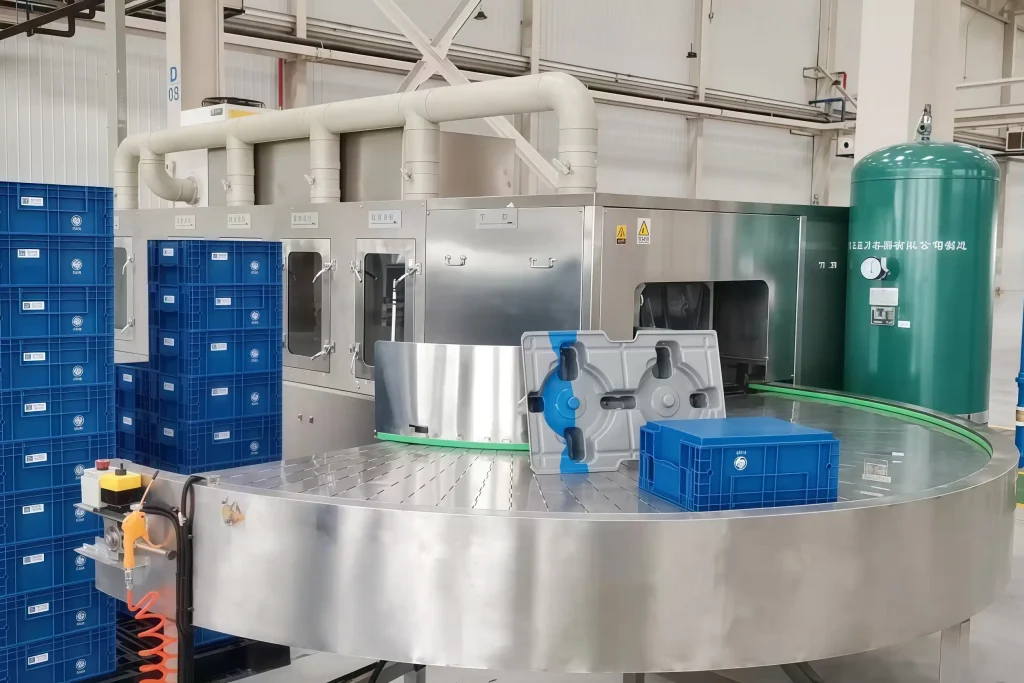
A factory manager recently asked me whether a tunnel washing system or an inline cleaning system would serve his expanding production line better. He had read the standard definitions—both are automated, both move parts through cleaning stages, and both reduce labor. But after twenty years designing and deploying industrial cleaning equipment, I have seen that the difference between the two architectures is less about the labels and more about how they handle throughput, part orientation, and integration with upstream and downstream processes. The right choice depends on your part geometry, volume, and what happens before and after the wash. This article walks through the practical factors I evaluate with clients when this question comes up, and why I often recommend starting with a throughput model rather than a specification sheet.
How Tunnel Washing Systems Handle High-Volume Parts Cleaning
A tunnel washing system is a continuous-flow automated cleaning line where parts travel on a conveyor through a series of sequential chambers—typically spray pre-wash, ultrasonic or immersion cleaning, rinsing, and drying. Each chamber performs a dedicated function, and parts move through without stopping. This architecture is designed for high throughput and minimal operator intervention.
In our work at GTKCLEAN, we have configured tunnel systems for applications ranging from fastener cleaning at over two tons per hour to heavy-duty automotive component lines handling workpieces exceeding 100 kg each. What distinguishes tunnel washing from other automated configurations is its ability to maintain consistent cycle times regardless of part complexity. The process parameters—temperature, spray pressure, ultrasonic power, and drying time—are locked per chamber, so every part receives the same treatment. For a production manager, that means predictable output rates and repeatable cleanliness levels batch after batch.
One design factor that engineers sometimes overlook is the buffer zone between chambers. In a well-designed tunnel system, high-pressure air knives or isolation zones prevent cross-contamination between cleaning stages. For instance, when cleaning fastener parts that carry drawing oil or quenching fluids into the line, a poorly separated system will drag detergent into the rinse tanks, degrading rinse quality and increasing chemical consumption. We integrate oil-water separation systems that remove over 98% of surface oil automatically, keeping rinse water clean and reducing operating costs over the line's lifetime.
How Inline Cleaning Systems Work for Automated Production Lines
Inline cleaning systems also move parts sequentially, but the term typically refers to modular stations arranged along a production line where parts are transferred between stations—often by robotic handling, walking beams, or indexing conveyors—rather than passing continuously through a single tunnel housing. The distinction matters because inline systems offer more flexibility in station configuration and are generally easier to integrate into an existing production cell.
I have seen cases where an inline system was the only practical choice because the factory layout simply could not accommodate a tunnel's linear footprint. In one deployment for CNC-machined aluminum shells used in automotive telecom housings, the cleaning system needed to sit between a machining center and a leak-test station, with only a narrow aisle available. The inline configuration—spray degreasing, DI water rinse, air-knife drying, hot air drying, and cooling—was spread across modular stations connected by a compact conveyor with a width of 1000 mm and adjustable speed of 0.8 m/min. Total system power ran at approximately 40–65 kW·h under normal load despite a 120 kW installed capacity, and the fully automatic loading and unloading meant one operator could oversee the entire cell.
The trade-off is that each transfer point in an inline system introduces a potential delay and a mechanical interface that requires maintenance. Over a ten-year equipment lifecycle, those transfer mechanisms will need replacement parts more frequently than the continuous belt in a tunnel system. That does not make inline systems inferior—it makes them different, and the difference matters most when you model total cost of ownership rather than purchase price.
Throughput Comparison: Tunnel vs Inline Cleaning Performance
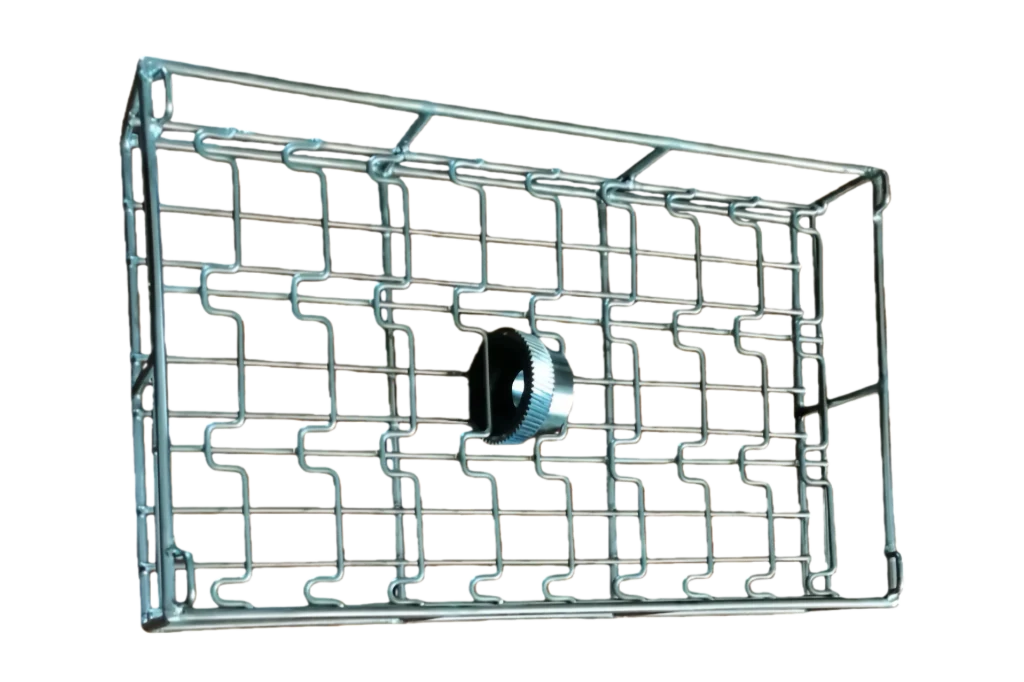
The throughput gap between tunnel and inline systems narrows or widens depending on part size, basket loading density, and cycle time per station. Rather than compare general claims, I find it more useful to walk through a couple of production scenarios from systems we have configured.
| Parâmetro | Tunnel System (Fastener Line) | Inline System (CNC Aluminum Shells) |
|---|---|---|
| Part throughput | ≥2 tons/hour | Cycle-dependent, ~120–180 parts/hour |
| Conveyor speed | 0.5–1 m/min | 0.8 m/min |
| Cleaning stages | Spray → Ultrasonic → Rinse → Air-knife → Hot air dry | Spray degreasing → DI rinse → Air-knife → Hot air → Cooling |
| Installed power | ≤190 kW | ≤120 kW (actual 40–65 kW·h) |
| Part orientation during wash | Bulk or fixtured on belt | cURL Too many subrequests by single Worker invocation. To configure this limit, refer to https://developers.cloudflare.com/workers/wrangler/configuration/#limits |
cURL Too many subrequests by single Worker invocation. To configure this limit, refer to https://developers.cloudflare.com/workers/wrangler/configuration/#limits
cURL Too many subrequests by single Worker invocation. To configure this limit, refer to https://developers.cloudflare.com/workers/wrangler/configuration/#limits
What Integration and Footprint Factors Affect System Selection
cURL Too many subrequests by single Worker invocation. To configure this limit, refer to https://developers.cloudflare.com/workers/wrangler/configuration/#limits
cURL Too many subrequests by single Worker invocation. To configure this limit, refer to https://developers.cloudflare.com/workers/wrangler/configuration/#limits
cURL Too many subrequests by single Worker invocation. To configure this limit, refer to https://developers.cloudflare.com/workers/wrangler/configuration/#limits
cURL Too many subrequests by single Worker invocation. To configure this limit, refer to https://developers.cloudflare.com/workers/wrangler/configuration/#limits
Cost Analysis: Tunnel Washing vs Inline Cleaning Systems
cURL Too many subrequests by single Worker invocation. To configure this limit, refer to https://developers.cloudflare.com/workers/wrangler/configuration/#limits
cURL Too many subrequests by single Worker invocation. To configure this limit, refer to https://developers.cloudflare.com/workers/wrangler/configuration/#limits
cURL Too many subrequests by single Worker invocation. To configure this limit, refer to https://developers.cloudflare.com/workers/wrangler/configuration/#limits
cURL Too many subrequests by single Worker invocation. To configure this limit, refer to https://developers.cloudflare.com/workers/wrangler/configuration/#limits
cURL Too many subrequests by single Worker invocation. To configure this limit, refer to https://developers.cloudflare.com/workers/wrangler/configuration/#limits
How to Determine Which System Fits Your Production Requirements
cURL Too many subrequests by single Worker invocation. To configure this limit, refer to https://developers.cloudflare.com/workers/wrangler/configuration/#limits
cURL Too many subrequests by single Worker invocation. To configure this limit, refer to https://developers.cloudflare.com/workers/wrangler/configuration/#limits
cURL Too many subrequests by single Worker invocation. To configure this limit, refer to https://developers.cloudflare.com/workers/wrangler/configuration/#limits
cURL Too many subrequests by single Worker invocation. To configure this limit, refer to https://developers.cloudflare.com/workers/wrangler/configuration/#limits
Common Concerns When Comparing Tunnel and Inline Cleaning Systems
Which delivers better cleaning consistency for precision parts?
cURL Too many subrequests by single Worker invocation. To configure this limit, refer to https://developers.cloudflare.com/workers/wrangler/configuration/#limits
Can one system handle both large and small parts?
cURL Too many subrequests by single Worker invocation. To configure this limit, refer to https://developers.cloudflare.com/workers/wrangler/configuration/#limits
What are the most overlooked maintenance costs?
cURL Too many subrequests by single Worker invocation. To configure this limit, refer to https://developers.cloudflare.com/workers/wrangler/configuration/#limits
Is one system safer to operate than the other?
cURL Too many subrequests by single Worker invocation. To configure this limit, refer to https://developers.cloudflare.com/workers/wrangler/configuration/#limits
How do I model the total cost before committing?
cURL Too many subrequests by single Worker invocation. To configure this limit, refer to https://developers.cloudflare.com/workers/wrangler/configuration/#limits
Se estiver interessado, consulte estes artigos relacionados:
Manutenção de Sistemas de Limpeza com Solventes: Guia Completo
Otimizar Frequência Ultrassónica para Materiais Diversos
 Portuguese
  English
  German
  Spanish
  French
  Russian