

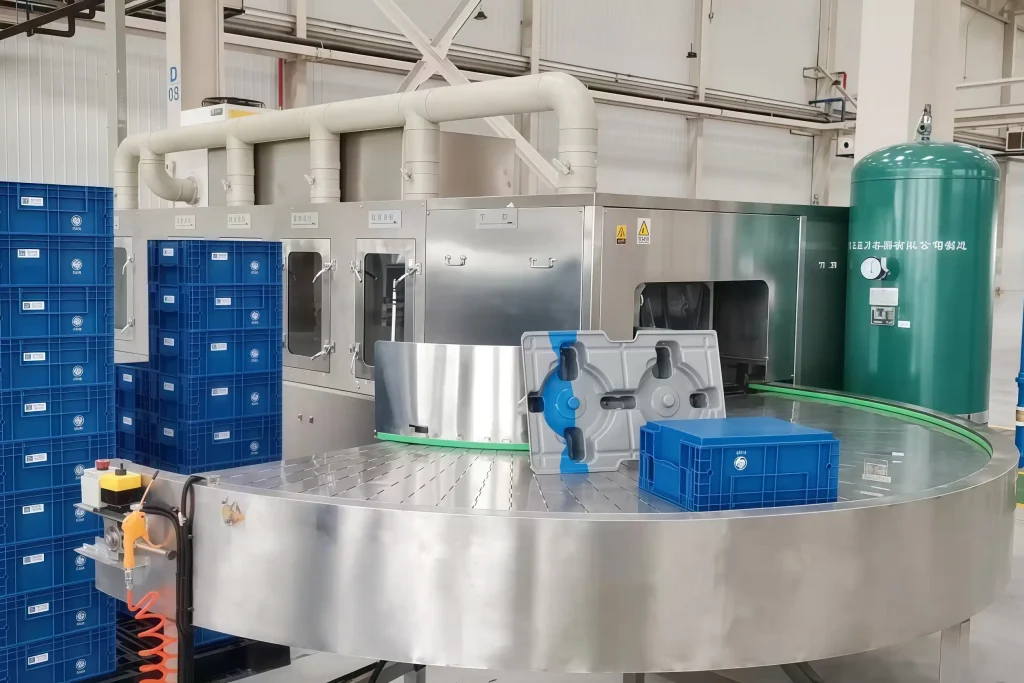
A factory manager recently asked me whether a tunnel washing system or an inline cleaning system would serve his expanding production line better. He had read the standard definitions—both are automated, both move parts through cleaning stages, and both reduce labor. But after twenty years designing and deploying industrial cleaning equipment, I have seen that the difference between the two architectures is less about the labels and more about how they handle throughput, part orientation, and integration with upstream and downstream processes. The right choice depends on your part geometry, volume, and what happens before and after the wash. This article walks through the practical factors I evaluate with clients when this question comes up, and why I often recommend starting with a throughput model rather than a specification sheet.
How Tunnel Washing Systems Handle High-Volume Parts Cleaning
A tunnel washing system is a continuous-flow automated cleaning line where parts travel on a conveyor through a series of sequential chambers—typically spray pre-wash, ultrasonic or immersion cleaning, rinsing, and drying. Each chamber performs a dedicated function, and parts move through without stopping. This architecture is designed for high throughput and minimal operator intervention.
In our work at GTKCLEAN, we have configured tunnel systems for applications ranging from fastener cleaning at over two tons per hour to heavy-duty automotive component lines handling workpieces exceeding 100 kg each. What distinguishes tunnel washing from other automated configurations is its ability to maintain consistent cycle times regardless of part complexity. The process parameters—temperature, spray pressure, ultrasonic power, and drying time—are locked per chamber, so every part receives the same treatment. For a production manager, that means predictable output rates and repeatable cleanliness levels batch after batch.
One design factor that engineers sometimes overlook is the buffer zone between chambers. In a well-designed tunnel system, high-pressure air knives or isolation zones prevent cross-contamination between cleaning stages. For instance, when cleaning fastener parts that carry drawing oil or quenching fluids into the line, a poorly separated system will drag detergent into the rinse tanks, degrading rinse quality and increasing chemical consumption. We integrate oil-water separation systems that remove over 98% of surface oil automatically, keeping rinse water clean and reducing operating costs over the line's lifetime.
How Inline Cleaning Systems Work for Automated Production Lines
Inline cleaning systems also move parts sequentially, but the term typically refers to modular stations arranged along a production line where parts are transferred between stations—often by robotic handling, walking beams, or indexing conveyors—rather than passing continuously through a single tunnel housing. The distinction matters because inline systems offer more flexibility in station configuration and are generally easier to integrate into an existing production cell.
I have seen cases where an inline system was the only practical choice because the factory layout simply could not accommodate a tunnel's linear footprint. In one deployment for CNC-machined aluminum shells used in automotive telecom housings, the cleaning system needed to sit between a machining center and a leak-test station, with only a narrow aisle available. The inline configuration—spray degreasing, DI water rinse, air-knife drying, hot air drying, and cooling—was spread across modular stations connected by a compact conveyor with a width of 1000 mm and adjustable speed of 0.8 m/min. Total system power ran at approximately 40–65 kW·h under normal load despite a 120 kW installed capacity, and the fully automatic loading and unloading meant one operator could oversee the entire cell.
The trade-off is that each transfer point in an inline system introduces a potential delay and a mechanical interface that requires maintenance. Over a ten-year equipment lifecycle, those transfer mechanisms will need replacement parts more frequently than the continuous belt in a tunnel system. That does not make inline systems inferior—it makes them different, and the difference matters most when you model total cost of ownership rather than purchase price.
Throughput Comparison: Tunnel vs Inline Cleaning Performance
The throughput gap between tunnel and inline systems narrows or widens depending on part size, basket loading density, and cycle time per station. Rather than compare general claims, I find it more useful to walk through a couple of production scenarios from systems we have configured.
| Parameter | Tunnel System (Fastener Line) | Inline System (CNC Aluminum Shells) |
|---|---|---|
| Part throughput | ≥2 tons/hour | Cycle-dependent, ~120–180 parts/hour |
| Conveyor speed | 0.5–1 m/min | 0.8 m/min |
| Cleaning stages | Spray → Ultrasonic → Rinse → Air-knife → Hot air dry | Spray degreasing → DI rinse → Air-knife → Hot air → Cooling |
| Installed power | ≤190 kW | ≤120 kW (actual 40–65 kW·h) |
| Part orientation during wash | Bulk or fixtured on belt | Fixtured per station requirement |
For high-volume, relatively uniform parts—fasteners, stamping components, small die-cast parts—a tunnel system almost always achieves lower per-part cleaning cost at scale. The continuous motion eliminates station-to-station transfer time, and the dedicated chambers allow each stage to run at its optimum parameters without compromise. For mixed-production environments where part geometries change frequently and volumes are moderate, an inline system's modularity can be the deciding factor. You can reconfigure, bypass, or add stations without rebuilding the entire line.
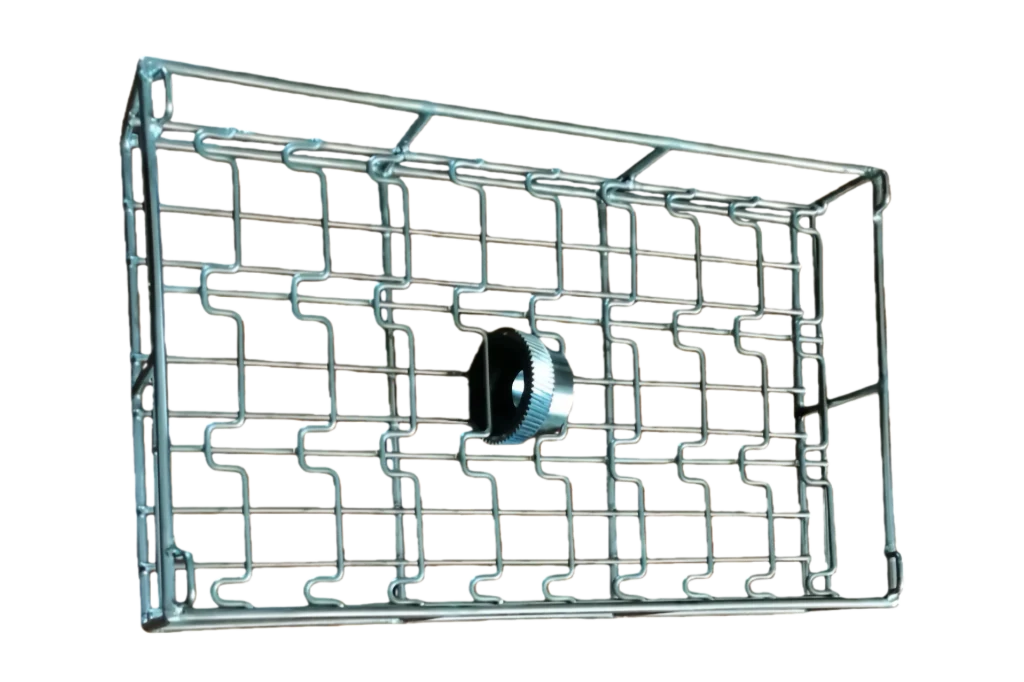
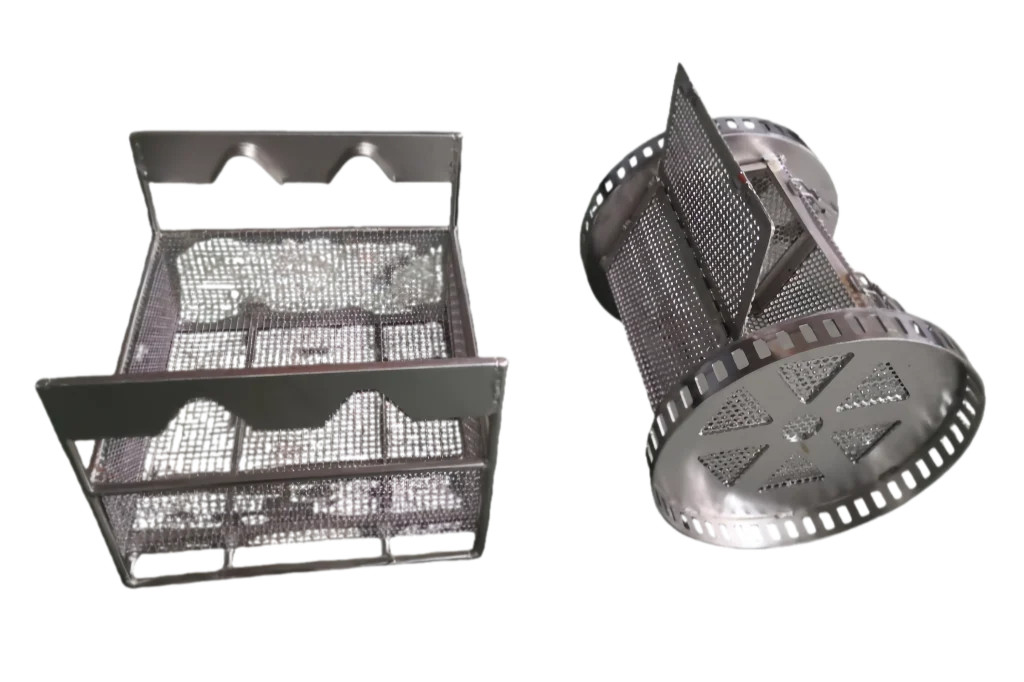
The number that surprises most buyers is not the throughput figure itself but how much it changes when you factor in basket loading time. A tunnel system moving at 1 m/min with poorly designed baskets will underperform an inline system with optimized fixtures. The conveyor speed is only half the equation—the other half is how many parts you can present to the cleaning media per cycle.
What Integration and Footprint Factors Affect System Selection
One hard constraint I encounter regularly is available floor space. A tunnel washing system for heavy components can easily exceed 15 meters in length once you include loading, buffer zones, drying, and unloading. An inline system of equivalent capability can sometimes be arranged in a U-shape or broken into parallel rows, reducing the effective footprint by 30% or more in the right layout.
But footprint is not the only integration variable. Consider what happens at each end of the cleaning system. If your upstream process is a stamping press ejecting parts onto a conveyor and your downstream process is a coating line that requires parts at a specific temperature, the cleaning system must match both the input rate and the output condition. Tunnel systems handle this well because the continuous belt naturally synchronizes with upstream and downstream conveyors. Inline systems with robotic transfers may require buffer conveyors or accumulation zones that eat into the floor space savings.
Power and utilities are another constraint that does not appear on most comparison tables. A tunnel system operating at 190 kW installed power for a high-throughput fastener line needs serious electrical infrastructure and ventilation. If your facility is older or expanding incrementally, that electrical load alone may force you toward a modular inline approach where you can phase the installation. We have worked with clients who started with a two-station inline system and added stages over twelve months as production ramped up—an option that a single-chassis tunnel system simply does not offer.
Drying deserves separate attention because it is often the bottleneck no one plans for. In tunnel systems, hot air drying chambers run continuously and handle the thermal load predictably. For parts with deep blind holes or complex internal cavities, an inline system may need vacuum drying or extended hot air exposure at a dedicated station, which can become the cycle time limiter for the entire line. If your parts trap liquid, model the drying time before you commit to either architecture—it will control throughput more than the wash stages do.
Cost Analysis: Tunnel Washing vs Inline Cleaning Systems
The purchase price comparison between tunnel and inline systems is only useful if you also account for installation, utilities, maintenance, and changeover costs over the equipment's expected service life. I use a simple framework when I walk clients through the numbers.
For the initial equipment investment, an inline system with equivalent cleaning capability often runs 10–20% lower than a tunnel configuration because the modular design reduces fabrication complexity and allows standard station designs. Installation costs also favor inline systems when the factory layout requires custom routing or limited access. But these upfront savings can erode quickly if your production volume pushes the system into duty cycles where transfer mechanisms and station-to-station handling become the maintenance bottleneck.
On the operating cost side, the filtration and circulation systems in both architectures play a larger role than most buyers realize. A tunnel washer with integrated oil-water separation and multi-stage filtration can extend cleaning solution life by a factor of three to four compared to a basic system, regardless of whether it is tunnel or inline. In a fastener cleaning line running two shifts daily, this can mean the difference between dumping and refilling tanks weekly versus monthly. Over five years, the chemical and disposal savings alone can exceed $50,000—more than the price difference between the two systems in some cases.
Energy consumption follows part throughput, not architecture type. A common mistake is to compare installed power ratings and assume a 190 kW tunnel system costs twice as much to run as a 120 kW inline system. In practice, neither system runs at full installed load continuously. The tunnel fastener line I referenced earlier typically draws well below peak, and the inline aluminum shell system I described runs at 40–65 kW·h in normal operation despite its 120 kW nameplate. Both systems benefit from the same heat recovery and insulation upgrades, and the energy difference per cleaned part tends to be marginal once the systems are properly sized for the application.
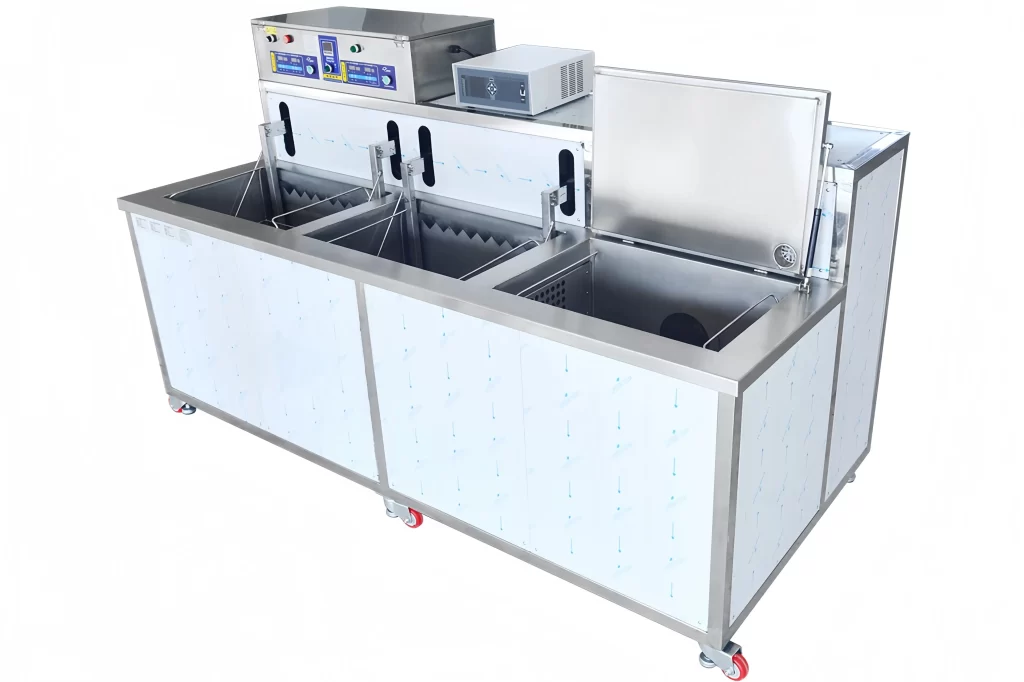
If your production schedule involves frequent part changeovers, the inline system's modularity becomes a cost advantage. You can clean different part families by adjusting or bypassing stations, whereas a tunnel system's fixed chamber sequence makes changeover more involved. For a job shop running varied work, the flexibility may be worth more than the throughput efficiency of a tunnel system. For a dedicated production line running the same part family year-round, the tunnel's locked-in efficiency usually wins.
How to Determine Which System Fits Your Production Requirements
I recommend starting with three numbers: your target hourly throughput in parts or kilograms, the largest part dimensions you need to clean, and the cleanliness specification your downstream process requires. These three numbers eliminate a surprising number of options before you ever discuss equipment cost.
If your throughput exceeds roughly 500 kg per hour of uniform parts and your cleanliness spec demands consistent, repeatable results with minimal operator judgment, a tunnel washing system is almost always the more economical choice over a ten-year equipment life. The continuous belt design, dedicated chamber parameters, and integrated filtration deliver predictable output that is hard to match with a modular system running at the same throughput.
If your throughput is moderate, your part mix changes weekly, or your facility cannot accommodate the linear footprint of a tunnel system, an inline configuration gives you the flexibility to adapt without overcommitting to a fixed design. The key is to spec the transfer mechanisms and filtration for the long term—upgrading those later costs far more than selecting them correctly at the outset.
I also urge clients to involve their maintenance team early in the selection process. An inline system's multiple transfer points have more wear surfaces than a tunnel system's continuous belt, but those wear points are also more accessible for service. In one facility, the maintenance manager preferred the inline design specifically because he could service one station while the rest of the line kept running. That operational consideration does not appear on any equipment specification sheet, but it shows up in the quarterly maintenance reports.
Common Concerns When Comparing Tunnel and Inline Cleaning Systems
Which delivers better cleaning consistency for precision parts?
Tunnel systems generally deliver more consistent results for high-volume, uniform parts because every chamber operates at a fixed parameter set and parts spend exactly the same time in each stage. Inline systems can match this consistency when stations are properly indexed, but the transfer timing between stations introduces an additional variable that must be controlled through the PLC program. For parts with tight cleanliness specifications—aerospace components, pre-coating surfaces, medical device parts—we typically validate the process after installation to confirm that the station-to-station timing does not create variance.
Can one system handle both large and small parts?
Inline systems handle mixed part sizes more gracefully because you can adjust fixture setups per station or run different part families through a subset of stations. Tunnel systems are less forgiving—the belt width, spray nozzle placement, and chamber dimensions are optimized for a specific part envelope, and running significantly different geometries through the same tunnel often compromises cleaning quality at the edges of the spray pattern. If you run parts ranging from small fasteners to large castings, an inline configuration with modular tooling is the safer bet.
What are the most overlooked maintenance costs?
Transfer mechanisms in inline systems and belt tracking systems in tunnel configurations are the two cost centers that buyers consistently underestimate. An inline system's robotic grippers, indexing drives, and station-to-station conveyors require scheduled replacement of wear components—bearings, seals, and drive belts—that accumulate over time. A tunnel system's continuous belt requires alignment monitoring and periodic tension adjustment, and the internal chamber access for cleaning and inspection is more restricted. In our experience, both systems should be budgeted for approximately 3–5% of the initial equipment cost per year in preventive maintenance, with the exact allocation shifting toward transfer mechanisms for inline systems and toward belt and chamber maintenance for tunnel systems.
Is one system safer to operate than the other?
Both architectures require proper guarding, ventilation, and interlocks to operate safely, but the nature of the operator interaction differs. Tunnel systems tend to reduce operator contact with the wash process because loading and unloading occur at the ends of the line, well away from the cleaning chambers. Inline systems with manual transfer between stations expose operators to more interaction points. When solvents or heated solutions are involved, minimizing operator access points is a genuine safety advantage, and the tunnel architecture naturally provides that separation.
How do I model the total cost before committing?
Start with the equipment price, add installation and facility modifications, then model annual costs for electricity, water, chemicals, and maintenance over your planned equipment life. Add one variable that most buyers omit: the cost of downtime during installation and commissioning. A tunnel system typically requires a longer installation window because the single-chassis construction means the line must be assembled and aligned as a unit. An inline system can often be installed in stages with less production disruption. If your facility cannot afford a two-week shutdown, that downtime cost alone may favor an inline approach. Share your production schedule and throughput requirements with our team, and we will build a TCO model specific to your application—reach out at [email protected] or call +86 17768507147.
If you're interested, check out these related articles:
Solvent Cleaning System Maintenance: A Complete Guide
Optimize Ultrasonic Frequency for Diverse Materials
 English
  German
  Spanish
  French
  Russian
  Portuguese