
Why is it essential to clean die-cast parts during the industrial manufacturing process?
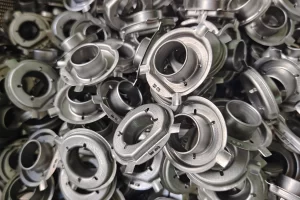
Cleaning die-cast parts is industrially essential due to the unique characteristics of die casting processes and the strict requirements of subsequent applications (e.g., automotive assembly, precision engineering).
1. Remove Process-Related Contaminants to Prevent Performance Failures
Die casting involves injecting molten metal (e.g., aluminum, zinc, magnesium alloys) into a steel mold under high pressure. This process inherently generates contaminants that must be eliminated:
Die release agent residues: A lubricant applied to mold surfaces to prevent sticking, but its oily/greasy film can cause poor adhesion of coatings (e.g., PVD, painting) or adhesives in later stages.
Metal chips/swarf and molten splash: Small metal particles or spatter from mold parting lines or gate areas may scratch mating surfaces, leading to seal leakage (e.g., in engine components) or premature wear.
Sand/core residues: For sand-cast inserts or mold cores, leftover sand particles can clog fluid channels (e.g., in cooling systems) or cause abrasive damage during assembly.
Oxide layers and flux residues: Formed on molten metal surfaces during casting, these contaminants reduce corrosion resistance and electrical conductivity (critical for automotive electronic housings or structural parts).
2. Ensure Dimensional Accuracy and Assembly Precision
Die-cast parts (e.g., engine brackets, transmission housings, automotive chassis components) often require tight tolerances for proper fit with other components.
Distort measurements during quality inspections, leading to misjudgment of part compliance.
Create gaps or interference during assembly, resulting in loose fittings, vibration, or even functional failure (e.g., a contaminated bolt hole preventing proper torque application).
3. Enable Reliable Subsequent Processing
Most die-cast parts undergo post-processing such as coating, plating, welding, or bonding—all of which depend on clean surfaces.
Coating/plating adhesion: Contaminants act as barriers, causing peeling, blistering, or uneven coverage of PVD coatings, electroplating, or paint (a major issue for automotive exterior parts or corrosion-prone components).
Weld quality: Oil, grease, or oxide layers can cause porosity, cracks, or incomplete fusion in welding joints, compromising structural integrity (critical for safety-related parts like steering knuckles).
Bonding effectiveness: Adhesives or sealants fail to wet clean surfaces, leading to weak bonds or leakage (e.g., in hydraulic system components).
4. Enhance Corrosion Resistance and Service Life
Die-cast alloys (especially aluminum and magnesium) are prone to corrosion if contaminants remain:
Salt, moisture, or chemical residues (from die release agents) can initiate galvanic corrosion, reducing the part’s service life (e.g., automotive underbody components exposed to road salts).
Clean surfaces allow for uniform formation of protective layers (e.g., anodization, PVD coatings) that enhance corrosion resistance.
5. Comply with Industry Standards and Quality Requirements
Automotive, aerospace, and industrial equipment industries have strict cleanliness standards (e.g., ISO 16232 for automotive components):
Contaminant-free parts are mandatory for meeting safety and performance regulations (e.g., engine components must be free of debris to prevent damage to bearings or cylinders).
Cleanliness is a key quality control metric—failed parts due to contamination lead to costly rework, scrap, or customer returns.
6. Prevent Equipment Damage in Subsequent Operations
Contaminants on die-cast parts can damage expensive processing equipment:
Metal chips or sand particles can scratch precision tooling during machining, reducing tool life and increasing production costs.
Residues can clog nozzles, filters, or pumps in coating lines or hydraulic systems, causing downtime and maintenance issues.
In essence, cleaning die-cast parts is not just a "surface preparation step"—it is a critical quality control measure that ensures part functionality, reliability, and compliance with industry standards. It prevents performance failures, enables effective post-processing, extends service life, and avoids costly production disruptions—making it indispensable in industrial manufacturing, especially for high-precision applications like automotive components.
What cleaning systems are typically utilized to effectively clean die-cast parts in industrial applications?
Die-cast parts, typically made of aluminum, zinc, or magnesium alloys, often retain contaminants like die release agent residues, metal chips, oxide layers, and sand particles during manufacturing. These contaminants must be thoroughly removed to ensure subsequent processes such as coating, welding, and assembly are reliable. Industrial production commonly adopts the following cleaning systems, each tailored to different workpiece sizes, contamination types, and production capacity.
Ultrasonic cleaning systems are widely used for small to medium-sized die-cast parts, such as electronic housings and small engine components. They utilize high-frequency ultrasonic vibrations to generate micro-bubbles in the cleaning fluid (usually aqueous cleaning agents). The rapid expansion and collapse of these bubbles create a "cavitation effect" that effectively strips contaminants from tiny gaps, blind holes, and complex surfaces. This system boasts high cleaning precision and is suitable for parts with intricate structures, but it is less efficient for large, heavy workpieces.
High Pressure Spray cleaning systems are preferred for large die-cast parts like engine cylinder blocks, transmission housings, and chassis components. They employ high-pressure nozzles to spray aqueous cleaning agents or hot water onto the workpiece surface, washing away contaminants through the impact of the fluid. The system can be designed as a fixed or rotary spray structure, enabling continuous high-volume production. It excels at removing bulky contaminants such as metal chips and sand residues, and its cleaning speed is adaptable to high-rhythm assembly lines.
If you need a specific type of cleaning system, please feel free to contact us. GTK engineers will tailor-make a suitable cleaning system based on your products and specific cleaning requirements, with no custom design fees involved. You can also refer to the following two existing GTK cleaning systems: the Rotary Basket Ultrasonic Cleaning Machine for Die-Cast Parts and Conveyor Spray Cleaning Machine for Die-Cast Parts.

 English
  German
  Spanish
  French
  Russian
  Portuguese