
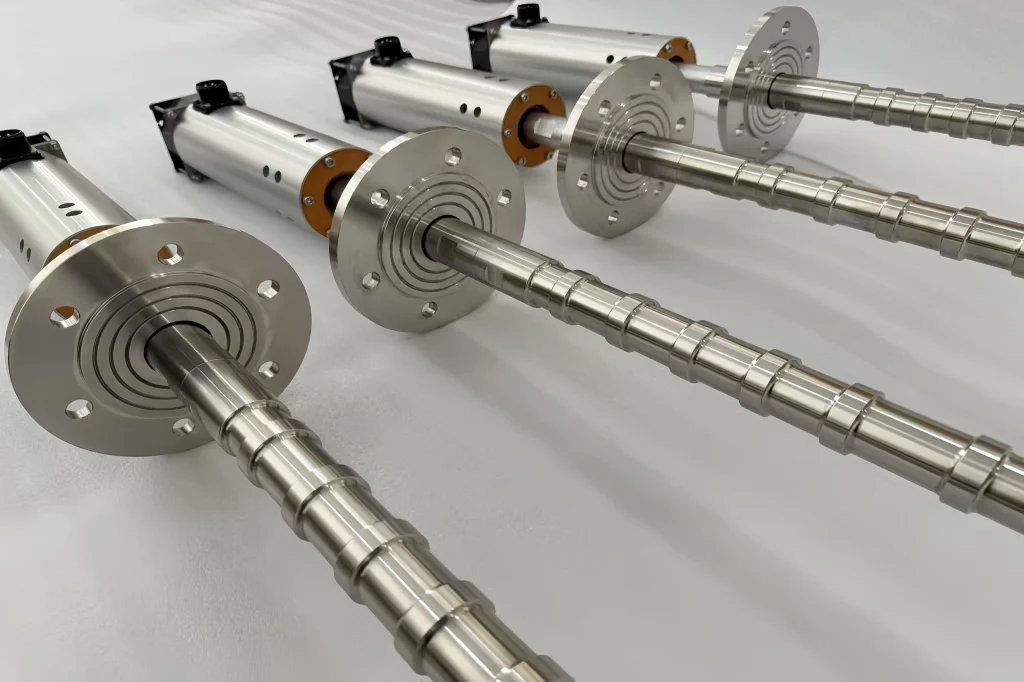
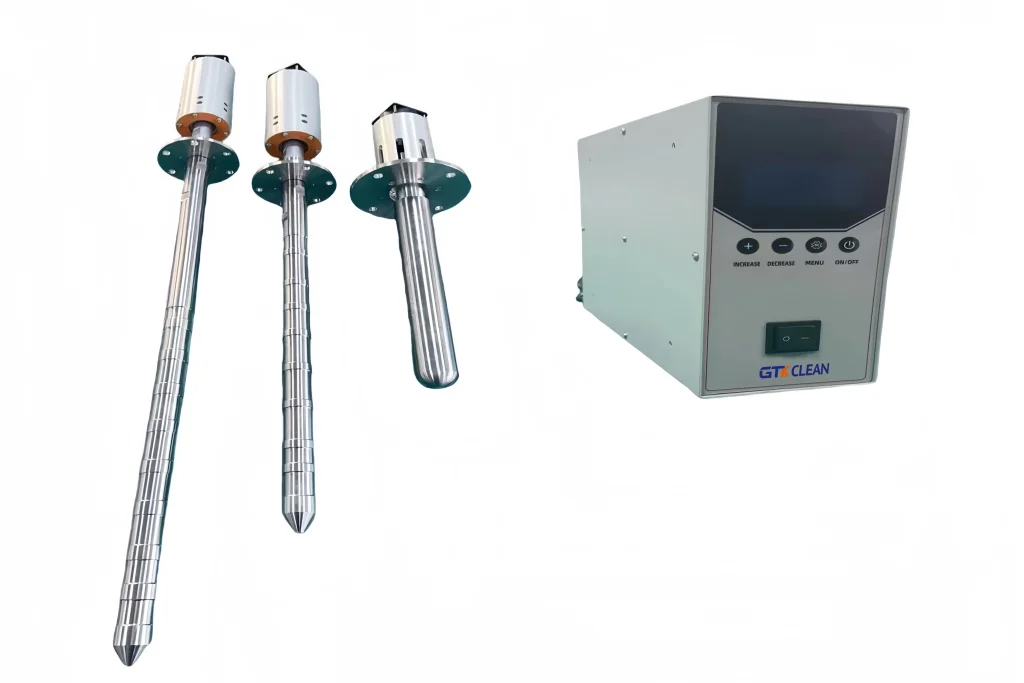
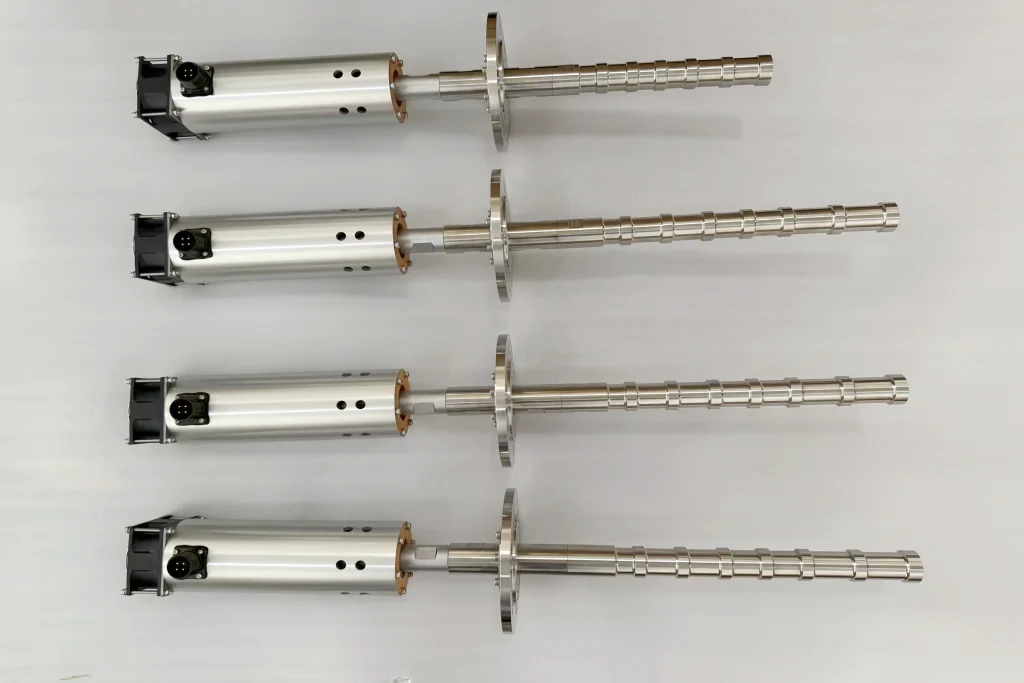
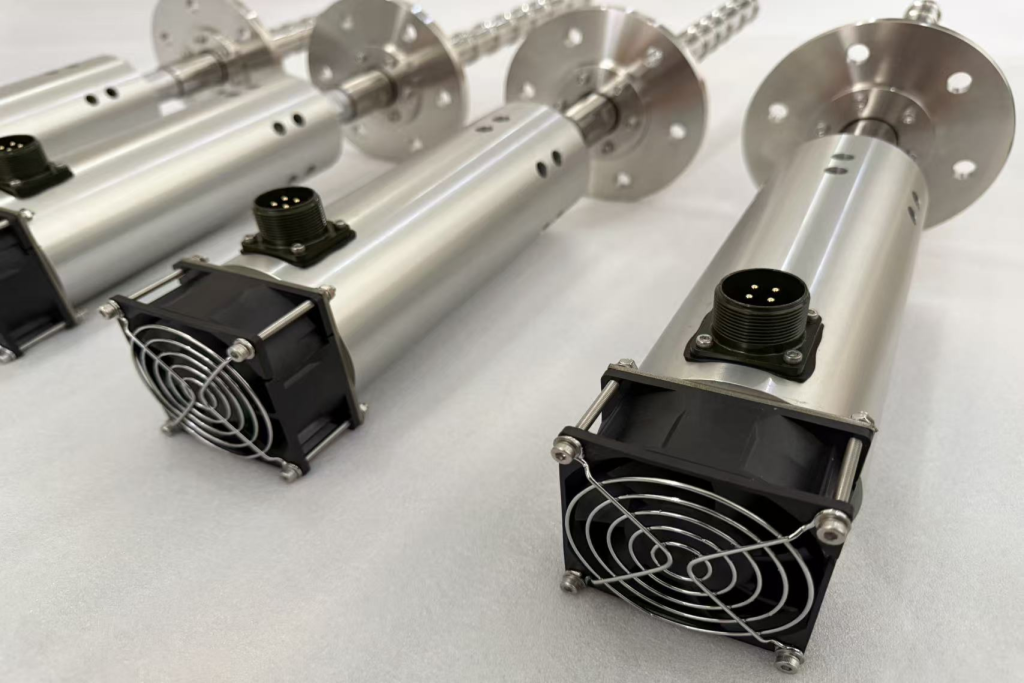
Ultrasonic Rod Transducer
Ultrasonic Rod Transducer is also called ultrasonic vibrating rods, it is a device that converts electrical energy into mechanical vibrational energy based on the principle of ultrasonic waves. It is typically composed of components such as an ultrasonic transducer, a horn, and a tool head (emission head).By leveraging the strong cavitation effect, it generates countless micro-bubbles in the liquid. The shock waves produced by the collapse of these bubbles can penetrate into every corner of industrial equipment, efficiently removing dirt, scale, and sediments from the inner walls of pipelines, reactors, storage tanks, and other equipment. This ensures the efficient operation of equipment and extends its service life, making it an ideal choice for equipment cleaning in industries such as chemical engineering and petroleum.
Ultrasonic Rod Transducer are Suitable for:
- Special-shaped/complex workpieces, such as cleaning inside deep holes, pipelines, and narrow gaps
- Precision components, including aero-engine turbine blades, medical devices, and electronic components
- Special working conditions: cleaning under high temperature (≤200℃), high pressure (±1MPa), and vacuum environments
- Large cleaning tanks (over 10 meters in length), which can be arranged at multiple points to achieve a more uniform sound field
- On-site maintenance: such as online cleaning of large-scale equipment without the need for disassembly
- Multifunctional applications: in addition to cleaning, it is also applicable to emulsification, extraction, defoaming, accelerating chemical reactions, etc.
Comparison Between Ultrasonic Transducer ( Plates-Style) and Ultrasonic Transducer ( Rod-Style):
| Parameter | Ultrasonic Transducer (Plate-Style) | Ultrasonic Transducer (Rod-Style) |
| Deployment Flexibility | Fixed installation with limited positioning | Can be immersed at any position,and even used for in-pipeline cleaning |
| Adaptability | Suitable for normal pressure and ambient temperature environments(<80℃),with severe attenuation at high temperatures | Temperature-resistant up to 200℃,pressure-resistant to±1MPa,and adaptable to vacuum/pressure environments |
| Reliability | Transducers are prone to detachment(adhesive connection);enclosed design causes poor heat dissipation and short service life | Transducers do not contact the cleaning fluid;air cooling is optional,featuring stable performance and a service life 1.5 times longer or more than that of vibrating plates |
| Maintenance Convenience | Requires disassembly of the entire cleaning tank with high maintenance costs | Independent modular design allows separate disassembly and replacement for easy ma |
How to Select an Ultrasonic Rod Transducer?
- Focus on core parameters: Based on your processing objectives, it is essential to prioritize frequency (e.g., 20–40kHz delivers strong penetration) and power (which affects processing intensity and efficiency). Meanwhile, verify whether the size of the vibrating rod is suitable for your container or pipeline.
- Select materials according to the processed medium: If the medium being handled is corrosive (e.g., acidic or alkaline environments), be sure to choose corrosion-resistant materials, such as titanium alloy (TC4) or Hastelloy. For general applications, stainless steel (e.g., 304 stainless steel) is a common and cost-effective option.
Note: Customization is available for any overall dimensions. If you have any questions, please feel free to contact us at any time. Thank you for your trust.

 English
  German
  Spanish
  French
  Russian
  Portuguese