
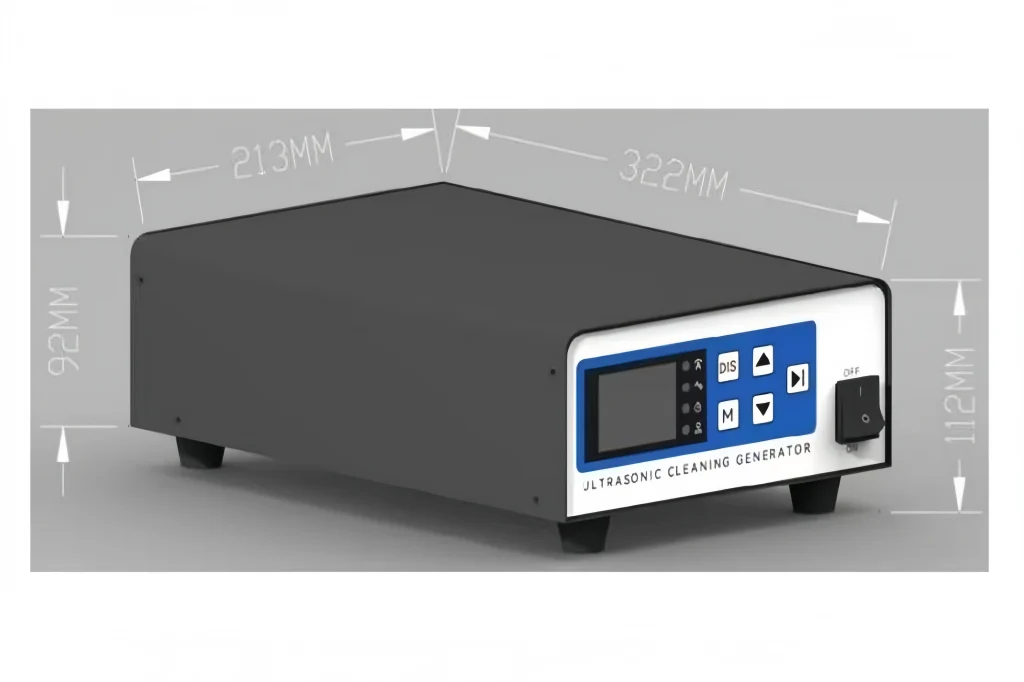
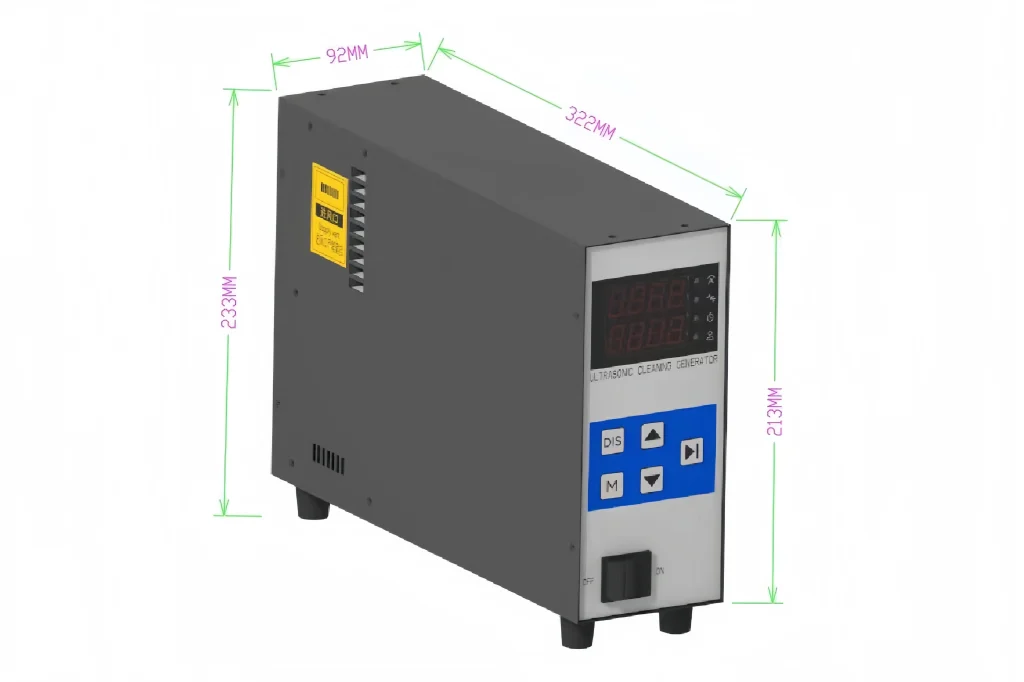
What Is An Ultrasonic Cleaning Generator?
An ultrasonic generator (also referred to as an ultrasonic power supply) is the core control and power unit of ultrasonic cleaning systems. Functioning as the system’s “signal and energy hub”, it is responsible for converting conventional electrical energy into high-frequency ultrasonic vibrations.
It first converts standard household or industrial alternating current (AC) into stable direct current (DC), then transforms this DC power into high-frequency electrical signals,these signals are transmitted to ultrasonic transducers, which leverage thepiezoelectric effectto convert electrical energy into mechanical vibrations.
The vibrations are transferred to the cleaning liquid, generating tiny cavitation bubbles that implode violently. This implosion creates intense micro-forces, effectively removing dirt, oil, and debris from workpiece surfaces. Additionally, the generator adjusts its frequency to match the transducer, ensuring efficient, stable cleaning performance for auto parts and precision components alike.
Applications Of Ultrasonic Generators In Industrial Cleaning Equipment:
In industrial cleaning systems—especially those designed for precision cleaning of components such as automotive parts, die-cast metalwork, and stamped components—ultrasonic generators serve as the core power and control unit, it defines the cleaning performance and functionality of industrial cleaning machines. The two devices are inherently interdependent, with the ultrasonic generator acting as the “brain and heart” of the ultrasonic cleaning subsystem, and the industrial cleaning machine providing the integrated platform to deliver consistent, high-precision cleaning results.
1. Fundamental Working Dependence
An industrial ultrasonic cleaning machine’s core cleaning mechanism relies entirely on the ultrasonic generator to initiate and sustain the cavitation effect—the key physical process for removing contaminants. The generator converts standard mains frequency electricity (typically 50/60 Hz AC) into high-frequency electrical signals (ranging from 20 kHz to 100 kHz, or even higher for precision applications). This high-frequency current is transmitted to ultrasonic transducers (mounted on the cleaning tank of the industrial cleaning machine), which then convert the electrical energy into mechanical vibrations. These vibrations propagate through the cleaning solution, creating millions of tiny cavitation bubbles that implode rapidly. The implosion generates intense localized pressure and micro-jets, dislodging stubborn contaminants (such as machining fluids, grease, metal shavings, and oxide layers) from the surface and blind holes of workpieces. Without the ultrasonic generator’s stable high-frequency output, the transducers cannot produce the required vibrations, and the industrial cleaning machine loses its ultrasonic cleaning capability entirely.
2. Performance Matching for Targeted Cleaning
The performance parameters of the ultrasonic generator directly dictate the industrial cleaning machine’s adaptability to different cleaning tasks, particularly critical for specialized applications like automotive component cleaning:
Frequency adjustment: Lower frequencies (20–40 kHz) generate larger cavitation bubbles with stronger implosion force, ideal for removing heavy contaminants from die-cast engine parts or stamped chassis components. Higher frequencies (60–100 kHz) produce smaller bubbles that act more gently, suitable for precision cleaning of delicate parts (e.g., fuel injectors, sensor components) without causing surface damage. The generator’s frequency modulation function allows the industrial cleaning machine to switch between these modes to match workpiece requirements.
Power regulation: The generator controls the output power (usually from hundreds of watts to several kilowatts for industrial-scale units) to adjust the intensity of cavitation. For batch cleaning of large automotive parts, higher power ensures uniform contaminant removal across the entire load; lower power is used for small batches of precision parts and micro-components,reduced power prevents over-cleaning or surface erosion. Industrial cleaning machines integrate this generator-controlled power adjustment into their process workflows to maintain cleaning consistency.
3. Integrated Control and Process Synchronization
Modern industrial cleaning machines often combine ultrasonic cleaning with other processes (e.g., immersion rinsing, hot air drying, or chemical degreasing). The ultrasonic generator interfaces with the machine’s central control system to achieve synchronized operation:
The generator can be programmed to activate/deactivate at specific stages of the cleaning cycle (e.g., initiating ultrasonic cleaning only after the workpiece is fully submerged and the cleaning solution reaches the target temperature).
Advanced generators offer frequency sweeping or pulsed output modes, which the industrial cleaning machine leverages to eliminate standing waves in the tank and ensure uniform cleaning across all workpiece surfaces—an essential feature for high-volume automotive component production lines where part consistency is mandatory.
4. Reliability and System Longevity
The stability and durability of the ultrasonic generator directly impact the overall uptime and service life of the industrial cleaning machine. Industrial-grade generators are engineered with overcurrent, overheating, and short-circuit protection to withstand the harsh operating conditions of factory floors (e.g., temperature fluctuations, voltage spikes). A reliable generator minimizes downtime caused by component failure, while its ability to maintain consistent frequency and power output prevents uneven cleaning results that would compromise production quality. Conversely, a faulty generator can lead to transducer damage or inconsistent cavitation, rendering the entire industrial cleaning machine ineffective and increasing maintenance costs for the end user.
In summary, the ultrasonic generator is not an auxiliary accessory but an indispensable component that determines the industrial cleaning machine’s cleaning efficiency, precision, and adaptability to industrial-scale, high-quality cleaning demands. Their seamless integration is critical for meeting the stringent cleanliness standards of sectors such as automotive manufacturing, where component cleanliness directly impacts subsequent processes like PVD coating adhesion and final product performance.

 English
  German
  Spanish
  French
  Russian
  Portuguese