
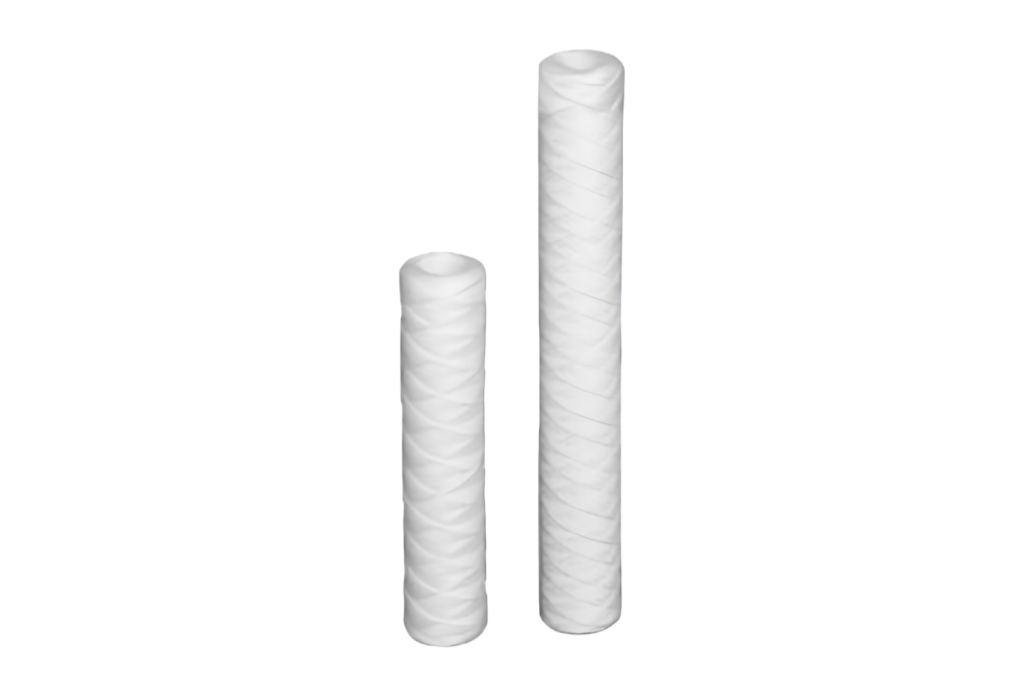
Filtration System
During the cleaning process impurities detached from workpieces (such as metal chips, dust, oil stains, polishing paste, fibers, etc.) will be suspended in the cleaning solution. Failure to remove these impurities will lead to the following issues:
Cross contamination: Dirty cleaning solution will reattach to the surface of already cleaned workpieces, resulting in failure to meet cleanliness standards.
Reduced cleaning effectiveness: Suspended particles will weaken the cavitation effect of ultrasonic waves and impair cleaning efficiency.
Equipment blockage: Particulates may clog nozzles, pumps, and valves, disrupting the normal operation of the equipment.
Accelerated cleaning solution degradation: Accumulated impurities will consume the active ingredients of the cleaning detergent, shorten the service life of the cleaning solution, and increase the cost of waste liquid treatment.
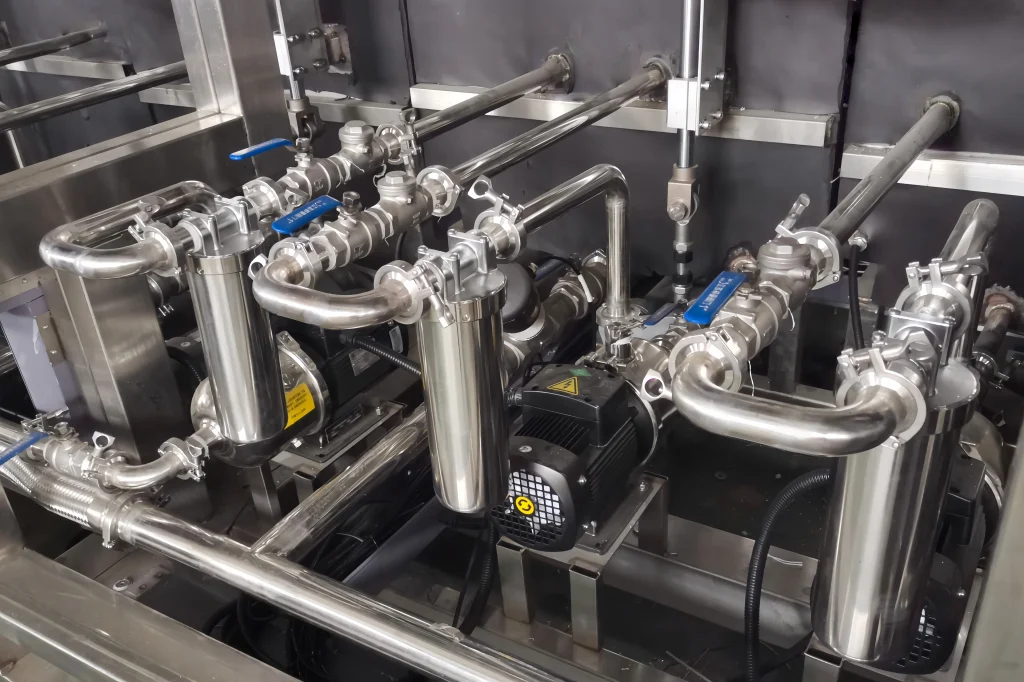
Filtration and Circulation System Designed by GTK Engineers, the general process flow:
- The water pump draws liquid from the dirty liquid zone of the cleaning tank
- The liquid passes through coarse filtration→The liquid enters the precision filter element
- The purified liquid is returned to the clean liquid zone of the cleaning tank or directly used for spray and rinsing cleaning.
Filter Type, Features & Application Scenarios
| Type | Features | Application Scenarios |
| String Wound Filter Cartridge (PP Cotton) | Made of cotton thread winding; enables depth filtration with high dirt-holding capacity and low cost. | Suitable for liquids with high impurity content and viscosity, e.g., filtration of grinding fluid and cutting fluid. |
| Melt Blown Polypropylene (PP) Filter Cartridge | Gradient distribution of internal fibers; supports depth filtration with a wide range of filtration accuracy and excellent chemical compatibility. | The most commonly used type; applicable to most water-based and some solvent-based cleaning agents. |
| Pleated Filter Cartridge | Filter membrane or paper pleated to achieve large filtration area, high flux and low pressure drop. | Ideal for high-flow, high-precision filtration scenarios, such as the final safeguard for spray systems. |
| Stainless Steel Filter Cartridge | Constructed with metal mesh or sintered felt; features high strength, reusable cleaning performance and high temperature resistance. | Suitable for harsh environments with high temperature, strong corrosion or long service life requirements. |
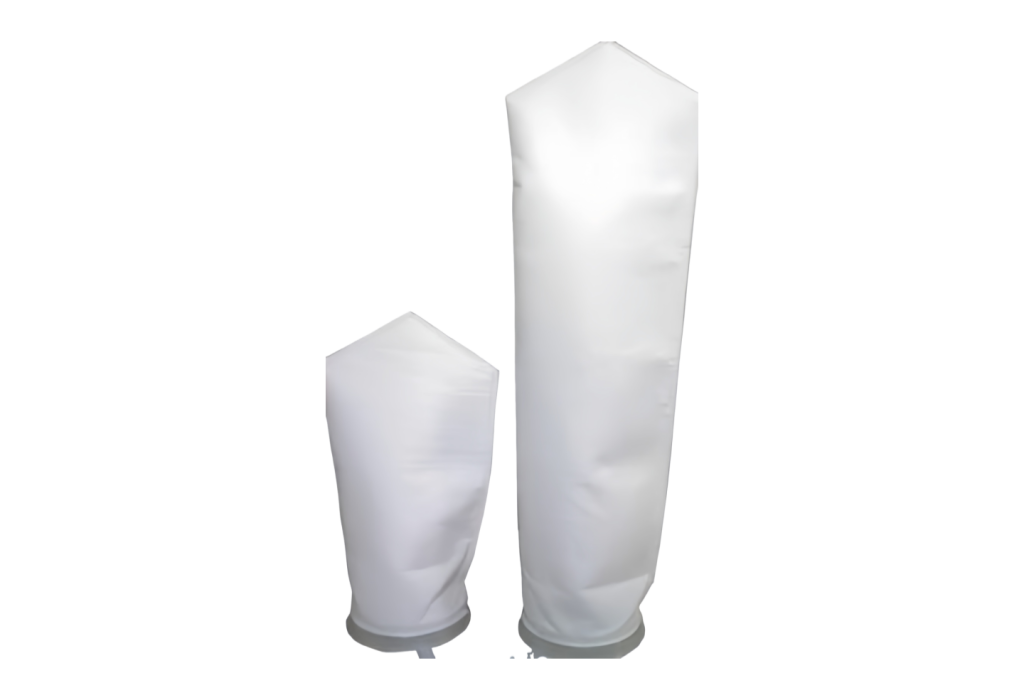
| Non-woven (Needle Felt) Filter Bag | Formed by needle-punching fibers like polypropylene (PP) and polyester (PET). The most commonly used type; offers depth filtration, high dirt-holding capacity and high cost-effectiveness. | Applicable to most water-based and some mild chemical cleaning agents. |
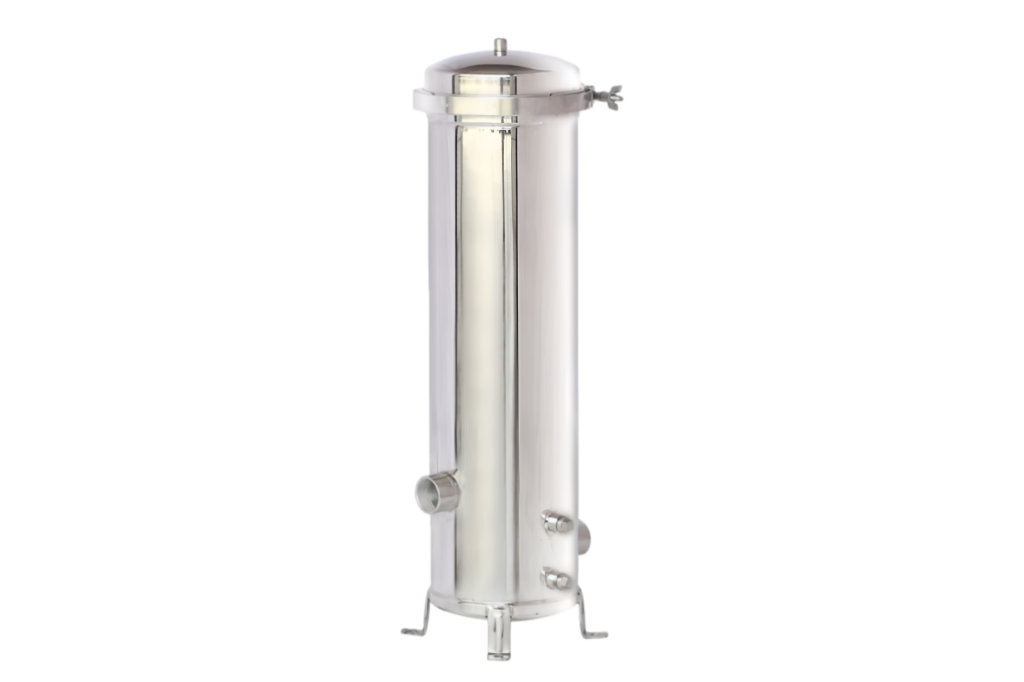
| Metal Mesh Filter Bag | Woven from stainless steel (e.g., 304, 316L) mesh. Reusable after cleaning, with high strength, high temperature resistance and corrosion resistance. | Commonly used for coarse filtration to trap large particle debris, featuring a long service life. |
| Multi-layer Composite Filter Bag | Composed of multi-layer filter media with different filtration accuracies. Enables gradient filtration: the surface layer traps large particles while the inner layer captures small particles, delivering higher dirt-holding capacity and more stable pressure drop. | Suitable for working conditions with wide distribution of impurity particles. |
| Microporous Membrane Filter Bag | Composite of PTFE and other filter membranes on non-woven support layers. Provides absolute filtration accuracy and surface filtration, ensuring ultra-high filtration precision, but with relatively low dirt-holding capacity and higher cost. | Used for ultra-precision cleaning that requires near-sterile conditions. |
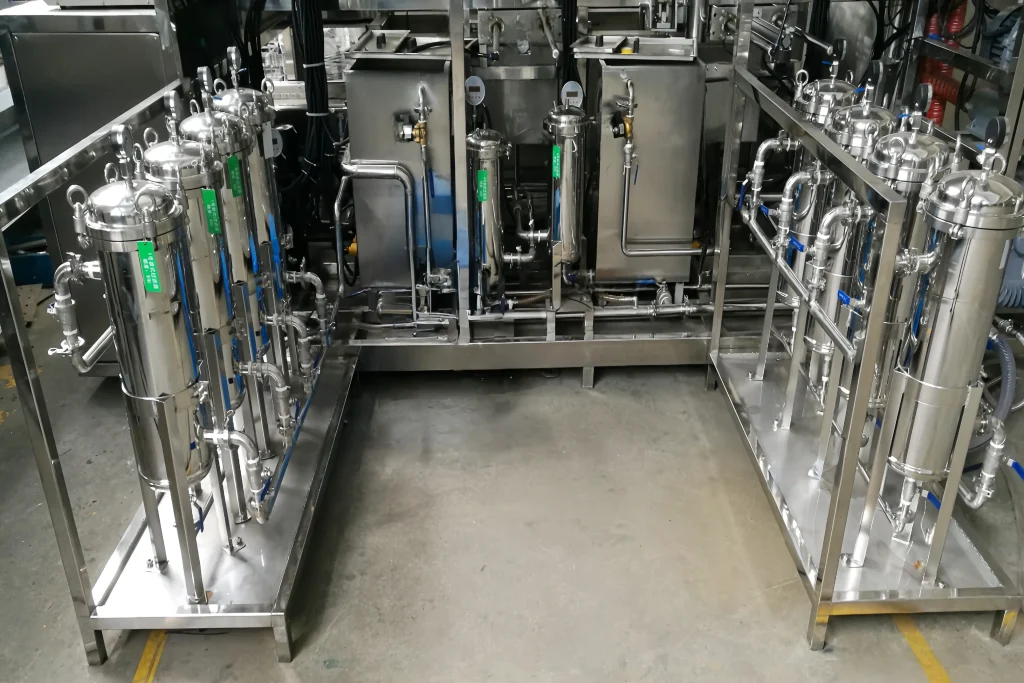
GTK engineers configure different filtration systems based on the type and requirements of the cleaning machine
- Single-machine Built-in Filtration
The filter is directly integrated into the cleaning machine. It features a compact structure and is suitable for standard cleaning machines.
- Bypass Circulation Filtration
The filtration system is independent of the main cleaning pump and continuously performs circulating filtration on the liquid in the cleaning tank. This mode delivers more stable filtration performance and is not affected by the start-stop of the main pump.
- Multi-stage Filtration (Coarse Filtration + Precision Filtration)
The liquid first passes through a coarse filter to protect the pump and extend the service life of the precision filter element, and then goes through the precision filter element to achieve the required cleanliness. This is the most common, cost-effective and efficient configuration.
- Magnetic Filtration + Media Filtration
A magnetic separator is added before the pump to preferentially adsorb and remove ferromagnetic impurities (e.g., iron chips), which greatly reduces the load on subsequent filters. This configuration is particularly suitable for cleaning in the machining industry.
Maintenance Recommendations from GTK Engineers
- Replace filter elements regularly
Follow the differential pressure indication or replace them periodically based on experience. A clogged filter element will cause reduced flow rate and compromise cleaning results.
- Clean coarse filters
Regularly clean or replace the filter bags.
- Monitor the condition of the cleaning solution
Even with a filtration system in place, the cleaning solution will accumulate oil and saponification products after long-term use and requires complete replacement at regular intervals.

 English
  German
  Spanish
  French
  Russian
  Portuguese