
Benchtop Ultrasonic Cleaners
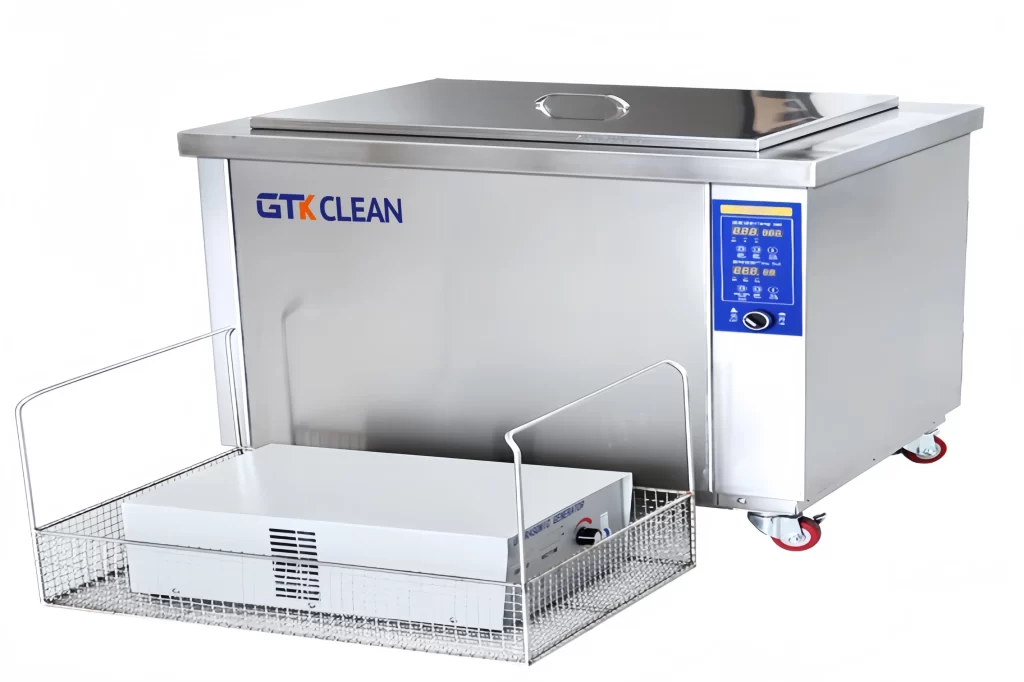
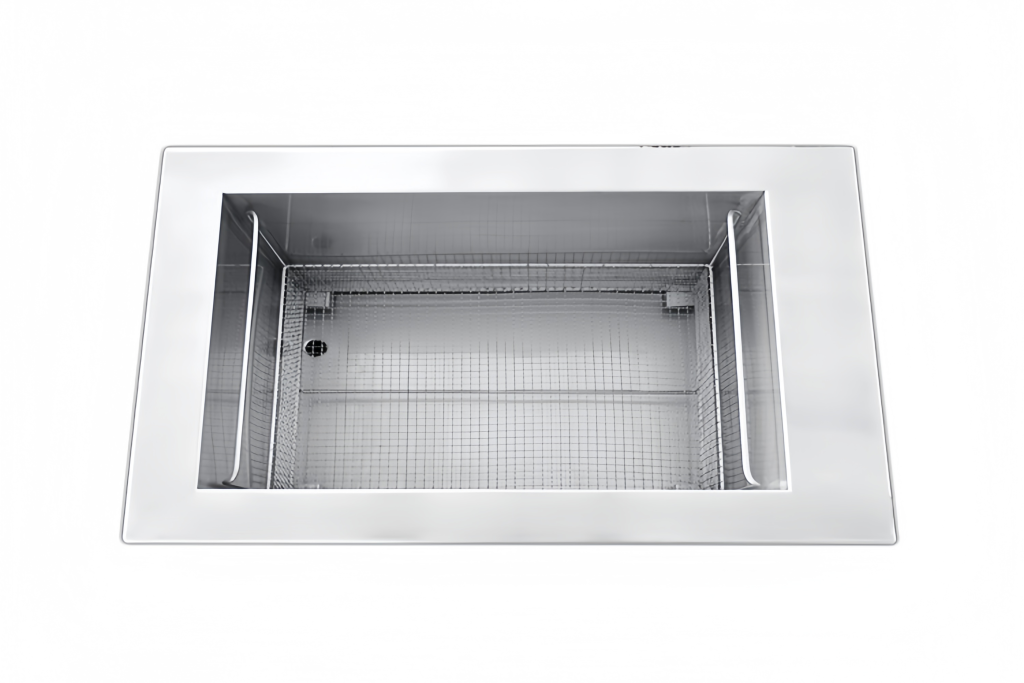
A single-tank ultrasonic washer is a type of ultrasonic cleaning equipment that is widely used, and easiest to operate of all ultrasonic cleaning equipment. It integrates all functions of ultrasonic generation, energy conversion, and cleaning within a single tank, it is ideal for scenarios such as laboratories,repair shops, dental clinics, jewelry stores, and small-batch industrial cleaning.The basic structure of a single-tank ultrasonic cleaner includes: cleaning tank,ultrasonic generator, transducer, heater, and control panel.
How Does a Benchtop Ultrasonic Washer Work?
The principle of ultrasonic cleaning is Ultrasonic Cavitation. An ultrasonic generator produces high-frequency electrical signals (typically 20 kHz – 80 kHz or higher). The ultrasonic transducer converts these high-frequency electrical signals into mechanical vibrations of the same frequency. These vibrations propagate through the tank bottom to the cleaning fluid, causing dense and sparse variations in fluid molecules and forming countless tiny, invisible-to-the-naked-eye vacuum bubbles (cavitation bubbles).
Under the alternating action of positive and negative pressure zones, these cavitation bubbles form rapidly and collapse violently (implode). This process instantly generates an impact force exceeding 1,000 atmospheres and localized high temperatures. When this powerful impact acts on the surface of workpieces immersed in the fluid, it can:
- Removal of stubborn contaminants (e.g., grease, oil, polishing paste, carbon deposits).
- Penetration into blind holes, fine gaps, threads, and other complex structures.
Industrial Application of Single-tank Ultrasonic Cleaning
- Laboratory: cleaning glassware, beakers, test tubes, crucibles, laboratory tools to remove chemical residue.
- Jewelry: Cleaning glasses, watches, necklaces, rings, bracelets, quickly removing sweat stains and dust, and restoring their luster.
- Medical Devices: Cleaning surgical instruments, dental molds, dentures, (requires special disinfectant cleaning solution.
- Electronic Maintenance: Cleaning circuit boards (PCBs), electronic components, and flux/dust on SMT stencils.
- Industrial Parts: Cleaning oil and debris from precision hardware, bearings, stampings, molds
- Printing/Photography: Cleans inkjet printheads,Screen mesh, lenses
- Household Use: Cleans personal items such as shaver heads, makeup brushes, baby bottle nipples, cutlery, tableware
How to Choose an Ultrasonic Cleaning Machine Model
When selecting a single-tank ultrasonic cleaner , the following key parameters should be considered:
- Internal Tank Dimensions (L x W x H): based the size of the largest workpiece to be cleaned. Ensure the workpiece can be easily placed inside with sufficient space for the cleaning solution to circulate.
- Capacity (L): Refers to the size of the tank, which determines the volume of cleaning solution required.
- Ultrasonic Frequency (kHz):
Low frequency (20kHz-30kHz): Features high energy and strong impact force, suitable for cleaning heavy-duty metal workpieces with stubborn contaminants. but may cause slight cavitation erosion on delicate items.
Medium-high frequency (40kHz-80kHz or higher): The higher the frequency, the more dense the cavitation bubbles, but the gentler the energy. It is suitable for cleaning precision, delicate, or coated components, such as electronic components, circuit boards, glass, and jewelry. 40kHz is the most common frequency.
- Power (W) : Higher power means stronger ultrasonic intensity, but excessive power can waste energy or cause over-cleaning. it needs to be matched to the tank size
- Heating Function: It is recommended to choose models with a heating function, as this can greatly improve cleaning efficiency. Check the maximum heating temperature (usually 70-80℃ is sufficient).
- Material: The cleaning tank must be made of 304 or 316 stainless steel for superior corrosion resistance.
Key Advantages of Ultrasonic Cleaners
- Superior Cleaning for Complex Parts : Ultrasonic technology achieves far better cleaning results than manual scrubbing, especially for intricate components with hard-to-reach areas.
- Effortless Operation : Simply set the time and temperature, then place the workpiece inside to start automatic cleaning —saving both labor and time.
- Versatile Cleaning Solutions : By switching between different cleaning detergent (aqueous or solvent-based), it can handle a wide range of materials and different type of contaminant
- Gentle, Non-Damaging Process : The cleaning process relies on physical action, avoiding scratches and damage that might occur with hard scrubbing.
- Compact Design : Its single-tank integrated design results in a small footprint and allows for easy placement in various workspaces..
Model & Technical Parameter Table
| Model | Capacity (L) | External Dimensions (L×W×H mm) | Internal Tank Dimensions (L×W×H mm) | Basket Dimensions (L×W×H mm) | Ultrasonic Power (W) | Heating Power (W) |
| GTK-15 | 30 | 530×330×330 | 500×300×200 | 450×250×130 | 750 | 1000 |
| GTK-18 | 61 | 730×480×620 | 500×350×350 | 470×310×105 | 900 | 2000 |
| GTK-24 | 77 | 780×530×680 | 550×400×400 | 515×365×130 | 1200 | 3000 |
| GTK-30 | 108 | 830×580×680 | 600×450×400 | 550×415×130 | 1500 | 4000 |
| GTK-36 | 117 | 880×595×680 | 650×450×400 | 630×430×135 | 1800 | 4000 |
| GTK-42 | 130 | 930×645×730 | 700×500×450 | 660×460×165 | 2100 | 6000 |
| GTK-48 | 187 | 980×645×780 | 750×500×500 | 720×475×185 | 2400 | 6000 |
Ultrasonic Cleaning Process:
Start-up → Basket Lowering → Ultrasonic Cleaning Begins → Set Time Expiration → Basket lifting
Note: Any size can be customized, no extra customization fees.

 English
  German
  Spanish
  French
  Russian
  Portuguese