
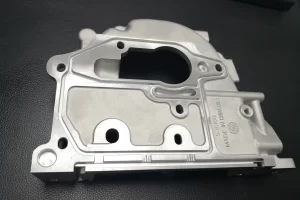
Stamped parts are widely used in automotive, aerospace, electronics, and household appliance industries. Most stamped components are high-value parts with complex geometries or precision requirements, which demand effective cleaning to ensure downstream process stability and final product quality. During stamping processes such as blanking, bending, and drawing, contaminants including oil stains, metal chips, oxide scales, and chemical residues often adhere to part surfaces, affecting assembly, welding, and finishing operations.
In response to different part types, contamination levels, and production requirements, GTK engineers provide tailored cleaning solutions for you:
For precision stamped parts with complex geometries, blind holes, or micro-irregular surfaces, ultrasonic cleaning machines are ideal. The cavitation effect penetrates dead corners, cracks, and recesses, removing micro solid particles, emulsified oils, and mixed sludge effectively;
For high-volume production of parts with simple surfaces or flat geometries, conveyor (inline) spray cleaning systems efficiently remove large particles, loose oil stains, and surface contaminants, completing cleaning, rinsing, and drying in a single integrated process;
For heavily oil-contaminated or water-sensitive stamped parts requiring residue-free cleaning, hydrocarbon cleaning machines dissolve thick oils and anti-rust films while preventing corrosion. Combined with ultrasonic or spray assistance and vacuum drying, they deliver high-quality, residue-free surfaces;
Customizable solutions such as basket-rotating ultrasonic cleaning, multi-stage DI water rinsing, air knife drying, and solvent recycling systems further enhance cleaning efficiency, water/solvent savings, and environmental compliance;
Equipment selection is guided by part size, complexity, material sensitivity, production volume, and contamination type to optimize cleaning performance and production cost.
With GTK cleaning systems, stamped parts achieve thoroughly cleaned surfaces, ensuring stable downstream processes, improved product quality, and efficient large-scale production.


 English
  German
  Spanish
  French
  Russian
  Portuguese