
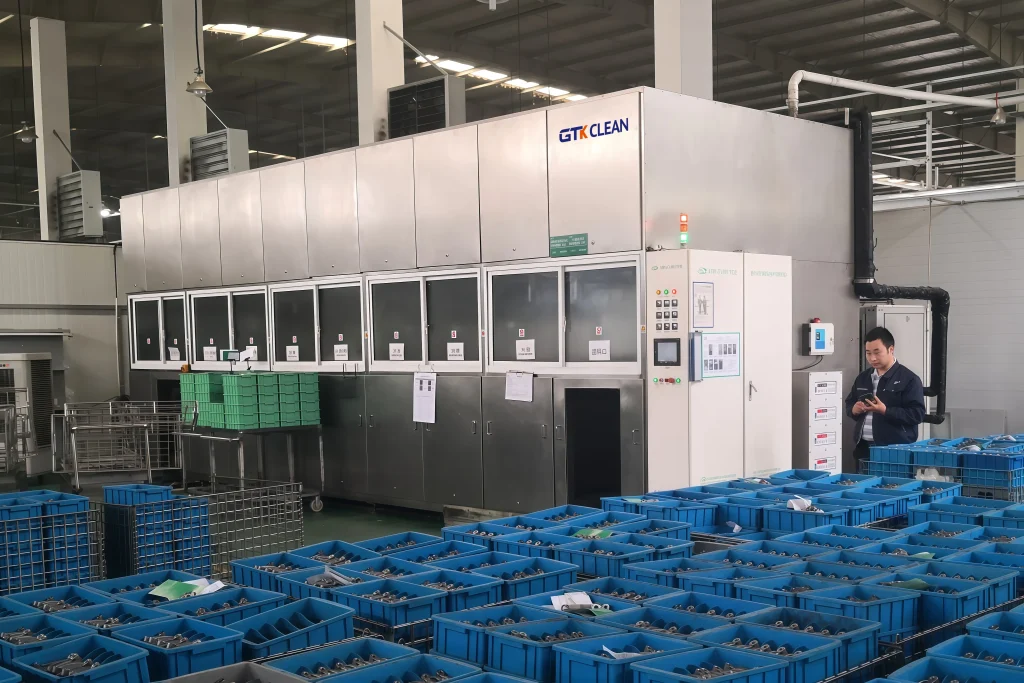
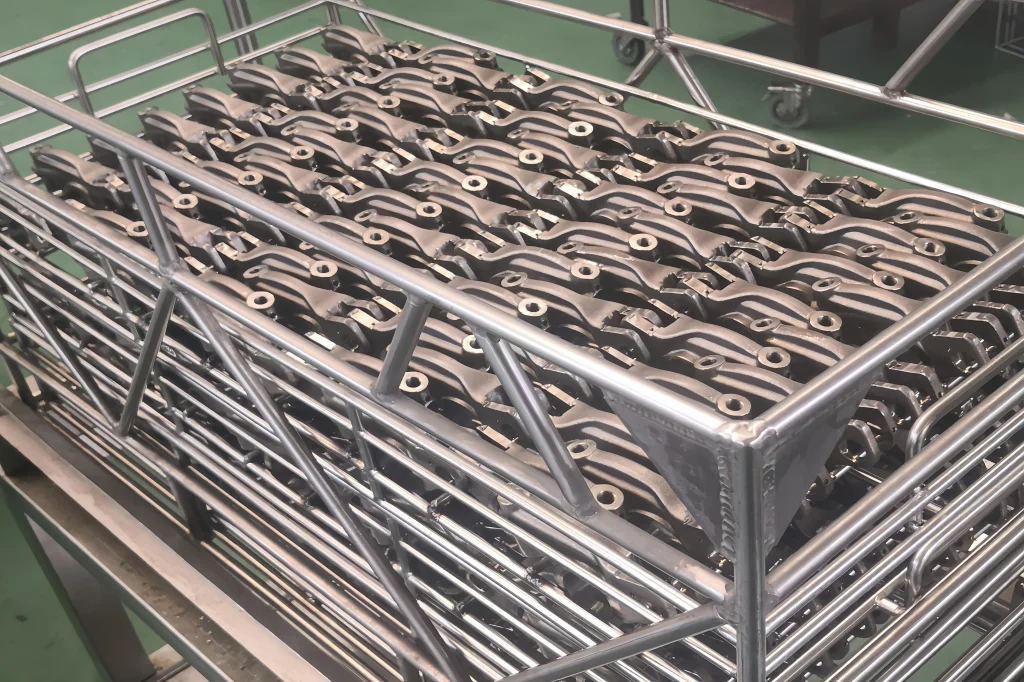
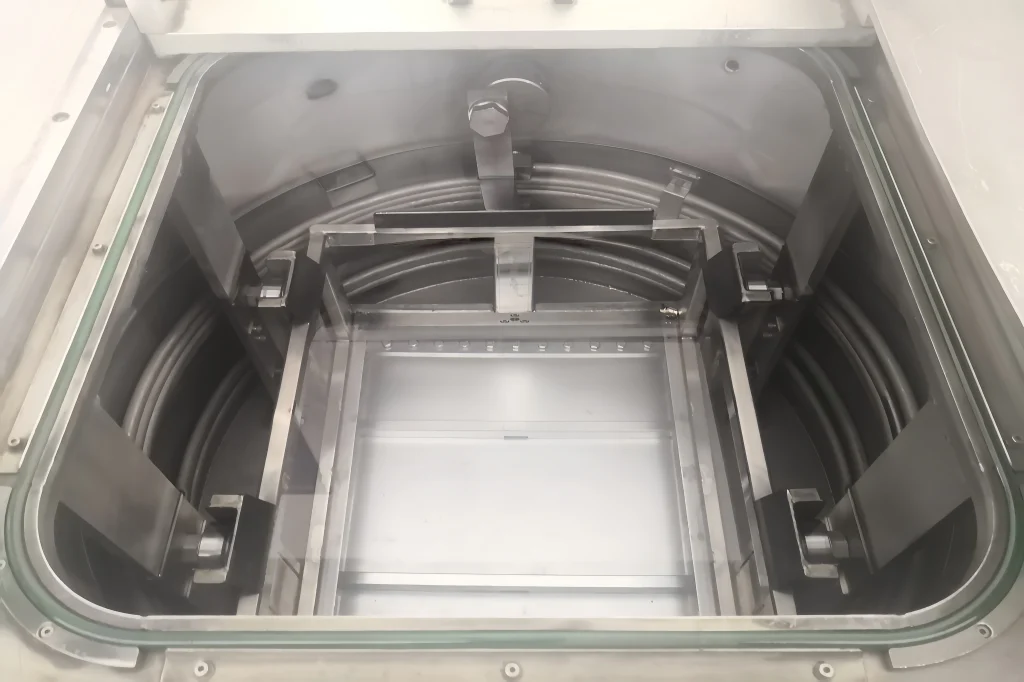
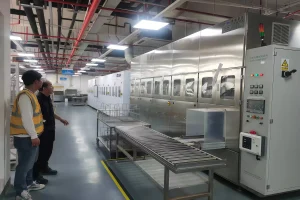
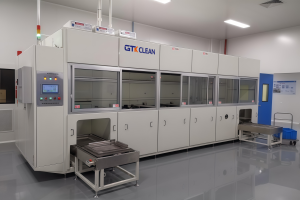
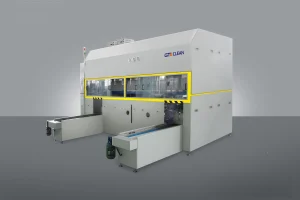
This 7-Tank Hydrocarbon Ultrasonic Cleaning Machine is a vacuum ultrasonic cleaning system designed specifically for diesel engine brake, camshaft, and engine component manufacturers.
It provides integrated cleaning and drying for components processed with both aqueous and oil-based metalworking fluids.
7-Tank Solvent Ultrasonic Cleaning Systems
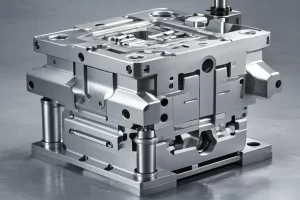
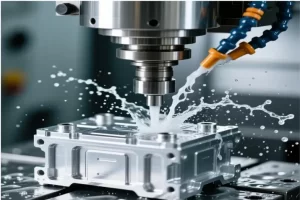
To meet the requirements of different processing operations, such as cool and/or lubricate metal workpieces when they are being machined, ground, milled, etc, common metalworking fluids include cutting fluids, cutting oils, emulsions, stamping oils, quenchants, and so on. These metalworking fluids can be categorized into water-based, oil-based, and oil-water mixed metalworking fluids.
For aqueous-based metalworking fluids, by leveraging the “cavitation effect” of ultrasonic wave, a standard water-based ultrasonic cleaner can easily clean them thoroughly.
For oil-based metalworking fluids, based on the principle of compatibility between hydrocarbon solvents and oil-based metalworking fluids, a hydrocarbon cleaner can solve the problem and remove the oil-based metalworking fluids effectively.
However, for aqueous-oil mixed metalworking fluids, using a single aqueous-based ultrasonic cleaner or oil-based hydrocarbon cleaner alone cannot resolve this cleaning challenge.
To Address this Cleaning Difficulty, GTK Engineers Have Designed a Special Cleaning Process:
- Tank 1 uses aqueous-based spraying to remove large impurities and heavy oil stains from the workpiece surface, preparing for subsequent cleaning.
- Tank 2 uses a dehydrating agent to remove moisture from the workpieces, effectively solving the problem of oil-aqueous mixed metalworking fluids.
- Tank 3 then performs hydrocarbon ultrasonic cleaning, allowing the solvent to act uniformly on the workpiece surface to remove contaminants.
- Tank 4 uses vacuum ultrasonic cleaning, which effectively removes dirt from deep holes, blind holes, cracks, and irregular grooves of components via the combination of vacuum and ultrasonic waves.
- Tank 5 conducts hydrocarbon ultrasonic rinsing, using uncontaminated solvent to rinse the workpieces, remove residual solvents and contaminants, and improve cleanliness.
- Tank 6 adopts hydrocarbon vapor cleaning + vacuum drying. Through the combination of hydrocarbon vapor cleaning and vacuum drying, it quickly removes moisture and solvent residues from the workpiece surface, and thoroughly cleans and dries the blind holes and grooves of the cleaned workpieces.
- Tank 7 adds an additional hydrocarbon vapor cleaning + vacuum drying process to shorten the cleaning cycle.
After these 7- tanks of cleaning and drying procedures, the workpieces achieve a thorough cleaning effect. Meanwhile, it provides rust prevention for the products and enhances the service life and performance of the workpieces.
The vapor of the cleaning fluid extracted from the vapor cleaning and vacuum drying tank are condensed and recovered for reuse via a Hydrocarbon Distillation Recovery Machine. This significantly reduces cleaning fluid consumption and consequently cuts down production costs.
Equipment Process Flow
| NO. | Working Process | Cleaning Media | Ultrasonic Frequency | Temperature | Heating | Cooling | Filtration |
| 1 | High-pressure Spray | Aqueous | / | ≤40℃ | Y | / | Y |
| 2 | Aqueous-oil Separation via Dehydrating Agent | dehydrated hydrocarbon solvent | / | ≤40℃ | / | Y | / |
| 3 | Hydrocarbon Ultrasonic Cleaning | HC | 28KHZ | ≤40℃ | Y | Y | Y |
| 4 | Vacuum Hydrocarbon Ultrasonic Cleaning | HC | 40KHZ | ≤40℃ | Y | Y | Y |
| 5 | Hydrocarbon Ultrasonic Rinsing, | HC | 40KHZ | ≤40℃ | Y | Y | Y |
| 6 | Hydrocarbon Vapor Cleaning+Vacuum Drying | HC | / | RT~100℃ | Y | Y | / |
| 7 | Hydrocarbon Vapor Cleaning+Vacuum Drying | HC | / | RT~100℃ | Y | Y | / |
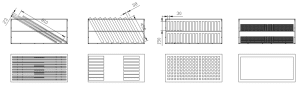
GTK Engineers Designed Different Basket Loading Methods For Various Products:
Equipment Specifications
| Parameter | Dimensions (mm) |
| Equipment Dimensions | L9000×W2800×H3200 |
| Cleaning Tank Dimensions | L1000×W550×H450 |
| Cleaning Basket Dimensions | L900×W450×H400 |
The cleaning process design can be specifically tailored to your product dimensions and production capacity requirements. If you have any special detailed needs, please contact us, and we will provide you with a customized design plan free of charge.

 English
  German
  Spanish
  French
  Russian
  Portuguese