

For production managers scaling up output, the shift from manual or batch cleaning to a continuous ultrasonic system marks a critical step in maintaining consistent part cleanliness without creating a bottleneck. Continuous ultrasonic cleaning systems integrate directly into mass production lines, using in-line cavitation to remove chips, oils, and residues from parts as they move continuously through wash, rinse, and dry stages. Unlike batch systems that require loading and unloading downtime, these systems achieve cycle times measured in parts per minute, which directly supports high‑volume manufacturing. However, the decision to deploy one involves more than just throughput; conveyor design, tank length, drying method, and integration with existing automation must all align with the specific production rate and part geometry.
What Is a Continuous Ultrasonic Cleaning System?
A continuous ultrasonic cleaning system embeds ultrasonic cavitation inside a conveyor‑driven production cell. Parts are not dipped batch‑by‑batch; they travel on a belt, chain, or roller conveyor that carries them through wash, rinse, and dry stages without pause. Submerged ultrasonic transducers in the wash zone generate high‑frequency sound waves that create microscopic cavitation bubbles. When those bubbles collapse against part surfaces, they strip away machining oil, chips, polishing paste, and other contaminants—even from blind holes or fine threads. The “continuous” advantage is that loading and unloading happen concurrently on opposite ends, eliminating idle time. For a plant running three shifts, that means more parts per hour with fewer operators.
The core system elements remain the same whether you are cleaning stamped brackets or precision‑machined housings: an ultrasonic wash tank, one or more rinse sections, a drying module, and a material handling system that maintains a constant feed rate. What changes is how engineers size those elements to match a given throughput target. I have seen installations where a 1000‑mm‑wide belt conveyor running at 0.8 m/min delivers more than two tons of fasteners per hour through a single line, while a smaller‑width machine for aluminum shells might run at 0.5 m/min but handle far heavier individual parts. The physics of cavitation does not change; the mechanical engineering around it has to.
When Does High‑Volume Production Justify a Continuous Ultrasonic Line?
Moving from batch ultrasonic tanks to a continuous conveyor‑based system makes financial sense when the cost of labor, floor space, and quality inconsistencies begin to exceed the investment in automation. A rough rule of thumb I use is this: if your daily part count exceeds roughly 50,000 small‑ to medium‑sized components, or if you are already running two full shifts on batch systems and still falling behind, a continuous line usually pays back within 18 to 24 months. The savings come from several directions: reduced direct labor, lower reject rates from human handling, and cleaning chemistry that lasts longer because filtration and oil‑water separation run inline.
The justification becomes stronger when the parts have to meet a cleanliness standard that cannot be guaranteed by manual or semi‑automated washing. In automotive fastener production, for example, a cold‑headed bolt must be free of drawing oil before plating. A tunnel cleaner with an integrated oil‑water separator removes more than 98% of surface oil before the rinse stage, so rinse water stays clean longer and detergent consumption drops. When that same line runs 24 hours a day, the chemical savings alone can cover the incremental cost of the integrated separation system within a year.
If your planned volumes sit between 10,000 and 50,000 parts per day, a modular multi‑tank configuration that can later be converted to a continuous feed might be a safer first step. Ask your equipment partner to quote both the batch‑to‑continuous transition path so you are not painting yourself into a corner.
Key Components That Define Continuous Ultrasonic System Performance
Continuous systems succeed or fail on four subsystems: the conveyor, the ultrasonic tank, the rinse cascade, and the drying module. Get any one wrong and throughput suffers.
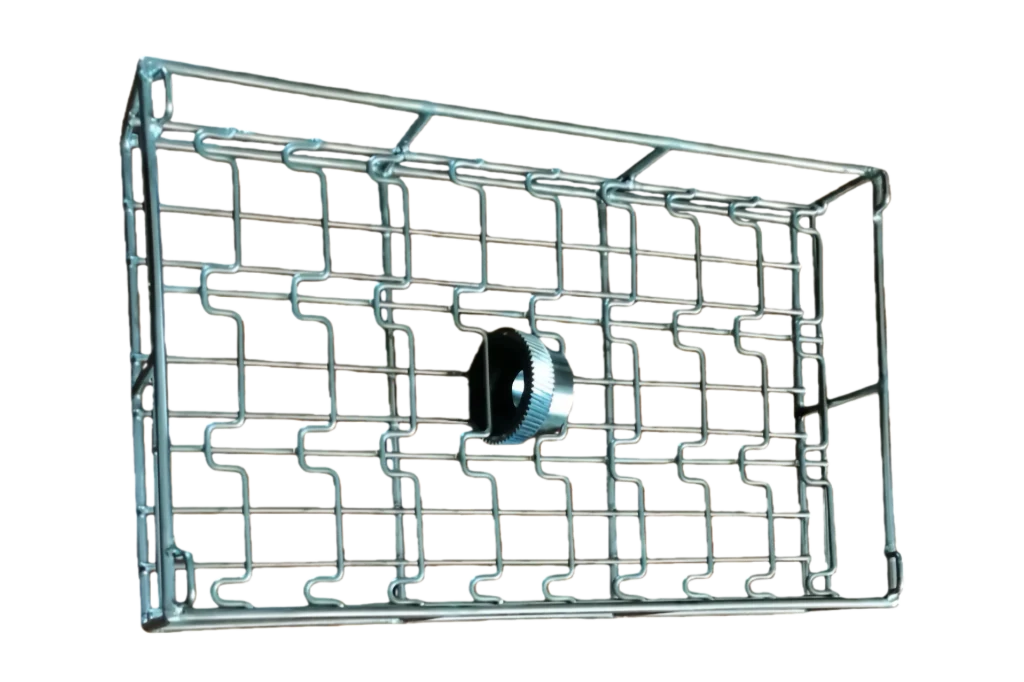
Conveyor and basket design. Belt width and speed set the maximum throughput. A belt 800–1200 mm wide running at 0.5–1.2 m/min can accommodate a wide range of part sizes, but the basket or fixture that holds the part must allow cleaning media to reach every surface without trapping liquid. Rotating baskets work well for parts with blind holes; flat mesh belts are fine for sheet metal parts that lie flat. Over the years, we have reinforced baskets to handle loads up to 2000 kg for heavy engine components, using dedicated motors and thicker tank structures. For lighter stamped parts, a simple stainless‑steel mesh belt with guide rails is often enough.
Ultrasonic wash tank. Most continuous systems operate at 20–28 kHz with ceramic transducers bonded to the tank bottom or sides. The tank length determines how much cavitation exposure each part receives at a given conveyor speed. For example, if the conveyor moves at 1 m/min and the tank is 4 m long, each part spends four minutes inside the ultrasonic field. That may be sufficient for light cutting oil but insufficient for heat‑treatment scale. I often start with a target exposure of 4–6 minutes for general degreasing and adjust tank length or conveyor speed from there. Temperature is held between 45 and 65 °C for aqueous chemistries, which lowers surface tension and improves bubble implosion strength.
Rinse cascade. Most lines use a two‑ or three‑stage rinse: a first rinse with recirculated water followed by a fresh DI water rinse with conductivity ≤ 0.06 μS/cm. Overflow weirs direct the cleanest water toward the exit end, counter‑current to part travel, so the final rinse always sees the highest‑quality water. This cascade dramatically cuts water consumption compared with manual tank‑dump rinsing. A throughput calculation is straightforward: if you process 1000 kg of parts per hour and each kilogram carries 50 mL of wash solution into the rinse, the rinse system must be sized to dilute and discharge that 50 L/h without letting contamination build up.
Drying. Hot air knives, followed by a hot air drying tunnel, work for most parts. For complex castings or components with deep recesses, vacuum drying prevents water spots by boiling off residual moisture at reduced pressure. I have learned that drying is the stage where many continuous lines bottleneck; you can wash 500 parts per hour, but if the dryer can only handle 400, you end up with wet parts piling up downstream. Always specify the dryer to match or slightly exceed the wash‑stage throughput.
Throughput and Cycle Time: Matching System Speed to Real Demand
Throughput for a continuous ultrasonic system is not a single number you pull from a catalog; it is a calculated value derived from conveyor speed, belt width, part loading density, and the required ultrasonic dwell time. The fundamental equation is simple:
| Parámetro | Unidad | Example Value |
|---|---|---|
| Belt width | mm | 1000 |
| Parts per row | piezas | 10 |
| Row spacing (pitch) | mm | 100 |
| Conveyor speed | m/min | 0.8 |
| Rows per minute | rows/min | 8 |
| Parts per minute | parts/min | 80 |
| Parts per hour | parts/h | 4800 |
The table shows a baseline for flat parts that can sit side‑by‑side. Real throughput will drop when parts are larger, require fixturing, or have complex shapes that need slower travel to meet cleanliness requirements.
A common mistake I see is assuming that increasing conveyor speed always increases throughput. If the ultrasonic tank length is insufficient for the new speed, dwell time falls below the minimum needed to remove the contaminant, and parts exit dirty. The right approach is to first determine the minimum cavitation exposure time your parts require—something you can test on a benchtop unit—then size the tank length to deliver that exposure at your target conveyor speed.
For a fastener cleaning line processing 2‑inch bolts, we once started with a target of 4 minutes of ultrasonic exposure. With a conveyor speed of 0.8 m/min, that required a 3.2‑meter active tank zone. By adding a second tank in series we extended the zone to 6 meters, which allowed us to increase speed to 1.2 m/min while keeping exposure above 5 minutes. The result was a 50% increase in hourly output without sacrificing cleanliness.
Integrating Continuous Ultrasonic Cleaning into Existing Production Lines
Adding a continuous ultrasonic washer to an active factory floor involves more than connecting power and water. The system must communicate with upstream and downstream automation, fit within available floor space, and operate without creating a hazardous chemical environment.
cURL Too many subrequests by single Worker invocation. To configure this limit, refer to https://developers.cloudflare.com/workers/wrangler/configuration/#limits cURL Too many subrequests by single Worker invocation. To configure this limit, refer to https://developers.cloudflare.com/workers/wrangler/configuration/#limits
cURL Too many subrequests by single Worker invocation. To configure this limit, refer to https://developers.cloudflare.com/workers/wrangler/configuration/#limits cURL Too many subrequests by single Worker invocation. To configure this limit, refer to https://developers.cloudflare.com/workers/wrangler/configuration/#limits
cURL Too many subrequests by single Worker invocation. To configure this limit, refer to https://developers.cloudflare.com/workers/wrangler/configuration/#limits cURL Too many subrequests by single Worker invocation. To configure this limit, refer to https://developers.cloudflare.com/workers/wrangler/configuration/#limits
cURL Too many subrequests by single Worker invocation. To configure this limit, refer to https://developers.cloudflare.com/workers/wrangler/configuration/#limits
cURL Too many subrequests by single Worker invocation. To configure this limit, refer to https://developers.cloudflare.com/workers/wrangler/configuration/#limits
cURL Too many subrequests by single Worker invocation. To configure this limit, refer to https://developers.cloudflare.com/workers/wrangler/configuration/#limits
cURL Too many subrequests by single Worker invocation. To configure this limit, refer to https://developers.cloudflare.com/workers/wrangler/configuration/#limits
cURL Too many subrequests by single Worker invocation. To configure this limit, refer to https://developers.cloudflare.com/workers/wrangler/configuration/#limits
cURL Too many subrequests by single Worker invocation. To configure this limit, refer to https://developers.cloudflare.com/workers/wrangler/configuration/#limits
cURL Too many subrequests by single Worker invocation. To configure this limit, refer to https://developers.cloudflare.com/workers/wrangler/configuration/#limits
cURL Too many subrequests by single Worker invocation. To configure this limit, refer to https://developers.cloudflare.com/workers/wrangler/configuration/#limits
cURL Too many subrequests by single Worker invocation. To configure this limit, refer to https://developers.cloudflare.com/workers/wrangler/configuration/#limits
cURL Too many subrequests by single Worker invocation. To configure this limit, refer to https://developers.cloudflare.com/workers/wrangler/configuration/#limits
cURL Too many subrequests by single Worker invocation. To configure this limit, refer to https://developers.cloudflare.com/workers/wrangler/configuration/#limits
cURL Too many subrequests by single Worker invocation. To configure this limit, refer to https://developers.cloudflare.com/workers/wrangler/configuration/#limits
cURL Too many subrequests by single Worker invocation. To configure this limit, refer to https://developers.cloudflare.com/workers/wrangler/configuration/#limits
cURL Too many subrequests by single Worker invocation. To configure this limit, refer to https://developers.cloudflare.com/workers/wrangler/configuration/#limits
cURL Too many subrequests by single Worker invocation. To configure this limit, refer to https://developers.cloudflare.com/workers/wrangler/configuration/#limits
cURL Too many subrequests by single Worker invocation. To configure this limit, refer to https://developers.cloudflare.com/workers/wrangler/configuration/#limits
Si estás interesado, consulta estos artículos relacionados:
Limpieza de piezas acuosas: Guía técnica para fabricantes
Estrategias para Minimizar Costos de Energía en Limpieza por Ultrasonidos
Sistemas de limpieza ultrasónica semi automatizados vs totalmente automatizados
¿Qué Es la Onda Ultrasonica?
 Spanish
  English
  German
  French
  Russian
  Portuguese