

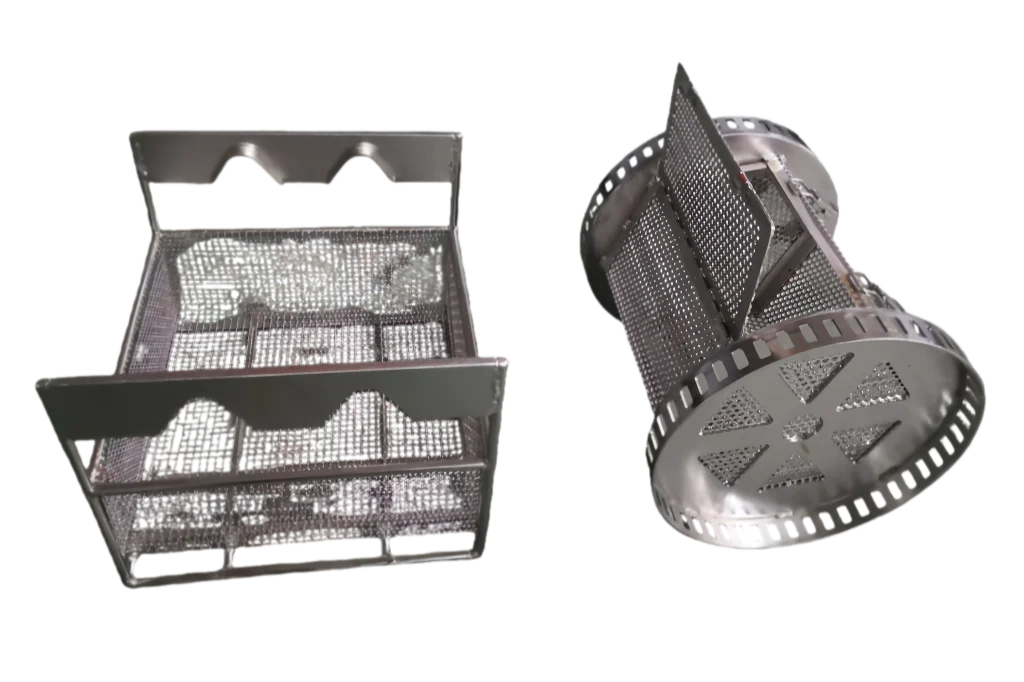
Temperature is one of the most misunderstood variables in ultrasonic cleaning. Operators often raise the heat to dissolve oil faster, only to find that cleaning becomes less repeatable, that parts emerge with hazing, or that cavitation seems to disappear. Temperature changes several physical and chemical processes at once: bubble formation, collapse energy, detergent activity, viscosity, surface tension, and drying behavior. This guide explains how those mechanisms interact and how to set a controlled temperature window for production.
What Temperature Changes Inside an Ultrasonic Tank
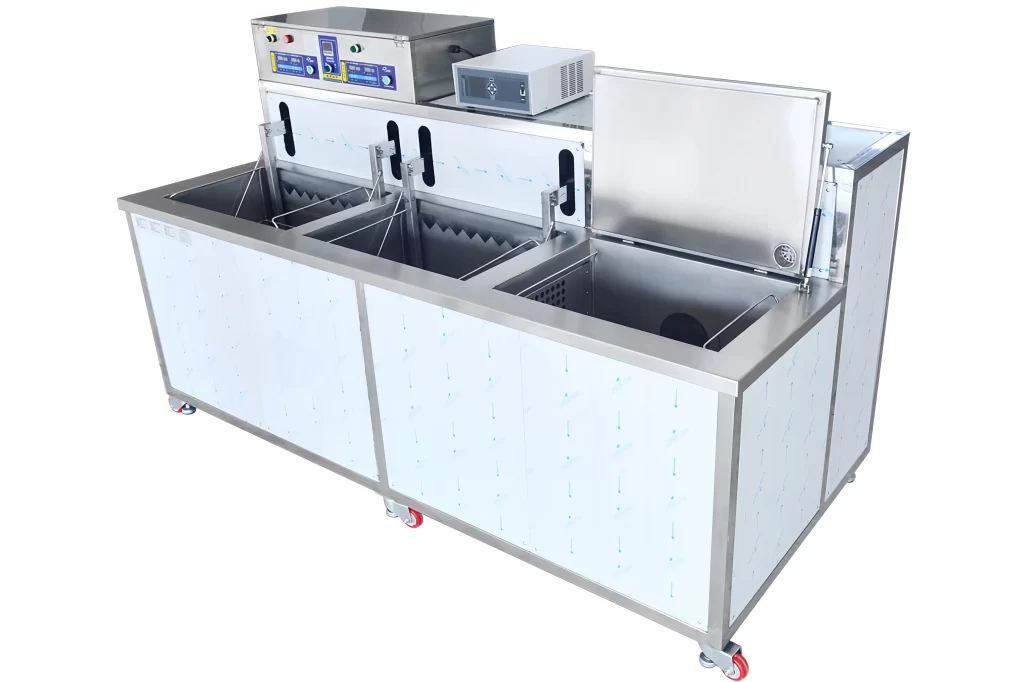
Heat does not simply activate the cleaning chemistry. In an aqueous ultrasonic tank, rising temperature increases the vapor pressure of the liquid, lowers surface tension and viscosity, and improves solubility for many oils and greases. Those changes help detergent penetrate thin films, blind holes, and tight clearances. At the same time, higher vapor pressure alters cavitation: bubbles form more easily but collapse with less force [1], [3].
The practical result is a trade-off. Chemical cleaning improves as temperature rises, but mechanical cavitation can weaken. A useful setpoint therefore balances detergent performance, part material limits, drying behavior, and cavitation intensity rather than chasing the highest possible heat.
The Temperature–Cavitation Trade-Off
At lower temperatures, dissolved gas leaves a bath more slowly, bubbles contain less vapor, and collapse is more energetic. This favors particle removal and strong surface scrubbing, but chemical degreasing can be slow. At higher temperatures, more vapor enters each bubble and cushions the collapse; cavitation intensity falls. Many aqueous detergent systems are most effective around 50–65 °C, where chemical activity is high enough to release oil films and cavitation remains strong enough to remove fine particles [1], [2].
Above roughly 70 °C, some tanks show a measurable drop in cleaning intensity unless frequency and power are adjusted. The exact threshold depends on the detergent, the ultrasonic frequency, the tank geometry, and the load.
Temperature and energy control are closely connected. <Estrategias para Minimizar Costos de Energía en Limpieza por Ultrasonidos> covers how heating decisions affect operating cost without weakening the cleaning result.
Cleaning Chemistry vs. Mechanical Action
The temperature setpoint should first be selected from the detergent supplier’s technical data sheet. Most alkaline detergents have a defined working window. Below that window, saponification and emulsification slow. Above it, surfactants may become less stable, foaming can increase, evaporation rises, and some inhibitors lose effectiveness.
After chemistry is selected, mechanical action should be confirmed at the chosen setpoint with a foil test or a soiled production coupon. The table below shows typical operating bands, not universal rules.
| Cleaning objective | Typical temperature window | Main cleaning mechanism |
|---|---|---|
| Light machining oil or coolant residue | 50–60 °C | Chemical action plus cavitation |
| Carbon, heavy grease, or thick stamping oil | 60–70 °C | Solubility and chemical release |
| Particle removal from heat-sensitive parts | cURL Too many subrequests by single Worker invocation. To configure this limit, refer to https://developers.cloudflare.com/workers/wrangler/configuration/#limits | cURL Too many subrequests by single Worker invocation. To configure this limit, refer to https://developers.cloudflare.com/workers/wrangler/configuration/#limits |
| cURL Too many subrequests by single Worker invocation. To configure this limit, refer to https://developers.cloudflare.com/workers/wrangler/configuration/#limits | cURL Too many subrequests by single Worker invocation. To configure this limit, refer to https://developers.cloudflare.com/workers/wrangler/configuration/#limits | cURL Too many subrequests by single Worker invocation. To configure this limit, refer to https://developers.cloudflare.com/workers/wrangler/configuration/#limits |
Practical Temperature Windows by Contaminant and Material
cURL Too many subrequests by single Worker invocation. To configure this limit, refer to https://developers.cloudflare.com/workers/wrangler/configuration/#limits
cURL Too many subrequests by single Worker invocation. To configure this limit, refer to https://developers.cloudflare.com/workers/wrangler/configuration/#limits
cURL Too many subrequests by single Worker invocation. To configure this limit, refer to https://developers.cloudflare.com/workers/wrangler/configuration/#limitsSistemas de Limpieza por Ultrasonidos: Precisión, Eficiencia y Aplicaciones IndustrialescURL Too many subrequests by single Worker invocation. To configure this limit, refer to https://developers.cloudflare.com/workers/wrangler/configuration/#limits
Heating Controls, Ramp-Up, and Degassing
cURL Too many subrequests by single Worker invocation. To configure this limit, refer to https://developers.cloudflare.com/workers/wrangler/configuration/#limits
cURL Too many subrequests by single Worker invocation. To configure this limit, refer to https://developers.cloudflare.com/workers/wrangler/configuration/#limits
cURL Too many subrequests by single Worker invocation. To configure this limit, refer to https://developers.cloudflare.com/workers/wrangler/configuration/#limitsReducir costos de energía en limpieza ultrasónica industrialcURL Too many subrequests by single Worker invocation. To configure this limit, refer to https://developers.cloudflare.com/workers/wrangler/configuration/#limits
Common Temperature-Related Failures and How to Fix Them
- cURL Too many subrequests by single Worker invocation. To configure this limit, refer to https://developers.cloudflare.com/workers/wrangler/configuration/#limits cURL Too many subrequests by single Worker invocation. To configure this limit, refer to https://developers.cloudflare.com/workers/wrangler/configuration/#limits
- cURL Too many subrequests by single Worker invocation. To configure this limit, refer to https://developers.cloudflare.com/workers/wrangler/configuration/#limits cURL Too many subrequests by single Worker invocation. To configure this limit, refer to https://developers.cloudflare.com/workers/wrangler/configuration/#limits
- cURL Too many subrequests by single Worker invocation. To configure this limit, refer to https://developers.cloudflare.com/workers/wrangler/configuration/#limits cURL Too many subrequests by single Worker invocation. To configure this limit, refer to https://developers.cloudflare.com/workers/wrangler/configuration/#limits
- cURL Too many subrequests by single Worker invocation. To configure this limit, refer to https://developers.cloudflare.com/workers/wrangler/configuration/#limits cURL Too many subrequests by single Worker invocation. To configure this limit, refer to https://developers.cloudflare.com/workers/wrangler/configuration/#limits
- cURL Too many subrequests by single Worker invocation. To configure this limit, refer to https://developers.cloudflare.com/workers/wrangler/configuration/#limits cURL Too many subrequests by single Worker invocation. To configure this limit, refer to https://developers.cloudflare.com/workers/wrangler/configuration/#limits
- cURL Too many subrequests by single Worker invocation. To configure this limit, refer to https://developers.cloudflare.com/workers/wrangler/configuration/#limits cURL Too many subrequests by single Worker invocation. To configure this limit, refer to https://developers.cloudflare.com/workers/wrangler/configuration/#limits
When to Adjust Temperature and When to Change Chemistry
cURL Too many subrequests by single Worker invocation. To configure this limit, refer to https://developers.cloudflare.com/workers/wrangler/configuration/#limits
cURL Too many subrequests by single Worker invocation. To configure this limit, refer to https://developers.cloudflare.com/workers/wrangler/configuration/#limits
Temperature Optimization Checklist
- cURL Too many subrequests by single Worker invocation. To configure this limit, refer to https://developers.cloudflare.com/workers/wrangler/configuration/#limits
- cURL Too many subrequests by single Worker invocation. To configure this limit, refer to https://developers.cloudflare.com/workers/wrangler/configuration/#limits
- cURL Too many subrequests by single Worker invocation. To configure this limit, refer to https://developers.cloudflare.com/workers/wrangler/configuration/#limits
- cURL Too many subrequests by single Worker invocation. To configure this limit, refer to https://developers.cloudflare.com/workers/wrangler/configuration/#limits
- cURL Too many subrequests by single Worker invocation. To configure this limit, refer to https://developers.cloudflare.com/workers/wrangler/configuration/#limits
- cURL Too many subrequests by single Worker invocation. To configure this limit, refer to https://developers.cloudflare.com/workers/wrangler/configuration/#limits
- cURL Too many subrequests by single Worker invocation. To configure this limit, refer to https://developers.cloudflare.com/workers/wrangler/configuration/#limits
Get a Temperature-Validated Cleaning Process
cURL Too many subrequests by single Worker invocation. To configure this limit, refer to https://developers.cloudflare.com/workers/wrangler/configuration/#limits
- cURL Too many subrequests by single Worker invocation. To configure this limit, refer to https://developers.cloudflare.com/workers/wrangler/configuration/#limits
- cURL Too many subrequests by single Worker invocation. To configure this limit, refer to https://developers.cloudflare.com/workers/wrangler/configuration/#limits
- cURL Too many subrequests by single Worker invocation. To configure this limit, refer to https://developers.cloudflare.com/workers/wrangler/configuration/#limits
- cURL Too many subrequests by single Worker invocation. To configure this limit, refer to https://developers.cloudflare.com/workers/wrangler/configuration/#limits
- cURL Too many subrequests by single Worker invocation. To configure this limit, refer to https://developers.cloudflare.com/workers/wrangler/configuration/#limits
cURL Too many subrequests by single Worker invocation. To configure this limit, refer to https://developers.cloudflare.com/workers/wrangler/configuration/#limits
Preguntas frecuentes
What is the best temperature for ultrasonic cleaning?
cURL Too many subrequests by single Worker invocation. To configure this limit, refer to https://developers.cloudflare.com/workers/wrangler/configuration/#limits
Does higher temperature always clean faster?
cURL Too many subrequests by single Worker invocation. To configure this limit, refer to https://developers.cloudflare.com/workers/wrangler/configuration/#limits
Can I clean at room temperature?
cURL Too many subrequests by single Worker invocation. To configure this limit, refer to https://developers.cloudflare.com/workers/wrangler/configuration/#limits
How do I prevent water spots from hot rinsing?
cURL Too many subrequests by single Worker invocation. To configure this limit, refer to https://developers.cloudflare.com/workers/wrangler/configuration/#limits
How long should I heat before cleaning?
Heat until the liquid reaches the target temperature and the bath is degassed. In many industrial tanks this takes 10–30 minutes after ultrasound is started, depending on tank volume, heater power, and initial water temperature.
Referencias
[1] ASTM G131-96(2019), Standard Practice for Cleaning of Materials by Ultrasonic Techniques, ASTM International, West Conshohocken, PA, 2019.
[2] B. Kanegsberg and E. Kanegsberg, eds., Handbook for Critical Cleaning, 2nd ed., CRC Press, Boca Raton, FL, 2011.
[3] T. J. Mason and J. P. Lorimer, Applied Sonochemistry: The Uses of Power Ultrasound in Chemistry and Processing, Wiley-VCH, Weinheim, 2002.
Si estás interesado, consulta estos artículos relacionados:
Selección de Lavadoras de Piezas: La Guía Definitiva de un Fabricante
Máquina de pre-limpieza ultrasónica para un tratamiento de recubrimiento PVD/DLC impecable
 Spanish
 English
 German
 French
 Russian
 Portuguese