
When a high-volume production line stalls at the cleaning stage, the bottleneck usually traces back to a batch tank that cannot match the pace of upstream automation. Pass-through ultrasonic cleaning systems eliminate that gap by moving parts continuously through wash, rinse, and dry stations on a conveyor, synchronizing cleaning throughput with the rest of the line. I have designed automated cleaning systems for over twenty years, and the operational difference between a well-integrated pass-through washer and a stop-start batch process is often the difference between hitting daily output targets and constantly rescheduling. This article walks through the key design factors, integration steps, and operating realities that determine whether a pass-through ultrasonic system stays reliable inside a demanding automated line.
What Makes a Pass-Through Ultrasonic Cleaning System Different?
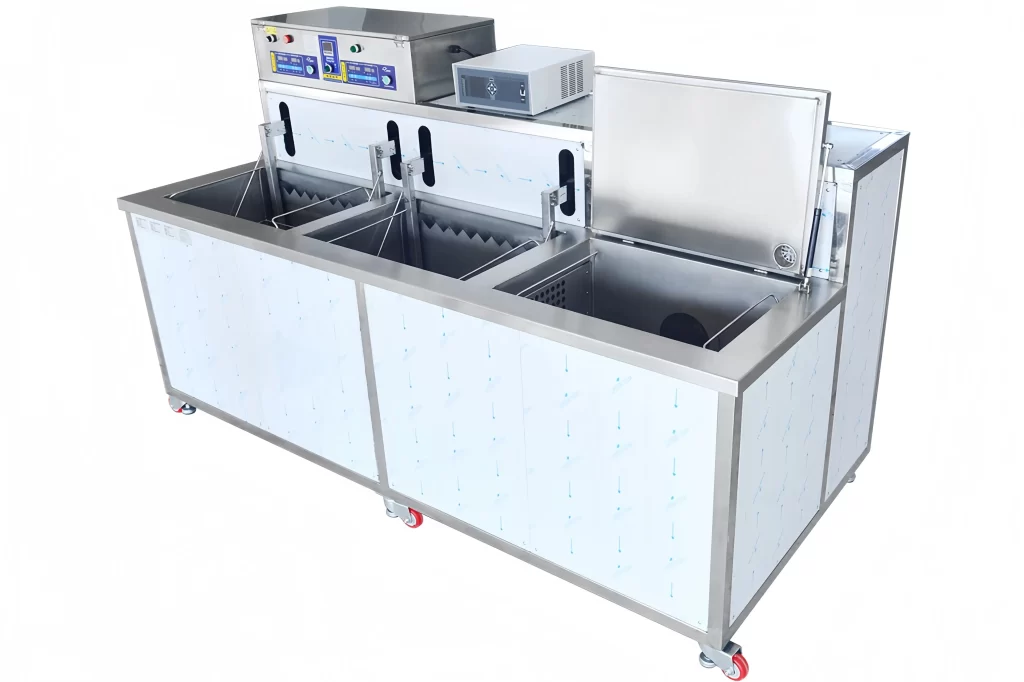
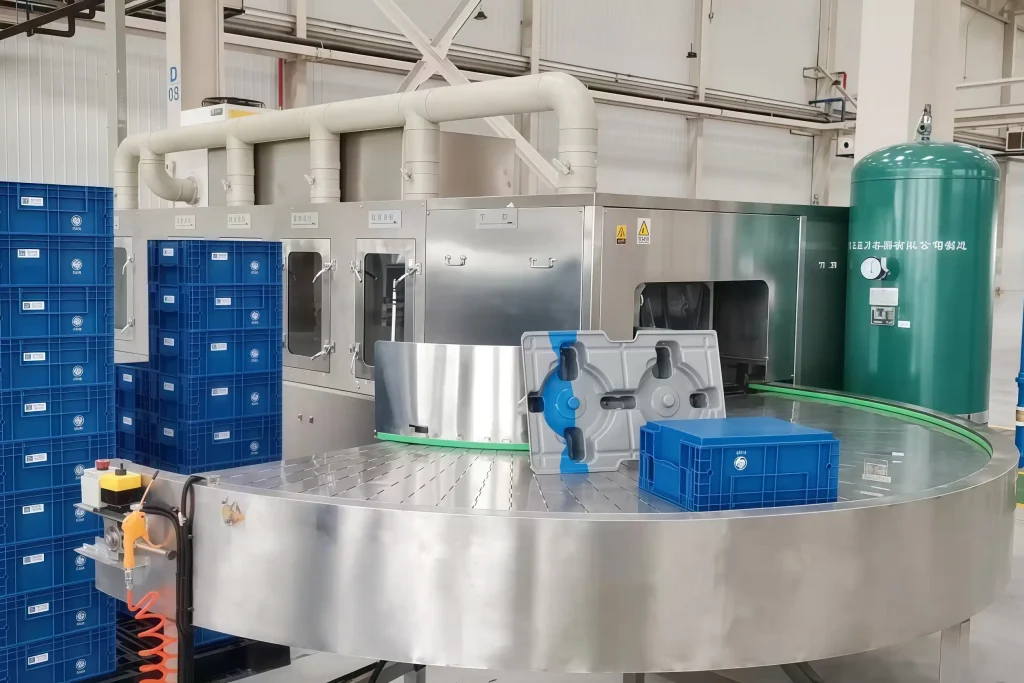
A pass-through ultrasonic cleaner is not simply a large ultrasonic tank with a conveyor running through it. The defining difference is that cleaning, rinsing, and drying happen in separate chambers or zones along a continuous flow path, and parts spend exactly the same programmed time in each zone without manual transfer. In contrast to multi-tank batch systems where an operator or robotic arm moves baskets from one tank to the next, a pass-through system uses an indexing or continuous belt conveyor to advance workpieces at a set speed through a sequence of ultrasonic wash, spray rinse, final rinse, and hot air or vacuum drying modules. This constant cadence makes it ideal for production lines where upstream machining or forming processes deliver a steady stream of dirty parts that cannot accumulate between operations.
The missing concept in most discussions of pass-through cleaning is that the cleaning envelope—the space where ultrasonic energy actually reaches the part surface—must be designed into the conveyor path, not treated as an afterthought. Because the conveyor moves, the distance a part travels through the active sonication zone directly sets the available cleaning time. If the ultrasonic transducers are mounted only on the tank bottom and the conveyor moves too fast, upper surfaces of tall parts may pass through with less cavitation exposure than lower surfaces. This is one of the first things I check on a proposal drawing: whether the transducer placement accounts for the part’s height profile and orientation as it moves through the fluid bath.
What Key Design Factors Drive Throughput and Part Orientation?
Throughput in a pass-through system is not just a function of conveyor speed. You have to balance speed against the required residence time inside the ultrasonic zone, the rinse spray coverage, and the drying module’s capacity. If a part needs 90 seconds of ultrasonic exposure to pass a cleanliness specification, and the active wash zone is 1.5 meters long, the maximum conveyor speed is 1 meter per minute. That math is straightforward, but what trips up new installations is the orientation—how parts are fixtured or loaded onto the conveyor—because orientation changes how much cleaning actually happens inside that 90-second window.
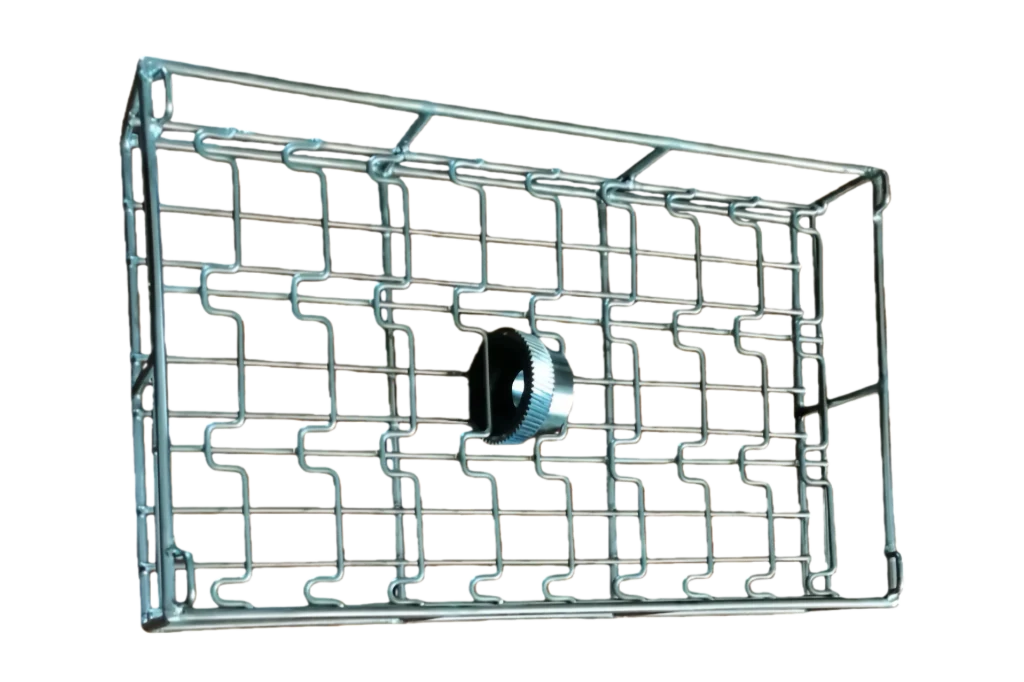
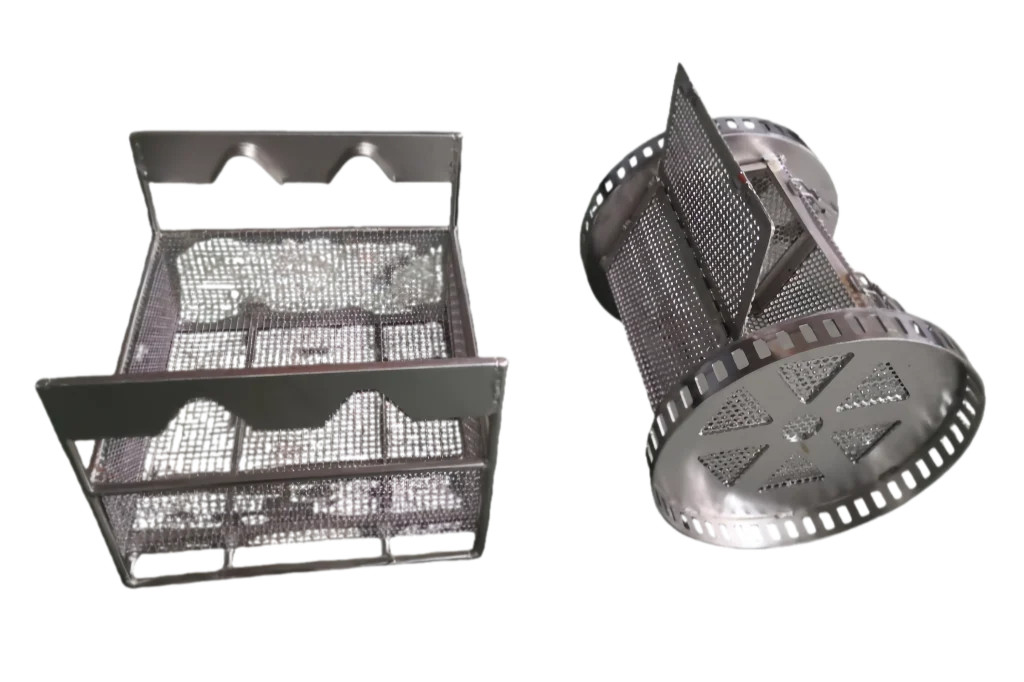
Parts with blind holes, deep recesses, or internal threads oriented upward will trap air and block cavitation unless the loading fixture tilts them or the conveyor includes a rotation mechanism. In some applications, we design the basket or fixture to rotate 360 degrees through the wash zone so that trapped air can escape and fresh sonication reaches every recess from multiple angles. This approach is standard in our rotary basket pass-through machines for complex machined components, and it doubles the effective cleaning time since no surface stays hidden for the full transit. Without that fixture engineering, you get the same 90-second pass but far less actual cleaning.
How Do You Integrate a Pass-Through Washer into an Existing Automated Line?
The hardest part of integration is usually not the cleaning hardware itself; it is aligning the conveyor speed, transfer points, and control signals with the upstream and downstream stations. When I walk the floor of a plant that is considering a pass-through upgrade, I look at three things first: the exit height and speed of the upstream conveyor, the space available for the washer’s load and unload zones, and the signals from the line’s PLC that can trigger washing start/stop or speed changes. Missing any of these details creates either a pile-up of parts at the washer entry or dry-running the machine because no parts arrive.
A common misstep is assuming the washer can run at its maximum rated speed as a standalone figure while ignoring that the line controller may slow down or stop for other reasons. If the washer conveyor is independent and only pulls parts when the line feeds them, the cleaning process must be able to pause and resume without leaving half-cleaned parts inside. I require that any pass-through system we supply for an existing line includes a buffer zone and a wash cycle pause function that retracts ultrasonic power and spray when no part is present, then restarts immediately when a part arrives. This avoids overheated transducers from sustained idle sonication and prevents chemical concentration swings.
If your program involves synchronizing with a proprietary line control protocol or handling parts with critical dimensional tolerances that shift during cleaning, it is worth confirming the control interface and the thermal compensation approach before finalizing your BOM. Reach out at [email protected] and we can walk through the signals your specific line controller provides and what the washer needs to respond to them correctly.
How to Select Cleaning Parameters for Continuous Flow?
Continuous-flow ultrasonic cleaning forces you to think in terms of exposure time per zone rather than the set-and-forget timer of a batch machine. The primary parameters are ultrasonic frequency and power density inside the wash tank, conveyor speed, cleaning solution temperature, and rinse pressure. I usually start with frequency: lower frequencies (20–28 kHz) produce larger cavitation bubbles and more aggressive mechanical cleaning for heavy oils and chips, while higher frequencies (40 kHz or 80 kHz) generate finer cavitation that reaches small crevices without surface erosion. For production lines cleaning mixed or precision parts, I often recommend a dual-frequency wash zone so the line can switch modes without retooling.
Temperature and conveyor speed interact because the cleaning chemistry needs enough heat to dissolve contaminants, but the part cannot stay submerged long enough if the line moves fast. In a pass-through system, increasing the wash tank temperature by 10°C can sometimes compensate for a 15% reduction in exposure time, but only if the chemistry is stable at that temperature and the rinse stage removes the heated detergent fully. I have seen lines where the drying section became the constraint: the conveyor had to slow down because parts emerged from the final rinse too cold for hot air drying to finish before the unload station. The fix was adding a pre-heat rinse so parts entered the dryer at a higher starting temperature.
How to Evaluate Reliability and Total Cost of Ownership?
Upfront equipment price is a poor predictor of what a pass-through ultrasonic system will cost over five years of continuous operation. The bigger cost drivers are energy consumption, cleaning solution life, maintenance labor, and unplanned downtime. Since these systems run for hours without stopping, even a small inefficiency—like a spray pump that cycles when no parts are present—adds up in power and chemical waste. I look first at the filtration and oil separation system because if the wash solution degrades quickly, you will dump and recharge more often, and each recharge means lost production and chemical disposal costs.
The following table compares two typical pass-through configurations and highlights how the key operating parameters influence long-term cost.
| Parámetro | Basic Pass-Through Washer | Advanced Inline Ultrasonic System |
|---|---|---|
| Frecuencia ultrasónica | Fixed 28 kHz | Dual 28/40 kHz, switchable |
| Conveyor Speed Range | 0.5–1.0 m/min | 0.3–1.5 m/min, variable |
| Filtration Level | 50 µm basket strainer | 10 µm bag filter + oil skimmer |
| Drying Method | Hot air only | Air knife + hot air / vacuum |
| Typical Solution Life | 2–3 weeks single shift | 4–6 weeks continuous |
| Interfaz de Control | Basic start/stop relay | cURL Too many subrequests by single Worker invocation. To configure this limit, refer to https://developers.cloudflare.com/workers/wrangler/configuration/#limits |
cURL Too many subrequests by single Worker invocation. To configure this limit, refer to https://developers.cloudflare.com/workers/wrangler/configuration/#limits
cURL Too many subrequests by single Worker invocation. To configure this limit, refer to https://developers.cloudflare.com/workers/wrangler/configuration/#limits
Common Questions About Pass-Through Ultrasonic Cleaning for Automated Lines
How is pass-through different from inline or tunnel cleaning?
cURL Too many subrequests by single Worker invocation. To configure this limit, refer to https://developers.cloudflare.com/workers/wrangler/configuration/#limits
Can the same pass-through system handle mixed part sizes?
cURL Too many subrequests by single Worker invocation. To configure this limit, refer to https://developers.cloudflare.com/workers/wrangler/configuration/#limits
What maintenance intervals should operators expect?
cURL Too many subrequests by single Worker invocation. To configure this limit, refer to https://developers.cloudflare.com/workers/wrangler/configuration/#limits
Is pass-through ultrasonic cleaning effective for heavy contaminants like stamping oils or scale?
cURL Too many subrequests by single Worker invocation. To configure this limit, refer to https://developers.cloudflare.com/workers/wrangler/configuration/#limits
Si estás interesado, consulta estos artículos relacionados:
¿Qué es el efecto piezoeléctrico?
Retorno de inversión en Sistemas de Limpieza Industrial: Calculando tu retorno de inversión
¿Cuál es la Mejor Máquina de Limpieza Pre-Coating para fábricas de recubrimiento PVD, DLC y CVD?
Soluciones de Limpieza de Moldes de Precisión
 Spanish
  English
  German
  French
  Russian
  Portuguese