

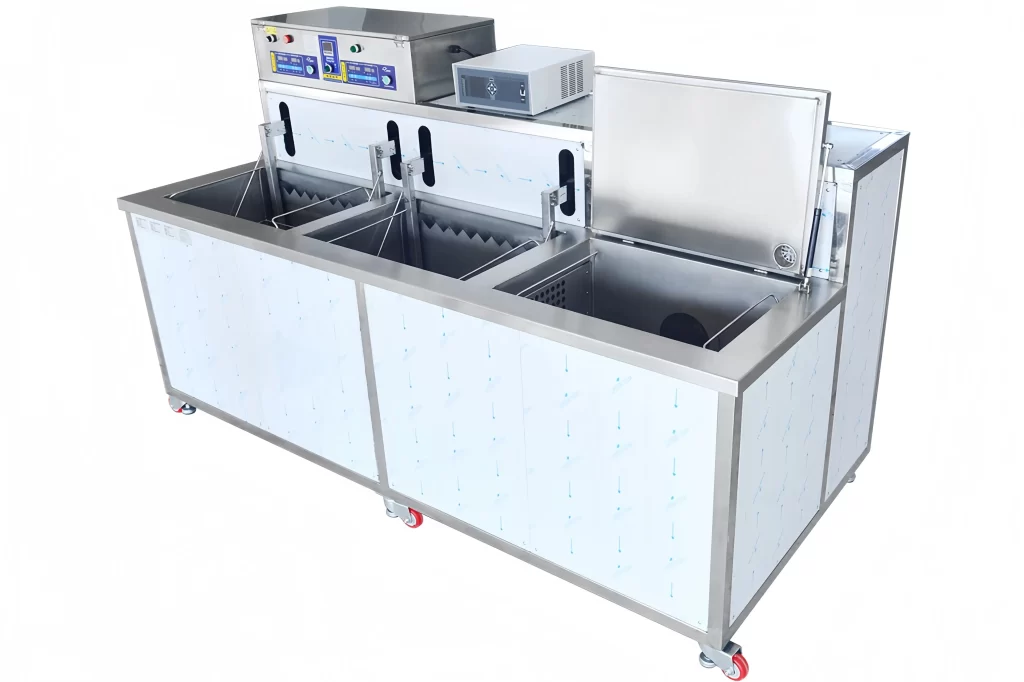
Choosing the right ultrasonic cleaning system for a manufacturing application involves more than matching power and tank size. The geometry of the parts and the specific contaminants they carry are the foundation of an effective selection. Most equipment catalogs start with machine specifications, but a better approach starts with the part itself. If the system cannot reach the surfaces that matter, it will not matter how powerful the transducer is. This guide explains how to analyze your parts and production demands to choose a configuration that delivers consistent cleanliness without excessive operating costs.
Part Geometry and Contamination Profile Analysis
A flat stamping with light oil patches requires a fundamentally different cleaning approach than a machined housing with blind tapped holes packed with metal chips. This is the first split in system selection, and it gets overlooked surprisingly often.
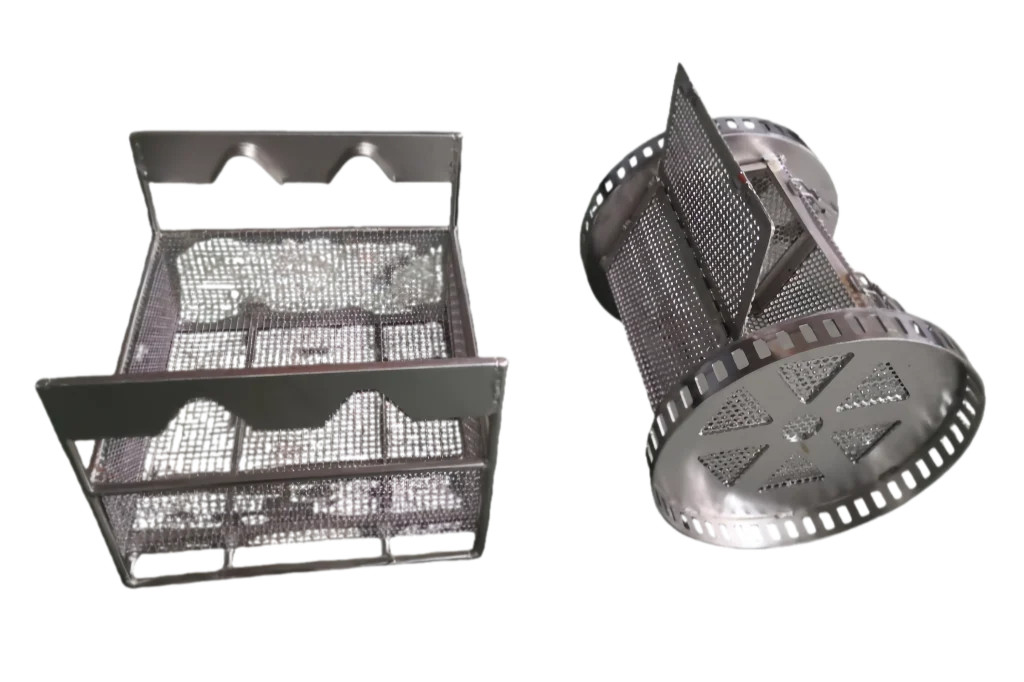
Parts with deep recesses, blind holes, or internal threads can hold contaminants where immersion alone fails to exchange fluid. Ultrasonic cavitation generates microscopic bubbles that collapse with enough energy to dislodge debris, but the cleaning solution must be able to reach those surfaces. If the part traps air pockets, the cavitation never touches the contamination. A rotary basket that turns the workpiece 360° during the ultrasonic cycle forces fluid into and out of every cavity. For flat or plate-type components, a stationary basket or simple immersion tank may be sufficient, though spray impingement often reduces cycle time for large surface areas.
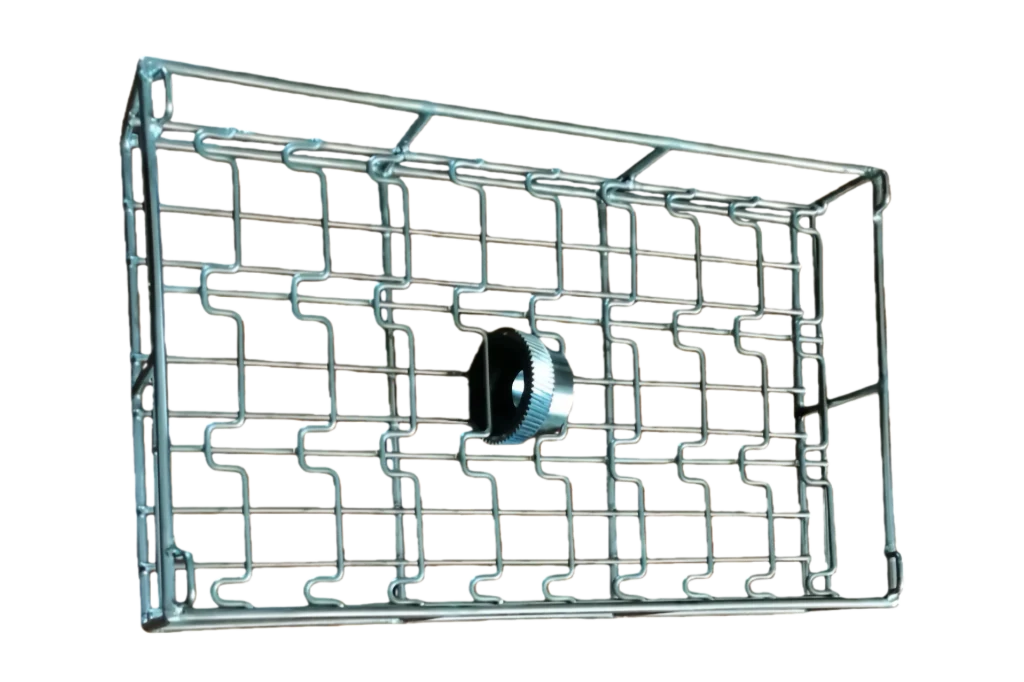
The table below maps common part characteristics to the system features that address them.
| Part Characteristic | Cleaning Challenge | Recommended System Feature |
|---|---|---|
| Blind holes, recesses | Fluid cannot reach all surfaces | Rotary basket or multi-direction spray |
| Heavy, large parts (up to 2000 kg) | Lifting, basket integrity | Reinforced heavy-duty baskets, robotic handling |
| Small fasteners in bulk | Even exposure, loss prevention | Tunnel cleaner with high-pressure spray and air knife |
| Plate-type parts with flat surfaces | Water spotting | Vacuum or hot air drying with air knife |
Cleaning Process Selection by Material and Contaminant
Once you understand the part geometry, the next decision is which cleaning medium and process sequence can remove the specific contaminant without damaging the substrate. Stamping oils, cutting fluids, quenching oils, release agents, and polishing compounds each have different solubility profiles. A hydrocarbon solvent dissolves heavy stamping oil at 40-60°C far more aggressively than a water-based detergent, but solvent systems require sealed, explosion-proof enclosures and recovery units to manage VOC emissions. An aqueous alkaline cleaner may be adequate for light cutting fluid on aluminum parts, provided the rinse stages are thorough enough to prevent residual alkalinity causing oxidation later.
Process complexity rises sharply when parts must meet pre-coating standards. A machined component heading for PVD coating cannot tolerate any residual hydrocarbon or even a thin film of rinse water spotting. Multi-stage cleaning that combines ultrasonic degreasing, multiple DI water rinses with ultrapure water (conductivity ≤ 0.06 μS/cm), and vacuum drying is often the minimum baseline. A single rinse stage or insufficient drying will show up as coating adhesion failures downstream.
Automation Level Assessment for Production Scale
The gap between a manual benchtop unit and a fully automated inline system is not just throughput. It is process repeatability, labor dependency, and the ability to trace cleaning cycles. A bench top unit may serve a toolroom cleaning prototypes or low-volume specialty parts, but shift-to-shift variability becomes a quality problem as volumes grow. Semi-automated multi-tank systems with manual basket transfer add consistency for medium-volume production while keeping capital cost down. For high-volume lines that cannot tolerate downtime, integrated inline cleaners with conveyor transport and PLC-controlled process programs remove the operator from the equation entirely.
The jump from batch to continuous cleaning usually doubles effective throughput and cuts cost per part by 30-50% once labor reduction is factored in, but it demands careful integration with existing material handling. A tunnel cleaner receiving parts directly from a stamping press eliminates intermediate handling and storage.
System Configuration Options for Specific Applications
Manufacturing environments tend to cluster into a few application families, and system configuration choices follow. The table below shows how GTKCLEAN applies different configurations to common industrial cleaning challenges.
| Part Type | cURL Too many subrequests by single Worker invocation. To configure this limit, refer to https://developers.cloudflare.com/workers/wrangler/configuration/#limits | cURL Too many subrequests by single Worker invocation. To configure this limit, refer to https://developers.cloudflare.com/workers/wrangler/configuration/#limits |
|---|---|---|
| cURL Too many subrequests by single Worker invocation. To configure this limit, refer to https://developers.cloudflare.com/workers/wrangler/configuration/#limits | cURL Too many subrequests by single Worker invocation. To configure this limit, refer to https://developers.cloudflare.com/workers/wrangler/configuration/#limits | cURL Too many subrequests by single Worker invocation. To configure this limit, refer to https://developers.cloudflare.com/workers/wrangler/configuration/#limits |
| cURL Too many subrequests by single Worker invocation. To configure this limit, refer to https://developers.cloudflare.com/workers/wrangler/configuration/#limits | cURL Too many subrequests by single Worker invocation. To configure this limit, refer to https://developers.cloudflare.com/workers/wrangler/configuration/#limits | cURL Too many subrequests by single Worker invocation. To configure this limit, refer to https://developers.cloudflare.com/workers/wrangler/configuration/#limits |
| cURL Too many subrequests by single Worker invocation. To configure this limit, refer to https://developers.cloudflare.com/workers/wrangler/configuration/#limits | cURL Too many subrequests by single Worker invocation. To configure this limit, refer to https://developers.cloudflare.com/workers/wrangler/configuration/#limits | cURL Too many subrequests by single Worker invocation. To configure this limit, refer to https://developers.cloudflare.com/workers/wrangler/configuration/#limits |
| cURL Too many subrequests by single Worker invocation. To configure this limit, refer to https://developers.cloudflare.com/workers/wrangler/configuration/#limits | cURL Too many subrequests by single Worker invocation. To configure this limit, refer to https://developers.cloudflare.com/workers/wrangler/configuration/#limits | cURL Too many subrequests by single Worker invocation. To configure this limit, refer to https://developers.cloudflare.com/workers/wrangler/configuration/#limits |
| cURL Too many subrequests by single Worker invocation. To configure this limit, refer to https://developers.cloudflare.com/workers/wrangler/configuration/#limits | cURL Too many subrequests by single Worker invocation. To configure this limit, refer to https://developers.cloudflare.com/workers/wrangler/configuration/#limits | cURL Too many subrequests by single Worker invocation. To configure this limit, refer to https://developers.cloudflare.com/workers/wrangler/configuration/#limits |
| cURL Too many subrequests by single Worker invocation. To configure this limit, refer to https://developers.cloudflare.com/workers/wrangler/configuration/#limits | cURL Too many subrequests by single Worker invocation. To configure this limit, refer to https://developers.cloudflare.com/workers/wrangler/configuration/#limits | cURL Too many subrequests by single Worker invocation. To configure this limit, refer to https://developers.cloudflare.com/workers/wrangler/configuration/#limits |
Cost Factors Beyond Initial Equipment Price
cURL Too many subrequests by single Worker invocation. To configure this limit, refer to https://developers.cloudflare.com/workers/wrangler/configuration/#limits
cURL Too many subrequests by single Worker invocation. To configure this limit, refer to https://developers.cloudflare.com/workers/wrangler/configuration/#limits
Getting a System Configuration That Fits Your Production
cURL Too many subrequests by single Worker invocation. To configure this limit, refer to https://developers.cloudflare.com/workers/wrangler/configuration/#limits
cURL Too many subrequests by single Worker invocation. To configure this limit, refer to https://developers.cloudflare.com/workers/wrangler/configuration/#limits
Common Questions About Ultrasonic Cleaning System Selection
How many ultrasonic stages do I need?
cURL Too many subrequests by single Worker invocation. To configure this limit, refer to https://developers.cloudflare.com/workers/wrangler/configuration/#limits
What ultrasonic frequency works best for metal parts with delicate features?
cURL Too many subrequests by single Worker invocation. To configure this limit, refer to https://developers.cloudflare.com/workers/wrangler/configuration/#limits
Can one system clean multiple part types?
cURL Too many subrequests by single Worker invocation. To configure this limit, refer to https://developers.cloudflare.com/workers/wrangler/configuration/#limits
How do I know if I need a solvent-based system?
cURL Too many subrequests by single Worker invocation. To configure this limit, refer to https://developers.cloudflare.com/workers/wrangler/configuration/#limits
What after-sales support should I expect from a system manufacturer?
cURL Too many subrequests by single Worker invocation. To configure this limit, refer to https://developers.cloudflare.com/workers/wrangler/configuration/#limits
Si vous êtes intéressé, consultez ces articles liés :
Réduire la consommation de solvants dans le nettoyage industriel : un guide
Systèmes de nettoyage ultrasonique pour pièces avant PVD (Revêtement)
Concevoir un processus de nettoyage industriel efficace à plusieurs étapes
 French
  English
  German
  Spanish
  Russian
  Portuguese