

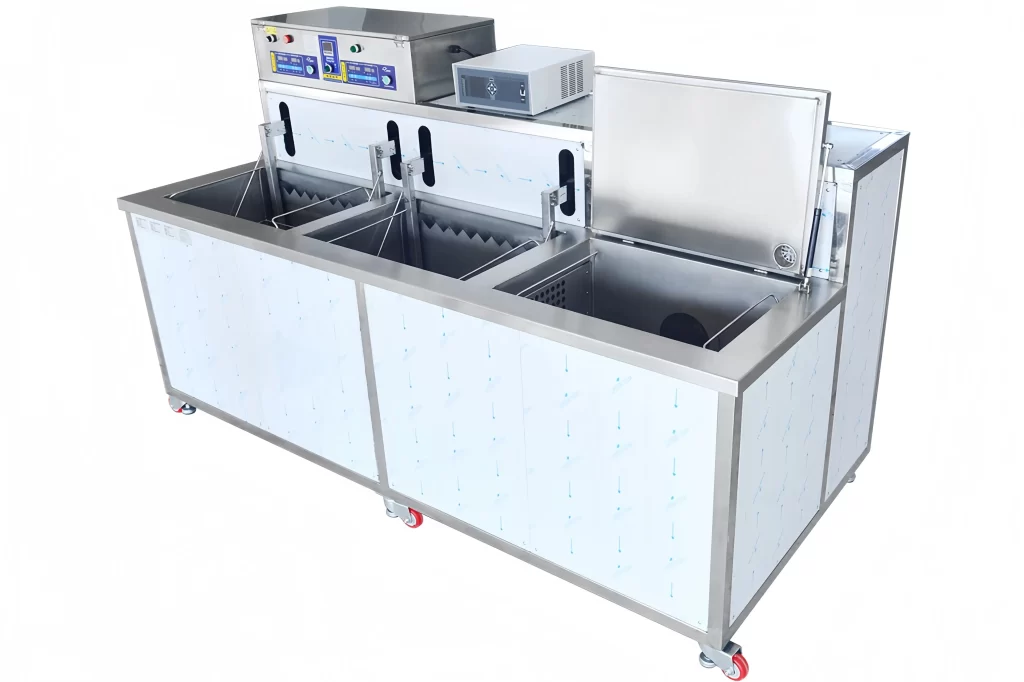
Choosing the right ultrasonic cleaning system for a manufacturing application involves more than matching power and tank size. The geometry of the parts and the specific contaminants they carry are the foundation of an effective selection. Most equipment catalogs start with machine specifications, but a better approach starts with the part itself. If the system cannot reach the surfaces that matter, it will not matter how powerful the transducer is. This guide explains how to analyze your parts and production demands to choose a configuration that delivers consistent cleanliness without excessive operating costs.
Part Geometry and Contamination Profile Analysis
A flat stamping with light oil patches requires a fundamentally different cleaning approach than a machined housing with blind tapped holes packed with metal chips. This is the first split in system selection, and it gets overlooked surprisingly often.
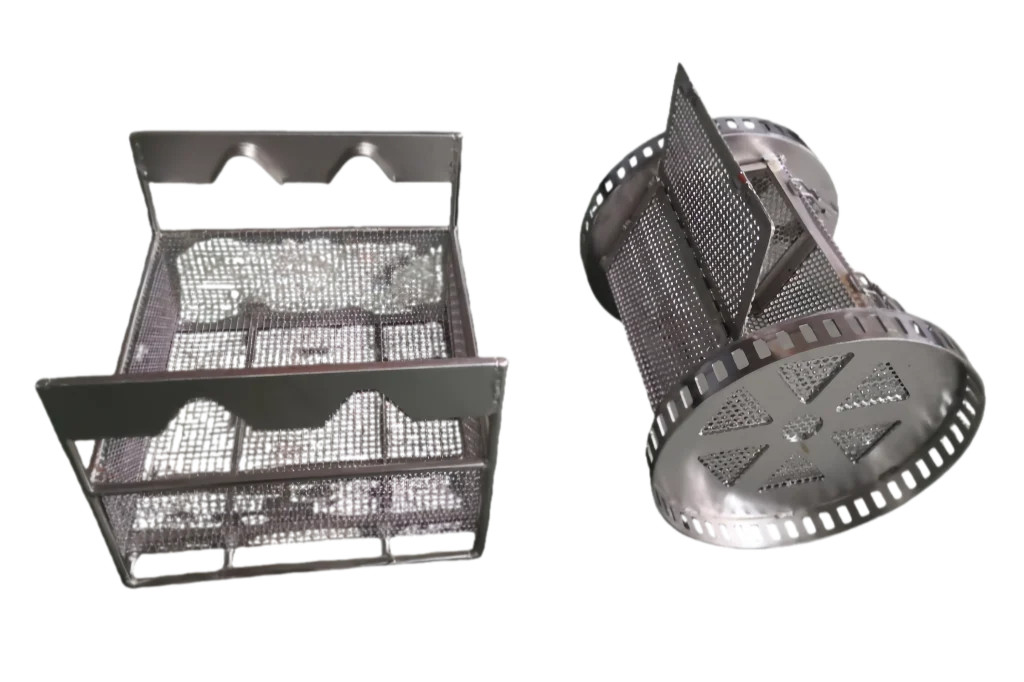
Parts with deep recesses, blind holes, or internal threads can hold contaminants where immersion alone fails to exchange fluid. Ultrasonic cavitation generates microscopic bubbles that collapse with enough energy to dislodge debris, but the cleaning solution must be able to reach those surfaces. If the part traps air pockets, the cavitation never touches the contamination. A rotary basket that turns the workpiece 360° during the ultrasonic cycle forces fluid into and out of every cavity. For flat or plate-type components, a stationary basket or simple immersion tank may be sufficient, though spray impingement often reduces cycle time for large surface areas.
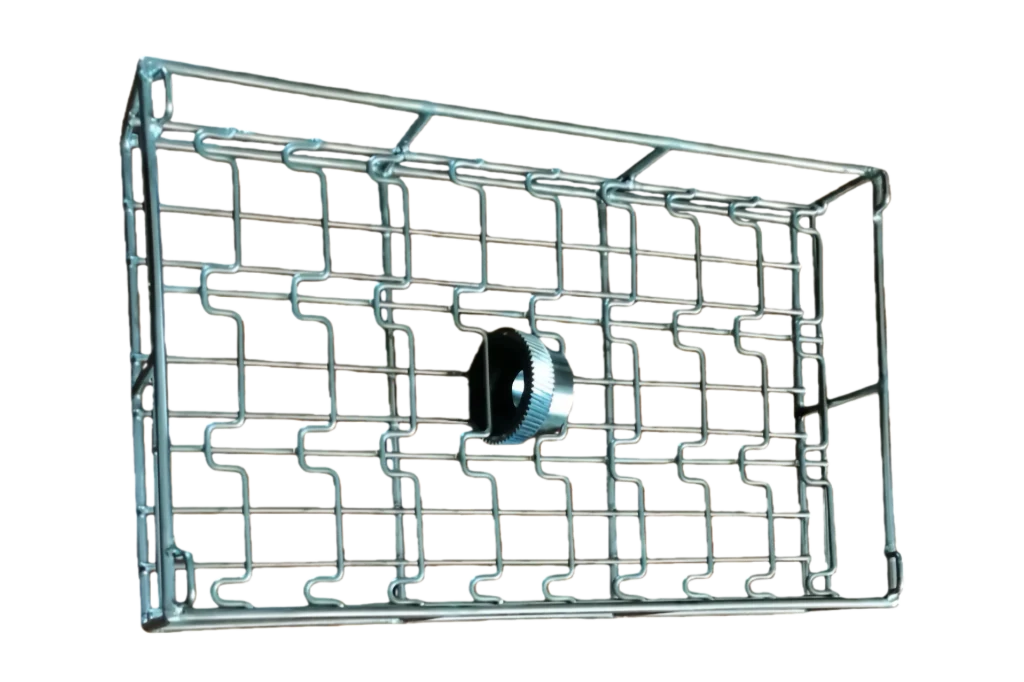
The table below maps common part characteristics to the system features that address them.
| Part Characteristic | Cleaning Challenge | Recommended System Feature |
|---|---|---|
| Blind holes, recesses | Fluid cannot reach all surfaces | Rotary basket or multi-direction spray |
| Heavy, large parts (up to 2000 kg) | Lifting, basket integrity | Reinforced heavy-duty baskets, robotic handling |
| Small fasteners in bulk | Even exposure, loss prevention | Tunnel cleaner with high-pressure spray and air knife |
| Plate-type parts with flat surfaces | Water spotting | Vacuum or hot air drying with air knife |
Cleaning Process Selection by Material and Contaminant
Once you understand the part geometry, the next decision is which cleaning medium and process sequence can remove the specific contaminant without damaging the substrate. Stamping oils, cutting fluids, quenching oils, release agents, and polishing compounds each have different solubility profiles. A hydrocarbon solvent dissolves heavy stamping oil at 40-60°C far more aggressively than a water-based detergent, but solvent systems require sealed, explosion-proof enclosures and recovery units to manage VOC emissions. An aqueous alkaline cleaner may be adequate for light cutting fluid on aluminum parts, provided the rinse stages are thorough enough to prevent residual alkalinity causing oxidation later.
Process complexity rises sharply when parts must meet pre-coating standards. A machined component heading for PVD coating cannot tolerate any residual hydrocarbon or even a thin film of rinse water spotting. Multi-stage cleaning that combines ultrasonic degreasing, multiple DI water rinses with ultrapure water (conductivity ≤ 0.06 μS/cm), and vacuum drying is often the minimum baseline. A single rinse stage or insufficient drying will show up as coating adhesion failures downstream.
Automation Level Assessment for Production Scale
The gap between a manual benchtop unit and a fully automated inline system is not just throughput. It is process repeatability, labor dependency, and the ability to trace cleaning cycles. A bench top unit may serve a toolroom cleaning prototypes or low-volume specialty parts, but shift-to-shift variability becomes a quality problem as volumes grow. Semi-automated multi-tank systems with manual basket transfer add consistency for medium-volume production while keeping capital cost down. For high-volume lines that cannot tolerate downtime, integrated inline cleaners with conveyor transport and PLC-controlled process programs remove the operator from the equation entirely.
The jump from batch to continuous cleaning usually doubles effective throughput and cuts cost per part by 30-50% once labor reduction is factored in, but it demands careful integration with existing material handling. A tunnel cleaner receiving parts directly from a stamping press eliminates intermediate handling and storage.
System Configuration Options for Specific Applications
Manufacturing environments tend to cluster into a few application families, and system configuration choices follow. The table below shows how GTKCLEAN applies different configurations to common industrial cleaning challenges.
| Part Type | Recommended Configuration | Key Attributes |
|---|---|---|
| CNC machined parts with blind holes | Rotary basket multi-tank cleaner | 360° rotation, ultrasonic degreasing, multiple rinse stages, vacuum or hot air drying |
| Stamping parts, oil and metal fines | Automated multi-stage cleaner | Ultrasonic degrease, tap/pure/DI water rinse, hot air or vacuum drying, filtration and circulation |
| Fasteners, screws, nuts | Tunnel cleaner | Continuous belt, spray wash, air-knife drying, oil-water separation, no cross-contamination |
| Large engine blocks, gearboxes | Heavy-duty automated cleaner | Load-bearing baskets up to 2000 kg, robotic transfer, high-load engineering, custom tank design |
| Pre-coating optical and metal parts | Multi-stage ultrapure water system | Ultrasonic clean, multi-stage DI rinse, hot air/vacuum drying, conductivity control |
| Die-cast aluminum shells | Inline conveyor cleaner | Spray degrease, DI rinse, air-knife and hot air drying, heat recovery, continuous throughput |
Cost Factors Beyond Initial Equipment Price
The purchase price of the cleaning machine is only part of the total cost. Solvent-based systems carry an ongoing cost for virgin solvent and recovery distillation energy. One installation with a hydrocarbon solvent recovery unit dropped monthly solvent consumption from several hundred liters to under 200 L per month after adding vacuum distillation. Water-based systems shift cost to water treatment, filtration consumables, and detergent replenishment. High-pressure pumps, hot air blowers, and ultrasonic generators also draw significant electrical load, and the energy bill can exceed the amortized capital cost if drying cycles are not optimized for the actual part mass and surface moisture load.
Custom baskets and fixturing designed to hold parts securely through agitation and drying add upfront engineering cost but pay back through reduced damage and rework. A poorly designed basket that allows parts to shift during the ultrasonic cycle can cause micro-scratches on precision surfaces, negating the benefit of cleaning. Basket material selection (stainless steel for water-based, PP or PTFE for acid or aggressive solvent environments) also affects longevity and contamination risk.
Getting a System Configuration That Fits Your Production
A cleaning system is a process machine, not a commodity. When standard tank sizes and cycle times leave a gap between what the catalog offers and what the production line actually needs, the result is either re-clean loops or wasted capacity. Both eat into margin.
If your application involves part geometries that trap fluid, tight cleanliness specs that demand validated rinse protocols, or throughput targets that push the limits of batch handling, it is worth working with an engineering team that designs around those constraints rather than fitting your process to an existing machine. We have built systems that combine rotary basket movement with vacuum drying specifically for parts with deep blind holes, and inline tunnel cleaners that integrate oil-water separation for continuous fastener processing. Send your part drawings and production targets to [email protected] or call +86 17768507147 to discuss an application-specific configuration.
Common Questions About Ultrasonic Cleaning System Selection
How many ultrasonic stages do I need?
The number of stages depends on the contamination load and the required final cleanliness. A simple removal of light cutting fluid from turned parts may need only a single ultrasonic degrease and a rinse. Parts destined for painting or coating often require two ultrasonic stages (rough and fine), followed by two or more rinse stages, because any residual detergent or surfactant left on the surface will interfere with adhesion. Pre-coating processes for PVD or optical coatings frequently demand four or more liquid stages, plus a drying stage that meets the surface energy specification of the coating line. Adding stages increases cycle time and floor space but reduces the risk of batch rejection.
What ultrasonic frequency works best for metal parts with delicate features?
Most production cleaning for steel, aluminum, and cast iron uses 20 kHz to 40 kHz. The lower frequencies produce larger cavitation bubbles and more aggressive cleaning, making them effective for breaking heavy oil and chip accumulations. Frequencies of 60 kHz to 80 kHz are gentler and better suited to polished surfaces, optical components, or thin-walled parts that could be damaged by violent cavitation. If the batch contains both robust and delicate elements, multi-frequency generators that sweep across a range are an option, but they require careful power density calibration to avoid dead zones.
Can one system clean multiple part types?
Yes, but the basket tooling and process recipes become the controlling factor. A multi-tank system with a programmable hoist can store different cycle times, temperatures, and basket movements for each part family. The limitation is usually basket compatibility. If part A requires a rotary basket for blind holes and part B is a heavy casting that needs a reinforced static basket, the same transport system must handle both. Designing a universal basket frame with interchangeable inserts is a common approach, though it increases upfront tooling cost. We typically recommend that manufacturers group parts by geometry and contamination type when planning for a shared system.
How do I know if I need a solvent-based system?
Choose solvent when the contaminant is heavy hydrocarbon (stamping oil, wax, grease) that water-based detergents cannot emulsify quickly, or when the part material is water-sensitive (some powdered metal parts, certain alloys prone to corrosion). Solvent systems require sealed construction, gas monitoring, and vapor recovery to meet safety and environmental regulations, so the infrastructure cost is higher. However, solvents such as hydrocarbon or modified alcohol evaporate completely and leave no residue, which is critical for parts going into high-vacuum environments or cleanrooms. If residue-free drying is the primary requirement, a solvent vacuum dryer may be the more reliable route.
What after-sales support should I expect from a system manufacturer?
Installation and commissioning that includes on-site tuning of ultrasonic power, conveyor speed, and drying parameters to your actual parts is non-negotiable. After that, remote program upgrade capability, spare parts availability for transducers and pumps, and a technician who can walk your maintenance team through fault diagnostics over a video call make the difference between a system that runs for a decade and one that becomes a downtime bottleneck. Before ordering, ask whether the supplier stocks critical spare parts in your region and whether they can provide remote software support. If your production lines span multiple countries, verify that the supplier has service coverage in each location. Share your requirements at [email protected] and we can confirm what support and spare parts availability look like for your geography.
If you're interested, check out these related articles:
Reduce Solvent Consumption in Industrial Cleaning: A Guide
Ultrasonic Cleaning systems for Pre PVD (Coating) Parts
Design an Efficient Multi-Stage Industrial Cleaning Process
 English
  German
  Spanish
  French
  Russian
  Portuguese