
Getting parts truly clean in industrial settings rarely comes down to a single wash. The contamination profiles on machined components, stamped parts, or coated surfaces are too varied for one-shot approaches. A multi-stage cleaning process breaks the job into distinct steps, each handling a specific type of residue or achieving a particular cleanliness threshold. This sequenced method has become standard practice where surface preparation directly affects coating adhesion, assembly fit, or product reliability. The logic is straightforward: bulk oils need different treatment than microscopic particulates, and rinse water quality matters as much as the cleaning agent itself.
Why Single-Stage Cleaning Falls Short for Complex Contamination
Multi-stage cleaning works because contamination rarely comes in one form. A CNC-machined aluminum housing might carry cutting fluid residue, metal fines, fingerprint oils, and airborne dust simultaneously. Attempting to remove all of these with a single cleaning step forces compromises. Either the cleaning agent is too aggressive for delicate substrates, or it lacks the specificity to address each contaminant type effectively.
Industrial cleaning principles start with contamination mapping. Oils and greases behave differently than particulates. Organic residues respond to different chemistries than inorganic scale. A multi-stage cleaning process allows each stage to target what it does best. Pre-cleaning handles the bulk removal. Main cleaning addresses stubborn residues. Rinsing eliminates both loosened debris and cleaning agent traces. Drying prepares surfaces for whatever comes next.
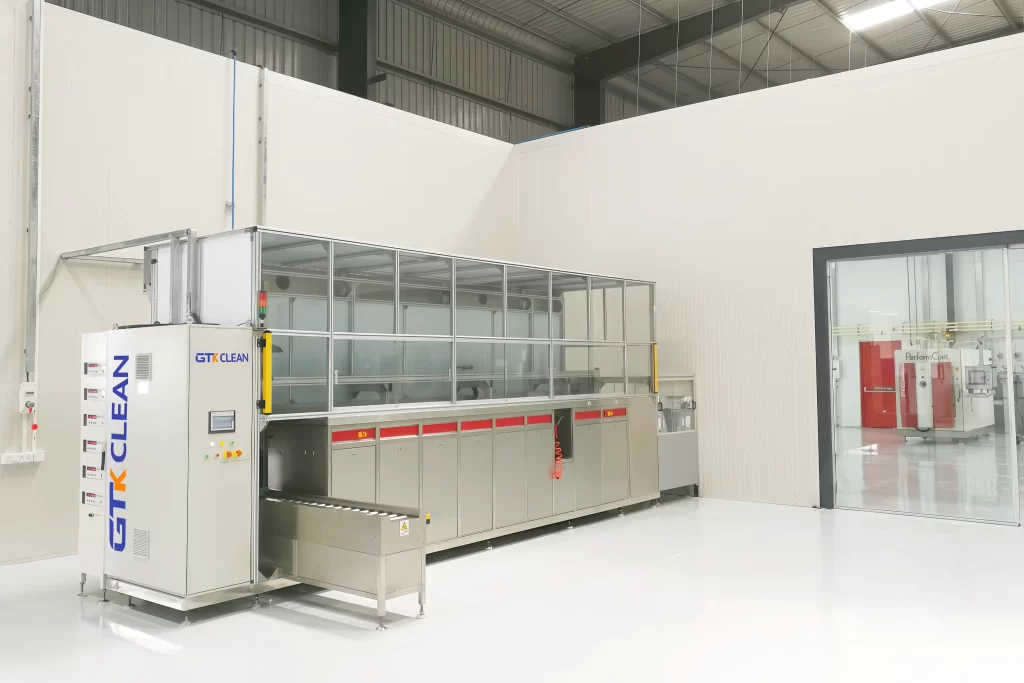
Pre PVD (Coating) Parts Ultrasonic Cleaners demonstrate this sequenced approach: hydrojet spray for initial debris removal, ultrasonic cleaning for embedded contaminants, multi-stage ultrapure water rinsing, and controlled drying. The result is conductivity levels at or below 0.06 μS/cm, which prevents water spots and secondary contamination that would compromise coating adhesion.
Part geometry complicates matters further. Deep holes, blind cavities, and complex internal passages trap contaminants that surface-only cleaning misses. A multi-stage cleaning process can incorporate different agitation methods at each step, ensuring that even hidden surfaces receive adequate treatment.
Process flow design considers material compatibility alongside cleanliness targets. Aluminum reacts differently than stainless steel to alkaline cleaners. Plastic components may absorb certain solvents. The staging allows for chemistry changes between steps, matching each cleaning agent to both the contaminant and the substrate.
Matching Cleaning Technologies to Contamination Types
Technology selection determines whether a multi-stage cleaning process achieves its targets or falls short. GTKCLEAN draws on over 20 years of R&D work and 28 technical patents to integrate ultrasonic, solvent, and conveyor systems into cohesive cleaning lines. Each technology has distinct strengths.
Ultrasonic cleaning systems generate high-frequency sound waves that create cavitation bubbles in the cleaning fluid. When these bubbles collapse near surfaces, they produce localized pressure spikes that dislodge contaminants. This mechanism reaches into blind holes, threads, and complex geometries where spray cleaning cannot penetrate effectively. Ultrasonic Cleaners for CNC Machined Parts use automated multi-stage sequences: high-pressure spray, ultrasonic degreasing, RO water rinse, DI water rinse, and hot air or vacuum drying. This combination removes cutting fluids, chips, and burrs from precision components.
Solvent cleaning systems excel at dissolving oils, greases, and organic residues. Hydrocarbon solvents offer strong degreasing capability with relatively low toxicity compared to chlorinated alternatives. Multi-Tank Hydrocarbon Ultrasonic Cleaners incorporate rotary baskets that provide 360-degree exposure for stamped parts with recessed features and blind holes. Operating temperatures between 40°C and 60°C optimize solvent activity without excessive evaporation losses.
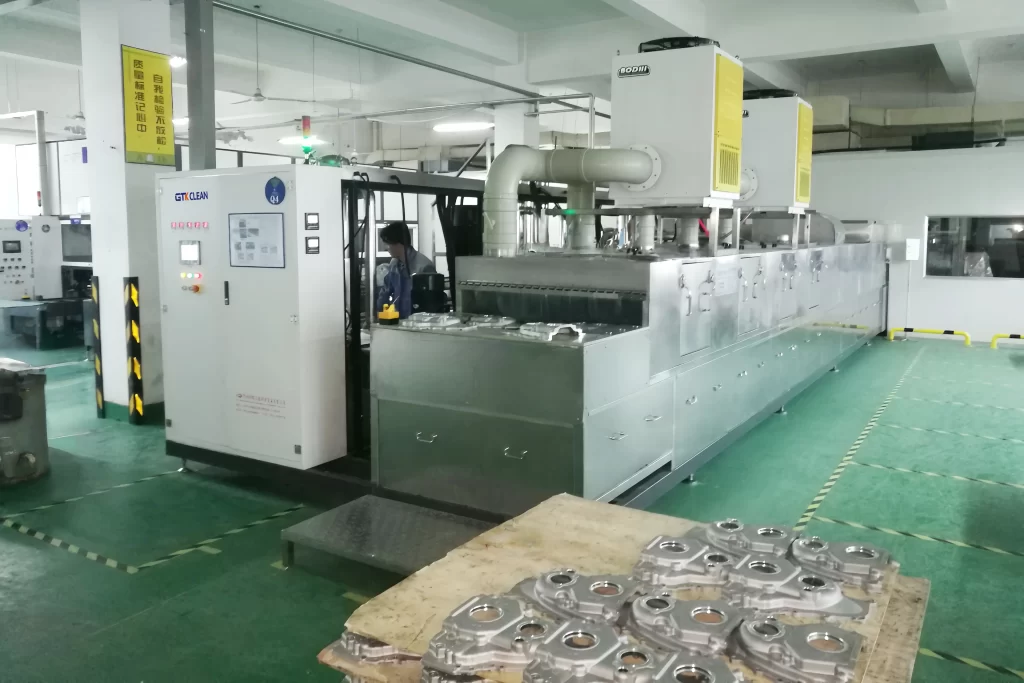
Aqueous cleaning solutions use water-based formulations containing detergents and surfactants. These systems are environmentally preferable in many applications and handle a broad range of contaminants when properly formulated. Conveyor belt cleaning systems move parts continuously through spray degreasing, rinsing, and drying stages. CNC Aluminum Shell Inline Cleaners transport die-cast housings through multi-directional spray zones, eliminating dead angles that manual cleaning often misses.
Precision cleaning equipment serves industries where contamination tolerances are measured in micrograms per square centimeter. Electronics assembly, medical device manufacturing, and optical component production all require this level of cleanliness. Degreasing method selection depends on both the contaminant chemistry and the substrate sensitivity. Cleaning agent selection must balance efficacy against material compatibility risks.
Cleaning Agent Selection for Each Stage
Cleaning chemistry choices cascade through the entire multi-stage cleaning process. Detergent formulations, surfactant types, and corrosion inhibitors must match both the substrate material and the target contaminant. Alkaline detergents work well against oils and greases because they saponify fatty acids and emulsify petroleum-based residues. Acidic agents remove rust, scale, and mineral deposits through dissolution reactions.
Material compatibility testing prevents costly damage. Aluminum alloys can pit or discolor in strongly alkaline solutions. Copper-bearing alloys may tarnish in certain acidic environments. Industrial Cleaning Detergents formulated for specific applications reduce these risks while maintaining cleaning effectiveness. Proper agent selection at each stage of a multi-stage cleaning process enhances overall performance and protects component integrity.
Process Parameter Optimization for Throughput and Quality
Process parameters determine whether a multi-stage cleaning process meets production demands without sacrificing cleanliness. GTKCLEAN designs automated cleaning equipment that addresses evolving requirements through precise control of cycle time, temperature, agitation, and filtration.
Cleaning cycle time directly affects throughput capacity. Shorter cycles increase production rates but may leave residues behind. Longer cycles improve cleanliness but reduce output. Finding the optimal balance requires understanding how quickly specific contaminants release under given conditions. Temperature control influences this relationship significantly. Elevated temperatures increase cleaning agent activity and improve contaminant solubility, often allowing shorter cycle times without compromising results.
Agitation methods vary in their effectiveness for different part geometries. Ultrasonic cavitation reaches into features that spray pressure cannot access. Spray systems cover large surface areas quickly but may miss internal passages. Rotation or oscillation ensures all surfaces receive exposure. The multi-stage cleaning process can employ different agitation methods at each step, matching the technique to the cleaning objective.
Filtration systems extend cleaning solution life and maintain consistent fluid quality throughout production runs. Ultrasonic Cleaners For Stamping Parts incorporate filtration and circulation systems that remove suspended particles and prevent recontamination. This reduces waste and lowers operating costs over time.
Drying techniques complete the multi-stage cleaning process. Air knives remove bulk water quickly. Hot air drying evaporates residual moisture. Vacuum drying is particularly effective for parts with blind holes or complex internal features where trapped water would otherwise remain. The choice depends on part geometry, throughput requirements, and downstream process sensitivity.
Automation through Siemens or Mitsubishi PLC control ensures consistent parameter execution across production shifts. Remote upgrade capability for process programs allows adjustments without physical access to equipment, supporting continuous improvement efforts.
Process Validation and Cleaning Efficiency
Process validation establishes documented evidence that a multi-stage cleaning process reliably achieves predetermined cleanliness standards. This documentation is essential for quality control systems and regulatory compliance, particularly in aerospace, medical device, and electronics manufacturing.
Validation protocols define performance metrics, identify critical parameters, and specify monitoring methods. Key parameters might include cleaning solution concentration, temperature, cycle time, and rinse water conductivity. Verification involves testing cleaned parts against cleanliness specifications using methods appropriate to the contamination type. GTKCLEAN automated systems support validation through precise parameter control and data logging that creates traceable records for each production batch.
Water Treatment Integration for Environmental Compliance
Water treatment systems have become integral to sustainable multi-stage cleaning process design. Environmental regulations increasingly restrict wastewater discharge quality, and water costs continue rising in many regions. GTKCLEAN addresses both concerns through integrated treatment solutions.
Reverse osmosis and deionized water systems produce the high-purity rinse water that prevents water spots and secondary contamination. Pre PVD (Coating) Parts Ultrasonic Cleaners incorporate ultrapure water systems achieving conductivity at or below 0.06 μS/cm. This level of purity is necessary for surfaces that will receive thin-film coatings where even trace mineral deposits can cause adhesion failures.
Effluent management involves treating wastewater to meet discharge standards before release. Filtration removes suspended solids. Chemical treatment may neutralize pH or precipitate dissolved metals. Biological treatment can address organic contamination in some applications. The specific treatment train depends on the cleaning chemistry used and local regulatory requirements.
Waste reduction strategies focus on extending cleaning fluid life through circulation and filtration. Ultrasonic Cleaners for CNC Machined Parts incorporate these features to reduce both chemical consumption and disposal costs. Longer fluid life means fewer changeouts and less waste generation.
Hydrocarbon solvent ultrasonic vacuum cleaners include built-in vapor condensation and vacuum distillation for solvent recovery and recycling. This closed-loop approach significantly reduces solvent consumption and minimizes emissions.
Resource efficiency extends beyond water and chemicals to energy consumption. Optimized process design minimizes heating requirements and reduces compressed air usage. These improvements contribute to lower operating costs and reduced environmental impact from the multi-stage cleaning process.
Implementation Examples from GTKCLEAN Projects
GTKCLEAN has implemented multi-stage cleaning process solutions across diverse industrial applications. These projects demonstrate how sequenced cleaning addresses specific contamination challenges while meeting production requirements.
Precision parts cleaning for CNC-machined components requires removing cutting fluids, metal fines, and burrs from complex geometries. Ultrasonic Cleaners for CNC Machined Parts use automated multi-stage sequences that achieve consistent cleanliness across production volumes. The combination of spray pre-cleaning, ultrasonic degreasing, and staged rinsing addresses the varied contamination profile typical of machined parts.
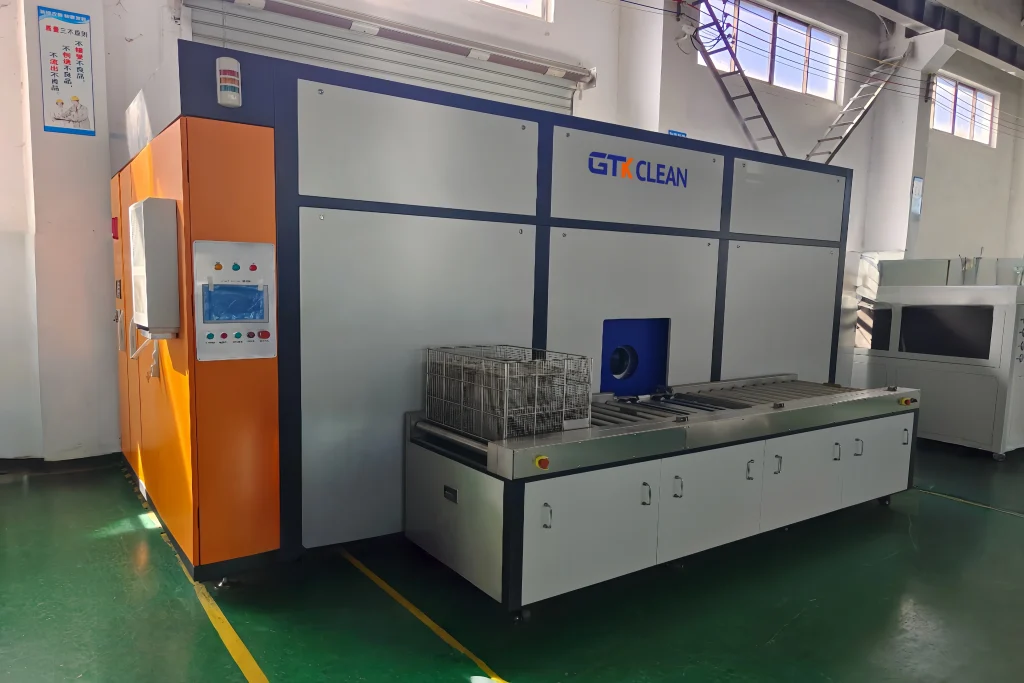
Automotive component cleaning often involves heavy parts with complex internal features. Rotary Basket Ultrasonic Cleaners handle components weighing up to 2000 kg while providing 360-degree rotary cleaning that reaches blind holes and recessed surfaces. The rotation prevents scratches from part-to-basket contact and ensures complete exposure to cleaning action.
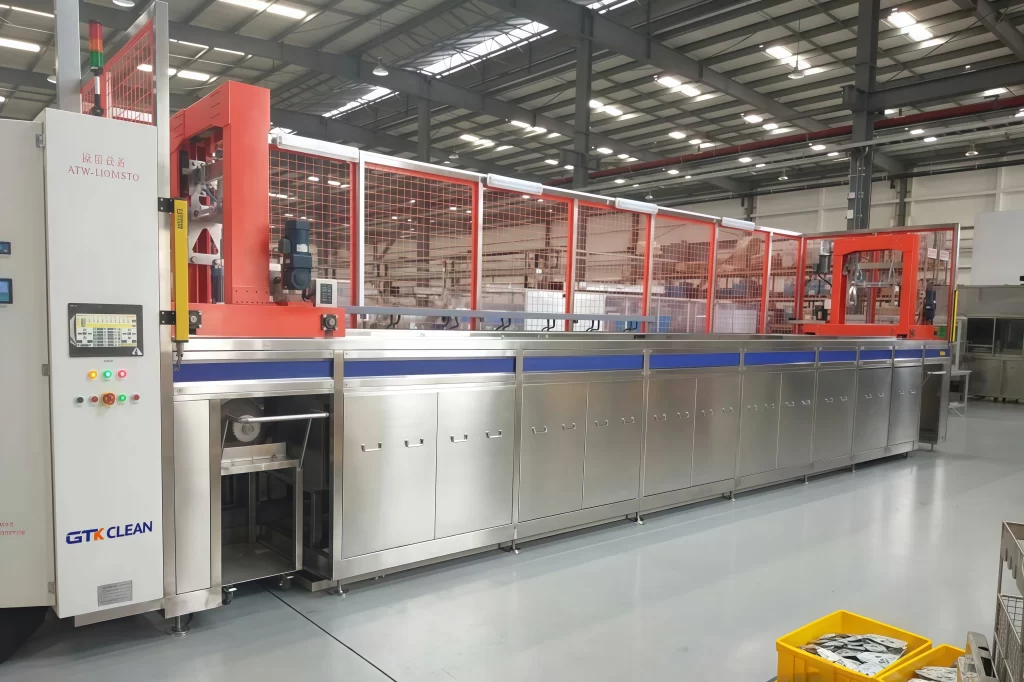
High-volume fastener cleaning demonstrates multi-stage cleaning process scalability. Fastener Tunnel Cleaners continuously remove drawing oil, cutting fluids, and metal powders at rates exceeding 2 tons per hour. Integrated oil-water separation achieves greater than 98% oil removal, recovering valuable lubricant while reducing waste treatment burden.
Pre-PVD coating applications demand the highest cleanliness levels. Specialized ultrasonic cleaners prepare parts through ultrapure water rinsing and precise drying that eliminates moisture from complex features. Any contamination remaining on surfaces can cause coating defects that compromise both appearance and functional performance.
Automation and Smart Systems in Industrial Cleaning
Industrial cleaning technology continues advancing toward greater automation and intelligence. These developments reflect both labor cost pressures and increasing cleanliness requirements that exceed what manual processes can reliably achieve. GTKCLEAN R&D efforts focus on these emerging capabilities.
Cleaning automation reduces human intervention through robotic handling, automated transfer between stages, and PLC-controlled process execution. Heavy-Duty Automated Ultrasonic Cleaners incorporate robotic lifting systems that handle large components safely and consistently. This automation ensures that every part receives identical treatment regardless of operator variation.
Smart cleaning systems add sensors, data analytics, and adaptive control to automated platforms. Real-time monitoring tracks cleaning solution condition, temperature stability, and process timing. Predictive maintenance algorithms identify equipment issues before they cause unplanned downtime. Adaptive process adjustments respond to changing contamination levels or part characteristics.
Industry 4.0 principles emphasize data exchange and system interconnection. Multi-stage cleaning process equipment can integrate with manufacturing execution systems, providing traceability data and receiving production scheduling information. This connectivity supports just-in-time manufacturing and quality management system requirements.
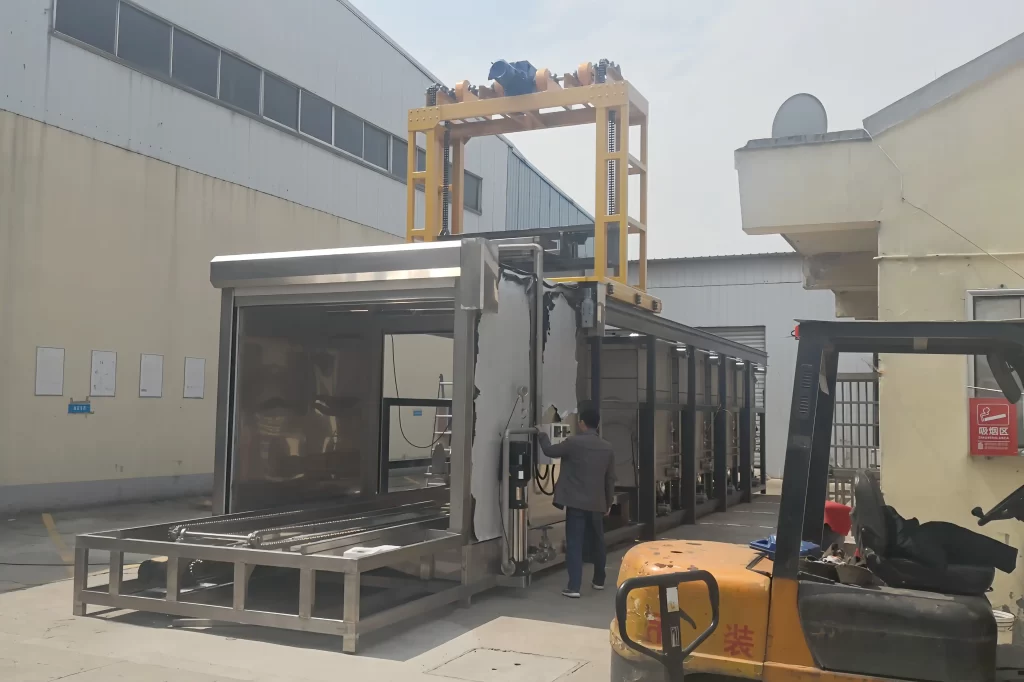
Predictive maintenance capabilities analyze equipment performance data to forecast component wear and schedule maintenance during planned downtime. This proactive approach reduces unexpected failures and extends equipment service life. The combination of automation and intelligence in multi-stage cleaning process systems delivers higher reliability with lower operating costs.
Partner with GTKCLEAN for Your Cleaning Challenges
Designing an efficient multi-stage cleaning process requires both technical knowledge and practical experience. Suzhou Grintek Environmental Technology Co.,Ltd. brings over 20 years of R&D development and 28 technical patents to client projects. Our engineering team has delivered solutions for organizations ranging from small enterprises to Fortune 500 corporations.
Contact us to discuss your specific industrial cleaning requirements. Our custom-engineered ultrasonic, solvent, and water treatment systems address contamination challenges across manufacturing sectors. Reach GTKCLEAN at [email protected] or +86 17768507147 for consultation on your multi-stage cleaning process needs.
Frequently Asked Questions About Multi-Stage Industrial Cleaning
What makes multi-stage cleaning process design difficult in practice?
The main difficulties involve balancing competing requirements. Cleaning agent selection must address the contaminant without damaging the substrate. Process parameters like temperature and cycle time affect both cleanliness and throughput. Waste stream management adds environmental compliance constraints. Automation integration requires careful sequencing between stages. GTKCLEAN addresses these challenges through application-specific engineering and offers Custom Ultrasonic Cleaners tailored to particular contamination profiles and production requirements.
How does multi-stage cleaning affect product reliability?
Each stage in a multi-stage cleaning process targets specific contaminants or achieves particular cleanliness thresholds. This thoroughness prevents residues from interfering with subsequent manufacturing steps. Clean surfaces accept coatings better, bond more reliably, and resist corrosion longer. In electronics, medical devices, and precision mechanical assemblies, contamination-related failures often trace back to inadequate cleaning. Proper multi-stage cleaning reduces these defect modes and extends product service life.
What water treatment considerations apply to multi-stage cleaning?
Water treatment serves two purposes in multi-stage cleaning process systems. Incoming water treatment produces the purity levels needed for effective rinsing, particularly in precision applications where mineral deposits cause problems. Outgoing water treatment addresses environmental discharge requirements and may enable water recycling. GTKCLEAN integrates both aspects into cleaning system designs, helping clients meet regulatory standards while reducing water consumption and operating costs.
Can existing cleaning equipment be converted to multi-stage operation?
Many single-stage cleaning systems can be expanded or modified for multi-stage operation. This might involve adding pre-cleaning stations, incorporating additional rinse stages, or integrating different cleaning technologies. The feasibility depends on available floor space, utility connections, and production flow requirements. GTKCLEAN evaluates existing installations and designs upgrade solutions that integrate with current equipment while adding the capabilities needed for improved cleanliness performance.
What advantages does automation bring to multi-stage industrial cleaning?
Automation in a multi-stage cleaning process delivers consistent results by eliminating operator variation. Every part receives identical treatment regardless of shift or personnel changes. Throughput increases because automated handling moves parts between stages without delays. Labor costs decrease while safety improves by reducing manual contact with cleaning chemicals. Process control becomes more precise, supporting validation requirements and quality system documentation. GTKCLEAN automated cleaning equipment incorporates these benefits while maintaining flexibility for different part types and cleanliness specifications.
 English
  German
  Spanish
  French
  Russian
  Portuguese