

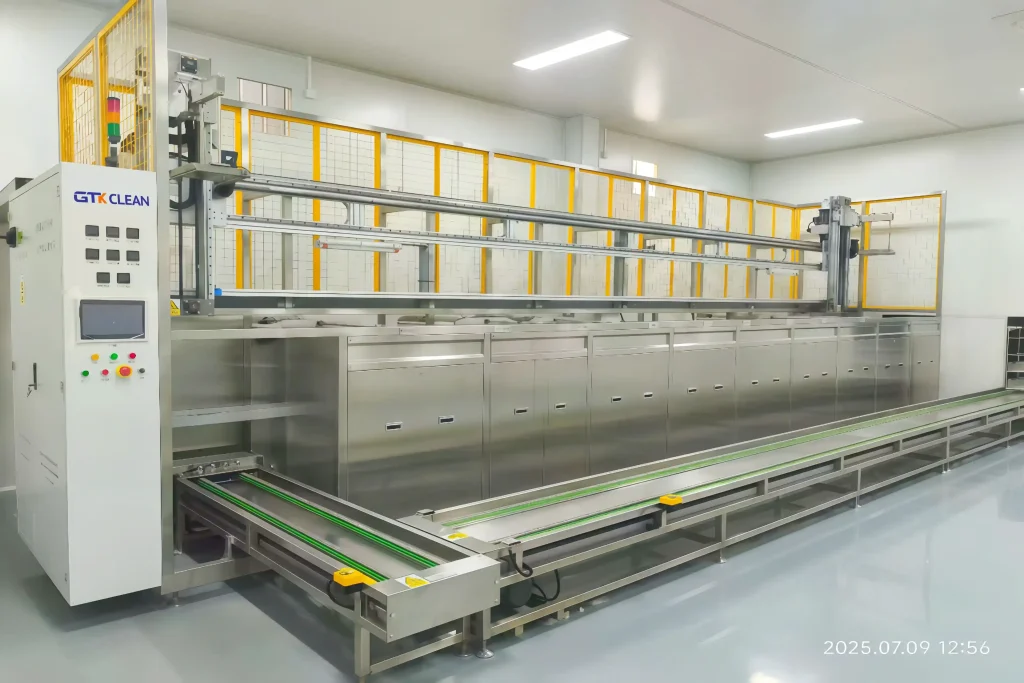
The cleanliness of workpieces prior to vacuum coating directly dictates coating adhesion, film uniformity, and the overall quality of finished products. Even trace residues of oil, dust, or oxide layers can give rise to coating defects.
GTK’s R&D team has dedicated itself to in-depth research on this critical pre-coating process, securing a portfolio of patents. To date, over 300 vacuum coating enterprises have adopted our ultrasonic cleaning machine series for coating components—covering a wide range of industrial parts including electronic components, optical devices, precision hardware, and semiconductor modules.
From custom design and precision manufacturing, to on-site commissioning and operator training post-delivery, and extending to long-term after-sales maintenance, we deliver a seamless, end-to-end service that is rooted in customer trust.
What are PVD Coating Treatments ?
PVD coating (short for Physical Vapor Deposition) is a process for applying a thin, durable film onto surfaces like metal, plastic, or glass. It takes place inside a vacuum chamber: a solid material is vaporized (using heat, plasma, or sputtering) into atoms or molecules. This vapor then condenses onto the surface of an substrate, forming a thin layer that is tough, scratch-resistant, and often provides an attractive, sleek finish to enhance surface properties like hardness, wear resistance, corrosion resistance, electrical conductivity, optical properties, or aesthetics.
What are the Main PVD Processing Methods Used in Industrial Applications?
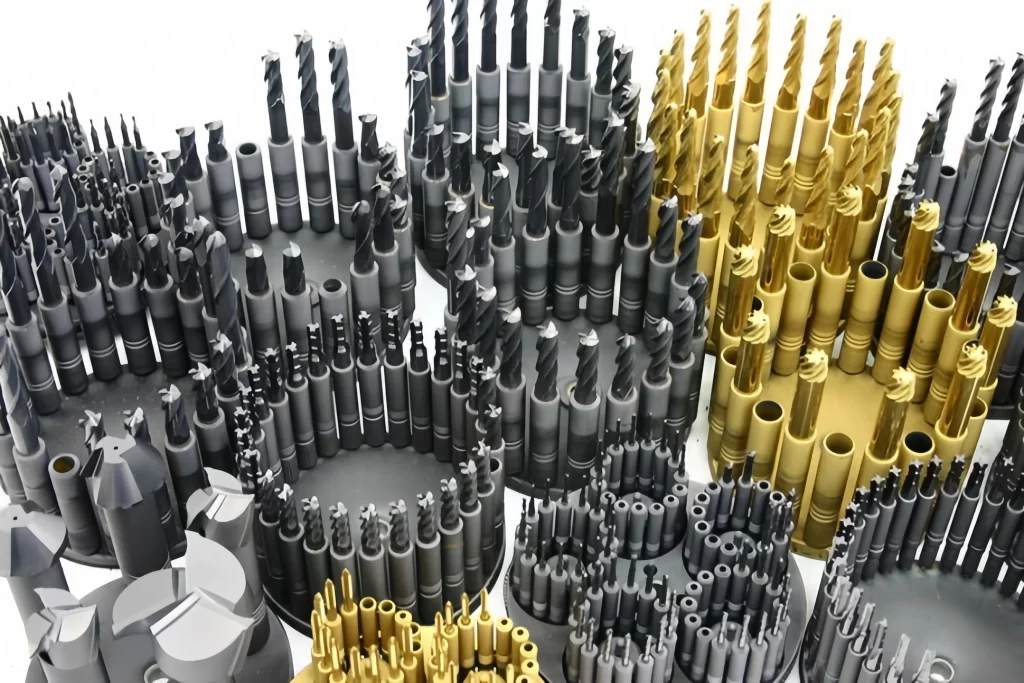
PVD coating is mainly divided into three categories: vacuum evaporation coating, sputtering coating, and ion plating coating.
- Vacuum Evaporation Deposition
Vacuum evaporation is one of the earliest and simplest PVD techniques. Through thermal evaporation, where the metal is vaporized on the surface by direct heating, then vaporized atoms/molecules condense onto the substrate surface, forming a thin film.
- Sputter Deposition
Sputter deposition is the most widely used industrial PVD method, valued for its versatility and superior film quality. The technique involves ionized gas (typically argon) bombarding a target material, ejecting atoms or molecules that are then deposited onto the substrate surface to form a highly homogeneous, dense, and adherent coating.
- Ion Plating
Ion plating combines vacuum evaporation and sputtering, by which the material is deposited by ion bombardment, improving adhesion and density.It is widely used for high-performance coatings requiring superior adhesion and density.
Why is Cleaning Necessary Prior to PVD Coating ?
- PVD coating technology is extensively applied in various industrial sectors, covering decorative, functional, and optical coatings.
- Different workpiece materials and the adoption of various processing technologies result in varying surface properties.
- In addition, workpieces come in diverse shapes, and some have numerous complex deep holes and blind holes on their inner surfaces. These various types of workpieces must undergo an environmentally friendly pretreatment process to ensure that all holes, narrow channels, and inner surfaces are kept clean.
- Only when workpieces reach a certain level of cleanliness can the success of PVD coating be guaranteed.
- If workpieces are inadequately cleaned during pre-coating pretreatment, mass production will lead to coating failure and scrap parts, thereby causing high economical risk and possible financial losses
To ensure effective adhesion and proper development of the coating properties, it’s crucial to start with a perfectly clean surface.
General workpieces include various metals (such as various types of steel, electroplated brass, die castings, etc.) and multiple injection molds.
Common contaminants on workpieces that require cleaning include:
- Residual oils and greases from the manufacturing process or anti-corrosion films
- Various manufacturing residues, such as polishes and abrasives
- Residues and substances generated during subsequent processing procedures, such as chromic acid from electroplating or hard water stains from rinsing processes
- Contaminants introduced during handling, transportation, and storage, such as fingerprints, oxide films, or dust
Six Factors or Parameters Influence the Cleaning Technology and Process:
- Appropriate and effective cleaning detergents: alkaline or neutral agents are generally used; For oxidation-sensitive workpieces, incorporate a certain proportion of water-based rust inhibitor that does not affect surface adhesion.
- Cleaning approach: ultrasonic cleaning of the workpiece surface is achieved via the cavitation effect of ultrasound. Simultaneously, the vertical up-and-down agitation of components generates friction with water, further enhancing cleaning efficiency;
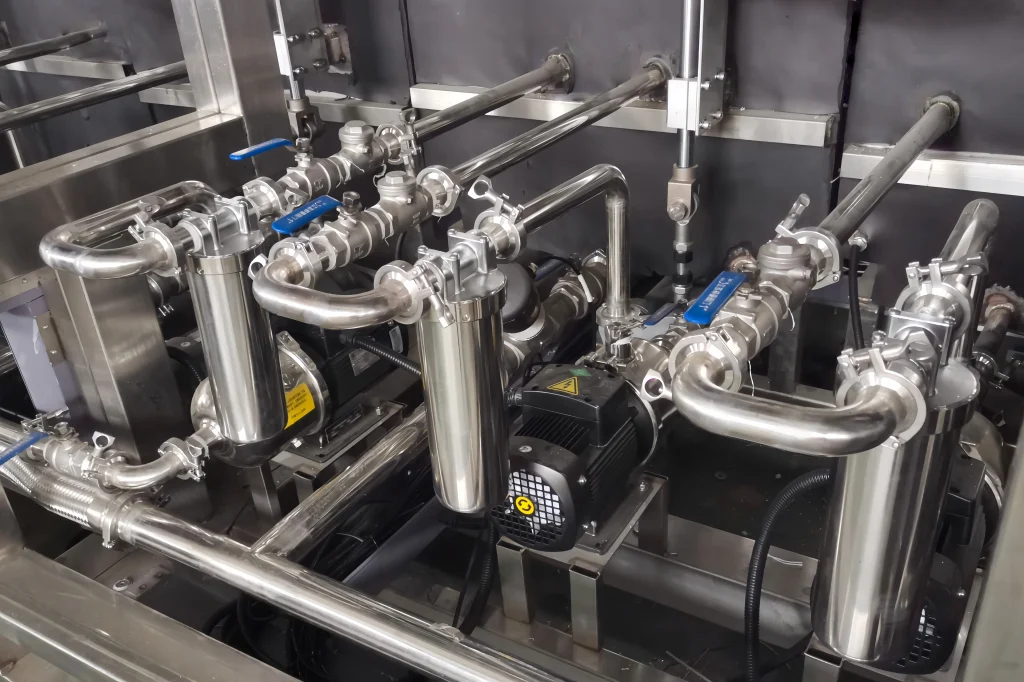
- Filtration system: the ultrasonic degreasing tank is equipped with a circulation filtration system, comprising a reservoir tank, a water pump, and a filter. Working principle: Liquid in the reservoir tank is pumped out by the water pump, filtered to remove particulate impurities, and then re-injected into the ultrasonic degreasing tank—improving the cleaning performance of the degreasing tank and extending the service life of the cleaning fluid;
- Appropriate cleaning temperature (to maintain the activity of the cleaning detergent, the recommended operating temperature is 45-65 °C;the recommended rinsing water temperature is around 30-40 °C);
- Cleaning cycle time: Depending on different process types and contaminants, and while ensuring cleaning quality, the time for each cleaning tank is adjusted accordingly, generally 5-6 minutes;
- Water quality cleanliness: The effectiveness of cleaning depends on the quality of the cleaning water. Generally, a cleaning water conductivity of 0.05-0.15 μS/cm ensures no water stains remain on the surface of metal workpieces; For cleaning optical glass: requires conductivity below 0.06 μS/cm. Therefore, it is preferable to exclusively use DI water for the entire cleaning system.
Pre-coating cleaning is a multistage process, involving alternating cleaning and rinsing steps, plus at least one drying procedure. The applicable process technology and sequence depend heavily on the substrate material, the part’s shape and dimensions, and the type and degree of contamination.
Why is DI Water Essential ?
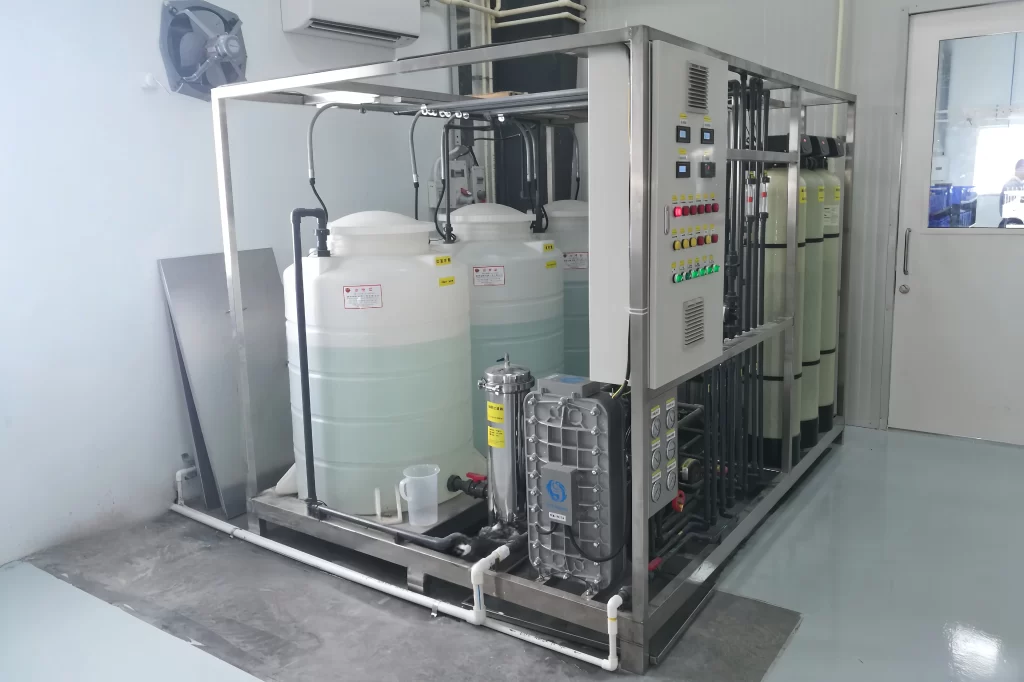
It is recommended to use DI water for the entire cleaning process. The ions present in tap water may chemically react with the cleaning detergents, reducing its activity, shortening its service life, and compromising cleaning performance—ultimately increasing cleaning costs. For this reason, all pre-coating cleaning systems are equipped with DI water equipment.
This DI water equipment can also be used for cooling water applications in the coating process. If tap water is used as cooling water, scale deposits are prone to accumulate in the pipelines, which impairs cooling efficiency and increases the energy consumption of the cooling system. DI water provides a simple solution to these common issues, making it an indispensable piece of equipment in the coating industry.
Features & Advantage of Ultrasonic Cleaners for Pre-PVD Coating Parts
- The cleaning process comprises multiple stations: hydrojet spray cleaning, ultrasonic cleaning, pure water rinsing, compressed air drying, hot air drying, or vacuum drying, ensuring the cleanliness of workpieces after cleaning;
- Equipped with an ultrapure water system, it ensures optimal cleaning performance for both ultrasonic cleaning and rinsing.
- Adopts designs such as countercurrent rinsing and water circulation filtration to minimize the consumption of pure water and cleaning detergents;
- Adopts Siemens or Mitsubishi PLC control systems and Schneider low-voltage electrical components, etc., to ensure the reliability of equipment operation;
- Incorporates a SIEMENS or MITSUBISHI color touchscreen human-machine interface (HMI) to ensure simple, reliable operation.
- Siemens or Mitsubishi brand color touch screen, easy to operate
- Once the parameters of cleaning time, temperature, and ultrasonic power are optimized for the best cleaning performance, the constancy of these parameters ensures consistently optimal cleaning results without further adjustments.
Custom machine layout planning assistance is available based on the client’s workshop layout;
The system is equipped with comprehensive alarm and protection functions, capable of automatic diagnosis of common faults for easy maintenance.
The cleaning process design can be specifically tailored to your product dimensions and production capacity requirements. If you have any special detailed needs, please contact us, and we will provide you with a customized design plan free of charge.
 English
  German
  Spanish
  French
  Russian
  Portuguese