

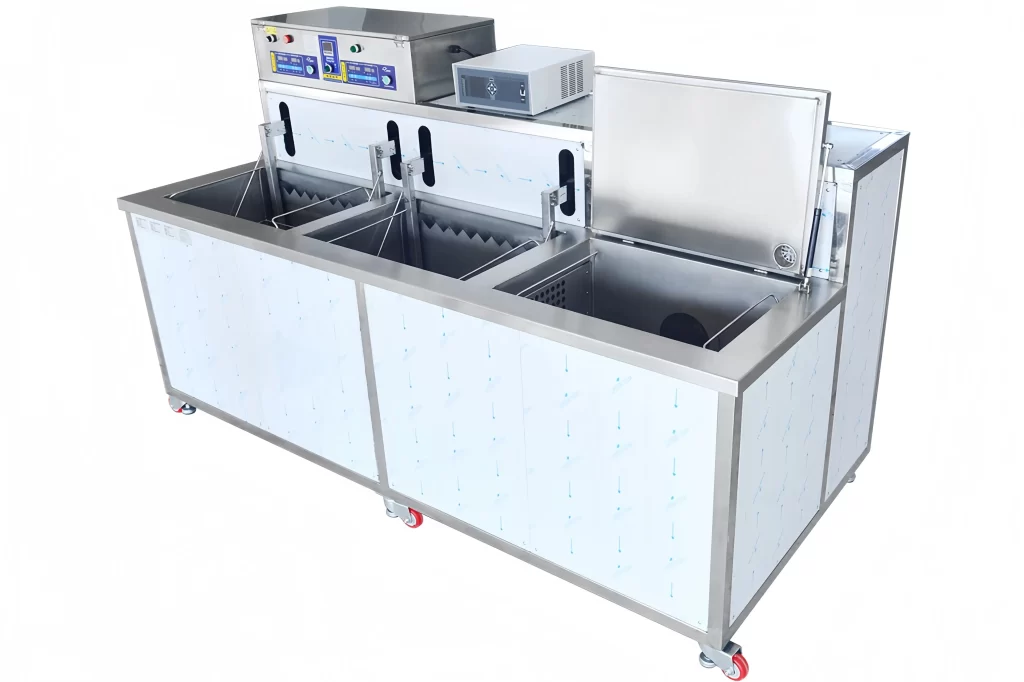
For operators of diesel-powered generators, marine engines, or heavy trucks, a decline in SCR catalyst activity is never just an instrumentation reading. It means higher NOx emissions, possible non-compliance penalties, and expensive unscheduled downtime. SCR catalyst ultrasonic cleaning systems use controlled cavitation and multi-stage rinsing to remove the soot, ash, and sulfate deposits that choke catalyst channels and poison active sites. When designed correctly, these systems restore NOx conversion efficiency to near-new levels without attacking the underlying titanium dioxide or vanadium-based washcoat. I’ve spent more than two decades designing industrial ultrasonic cleaning equipment, and the single most common path to failure I’ve observed is not insufficient cleaning—it’s cleaning that erodes the catalyst substrate because someone skipped the engineering fundamentals.
How Ultrasonic Cleaning Restores SCR Catalyst Performance
SCR catalysts degrade primarily through physical blockage and chemical poisoning. Exhaust flows through thousands of narrow square channels in a ceramic monolith, and over time, carbonaceous soot, lube oil ash, and ammonium sulfate/bisulfate compounds accumulate on and within the porous washcoat. These deposits block active sites and restrict exhaust flow, increasing backpressure and reducing NOx conversion.
Ultrasonic cleaning addresses this by generating cavitation bubbles in a liquid cleaning medium. When an ultrasonic transducer emits high-frequency sound waves (typically 20–80 kHz), it creates alternating compression and rarefaction cycles in the liquid. During the rarefaction phase, microscopic vapor cavities form and subsequently collapse violently during compression. The collapse produces localized temperatures above 5000°C and pressures exceeding 1000 atmospheres, creating micro-jets that scrub the catalyst surface. In SCR honeycomb structures, these implosions dislodge particulate matter and dissolve soluble contaminants without mechanical abrasion.
The key here is that cavitation works at a microscopic scale, reaching into the catalyst pores where soot and sulfates accumulate. Unlike manual brushing or high-pressure spray, ultrasonic energy penetrates the entire channel length, cleaning the inner walls uniformly. The process does not rely on direct contact; it’s the liquid itself that does the work.
What Components Typically Fail During SCR Operation?
The degradation is not uniform. The front face of the catalyst sees the highest particulate loading, while the rear sections suffer more from ammonium sulfate crystallization because temperatures are lower. In marine applications using high-sulfur fuels, sulfate poisoning can be rapid, sometimes reducing activity by 20–30% within 2,000 operating hours.
How Cavitation Removes Deposits Without Abrasion
The cavitation bubble collapse is confined to the liquid boundary layer; the solid substrate receives only the micro-jet impulse, not direct mechanical impact. This is why ultrasonic cleaning can be used repeatedly without measurable substrate mass loss—provided the frequency and power density are appropriately matched to the catalyst coating hardness.
Designing an Ultrasonic Cleaning System for SCR Catalysts
The cleaning system must be engineered around the catalyst module’s dimensions, material, and fouling type. Off-the-shelf benchtop units are not designed for the mass and channel geometry of a full-size SCR catalyst, and attempting to use them will result in uneven cleaning and likely damage.
Tank and Transducer Configuration
For large SCR catalysts—some weighing over 100 kg—we use rectangular tanks with stainless steel construction (SUS304 or 316) and multiple transducer arrays bonded to the tank bottom and sides. The transducer placement is critical to create a uniform sound field across the entire catalyst face. We typically bond 28 kHz or 40 kHz piezoelectric transducers in a staggered pattern to avoid standing waves and hot spots. For catalysts with delicate coatings, we lower the frequency to 40 kHz, which produces gentler cavitation with smaller bubble implosion energy. For robust metal-substrate catalysts, 28 kHz offers more aggressive cleaning.
Processus de nettoyage multi-étapes
An effective SCR catalyst cleaning system is not a single tank. It requires a process train that includes:
1. Pre-wash: removal of loose soot and ash using filtered water.
2. Ultrasonic degreasing: high-efficiency detergent solution at 45–60°C, with ultrasonic irradiation for 5–10 minutes per section.
3. RO water rinsing: multiple rinses with reverse-osmosis water to eliminate detergent and dissolved contaminants.
cURL Too many subrequests by single Worker invocation. To configure this limit, refer to https://developers.cloudflare.com/workers/wrangler/configuration/#limits
cURL Too many subrequests by single Worker invocation. To configure this limit, refer to https://developers.cloudflare.com/workers/wrangler/configuration/#limits
cURL Too many subrequests by single Worker invocation. To configure this limit, refer to https://developers.cloudflare.com/workers/wrangler/configuration/#limits
Water Treatment and Rinsing Systems
cURL Too many subrequests by single Worker invocation. To configure this limit, refer to https://developers.cloudflare.com/workers/wrangler/configuration/#limits
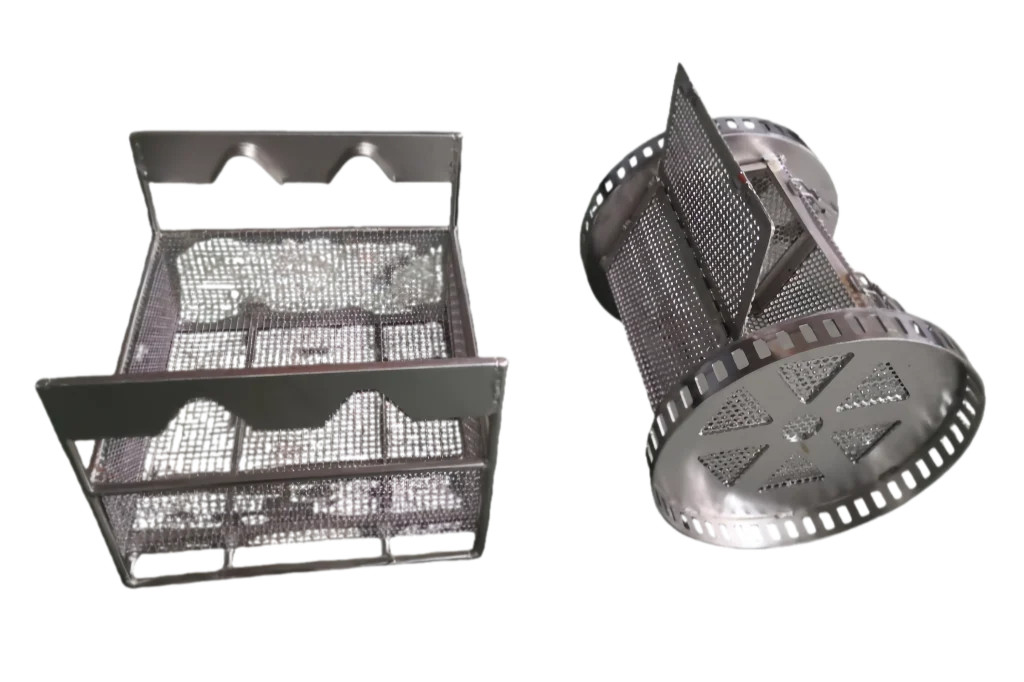
Critical Parameters for Effective SCR Catalyst Cleaning
cURL Too many subrequests by single Worker invocation. To configure this limit, refer to https://developers.cloudflare.com/workers/wrangler/configuration/#limits
Choosing the Right Frequency
| Fréquence | Type | cURL Too many subrequests by single Worker invocation. To configure this limit, refer to https://developers.cloudflare.com/workers/wrangler/configuration/#limits | Idéal pour |
|---|---|---|---|
| cURL Too many subrequests by single Worker invocation. To configure this limit, refer to https://developers.cloudflare.com/workers/wrangler/configuration/#limits | cURL Too many subrequests by single Worker invocation. To configure this limit, refer to https://developers.cloudflare.com/workers/wrangler/configuration/#limits | cURL Too many subrequests by single Worker invocation. To configure this limit, refer to https://developers.cloudflare.com/workers/wrangler/configuration/#limits | cURL Too many subrequests by single Worker invocation. To configure this limit, refer to https://developers.cloudflare.com/workers/wrangler/configuration/#limits |
| cURL Too many subrequests by single Worker invocation. To configure this limit, refer to https://developers.cloudflare.com/workers/wrangler/configuration/#limits | cURL Too many subrequests by single Worker invocation. To configure this limit, refer to https://developers.cloudflare.com/workers/wrangler/configuration/#limits | Modéré | cURL Too many subrequests by single Worker invocation. To configure this limit, refer to https://developers.cloudflare.com/workers/wrangler/configuration/#limits |
| cURL Too many subrequests by single Worker invocation. To configure this limit, refer to https://developers.cloudflare.com/workers/wrangler/configuration/#limits | cURL Too many subrequests by single Worker invocation. To configure this limit, refer to https://developers.cloudflare.com/workers/wrangler/configuration/#limits | cURL Too many subrequests by single Worker invocation. To configure this limit, refer to https://developers.cloudflare.com/workers/wrangler/configuration/#limits | cURL Too many subrequests by single Worker invocation. To configure this limit, refer to https://developers.cloudflare.com/workers/wrangler/configuration/#limits |
| cURL Too many subrequests by single Worker invocation. To configure this limit, refer to https://developers.cloudflare.com/workers/wrangler/configuration/#limits | cURL Too many subrequests by single Worker invocation. To configure this limit, refer to https://developers.cloudflare.com/workers/wrangler/configuration/#limits | cURL Too many subrequests by single Worker invocation. To configure this limit, refer to https://developers.cloudflare.com/workers/wrangler/configuration/#limits | cURL Too many subrequests by single Worker invocation. To configure this limit, refer to https://developers.cloudflare.com/workers/wrangler/configuration/#limits |
cURL Too many subrequests by single Worker invocation. To configure this limit, refer to https://developers.cloudflare.com/workers/wrangler/configuration/#limits
Power Density and Temperature Control
cURL Too many subrequests by single Worker invocation. To configure this limit, refer to https://developers.cloudflare.com/workers/wrangler/configuration/#limits
Cleaning Solution Compatibility
cURL Too many subrequests by single Worker invocation. To configure this limit, refer to https://developers.cloudflare.com/workers/wrangler/configuration/#limits
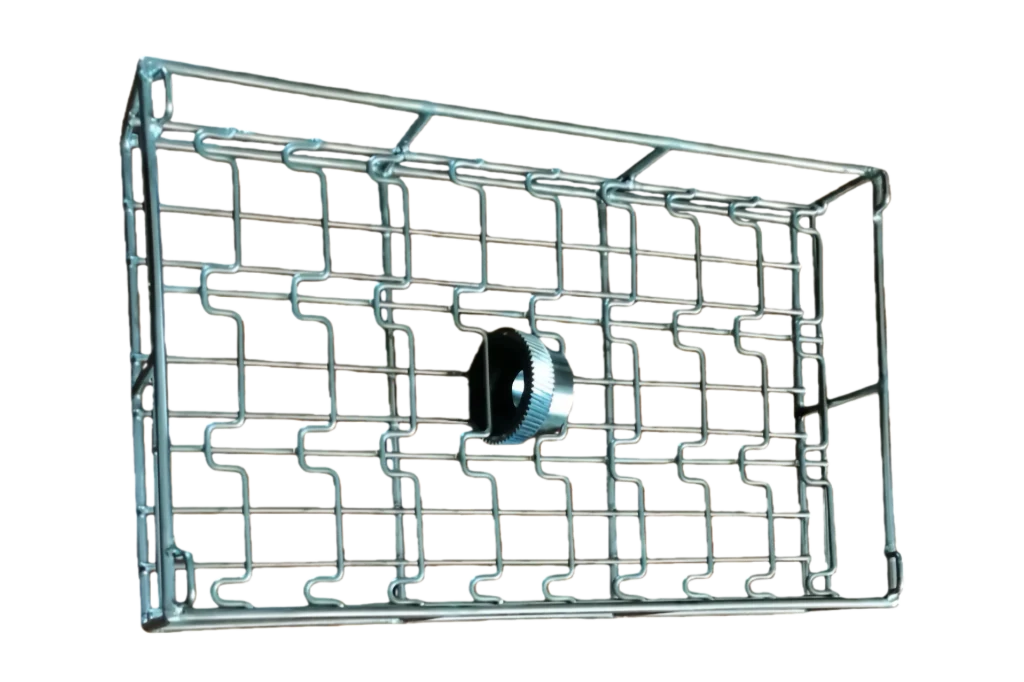
Integrating Ultrasonic Cleaning into SCR Maintenance Operations
Online vs. Offline Cleaning
cURL Too many subrequests by single Worker invocation. To configure this limit, refer to https://developers.cloudflare.com/workers/wrangler/configuration/#limits
Automation and Loading Systems
cURL Too many subrequests by single Worker invocation. To configure this limit, refer to https://developers.cloudflare.com/workers/wrangler/configuration/#limits
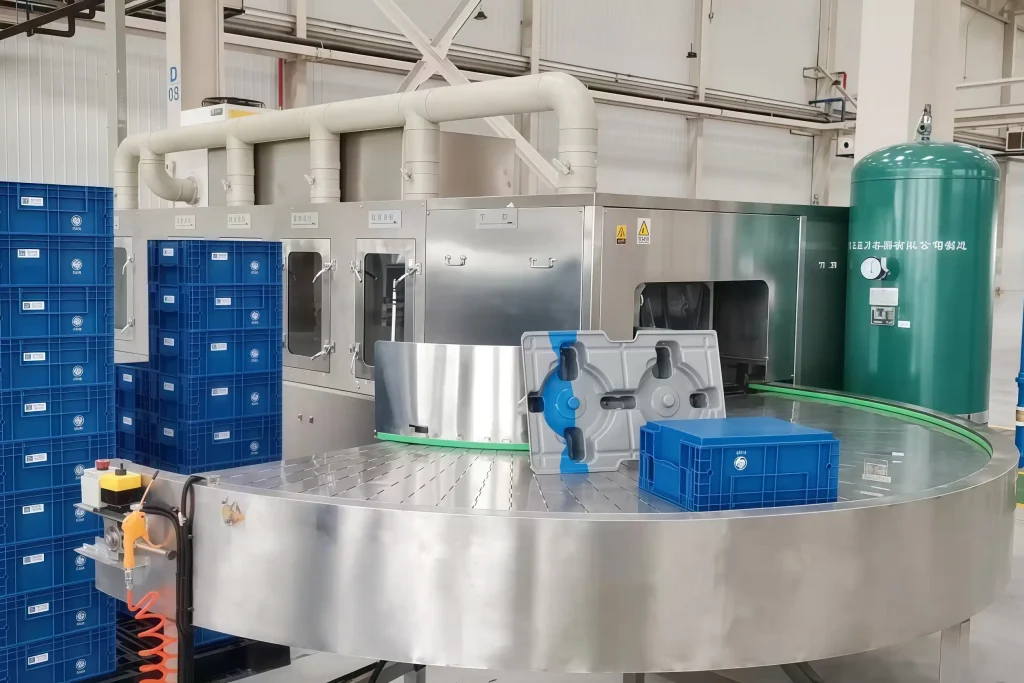
Wastewater Management
cURL Too many subrequests by single Worker invocation. To configure this limit, refer to https://developers.cloudflare.com/workers/wrangler/configuration/#limits
Evaluating System ROI and Selecting a Reliable Supplier
Cost of Ownership vs. Replacement
cURL Too many subrequests by single Worker invocation. To configure this limit, refer to https://developers.cloudflare.com/workers/wrangler/configuration/#limits
cURL Too many subrequests by single Worker invocation. To configure this limit, refer to https://developers.cloudflare.com/workers/wrangler/configuration/#limits
Supplier Qualification Checklist
cURL Too many subrequests by single Worker invocation. To configure this limit, refer to https://developers.cloudflare.com/workers/wrangler/configuration/#limits
cURL Too many subrequests by single Worker invocation. To configure this limit, refer to https://developers.cloudflare.com/workers/wrangler/configuration/#limits
cURL Too many subrequests by single Worker invocation. To configure this limit, refer to https://developers.cloudflare.com/workers/wrangler/configuration/#limits
cURL Too many subrequests by single Worker invocation. To configure this limit, refer to https://developers.cloudflare.com/workers/wrangler/configuration/#limits
cURL Too many subrequests by single Worker invocation. To configure this limit, refer to https://developers.cloudflare.com/workers/wrangler/configuration/#limits
cURL Too many subrequests by single Worker invocation. To configure this limit, refer to https://developers.cloudflare.com/workers/wrangler/configuration/#limits
cURL Too many subrequests by single Worker invocation. To configure this limit, refer to https://developers.cloudflare.com/workers/wrangler/configuration/#limits
Move Forward with an Engineered SCR Catalyst Cleaning System
cURL Too many subrequests by single Worker invocation. To configure this limit, refer to https://developers.cloudflare.com/workers/wrangler/configuration/#limits
Common Questions About SCR Catalyst Ultrasonic Cleaning
How often should an SCR catalyst be ultrasonic cleaned?
cURL Too many subrequests by single Worker invocation. To configure this limit, refer to https://developers.cloudflare.com/workers/wrangler/configuration/#limits
Can ultrasonic cleaning damage the catalyst substrate?
cURL Too many subrequests by single Worker invocation. To configure this limit, refer to https://developers.cloudflare.com/workers/wrangler/configuration/#limits
Are cleaning and regeneration the same thing?
cURL Too many subrequests by single Worker invocation. To configure this limit, refer to https://developers.cloudflare.com/workers/wrangler/configuration/#limits
How do I know if my cleaning process is working?
cURL Too many subrequests by single Worker invocation. To configure this limit, refer to https://developers.cloudflare.com/workers/wrangler/configuration/#limits
Should I purchase my own cleaning system or use a third-party service?
cURL Too many subrequests by single Worker invocation. To configure this limit, refer to https://developers.cloudflare.com/workers/wrangler/configuration/#limits
Si vous êtes intéressé, consultez ces articles liés :
Casiers de nettoyage industriel : pourquoi ils sont importants pour l'efficacité de votre nettoyage de pièces
Justifier l'investissement dans un équipement de nettoyage par ultrasons : un guide stratégique pour le retour sur investissement
 French
  English
  German
  Spanish
  Russian
  Portuguese