
Precision metal parts ultrasonic cleaning demands more than just adding a bench-top tank to your production line. I've seen too many shops invest in ultrasonic power alone, only to find parts emerging with residue in blind holes or water spots that ruin coating adhesion. Achieving a truly residue-free result hinges on matching tank configuration, rinsing stages, and drying method to your specific part geometry and downstream process. Over two decades of designing automated cleaning lines at GTKCLEAN, I've learned that these design factors, not raw ultrasonic power, separate a reliable process from a recurring quality headache.
The Challenges of Cleaning Precision Metal Parts
Precision metal components, whether CNC machined parts, stampings, or die castings, arrive at the cleaning stage carrying a mix of cutting fluids, stamping oils, metal fines, and polishing compounds. The real difficulty isn't the variety of contaminants; it's the part geometry. Blind holes, threaded holes, narrow recesses, and internal channels trap these contaminants where spray or manual methods can't reach. Traditional vapor degreasing or manual wiping may remove surface oil, but residue stays deep inside. If that residue isn't removed before coating, heat treating, or assembly, it can cause coating delamination, poor weld quality, or particle contamination that fails critical inspection. For aerospace and medical device manufacturers, those failures mean scrapped parts, rework costs, and potential audit findings. Ultrasonic cleaning solves this by generating millions of microscopic cavitation bubbles that implode in liquid, releasing energy that dislodges contaminants from even the most inaccessible geometries. But getting the process right requires more than dropping parts into an ultrasonic tank.
Ultrasonic Cleaning Configurations for Complex Geometries
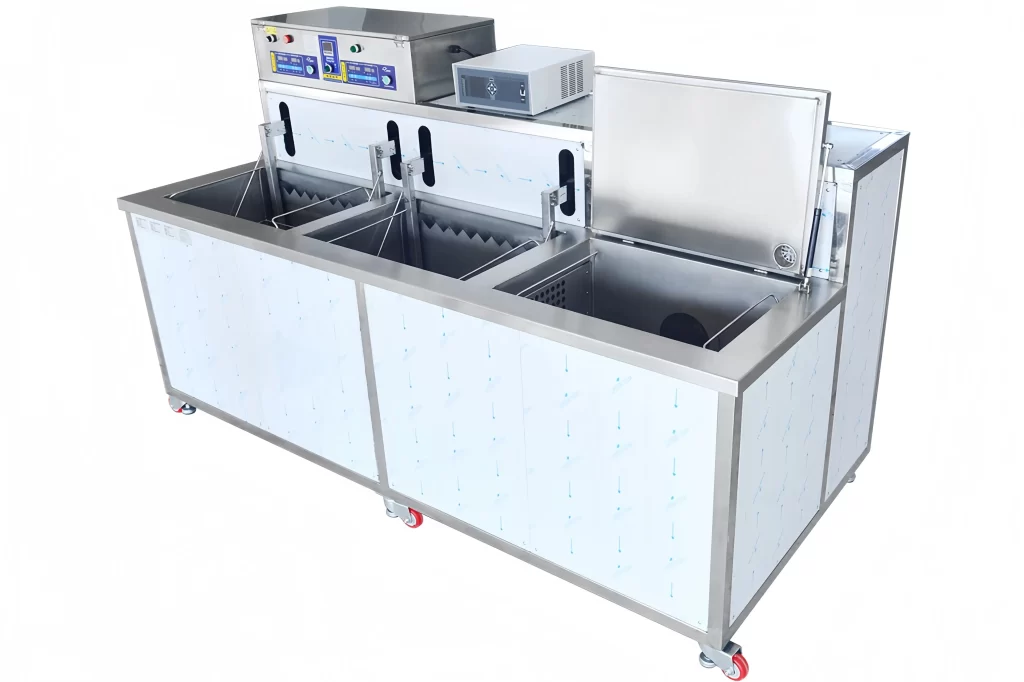
The cleaning tank itself is just one piece. For parts with complex internal features, a single-tank approach often fails because the same bath that loosens the oil also re-deposits it when parts are removed. A multi-tank system, with degreasing, rinsing, and drying in separate stages, prevents cross-contamination. At GTKCLEAN, we design multi-tank lines where ultrasonic degreasing uses detergents or solvents at controlled temperatures, followed by purified water rinses that eliminate detergent residues.
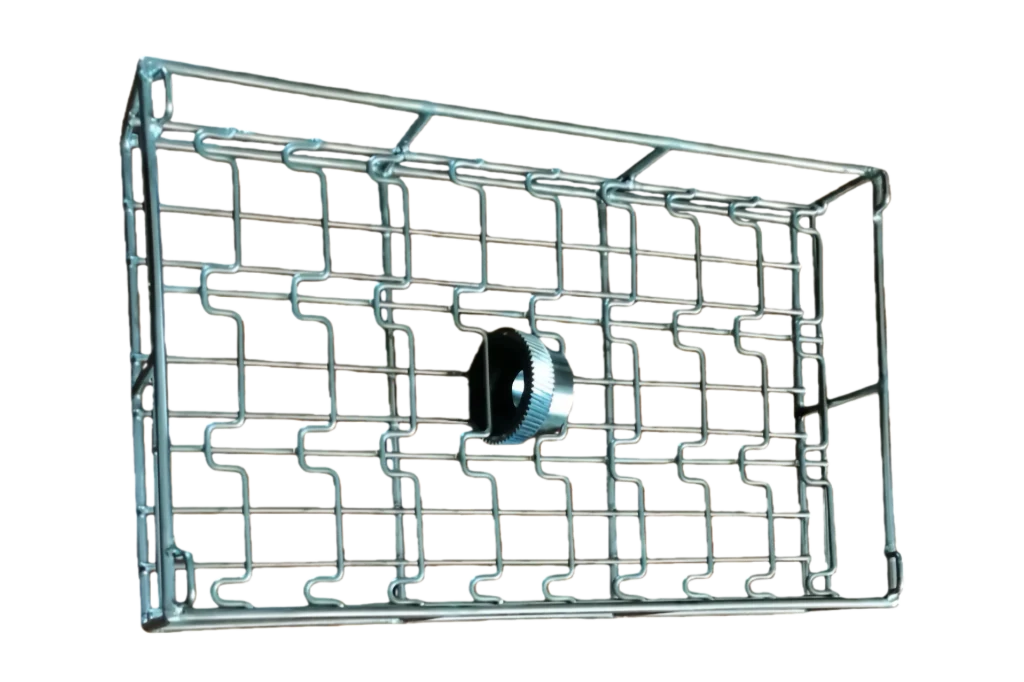
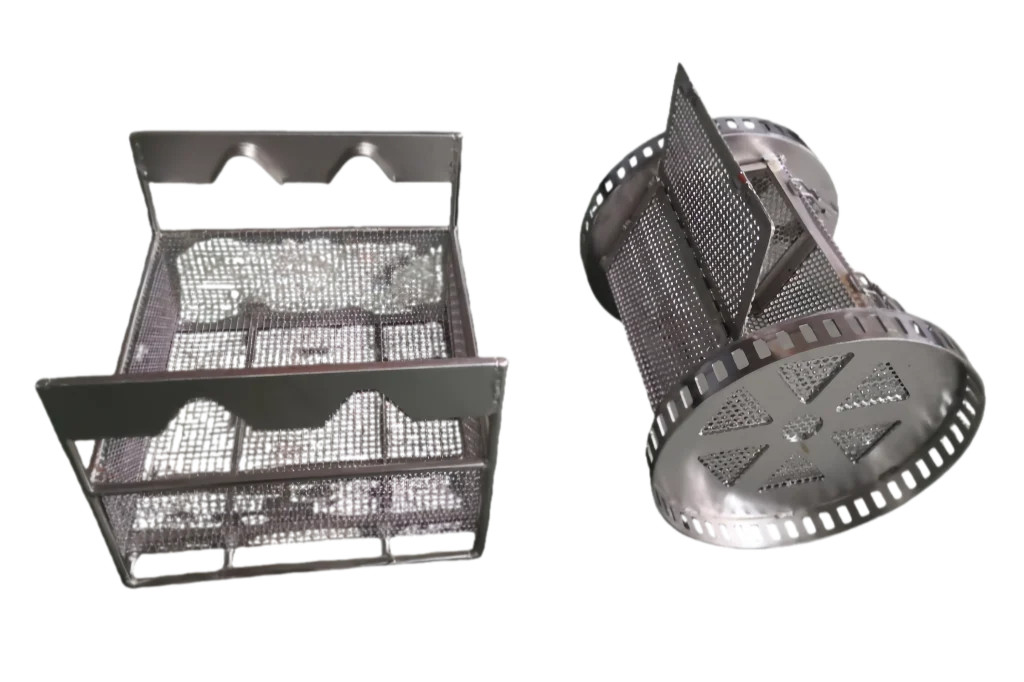
For parts like bearing housings or automotive components with deep blind holes, a rotary basket can rotate the load during cleaning, ensuring fresh cavitation reaches every surface. The basket design also matters: parts must be securely fixed without masking contact points. Choosing the right ultrasonic frequency is equally critical. Lower frequencies (20–28 kHz) produce more aggressive cavitation suitable for removing heavy oils and chips from steel parts, while higher frequencies (40–80 kHz) deliver finer, gentler cleaning for polished surfaces or delicate alloys. Running the wrong frequency can either fail to clean or pit sensitive surfaces.
Rinsing and Drying Methods That Stop Recontamination
After ultrasonic cleaning, the part surface is chemically active and highly susceptible to recontamination. The first mistake I see is using tap water for rinsing. Minerals in tap water leave conductive residue or cause water spots that later appear as cosmetic defects or interfere with electrical bonding. For precision parts, a multi-stage rinse with deionized (DI) water is required. The final rinse conductivity should be ≤0.06 μS/cm, comparable to ultrapure water, to prevent any ionic contamination. GTKCLEAN incorporates on-line DI water polishing systems and conductivity monitoring to hold that standard.
Drying is where many lines fail. A simple hot air blast can cook residues onto the surface if any detergent film remains. For blind holes and internal cavities, vacuum drying is more reliable. Vacuum lowers the boiling point of residual moisture, pulling liquid out of crevices and drying even the innermost features. Air knife systems work well for simpler geometries, but only if the air is filtered and heated to avoid reapplication of contaminants. The drying method must be matched to the part's complexity. Oversimplifying this step leads to water spots that ruin the coating or assembly.
If your parts include deep blind holes or require vacuum drying to meet a strict cleanliness spec, the drying method choice is just as critical as the ultrasonic step itself. Reach out to our team at [email protected]. Share your part geometry, and we'll recommend a rinsing and drying sequence that avoids water spots and recontamination.
Cleanliness Validation Standards and Practices
How do you know your cleaning process actually works? Many shops rely on a visual check, but for precision components, that's insufficient. Standards like ISO 16232 (for automotive fluid circuits) and VDA 19 (German automotive requirement) define particle count limits and gravimetric residue measurements. Even if you aren't certified, these methods provide a reliable baseline.
A practical approach is gravimetric testing: clean a known dirty sample, collect the washings, filter, and weigh the residue. The target depends on your downstream process. For pre-coating applications, some PVD coaters require ≤0.1 mg of residue per part. Others may accept ≤0.5 mg. Without a measurable target, you can't validate that your ultrasonic system is performing. I've seen production runs where post-coating adhesion failures were traced back to an undocumented shift in cleaning effectiveness. A filter had clogged, reducing pump pressure and rinse quality. A simple weekly gravimetric check would have caught it.
Building a Cost-Effective Precision Cleaning Line
A common hesitation I hear is that automated multi-tank ultrasonic systems are too expensive. But looking only at the equipment purchase price misses the total picture. A well-designed line reduces labor hours, chemical consumption, and reject rates. For high-volume manufacturing, automating the material handling, robotic load/unload with conveyor transfer, removes the biggest variable: operator inconsistency.
Operating costs break down into detergents or solvents, water treatment, energy, and maintenance. Solvent-based systems may have higher initial chemical cost but lower energy because drying is faster. Aqueous systems often use less expensive detergents but require more drying energy and water treatment equipment. In our experience, adding a solvent recovery unit can cut solvent consumption by over 90% in hydrocarbon-based systems, shifting the cost equation significantly. The ROI case becomes compelling when you calculate the cost of rework or customer returns due to contamination. One GTKCLEAN customer in the automotive supply chain reduced coating reject rates from 3% to under 0.1% after switching to a validated multi-tank ultrasonic line. The payback was under 12 months.
Your Next Step Toward Reliable Precision Cleaning
Every precision metal component, from fuel injectors to surgical instruments, has a required cleanliness level that determines the success of subsequent processes. You've seen that the critical design factors, tank configuration, rinse water purity, drying method, and validation, are what transform ultrasonic cleaning from a generic parts washer into a reliable manufacturing step. If your current cleaning line isn't meeting your quality targets, or if you're designing a new production process, start with the part geometry and required cleanliness standard. Our engineering team at GTKCLEAN has deployed systems across 20+ countries, including multi-tank ultrasonic, solvent vacuum, and conveyor-based solutions tailored to the most challenging precision parts. Send your part specifications and cleanliness requirements to [email protected], or call +86 17768507147 to discuss a configuration that fits your throughput and compliance needs.
Common Questions About Precision Ultrasonic Cleaning
Does ultrasonic cleaning damage delicate metal parts?
When the correct frequency and power are selected, no. Higher frequencies (40–80 kHz) produce gentler cavitation suitable for aluminum, brass, or fine-finished surfaces. Damage typically occurs when operators use excessive power or the wrong chemistry, not from the cavitation itself. We always recommend testing on sample parts first to dial in parameters.
How do I choose the right cleaning chemistry?
It depends on the contaminant and the metal. Aqueous detergents work well for cutting oils and chips on steel and stainless steel. Hydrocarbon solvents excel at removing heavy stamping oils and waxes from aluminum or titanium, and they dry faster. For parts destined for medical or semiconductor use, the chemistry must leave no residue that could cause biocompatibility or electrical issues. A compatibility test with your part and target cleanliness standard is the safest approach.
What is the typical throughput of a multi-tank system?
Throughput varies with basket size and cycle time. For a typical 4-tank system with ultrasonic degreasing, two rinses, and hot air drying, a cycle might be 5–6 minutes per basket. With automated loading, that can reach 8–10 baskets per hour. Heavier loads or vacuum drying cycles extend time. We design systems to match your required output rate, often integrating conveyor or robotic transfer.
How long does it take to see ROI on a precision cleaning system?
Most of our customers recover the investment within 12–24 months through reduced rework, lower chemical and labor costs, and fewer customer returns. For high-value components where a single reject costs hundreds of dollars, the payback is often faster. Calculating your current scrap and rework costs is the first step toward a business case.
What after-sales support should I expect from a cleaning equipment supplier?
At a minimum, on-site installation and training, a warranty covering critical components like transducers and pumps, and access to technical support for process changes. With GTKCLEAN, our support extends to remote diagnostics and process upgrades as your production scales. If you're validating cleanliness for a new contract, share your requirements and we'll confirm the system capability and testing protocols.
Wenn Sie interessiert sind, schauen Sie sich diese verwandten Artikel an:
Die unverzichtbare Verbindung zwischen Beschichtungstechnologien und industriellen Reinigungssystemen
Ultraschallreinigungsprozess: Ein Schritt-für-Schritt-Technikleitfaden
Wie man perfekte Haftung der Beschichtung ohne Wasserflecken oder Flecken gewährleistet?
Ultraschallreinigungssysteme für die Fertigung – Ein technischer Leitfaden
 German
  English
  Spanish
  French
  Russian
  Portuguese