

Parts can pass through an aggressive wash stage, look wet-clean, and then dry dirty. White films, haze rings, rainbow sheen, salt-like blooms, or sticky patches are common. The cause is usually not the cleaning step; it is what remains after rinsing. Detergent surfactants, builders, water hardness minerals, and rinse-aid components that are not removed before drying become the residue the operator sees. Once that film is baked on, rework is often the only fix.
The Two Main Residue Paths
Residue on cleaned parts follows two main paths: detergent carry-over and rinse-aid deposition.
Detergent carry-over occurs when wash chemistry is dragged into the rinse stage faster than the rinse volume can dilute it, or when saturated cleaning solution remains trapped in blind holes, threads, and narrow gaps. As the part drains and dries, dissolved detergent and builders form a film. Rinse-aid deposition occurs when the rinse aid itself is over-dosed, incompatible with the water quality, or exposed to temperatures at which its nonvolatile fraction plates out. The film may be organic, inorganic, or mixed, so the correction is diagnostic rather than guesswork [5].
What Detergent Residue Looks Like on Cleaned Parts
Identification narrows the possible source. The same white deposit can be sodium silicate, phosphate, carbonate scale, surfactant film, or dissolved solids from tap water [2]. Table 1 groups the common signatures.
| Residue type | Typical source | On-part signature | Downstream risk |
|---|---|---|---|
| Surfactant film | Over-dosed detergent, low rinse volume | Hydrophobic haze, water beading, sticky touch | Loss of coating adhesion, particle reattachment |
| Builder salts | Alkaline detergent, hard water | White crystalline bloom, salt tails around holes | Electrical leakage, corrosion initiation |
| Rinse-aid film | Over-concentrated rinse aid, low rinse temperature | Rainbow sheen, wetting unevenness | cURL Too many subrequests by single Worker invocation. To configure this limit, refer to https://developers.cloudflare.com/workers/wrangler/configuration/#limits |
| cURL Too many subrequests by single Worker invocation. To configure this limit, refer to https://developers.cloudflare.com/workers/wrangler/configuration/#limits | cURL Too many subrequests by single Worker invocation. To configure this limit, refer to https://developers.cloudflare.com/workers/wrangler/configuration/#limits | cURL Too many subrequests by single Worker invocation. To configure this limit, refer to https://developers.cloudflare.com/workers/wrangler/configuration/#limits | cURL Too many subrequests by single Worker invocation. To configure this limit, refer to https://developers.cloudflare.com/workers/wrangler/configuration/#limits |
| cURL Too many subrequests by single Worker invocation. To configure this limit, refer to https://developers.cloudflare.com/workers/wrangler/configuration/#limits | cURL Too many subrequests by single Worker invocation. To configure this limit, refer to https://developers.cloudflare.com/workers/wrangler/configuration/#limits | cURL Too many subrequests by single Worker invocation. To configure this limit, refer to https://developers.cloudflare.com/workers/wrangler/configuration/#limits | cURL Too many subrequests by single Worker invocation. To configure this limit, refer to https://developers.cloudflare.com/workers/wrangler/configuration/#limits |
cURL Too many subrequests by single Worker invocation. To configure this limit, refer to https://developers.cloudflare.com/workers/wrangler/configuration/#limits
How Rinse Aids Work — and How They Backfire
cURL Too many subrequests by single Worker invocation. To configure this limit, refer to https://developers.cloudflare.com/workers/wrangler/configuration/#limits
cURL Too many subrequests by single Worker invocation. To configure this limit, refer to https://developers.cloudflare.com/workers/wrangler/configuration/#limits
cURL Too many subrequests by single Worker invocation. To configure this limit, refer to https://developers.cloudflare.com/workers/wrangler/configuration/#limitsWie man perfekte Haftung der Beschichtung ohne Wasserflecken oder Flecken gewährleistet?cURL Too many subrequests by single Worker invocation. To configure this limit, refer to https://developers.cloudflare.com/workers/wrangler/configuration/#limits
Water Quality and Rinse Stage Design
cURL Too many subrequests by single Worker invocation. To configure this limit, refer to https://developers.cloudflare.com/workers/wrangler/configuration/#limits
cURL Too many subrequests by single Worker invocation. To configure this limit, refer to https://developers.cloudflare.com/workers/wrangler/configuration/#limits
cURL Too many subrequests by single Worker invocation. To configure this limit, refer to https://developers.cloudflare.com/workers/wrangler/configuration/#limitsVorbeschichtungsreinigungslösungen für PVD - GTKcURL Too many subrequests by single Worker invocation. To configure this limit, refer to https://developers.cloudflare.com/workers/wrangler/configuration/#limits
Process Parameters That Drive Residue
cURL Too many subrequests by single Worker invocation. To configure this limit, refer to https://developers.cloudflare.com/workers/wrangler/configuration/#limits
cURL Too many subrequests by single Worker invocation. To configure this limit, refer to https://developers.cloudflare.com/workers/wrangler/configuration/#limits

cURL Too many subrequests by single Worker invocation. To configure this limit, refer to https://developers.cloudflare.com/workers/wrangler/configuration/#limits
Detecting Residue Before It Escapes the Line
cURL Too many subrequests by single Worker invocation. To configure this limit, refer to https://developers.cloudflare.com/workers/wrangler/configuration/#limits
| cURL Too many subrequests by single Worker invocation. To configure this limit, refer to https://developers.cloudflare.com/workers/wrangler/configuration/#limits | cURL Too many subrequests by single Worker invocation. To configure this limit, refer to https://developers.cloudflare.com/workers/wrangler/configuration/#limits | cURL Too many subrequests by single Worker invocation. To configure this limit, refer to https://developers.cloudflare.com/workers/wrangler/configuration/#limits |
|---|---|---|
| cURL Too many subrequests by single Worker invocation. To configure this limit, refer to https://developers.cloudflare.com/workers/wrangler/configuration/#limits | cURL Too many subrequests by single Worker invocation. To configure this limit, refer to https://developers.cloudflare.com/workers/wrangler/configuration/#limits | cURL Too many subrequests by single Worker invocation. To configure this limit, refer to https://developers.cloudflare.com/workers/wrangler/configuration/#limits |
| cURL Too many subrequests by single Worker invocation. To configure this limit, refer to https://developers.cloudflare.com/workers/wrangler/configuration/#limits | cURL Too many subrequests by single Worker invocation. To configure this limit, refer to https://developers.cloudflare.com/workers/wrangler/configuration/#limits | cURL Too many subrequests by single Worker invocation. To configure this limit, refer to https://developers.cloudflare.com/workers/wrangler/configuration/#limits |
| cURL Too many subrequests by single Worker invocation. To configure this limit, refer to https://developers.cloudflare.com/workers/wrangler/configuration/#limits | cURL Too many subrequests by single Worker invocation. To configure this limit, refer to https://developers.cloudflare.com/workers/wrangler/configuration/#limits | cURL Too many subrequests by single Worker invocation. To configure this limit, refer to https://developers.cloudflare.com/workers/wrangler/configuration/#limits |
| cURL Too many subrequests by single Worker invocation. To configure this limit, refer to https://developers.cloudflare.com/workers/wrangler/configuration/#limits | cURL Too many subrequests by single Worker invocation. To configure this limit, refer to https://developers.cloudflare.com/workers/wrangler/configuration/#limits | cURL Too many subrequests by single Worker invocation. To configure this limit, refer to https://developers.cloudflare.com/workers/wrangler/configuration/#limits |
| cURL Too many subrequests by single Worker invocation. To configure this limit, refer to https://developers.cloudflare.com/workers/wrangler/configuration/#limits | cURL Too many subrequests by single Worker invocation. To configure this limit, refer to https://developers.cloudflare.com/workers/wrangler/configuration/#limits | cURL Too many subrequests by single Worker invocation. To configure this limit, refer to https://developers.cloudflare.com/workers/wrangler/configuration/#limits |
Corrective Sequence for Dirty Parts
cURL Too many subrequests by single Worker invocation. To configure this limit, refer to https://developers.cloudflare.com/workers/wrangler/configuration/#limits
- cURL Too many subrequests by single Worker invocation. To configure this limit, refer to https://developers.cloudflare.com/workers/wrangler/configuration/#limits
- cURL Too many subrequests by single Worker invocation. To configure this limit, refer to https://developers.cloudflare.com/workers/wrangler/configuration/#limits
- cURL Too many subrequests by single Worker invocation. To configure this limit, refer to https://developers.cloudflare.com/workers/wrangler/configuration/#limits
- cURL Too many subrequests by single Worker invocation. To configure this limit, refer to https://developers.cloudflare.com/workers/wrangler/configuration/#limits
- Run a cleaned, unsoiled coupon through the process to isolate mechanical issues from incoming soil load.
This sequence avoids replacing detergent or rinse aid before the actual cause is identified.
Equipment Choices That Reduce Residue
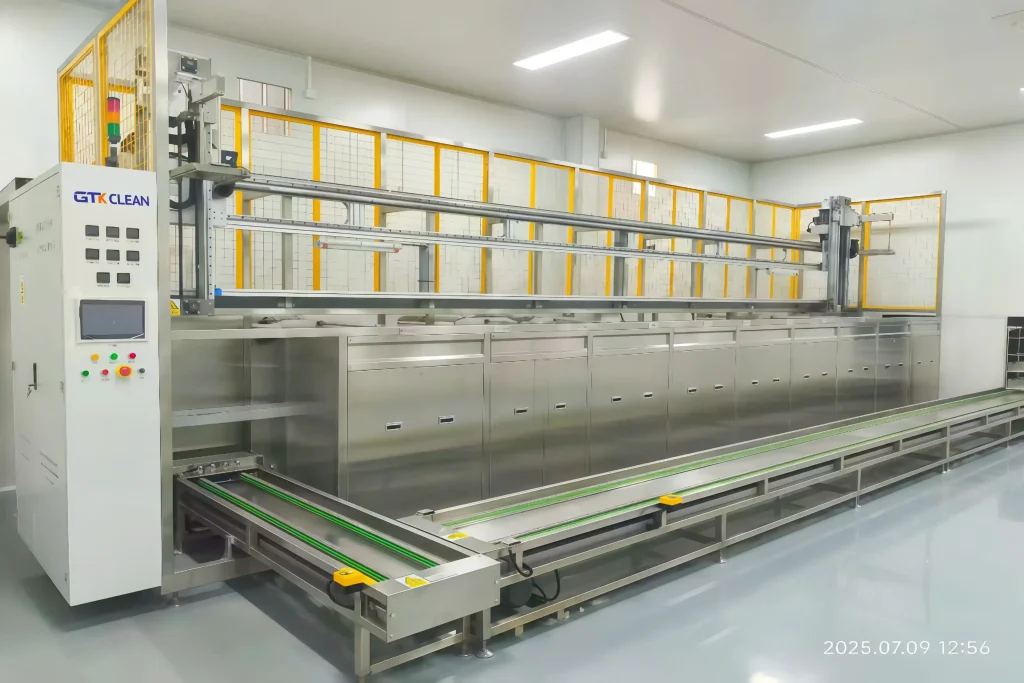
Single-tank manual lines often struggle because washing, rinsing, and drying share the same geometry. A multi-stage automated system dedicates stations to wash, first rinse, final rinse, and drying, which makes carry-over easier to control. Rotating baskets improve drainage from blind holes; air knives or vacuum drying remove droplets before they dry into spots.
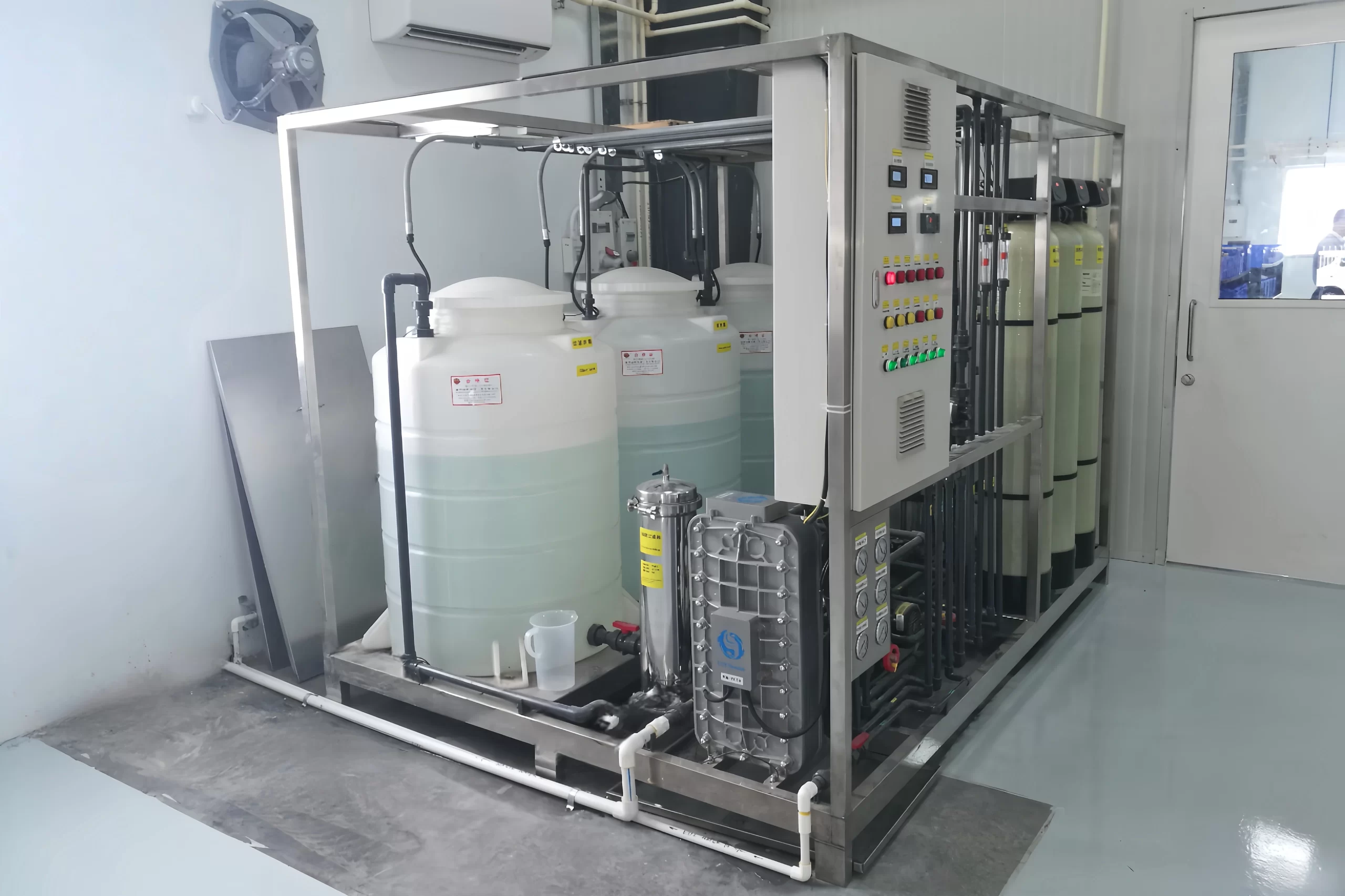
In one GTKCLEAN pre-PVD cleaning cell, the rinse train uses multistage ultrapure water with final conductivity maintained at ≤0.06 µS/cm, followed by air knife or vacuum drying for complex parts. The layout is designed so parts do not sit in contaminated rinse fluid between stages.
When residue is caused by the wrong cleaning chemistry rather than rinse water alone, selecting the correct system matters. <Wie man zwischen wässrigen und lösungsmittelbasierten Reinigungsystemen wählt> covers matching solvent or aqueous stages to the contaminant and rinse chemistry.
Resolve Residue Problems at the Process Level
Persistent residue rarely comes from a single component. It usually reflects a mismatch among detergent, rinse aid, water quality, mechanical drainage, and drying. A residue-corrected process includes the right chemistry, controlled dosage, verified rinse water, adequate drain geometry, and a detection step rather than waiting for the final customer to report the failure.
If you are specifying a new cleaning line or upgrading a residue-prone process, contact GTKCLEAN at [email protected] or +86 17768507147 with your part geometry, production volume, and current cleaning chemistry. A practical multistage cleaning specification can be built around your worst-case part, not just the cleanest sample on the bench.
FAQ
Can rinse aid itself make parts dirty?
Yes. A rinse aid that is over-dosed, incompatible with hard water, or used at too low a temperature can leave an organic film that appears as haze, sheen, or water beading after drying.
How do I know if residue is detergent or water spot?
One useful distinction is behavior. A water spot is usually mineral scale from drying dissolved solids and often appears in ring-shaped deposits where a droplet evaporated. Detergent residue is more likely to be a uniform haze or sticky film. Conductivity testing and water break behavior help confirm.
Does DI water eliminate the need for rinse aids?
Not always. DI water removes mineral content but does not by itself guarantee complete sheeting from complex geometries. Rinse aids can still be useful for drainage, but they must be dosed within the recommended range and followed by adequate final rinsing.
What rinse aid concentration should I use?
Start at the chemistry supplier’s recommended range for your water hardness and part geometry. Use the lowest dose that gives complete sheeting, then verify final rinse conductivity and residue tests before raising the dose.
Can ultrasonic cleaning remove existing residue?
Ultrasonic energy can help remove loosely attached residues from surfaces and blind holes, but baked-on films, scale, or cured coating defects may need a mechanical or chemical pre-treatment step. Prevention through rinse design is more reliable than rework.
Referenzen
[1] ASTM International, D1193-06(2018) Standard Specification for Reagent Water, West Conshohocken, PA, USA, 2018. [Online]. Available: https://www.astm.org/d1193-06r18.html
[2] ASTM International, G122-20 Standard Guide for Evaluating the Effectiveness of Cleaning Agents, West Conshohocken, PA, USA, 2020. [Online]. Available: https://www.astm.org/g0122-20.html
[3] ISO, ISO 16232:2018 Road vehicles — Cleanliness of components and systems, Geneva, Switzerland, 2018.
[4] United States Pharmacopeia, USP Water for Pharmaceutical Purposes, USP-NF, Rockville, MD, USA.
[5] B. Kanegsberg and E. Kanegsberg, Handbook for Critical Cleaning, 2nd ed. Boca Raton, FL, USA: CRC Press, 2011.
Wenn Sie interessiert sind, schauen Sie sich diese verwandten Artikel an:
Energiekosten in der industriellen Ultraschallreinigung senken
Ultraschallreinigungssysteme für die Fertigung – Ein technischer Leitfaden
So wählen Sie die beste Reinigungsflüssigkeit für Metallteile aus
Wie man automatisierte Reinigung in Produktionslinien integriert
 German
 English
 Spanish
 French
 Russian
 Portuguese