

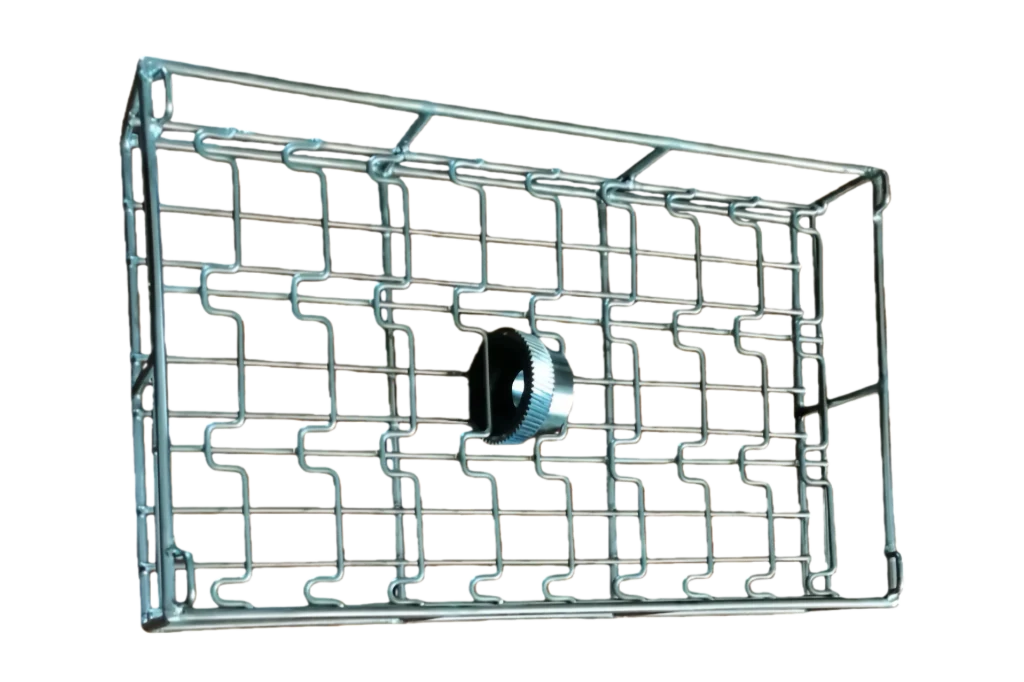
Pre-PVD ultrasonic cleaning is not a preliminary step you can treat as optional. The difference between a coating that adheres and one that delaminates often comes down to sub-micron contaminants left on the substrate. I have seen coating lines where a single overlooked cleaning parameter caused batch-wide pinhole failures. In this article, I'll explain why standard manual or spray cleaning falls short for PVD preparation, and what a properly engineered ultrasonic cleaning system needs to deliver to guarantee coating adhesion.
How Contaminants Cause PVD Coating Adhesion Failures
Physical Vapor Deposition coatings are only as good as the surface they are applied to. A PVD film typically ranges from one to a few microns thick; any contamination layer on the substrate, even on the sub-micron scale, can prevent the coating from bonding to the base metal. The result is not always catastrophic delamination. More often, it appears as pinholes, reduced coating density, or localized adhesion loss that only shows up during post-coating inspection or, worse, after components go into service.
The contaminants that cause these failures come from multiple sources. Cutting fluids, stamping oils, and drawing compounds remain on machined parts. Fingerprints deposit salts and fatty acids. Dust and airborne particulates settle during storage. On many substrates, a thin oxide layer forms naturally and must be removed immediately before coating. Manual solvent wiping or even pressurized spray cleaning cannot reliably remove contamination from blind holes, threads, and internal cavities. In PVD, these trapped residues can outgas during the vacuum coating process, creating localized voids and pinholes in the deposited film.
How Ultrasonic Cavitation Targets Critical Contaminants
The mechanism that makes ultrasonic cleaning uniquely effective for pre-PVD preparation is cavitation. High-frequency sound waves, typically in the range of 20 to 80 kHz, create microscopic vacuum bubbles in the cleaning solution. When these bubbles collapse against the part surface, they generate a scrubbing action with enough force to dislodge sub-micron particles and molecular contaminant films. Because the cleaning medium is liquid, the cavitation effect reaches into blind holes, threaded recesses, and other complex geometries that spray nozzles cannot physically access.
When comparing cleaning methods, the difference in effectiveness for PVD-critical contaminants becomes clear.
| Reinigungsmethode | Sub‑Micron Particle Removal | Oil and Grease Removal | Blind Hole / Cavity Cleaning | Surface Oxide Disruption |
|---|---|---|---|---|
| Solvent Wipe | Poor | Mäßig | Keine | Keine |
| High‑Pressure Spray | Mäßig | Gut | Limited to line of sight | Keine |
| Manuelles Ultraschallbecken | Gut | Gut | Partial (no rotation) | Mäßig |
| Automated Multi‑Stage Ultrasonic | Ausgezeichnet | Ausgezeichnet | Complete (with rotary basket) | Ausgezeichnet |
Relying on a manual wipe or a simple spray step leaves contamination behind that directly compromises coating adhesion. The automated ultrasonic approach, particularly when combined with properly managed chemistry and rinsing, removes these failure‑causing residues systematically.
How to Design a Multi‑Stage Pre‑PVD Ultrasonic Cleaning Line
A pre‑PVD cleaning system is not a single tank. In production environments where coating quality is measured in microns of adhesion, the cleaning line must integrate several stages, each performing a specific function. The sequence I recommend, based on our deployments in precision coating shops, follows: hydrojet spray to remove heavy chips and gross oils, ultrasonic degreasing with an alkaline or neutral detergent, followed by multiple stages of ultrapure water rinsing, and finally drying with air knives and hot air, or vacuum drying for parts with complex internal cavities.
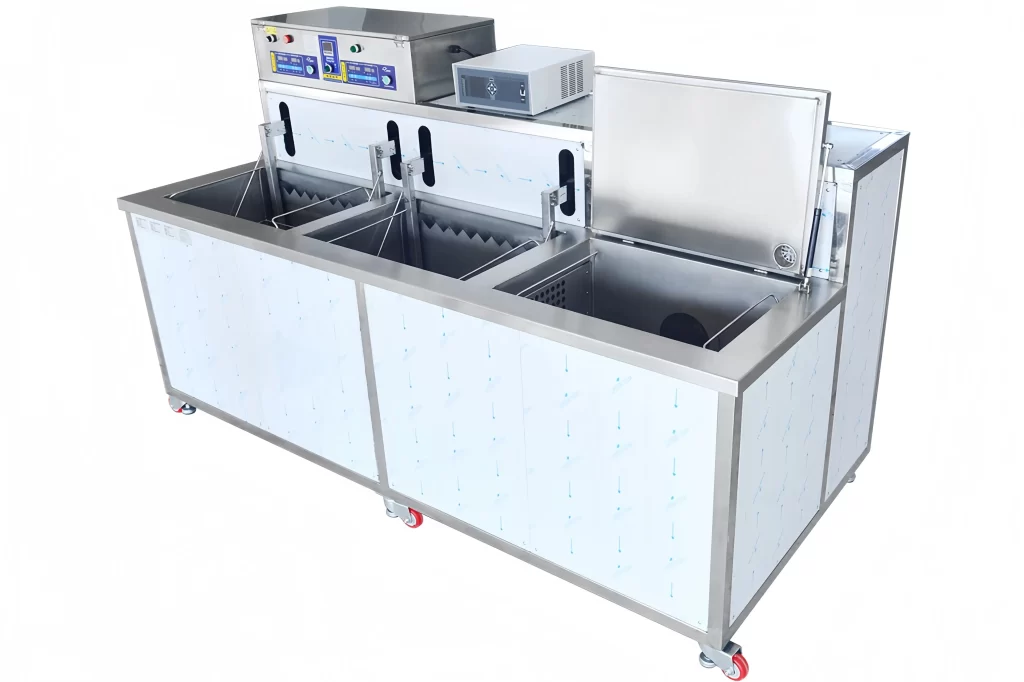
The ultrasonic degreasing stage operates at temperatures between 45 and 65 °C, which accelerates the breakdown of oil films. The cleaning cycle per tank is adjustable, typically 5 to 6 minutes, but must be validated for the specific part geometry. The rinse stages are where many coating failures originate. Without ultrapure water with conductivity of 0.06 µS/cm or lower, dissolved minerals in ordinary rinse water will dry on the part surface and leave invisible water spots that act as contamination nuclei under the coating. A properly designed system circulates and filters the rinse water to maintain this purity while minimizing waste.
Drying after the final rinse is the last opportunity to prevent recontamination. For simple geometries, air knives combined with hot air blowing can remove all residual moisture. However, parts with deep holes, narrow slits, or layered features trap liquid that simple blowing cannot reach. In these cases, vacuum drying, which boils residual moisture at low temperature through pressure reduction, is the only reliable method. If your parts include such features, the drying method is a specification you should confirm before committing to a system design. Reach out at [email protected] if you are uncertain which drying technology matches your component set.
How Water Quality and Drying Affect Pre‑PVD Cleaning Results
The conductivity of the final rinse water is the most frequently overlooked parameter in pre‑PVD cleaning. When water evaporates from a surface, any dissolved solids remain behind. At 0.5 µS/cm, a typical reverse‑osmosis water quality, those residues are still significant enough to cause localized adhesion failures. Only deionized water with a conductivity below 0.1 µS/cm, and ideally at or below 0.06 µS/cm, eliminates this risk. Our in‑house tests on PVD‑coated cutting inserts demonstrated that a rinse water conductivity above 0.1 µS/cm correlates with a measurable drop in coating adhesion in peel tests.
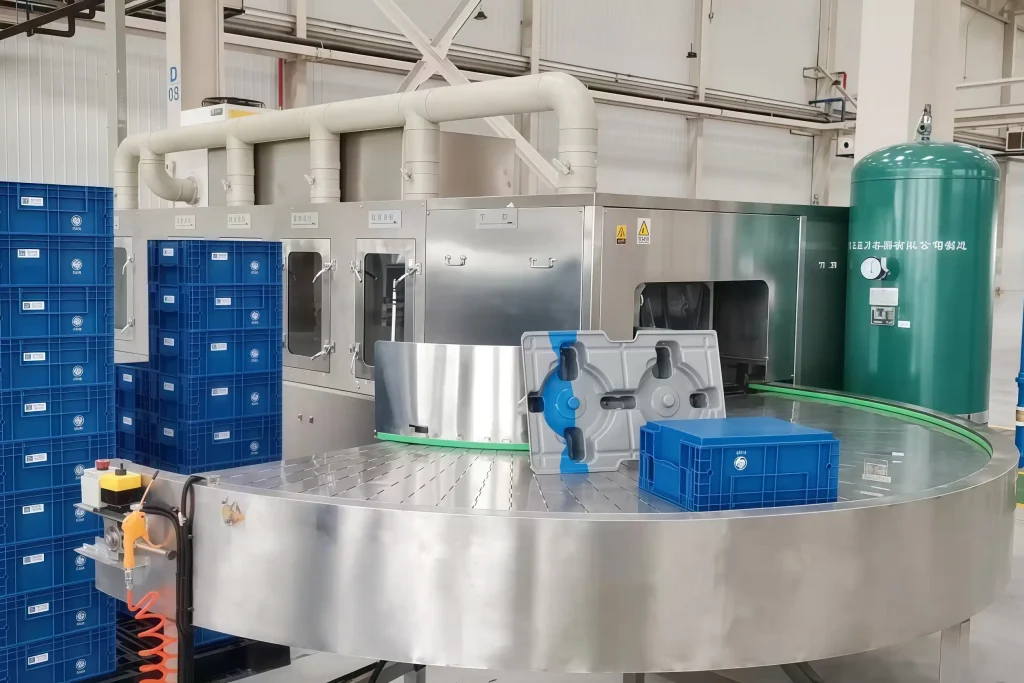
The drying step that follows must do more than remove visible water. Air‑knife systems can be effective if the part geometry allows unobstructed airflow across all surfaces. The problem appears when a blind hole holds a droplet of rinse water. In a vacuum chamber, that droplet will vaporize rapidly during pump‑down, leaving the dissolved minerals exactly where they cause the most harm. Vacuum drying avoids this by removing water before the part enters the coating chamber, preventing the kind of ghost contamination that inspection teams often blame on the coating process itself. Incorporating vacuum drying into a pre‑PVD line adds cost, but the alternative is accepting a baseline coating failure rate that few high‑volume manufacturers can afford.
How to Choose a Pre‑PVD Ultrasonic Cleaning System
The selection process for a pre‑PVD cleaning system should start with the part geometry and the production volume. Small, simple parts produced in high quantities may run well through an automated inline conveyor system with spray and ultrasonic stations. Large components with complex internal passages usually need a rotary‑basket system to ensure full liquid exchange inside the parts and a drying stage capable of handling liquid retention. For very large molds or heavy‑duty components, a stationary multi‑tank line with robotic transfer may be the only practical choice.
Beyond the machine itself, the supplier's ability to integrate water treatment, filtration, and drying stages is what separates a cleaning system from a cleaning process. Look for the inclusion of a closed‑loop DI water supply with conductivity monitoring, not just a batch water change. Confirm that filtration captures particles below the size threshold that can cause pinholes in your specific coating. And ask for documented cycle‑time validation on parts similar to yours, not just catalog specifications.
Turning Pre‑PVD Cleaning into a Coating Process Advantage
Adhesion failures from poor substrate cleanliness are preventable, but they require a cleaning system that is engineered, not assembled from commodity tanks. The difference between a cleaning line that guarantees coating quality and one that generates periodic batch failures often lies in the rinse water purity, the drying method, and the system's ability to handle the specific internal features of your parts.
If your coating operation is experiencing unexplained pinholes or adhesion inconsistencies, the root cause is nearly always traceable to the cleaning step. I invite you to send your part prints and daily throughput requirements to [email protected] or call +86 17768507147. We will evaluate the geometries and recommend a multi‑stage ultrasonic system with the correct rinsing and drying stages to eliminate cleaning‑related coating failures before they reach your customer.
Common Questions About Pre‑PVD Ultrasonic Cleaning
Can a benchtop ultrasonic cleaner handle pre‑PVD cleaning for low‑volume production?
It depends on part complexity and the coating specification. A simple benchtop cleaner with single‑tank operation lacks the multistage rinsing and drying that PVD adhesion demands. Even for low volumes, if the parts have blind holes or intricate surfaces, without a rotary basket and DI water rinse the risk of residue‑induced pinholes remains high. I would only consider it for prototypes where coating qualification results are verified on every part afterward.
What water quality is acceptable for pre‑PVD cleaning?
The short answer is deionized water with conductivity of 0.1 µS/cm or lower. In our cleaning lines, we specify a target of 0.06 µS/cm or less for the final rinse to eliminate any risk of mineral spotting. Higher conductivity rinse water consistently leads to microscopic residues that act as nucleation points for coating defects. Many manufacturers initially overlook this requirement and only discover the correlation after months of troubleshooting adhesion failures.
Is solvent cleaning better than water‑based cleaning before PVD?
The choice depends on the contaminant. Modified alcohol or hydrocarbon solvents can be more effective at removing heavy stamping oils without leaving a residue, but they require closed‑loop systems with vapor recovery to meet safety and environmental regulations. Aqueous systems using alkaline detergents and ultrapure water achieve excellent results for general oils and particulates, and they simplify the handling of large or geometrically complex parts. In many PVD coating lines, a multi‑stage aqueous system with proper DI water rinsing delivers cleanliness that matches or exceeds solvent‑based processes while being easier to integrate into a production line.
cURL Too many subrequests by single Worker invocation. To configure this limit, refer to https://developers.cloudflare.com/workers/wrangler/configuration/#limits
cURL Too many subrequests by single Worker invocation. To configure this limit, refer to https://developers.cloudflare.com/workers/wrangler/configuration/#limits
Wenn Sie interessiert sind, schauen Sie sich diese verwandten Artikel an:
Automatisierte Ultraschallreinigungssysteme für die fortschrittliche Fertigung
So wählen Sie die beste Reinigungsflüssigkeit für Metallteile aus
Industrieller Reinigungskorb-Design: Optimierung von Leistung und Haltbarkeit
 German
  English
  Spanish
  French
  Russian
  Portuguese