

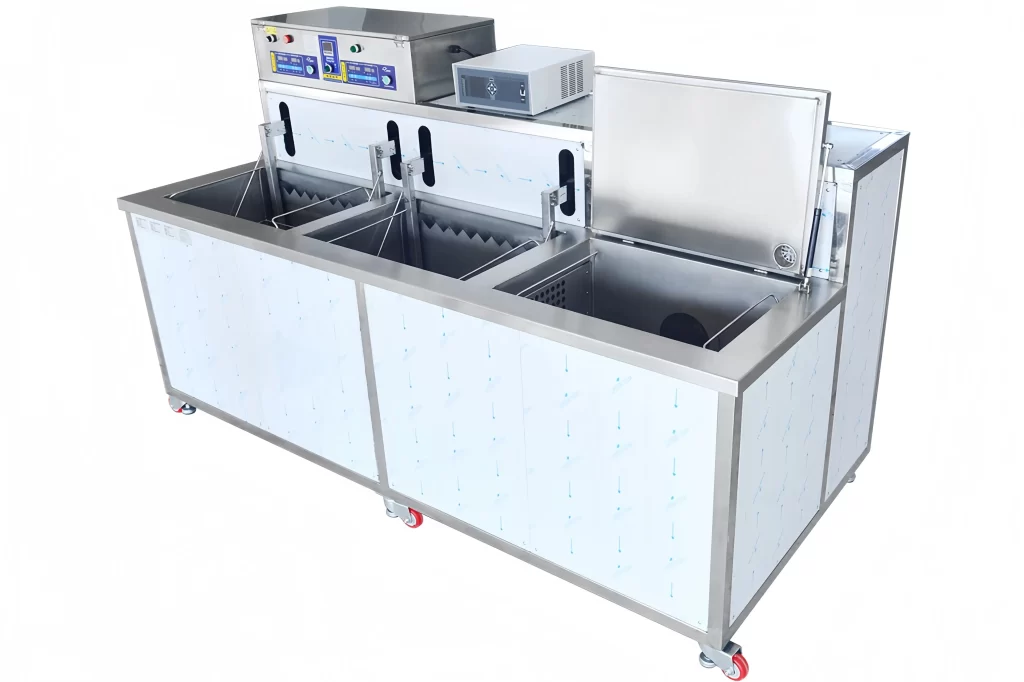
A production manager once told me they bought a high-wattage ultrasonic cleaner expecting it to remove all machining chips, only to find residue still trapped in blind holes after the cycle. The real problem wasn't power—it was how the parts were held and whether the frequency matched the contaminant. When selecting ultrasonic cleaning systems for industrial parts, engineers face dozens of configuration choices that matter far more than wattage alone. Matching tank configuration, automation level, and cleaning chemistry to your specific part geometry and target cleanliness is what separates a system that runs reliably from one that causes downstream coating failures. This article walks through the practical selection criteria I've applied across projects in 20 countries, focusing on the engineering decisions that directly affect cleaning outcomes.
How Ultrasonic Cleaning Removes Industrial Contaminants
Ultrasonic cleaning works by generating microscopic cavitation bubbles that implode on part surfaces, dislodging oils, chips, and debris. But the cleaning action isn't uniform—it's shaped by frequency, power density, and how parts are positioned relative to the transducer field. In manufacturing, the contaminants we deal with range from heavy stamping oils and abradable coatings to fine polishing compounds, each requiring a different combination of mechanical and chemical energy.
The cleaning process typically moves through several stations: pre-cleaning to remove bulk contamination, ultrasonic immersion in a heated detergent or solvent, one or more rinses, and drying. A single-step system might handle light-duty parts, but most industrial applications need at least three tanks to avoid cross-contamination and ensure repeatable results. For example, the multi-tank ultrasonic cleaners we build at GTKCLEAN run a sequence of ultrasonic degreasing, RO water rinse, and hot air drying, with optional passivation and vacuum drying stages for components going directly to coating. The key parameter isn't just the ultrasonic frequency—it's ensuring that every surface, including blind holes, sees cavitation intensity high enough to remove the target contaminant within the cycle time you can afford.
Why 28 kHz vs. 40 kHz Matters for Different Part Types
Lower frequencies like 20 kHz to 28 kHz generate larger, more energetic bubbles that excel at removing heavy soils from steel and iron. But those larger bubbles can also cause surface erosion on softer materials. Frequencies above 40 kHz produce finer cavitation that penetrates tight gaps without pitting, which is essential for precision-ground components, medical instruments, or parts with delicate coatings. When I evaluate a new application, I look at the hardest-to-clean feature—a threaded hole, a cross-drilled passage, or a stamped recess—and choose the frequency that will cavitate inside that feature without damaging the surrounding material.
How Chemistry Extends Cavitation Effectiveness
Ultrasonic energy alone won't dissolve most industrial residues. The cleaning solution—alkaline, neutral, or solvent-based—must wet the contaminant, lower its surface tension, and hold it in suspension after removal. Elevated temperature helps: stamping oil dissolves faster at 55 °C than at 30 °C. But hotter isn't always better; some hydrocarbon solvents work best around 45 °C to avoid excessive vapor loss. I've seen lines running the same parts shift from good to poor cleaning overnight because someone turned the tank heater up to “speed things up” and actually reduced cavitation intensity (higher temperature lowers the vapor pressure threshold, weakening bubble collapse). Matching the detergent to both the contaminant and the operating temperature window is a tuning exercise that pays off in consistent first-pass yields.
Comparing Automated and Manual Ultrasonic Cleaning Systems
Manual ultrasonic cleaning systems—where an operator loads, transfers, and unloads baskets—work well for low-volume, high-variety production. They're flexible and have lower upfront cost. But they introduce variability. Every operator dips parts differently, timing isn't precise, and drying often relies on compressed air blow-off that leaves water spots.
Automated systems, on the other hand, enforce consistent cycle parameters. A PLC-controlled hoist moves the basket through the tank sequence on a fixed recipe. Drying stations use hot air or vacuum to remove moisture without operator intervention. The trade-off is higher capital cost and less flexibility for frequent part changeovers. In practice, I've found that mid-volume operations with mixed part families often justify a semi-automatic system—manual loading but automated transport and cycle control—because it captures most of the quality benefit without the full cost of a conveyor.
When Manual Cleaning Is Still the Right Answer
If you clean fewer than a hundred parts per day across thirty different geometries, a benchtop ultrasonic cleaner paired with a rinsing station and compressed air drying might be the most practical solution. There's no point automating a process that changes every hour. I often advise prototyping a cleaning protocol manually first, then automating once the recipe and throughput requirements are validated.
If your production volume sits in that gray zone—too many parts for a manual station but uncertain about full automation—reach out with your daily throughput and part mix at [email protected]. We can map out a semi-automatic configuration that fits your current scale and leave headroom for future growth.
How to Know When Automation Pays for Itself
The crossover point usually arrives when labor cost, scrap from inconsistent cleaning, or line downtime from dwell-time mismatches becomes visible on monthly quality reports. One aerospace supplier we worked with cut rework rates by 60% after switching to an automated multi-tank system with recipe control, simply because every part saw the same exposure time.
Matching Tank Configuration and Basket Design to Your Industrial Parts
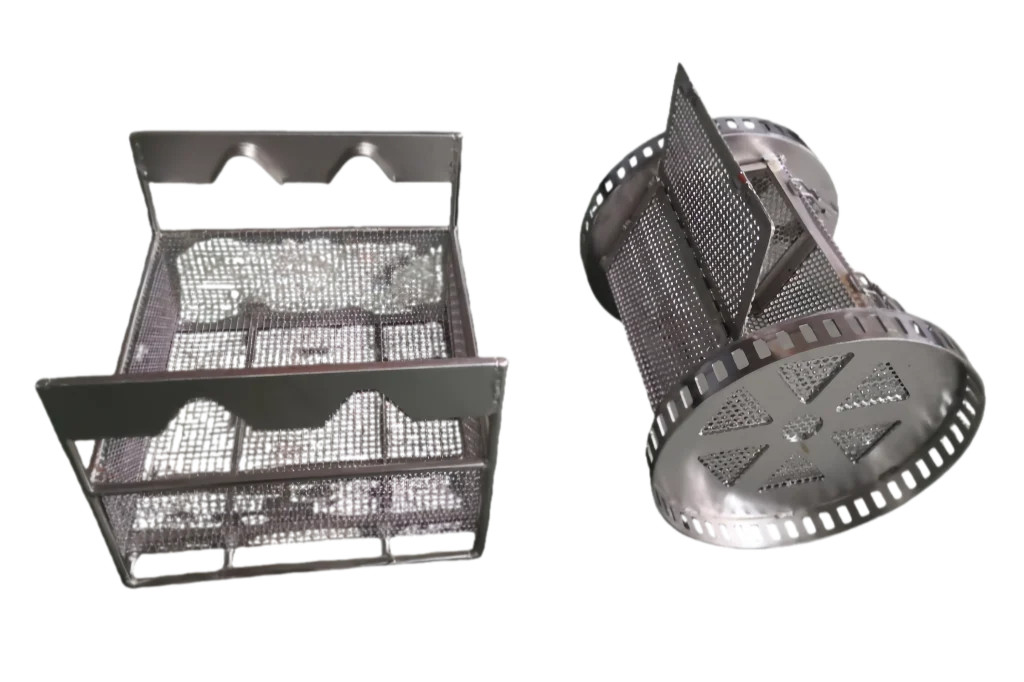
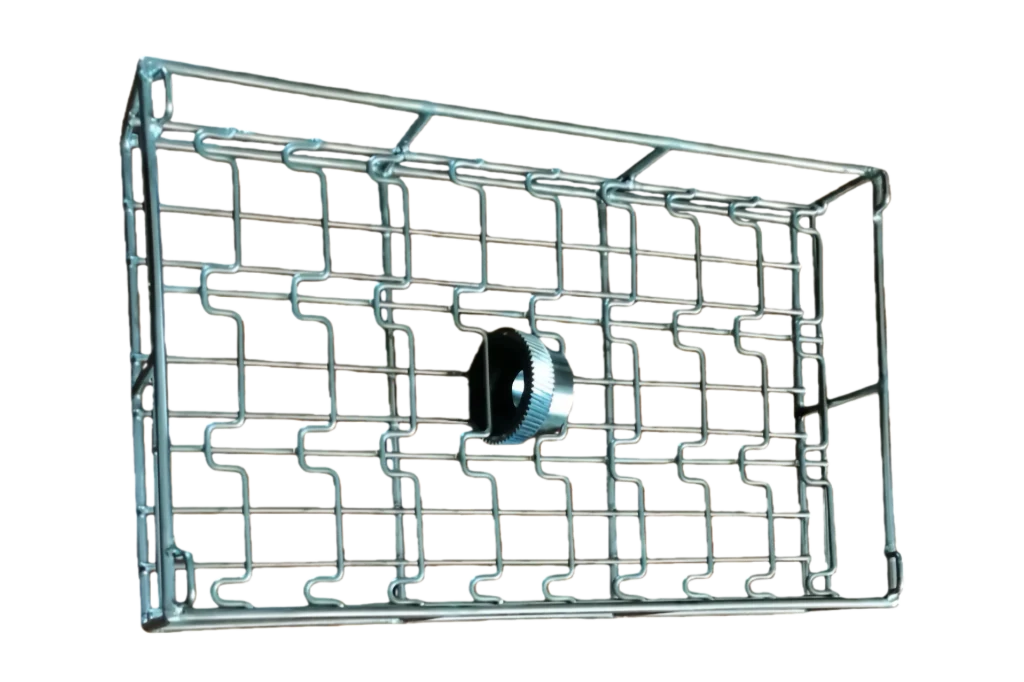
Ultrasonic cleaning performance is as much about how you hold the part as about the tank itself. A dense basket of parts shields the center from cavitation. Trapped air in blind holes dampens energy. Wrong fixture material—like carbon steel in an aqueous tank—introduces rust. We design cleaning baskets to be thin-walled stainless steel with targeted perforations that let cavitation reach the parts while keeping them from contacting each other. For parts with deep recesses, a rotary basket that continuously reorients the workpiece inside the ultrasonic field can eliminate cleaning shadows.
How Basket Rotation Rate Affects Cleaning of Blind Holes
Rotary baskets spin slowly—about 5 to 15 rpm—to gently tumble parts or to rotate a fixture so that every cavity is exposed to the transducer field. Too fast, and the parts get scuffed; too slow, and the cycle time must stretch to guarantee coverage. For stamped connectors with deep-drawn cups, we've used a rotation synchronized with the ultrasonic pulsing to ensure at least three cavitation pulses inside each cup per cycle. That took a few iterations to get right, but once locked in, reject rates fell below 0.2%.
Multi-Tank Configurations for Sequential Cleaning
cURL Too many subrequests by single Worker invocation. To configure this limit, refer to https://developers.cloudflare.com/workers/wrangler/configuration/#limits
| cURL Too many subrequests by single Worker invocation. To configure this limit, refer to https://developers.cloudflare.com/workers/wrangler/configuration/#limits | Am besten geeignet für | cURL Too many subrequests by single Worker invocation. To configure this limit, refer to https://developers.cloudflare.com/workers/wrangler/configuration/#limits |
|---|---|---|
| cURL Too many subrequests by single Worker invocation. To configure this limit, refer to https://developers.cloudflare.com/workers/wrangler/configuration/#limits | cURL Too many subrequests by single Worker invocation. To configure this limit, refer to https://developers.cloudflare.com/workers/wrangler/configuration/#limits | 3 |
| cURL Too many subrequests by single Worker invocation. To configure this limit, refer to https://developers.cloudflare.com/workers/wrangler/configuration/#limits | cURL Too many subrequests by single Worker invocation. To configure this limit, refer to https://developers.cloudflare.com/workers/wrangler/configuration/#limits | 4 |
| cURL Too many subrequests by single Worker invocation. To configure this limit, refer to https://developers.cloudflare.com/workers/wrangler/configuration/#limits | cURL Too many subrequests by single Worker invocation. To configure this limit, refer to https://developers.cloudflare.com/workers/wrangler/configuration/#limits | 5 |
| cURL Too many subrequests by single Worker invocation. To configure this limit, refer to https://developers.cloudflare.com/workers/wrangler/configuration/#limits | cURL Too many subrequests by single Worker invocation. To configure this limit, refer to https://developers.cloudflare.com/workers/wrangler/configuration/#limits | 6 |
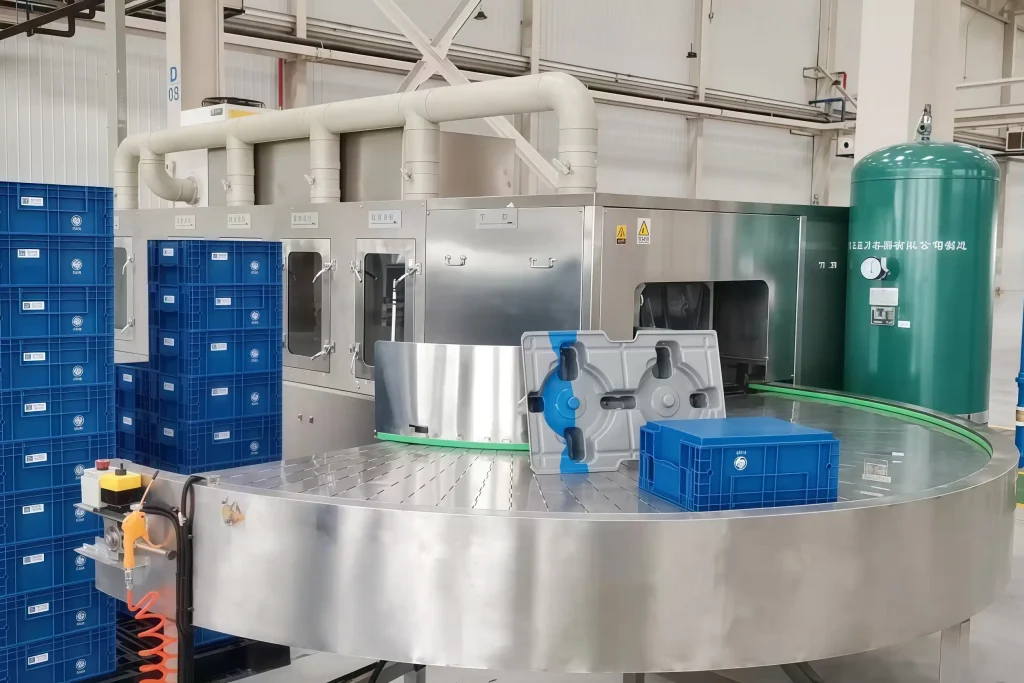
Integrating Ultrasonic Cleaning into Continuous Production Lines
cURL Too many subrequests by single Worker invocation. To configure this limit, refer to https://developers.cloudflare.com/workers/wrangler/configuration/#limits
Matching Conveyor Speed to Contaminant Removal Time
cURL Too many subrequests by single Worker invocation. To configure this limit, refer to https://developers.cloudflare.com/workers/wrangler/configuration/#limits
How to Handle Part Transfer Without Contamination
cURL Too many subrequests by single Worker invocation. To configure this limit, refer to https://developers.cloudflare.com/workers/wrangler/configuration/#limits
Verifying Cleaning Results and Calculating Equipment ROI
cURL Too many subrequests by single Worker invocation. To configure this limit, refer to https://developers.cloudflare.com/workers/wrangler/configuration/#limits
How to Set Measurable Cleanliness Targets
cURL Too many subrequests by single Worker invocation. To configure this limit, refer to https://developers.cloudflare.com/workers/wrangler/configuration/#limits
ROI Calculation for Industrial Ultrasonic Cleaning Systems
cURL Too many subrequests by single Worker invocation. To configure this limit, refer to https://developers.cloudflare.com/workers/wrangler/configuration/#limits
| Kostenkategorie | cURL Too many subrequests by single Worker invocation. To configure this limit, refer to https://developers.cloudflare.com/workers/wrangler/configuration/#limits | cURL Too many subrequests by single Worker invocation. To configure this limit, refer to https://developers.cloudflare.com/workers/wrangler/configuration/#limits |
|---|---|---|
| cURL Too many subrequests by single Worker invocation. To configure this limit, refer to https://developers.cloudflare.com/workers/wrangler/configuration/#limits | cURL Too many subrequests by single Worker invocation. To configure this limit, refer to https://developers.cloudflare.com/workers/wrangler/configuration/#limits | cURL Too many subrequests by single Worker invocation. To configure this limit, refer to https://developers.cloudflare.com/workers/wrangler/configuration/#limits |
| Installation | cURL Too many subrequests by single Worker invocation. To configure this limit, refer to https://developers.cloudflare.com/workers/wrangler/configuration/#limits | cURL Too many subrequests by single Worker invocation. To configure this limit, refer to https://developers.cloudflare.com/workers/wrangler/configuration/#limits |
| cURL Too many subrequests by single Worker invocation. To configure this limit, refer to https://developers.cloudflare.com/workers/wrangler/configuration/#limits | cURL Too many subrequests by single Worker invocation. To configure this limit, refer to https://developers.cloudflare.com/workers/wrangler/configuration/#limits | cURL Too many subrequests by single Worker invocation. To configure this limit, refer to https://developers.cloudflare.com/workers/wrangler/configuration/#limits |
| Wartung | cURL Too many subrequests by single Worker invocation. To configure this limit, refer to https://developers.cloudflare.com/workers/wrangler/configuration/#limits | cURL Too many subrequests by single Worker invocation. To configure this limit, refer to https://developers.cloudflare.com/workers/wrangler/configuration/#limits |
| Schulung | cURL Too many subrequests by single Worker invocation. To configure this limit, refer to https://developers.cloudflare.com/workers/wrangler/configuration/#limits | cURL Too many subrequests by single Worker invocation. To configure this limit, refer to https://developers.cloudflare.com/workers/wrangler/configuration/#limits |
cURL Too many subrequests by single Worker invocation. To configure this limit, refer to https://developers.cloudflare.com/workers/wrangler/configuration/#limits
The Engineering Decisions That Affect Long-Term Cleaning Reliability
cURL Too many subrequests by single Worker invocation. To configure this limit, refer to https://developers.cloudflare.com/workers/wrangler/configuration/#limits
How to Detect Transducer Degradation Before Failure
cURL Too many subrequests by single Worker invocation. To configure this limit, refer to https://developers.cloudflare.com/workers/wrangler/configuration/#limits
When to Update Cleaning Chemistry and Filtration
cURL Too many subrequests by single Worker invocation. To configure this limit, refer to https://developers.cloudflare.com/workers/wrangler/configuration/#limits
Common Questions About Industrial Ultrasonic Cleaning Systems
cURL Too many subrequests by single Worker invocation. To configure this limit, refer to https://developers.cloudflare.com/workers/wrangler/configuration/#limits
cURL Too many subrequests by single Worker invocation. To configure this limit, refer to https://developers.cloudflare.com/workers/wrangler/configuration/#limits
How do I know if I need aqueous or solvent cleaning?
cURL Too many subrequests by single Worker invocation. To configure this limit, refer to https://developers.cloudflare.com/workers/wrangler/configuration/#limits
What throughput can I expect from an automated system compared to manual?
cURL Too many subrequests by single Worker invocation. To configure this limit, refer to https://developers.cloudflare.com/workers/wrangler/configuration/#limits
Is it worth upgrading from a manual to a semi-automatic system?
cURL Too many subrequests by single Worker invocation. To configure this limit, refer to https://developers.cloudflare.com/workers/wrangler/configuration/#limits
cURL Too many subrequests by single Worker invocation. To configure this limit, refer to https://developers.cloudflare.com/workers/wrangler/configuration/#limits
cURL Too many subrequests by single Worker invocation. To configure this limit, refer to https://developers.cloudflare.com/workers/wrangler/configuration/#limits
Wenn Sie interessiert sind, schauen Sie sich diese verwandten Artikel an:
Mehrbehälter-Ultraschallreinigung: Ein tiefer Einblick in industrielle Konfigurationen
Ultraschall-Transducer-Technologie: Ein Expertenleitfaden für die industrielle Reinigung
 German
  English
  Spanish
  French
  Russian
  Portuguese