
FAQ: Answering Common Questions About Solvent (Hydrocarbon) Cleaning Machines
As a leader in the design and manufacturing of solvent (hydrocarbon) cleaning equipment, GTKCLEAN has developed this FAQ to address the key needs of industrial professionals, recognizing the demand for efficient and eco-friendly cleaning solutions amid the evolving landscape of precision manufacturing and advanced technologies; this document compiles and explains common questions about hydrocarbon cleaning machines, with the goal of providing expert guidance to support businesses in upgrading their production lines and transitioning to greener operations.
1. How Does a Solvent (Hydrocarbon) Cleaning Machine Work?
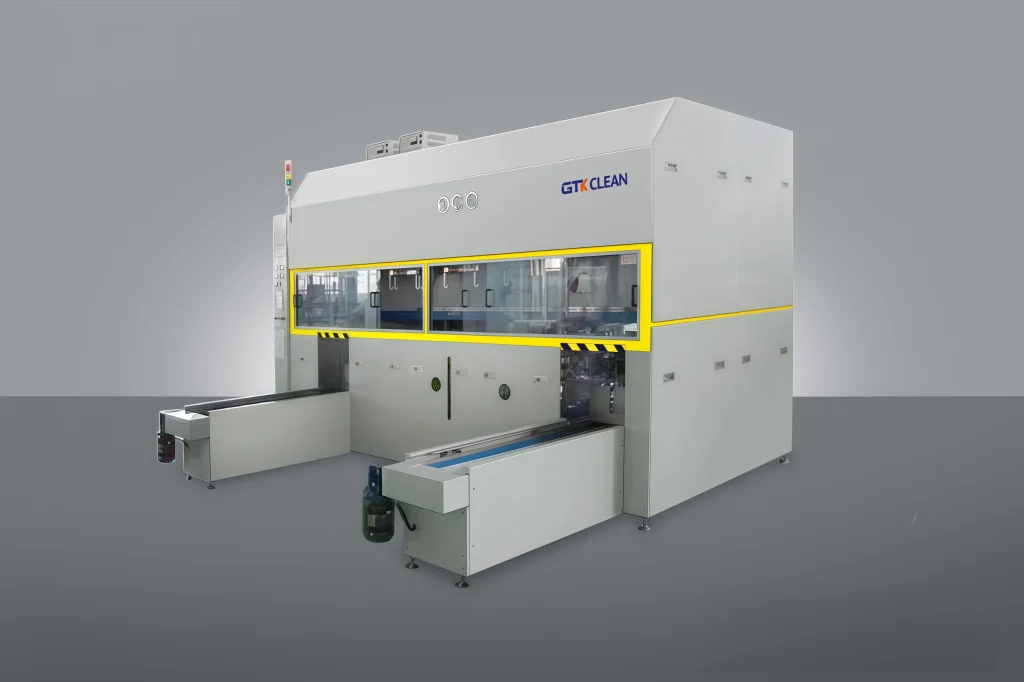
Solvent (Hydrocarbon) cleaning machines operate using hydrocarbon solvents and specialized cleaning methods, with key details broken down below:
- Cleaning medium: Hydrocarbon solvents (e.g., mineral oils, synthetic hydrocarbons) are used as the core cleaning agent.
- Core principle: Leverage the physical and chemical properties of solvents to remove surface contaminants (grease, metal chips, dust, fingerprints, welding residues).
- Cleaning methods: Spray cleaning: High-pressure nozzles evenly coat workpieces to accelerate contaminant dissolution and rinsing.
- Ultrasonic vibration: Cavitation creates tiny, bursting bubbles that generate shockwaves for deep cleaning of gaps and blind holes.
- Vacuum immersion: Negative-pressure environment speeds up solvent penetration and dissolution to boost efficiency.
- Solvent advantages: Excellent solubility, low toxicity, high flash point, and recyclability make them ideal for modern industrial cleaning.
2. What Are the Key Advantages of Solvent (Hydrocarbon) Cleaning Over Traditional Methods?
Solvent (Hydrocarbon) cleaning outperforms traditional methods in four key areas:
- Environmental friendliness: Less toxic and more biodegradable than traditional halogenated solvents (e.g., trichloroethylene, tetrachloroethylene).
- Complies with international regulations (REACH, RoHS) to support green production and reduce environmental impact.
- Higher efficiency: Ultrasonic cavitation and full-coverage spray enable deep cleaning in a short time.
- Removes tiny stains and hard-to-reach contaminants, improving production efficiency and product cleanliness.
- Cost-effectiveness: Solvents are recyclable via distillation and filtration, reducing consumption and waste disposal costs.
- Machines are designed for easy maintenance, lowering long-term operational expenses.
- Enhanced safety: High-flash-point solvents minimize fire and explosion risks.
- Advanced safety controls (temperature monitoring, pressure protection, emergency shutdown) eliminate hazards.
3. Which Industries and Applications Are Solvent (Hydrocarbon) Cleaning Machines Suitable For?
Solvent (Hydrocarbon) cleaning machines are widely applicable across industries, with key use cases outlined below:
- Key industries: Precision machining, automotive parts manufacturing, aerospace, electronic semiconductors, optical component processing, medical device manufacturing.
- Ideal for high-precision components: Precision molds, optical lenses, integrated circuits, precision hardware, medical device parts (all require strict cleanliness).
- Industry-specific applications: Automotive parts: Removes processing oils, cutting fluids, and rust-preventive oils to ensure assembly accuracy and performance.
- Electronic semiconductors: Eliminates wafer and chip packaging residues to improve product yield and reliability.
4. How Can I Customize a Solvent (Hydrocarbon) Cleaning Machine for My Specific Needs?
Customizing a Solvent (hydrocarbon) cleaning machine requires considering five core factors, plus GTKCLEAN’s support:
- Workpiece material and size: Different materials/sizes require specific cleaning media, methods, and equipment specifications.
- Contaminant type and severity: Determines the cleaning process and duration (e.g., grease, metal chips).
- Production cycle and capacity: Dictates the number of stations, cleaning speed, and automation level.
- Space and budget: Machine size and configuration must fit on-site space and budget, ensuring easy installation and operation.
- Safety and environmental requirements: Compliance with national/local regulations (explosion protection, fire prevention, waste treatment).
- GTKCLEAN’s one-stop service: From needs analysis and process design to equipment selection and installation, we tailor solutions to your needs.
5. What Is the Standard Operating Procedure (SOP) for a Solvent (Hydrocarbon) Cleaning Machine?
The standard operating procedure (SOP) for solvent (hydrocarbon) cleaning machines involves five sequential steps:
- Step 1: Pre-treatment – Remove large impurities, burrs, and oxide layers to prepare the workpiece for cleaning.
- Step 2: Cleaning – Select the appropriate method (spray, ultrasonic, vacuum immersion) to ensure even solvent coverage and full contaminant removal.
- Step 3: Rinsing – Use fresh solvent or distilled water to remove residual solvent and contaminants, enhancing cleanliness.
- Step 4: Drying – Use hot air, vacuum, or centrifugal drying to quickly remove moisture and solvent residues, preventing corrosion and secondary contamination.
- Step 5: Post-treatment – Perform rust prevention, coating, or other treatments (as needed) to extend workpiece service life and ensure performance.
6. What Are the Key Technical Parameters of a Solvent (Hydrocarbon) Cleaning Machine?
Key technical parameters directly impact cleaning effectiveness and operational efficiency, with details below:
- Solvent temperature: Affects solubility and cleaning efficiency; finely tuned based on workpiece material and contaminant type.
- Cleaning time: Ensures full contaminant dissolution/rinsing without over-cleaning (which can damage workpieces).
- Ultrasonic power and frequency: Determines cavitation intensity and cleaning depth; matched to workpiece structure and contaminant characteristics.
- Spray pressure and flow rate: Influences solvent spray force and coverage to ensure uniform, efficient cleaning.
- Drying temperature and time: Strictly controlled to avoid workpiece deformation, oxidation, or solvent residue (matched to material and size).
7. How to Maintain a Solvent (Hydrocarbon) Cleaning Machine for Long-Term Stable Operation?
Proper maintenance ensures long-term stable operation and efficiency, with key tasks outlined below:
- Regular maintenance:Filter solvents, clean nozzles, inspect/replace pumps, and test ultrasonic generators.
- Ensures cleaning medium purity and reliable machine performance.
- Solvent management: Regularly test solvent quality; purify or replace as needed.
- Use high-quality solvents to avoid impurity accumulation and maintain recyclability.
- Temperature and pressure control: Maintain stable operation of heating, cooling, and pressure systems to balance efficiency and safety.
- Electrical safety: Regularly inspect components and wiring to prevent short circuits, overloads, and electric leakage.
- Training and documentation: Train operators on procedures and maintenance requirements.
- Maintain maintenance records to track machine status and fault history for preventive care.
8. Are Solvent (Hydrocarbon) Cleaning Machines Environmentally Compliant, and What Is Their Future Trend?
Solvent (Hydrocarbon) cleaning machines meet strict environmental standards, with future trends focused on innovation and sustainability:
- Environmental compliance:GTKCLEAN adheres to domestic and international environmental regulations.
- All machines are ISO 14001 certified to ensure emissions meet standards.
- Energy-saving design: High-efficiency motors and energy-saving heating/cooling systems reduce energy consumption and carbon emissions.
- Innovative developments: Ongoing research into eco-friendly media and processes (e.g., bio-based solvents, supercritical CO₂ cleaning).
- Future trends: Intelligence, automation, and integration with Industry 4.0 and smart manufacturing.
- Integration of IoT, big data, and AI for precise control and remote monitoring (improves efficiency, reduces costs, optimizes energy use).
- Focus on sustainability to drive the industry toward green, low-carbon, circular cleaning.
GTKCLEAN’s commitment and support for customers include the following:
- We provide high-quality solvent (hydrocarbon) cleaning solutions with professionalism and innovative technology.
- We collaborate with industries to explore more efficient, eco-friendly cleaning paths for green manufacturing.
- We welcome inquiries and needs from customers to start a new chapter in clean production.
 English
  German
  Spanish
  French
  Russian
  Portuguese