
2026 Industrial Ultrasonic Washer Buying Guide: Avoid 4 Costly Mistakes & Save on Operational Costs
As the manufacturing industry shifts toward high-end production, intelligence and sustainability, industrial ultrasonic cleaners have become essential equipment across precision manufacturing, automotive parts, medical devices and other sectors. Market demand keeps growing, yet many companies still struggle to pick the right model.
A large number of buyers either chase the lowest price blindly or focus solely on technical specs without checking compatibility. Once the equipment is put into use, they face poor cleaning performance, mismatched production requirements and frequent breakdowns. This leads to wasted procurement budgets and disrupted production schedules.
In 2026, the industry continues to evolve toward smarter, greener and more customized solutions. A well-chosen ultrasonic cleaner can boost cleaning efficiency and cut operational expenses. Below we break down four major selection mistakes and share practical tips to help you make a smart purchase.
Mistake 1: Prioritizing Low Price Over Quality & After-Sales Support
Many small and medium-sized businesses opt for cheap units, believing any functional cleaner will suffice. They overlook the two most critical factors for industrial equipment: build quality and after-sales service.
Low-cost cleaners usually come with inferior transducers and wiring. They deliver low cleaning efficiency, consume more power and break down easily. Worse still, slow after-sales response means prolonged downtime and substantial production losses, which ultimately costs far more in the long run.
Best Practice: Focus on the quality of core components including transducers and generators. Partner with suppliers that offer comprehensive after-sales services. A slightly higher upfront cost always translates to greater reliability and long-term savings.
Mistake 2: Chasing Maximum Specs Without Considering Production Compatibility
Some procurement staff assume higher ultrasonic power and frequency always equal better cleaning results, so they rush to buy over-specified machines regardless of actual production needs.
For example, high-power, large-tank cleaners are a waste of electricity and floor space for small workshops handling tiny precision components. On the other hand, low-power units will fail to thoroughly clean heavy machinery parts and compromise product quality.
Best Practice: Select equipment based on workpiece size, contamination type and production capacity.
- High frequency (40-80kHz) & medium/low power: Ideal for precision parts
- Low frequency (20-30kHz) & high power: Suitable for heavy-duty components
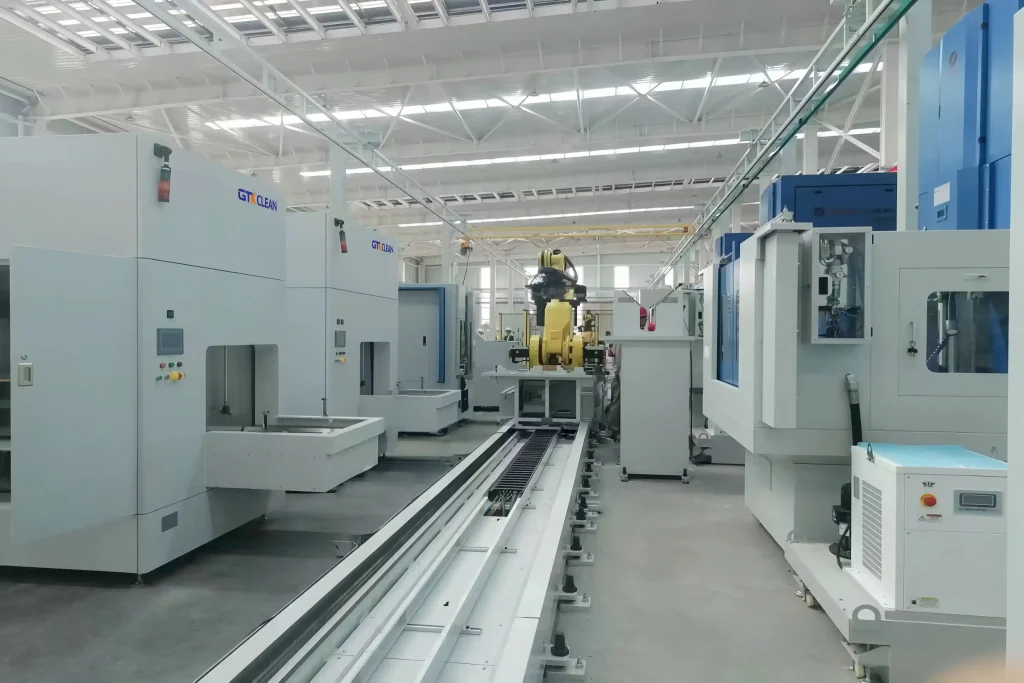
- Fully automatic cleaning lines: Recommended for mass production
- Single-tank units: Perfect for small-batch processing
Matching the equipment to your actual needs is the optimal choice.
Mistake 3: Using Standard Units for Unique Custom Requirements
Cleaning standards vary drastically across industries and workpieces. Medical applications require cleaners that meet healthcare regulations, while facilities in explosion-proof zones need explosion-proof ultrasonic models.
Many companies force standard equipment to fit special demands, resulting in subpar cleaning performance and non-compliance with industry rules.
Best Practice: Clarify your specific requirements upfront, such as cleanliness standards, workshop conditions and workpiece features. Work with manufacturers capable of custom engineering. Let them tailor cleaning solutions to your production processes to ensure full alignment with operational demands.
Mistake 4: Neglecting Environmental Performance & Incurring Extra Long-Term Costs
With carbon neutrality goals being pushed forward in the industrial sector, environmental regulations have become increasingly stringent. Companies that choose high-energy and high-pollution equipment face steep power bills later on. They may also be ordered to rectify non-compliant operations, bringing additional unexpected expenses.
Best Practice: Choose energy-efficient models that support reusable cleaning agents. These units minimize wastewater and exhaust emissions. They not only comply with environmental policies but also reduce long-term operating costs, keeping your business in line with the industry’s green development roadmap.
Ever struggled with ultrasonic cleaner selection? Get in touch with us on WhatsApp (+8617768507147) or via email: [email protected].
In 2026, the core principle of equipment selection has shifted from simply buying a machine to sourcing a complete solution. The right ultrasonic cleaner helps improve productivity, guarantee product quality and lower running costs, supporting your business’s upgrade to high-end and sustainable manufacturing.
If this guide is useful, feel free to share it with your procurement colleagues to help everyone avoid pitfalls and unnecessary spending.
Bookmark our website (www.gtkclean.com) for more practical industrial equipment selection tips and industry trend insights. We will keep updating content to help you select suitable gear, cut costs and ramp up efficiency.
 English
  German
  Spanish
  French
  Russian
  Portuguese