
Process Flow Design for Multi-Stage Cleaning Systems
Multi-stage cleaning systems follow a defined sequence: gross debris removal first, then progressively finer contaminant extraction, ending with residue-free surfaces. The number of stages depends on part geometry, contamination type, and target cleanliness level. A Pre PVD parts cleaning line, for example, moves through hydrojet spray, ultrasonic cleaning, multi-stage ultrapure water rinsing, and finally air knife, hot air, or vacuum drying. Each stage addresses a specific contamination layer rather than attempting to handle everything at once.
Pre-cleaning removes bulk contaminants—machining oils, particulates, handling residues—before precision cleaning addresses microscopic films. Final rinse stages prevent water spots and secondary contamination. Ultrapure water systems maintaining conductivity at or below 0.06 μS/cm are standard for optical and coating applications where even trace mineral deposits cause rejection. Drying method selection matters equally: vacuum drying reaches blind holes and complex internal geometries that hot air cannot fully address.
Chemical Compatibility and Solution Management in Multi-Tank System Configuration
Cleaning agent selection determines whether a multi-tank system configuration delivers consistent results or creates new problems. Incorrect chemical pairing causes material degradation—etching on aluminum, stress cracking in certain polymers, surface discoloration on stainless steel. Aqueous cleaning solutions suit most ferrous metals and many plastics; solvent cleaning solutions handle heavy oils and waxes more effectively on precision components.
Solution lifespan extends significantly through advanced filtration and circulation. A distillation-based solvent recycling system in hydrocarbon ultrasonic cleaners recovers solvent, removes dissolved contaminants, and reduces both chemical consumption and disposal costs. Degreasing agents handle oils; rust inhibitors can be added to rinse stages when parts require corrosion protection during storage or transport. The practical outcome is lower operating cost per part cleaned and more predictable bath performance over time.
Temperature, Agitation, and Energy Efficiency
Temperature and agitation control directly affect cleaning performance and energy consumption. Ultrasonic agitation generates cavitation bubbles through high-frequency sound waves—these bubbles collapse against part surfaces and dislodge contaminants from blind holes, threads, and complex geometries that spray cleaning cannot reach. Mechanical agitation through spray or immersion handles bulk contamination effectively but lacks the penetration of ultrasonic action.
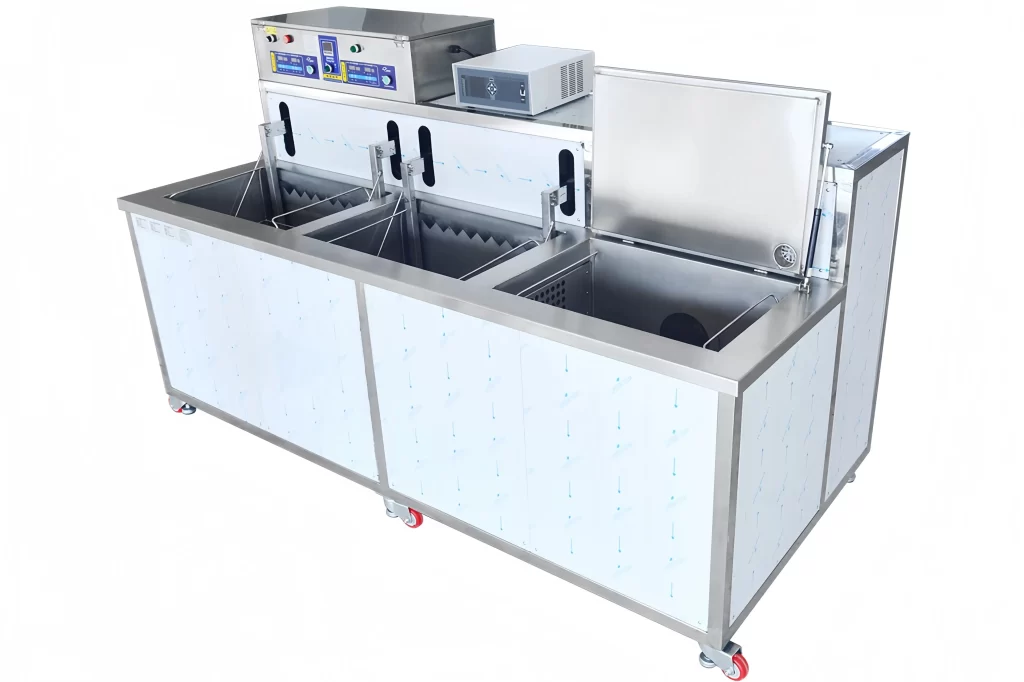
Optimal cleaning temperatures typically fall between 45°C and 65°C; rinsing operates cooler, usually 30°C to 40°C. Energy-efficient heating elements and proper tank insulation maintain these temperatures without excessive power draw. Multi-tank ultrasonic cleaners with adjustable temperature and time parameters per tank allow operators to fine-tune each stage independently, matching process conditions to the specific contamination and material at each point in the sequence.
Automation Integration and Control Systems
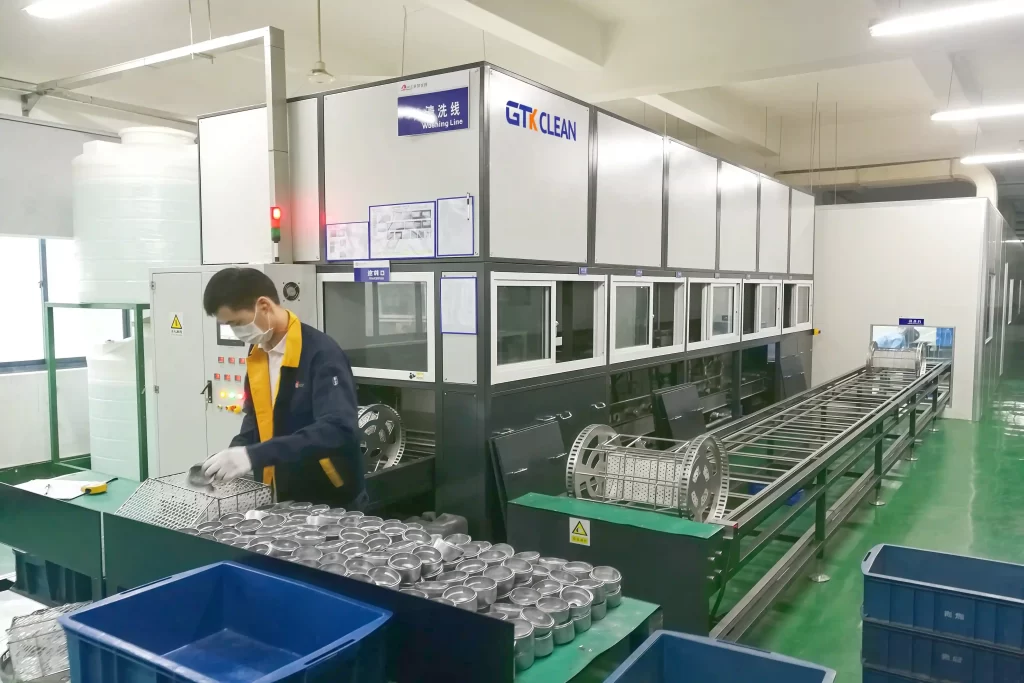
Automation reduces human error and increases throughput capacity in multi-tank system configuration. PLC control—commonly Siemens or Mitsubishi platforms—paired with color touchscreen HMI provides intuitive process monitoring, parameter adjustment, and data logging for quality documentation. Robotic handling and conveyor systems enable continuous high-volume production without manual transfer between tanks.
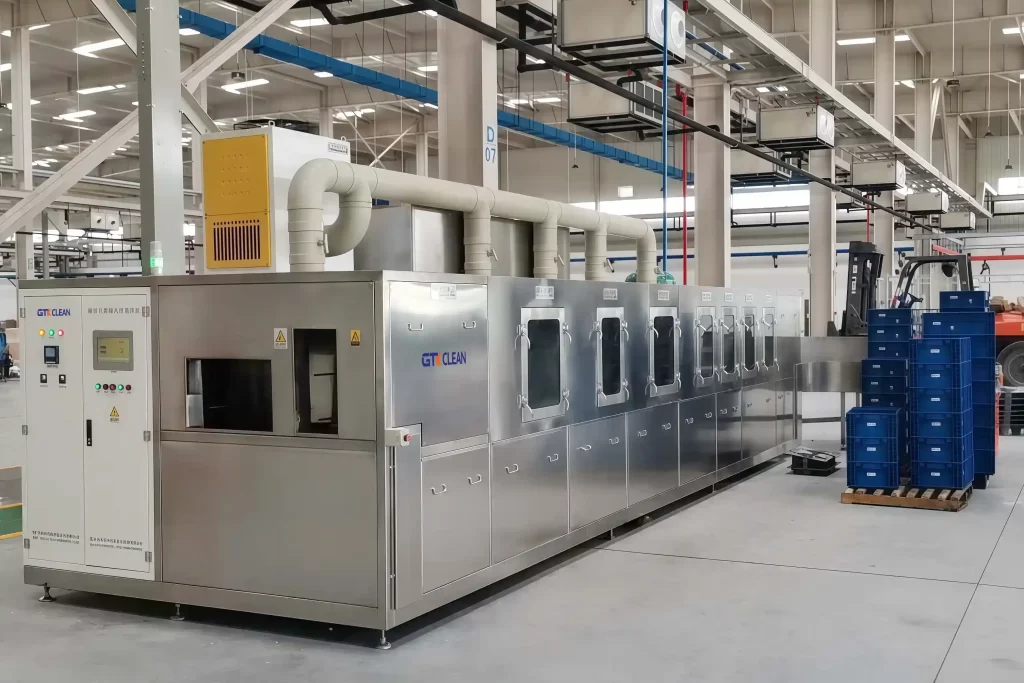
Fastener tunnel cleaners illustrate this approach: a continuous conveyor system with adjustable speeds and fully automatic loading and unloading eliminates manual basket handling. Operators monitor rather than intervene. Integrated safety features—emergency stops, interlocked access doors, gas monitoring for solvent applications—reduce direct chemical exposure. If your production volume requires consistent cycle times across shifts, discussing automation levels with your equipment supplier clarifies which features deliver measurable return.
Footprint Optimization and System Scalability
Factory floor space carries cost. Effective multi-tank system configuration balances cleaning capability against physical footprint. Modular system design allows reconfiguration or expansion as production demands change, avoiding complete system replacement when capacity requirements grow.
Customizable cleaning solutions scale from compact benchtop units for prototype work to heavy-duty automated systems handling workpieces up to 2000 kg with custom load-bearing baskets and reinforced tanks. The practical question is whether your current layout can accommodate future expansion. Modular designs that allow adding tanks or drying stages without relocating the entire line reduce long-term capital expenditure.
Environmental Compliance and Waste Treatment
Environmental regulations govern effluent discharge, chemical disposal, and air emissions from industrial cleaning operations. Multi-tank system configuration must integrate waste treatment and water treatment systems that meet local and national standards. Overflow rinsing and circulation systems minimize water and detergent consumption while maintaining rinse quality.
Integrated water treatment loops filter and recirculate cleaning solutions, reducing both freshwater consumption and wastewater volume. Solvent recovery systems capture and regenerate hydrocarbon cleaners rather than sending them to disposal. These features address regulatory requirements while lowering operating costs—compliance and efficiency align rather than conflict.
Optimize Your Industrial Cleaning Operations
For a consultation on multi-tank system configuration tailored to your production requirements, contact Suzhou Grintek Environmental Technology Co., Ltd. at [email protected] or +86 17768507147.
What is the ideal number of tanks for complex industrial cleaning tasks?
Complex industrial cleaning typically requires 3 to 7 tanks, determined by contamination type, part geometry, and cleanliness specifications. A multi-tank system configuration segments the process into pre-cleaning, precision cleaning, multiple rinse stages, and drying. This separation allows specialized treatment at each step and prevents cross-contamination between stages. Parts with heavy machining oils and tight cleanliness requirements for subsequent coating operations sit at the higher end of that range.
How does multi-tank configuration impact cleaning solution lifespan?
Multi-tank configurations extend cleaning solution lifespan by segregating contamination loads across stages. Pre-cleaning tanks absorb the heaviest soil burden, protecting precision cleaning baths from rapid degradation. Filtration and regeneration systems further optimize solution longevity. Distillation-based solvent recovery in hydrocarbon ultrasonic cleaners, for instance, removes dissolved oils and particulates, returning clean solvent to the process tank and reducing both chemical consumption and disposal frequency.
What are the critical safety considerations for multi-tank industrial cleaning systems?
Safety considerations include proper ventilation for solvent applications, chemical handling protocols, emergency shut-off mechanisms, and operator training on both routine operation and emergency response. Material compatibility verification prevents unexpected reactions between cleaning agents and part materials. Automated systems integrate gas monitoring, exhaust systems, and interlocked access panels to minimize direct chemical exposure. To discuss safety requirements for your specific application, contact the engineering team during system specification.
If you're interested, you may want to read the following articles:
Automated Versus Manual Cleaning Investment Comparison for Industry
Ultrasonic Cleaning Systems for Manufacturing A Technical Guide
 English
  German
  Spanish
  French
  Russian
  Portuguese