

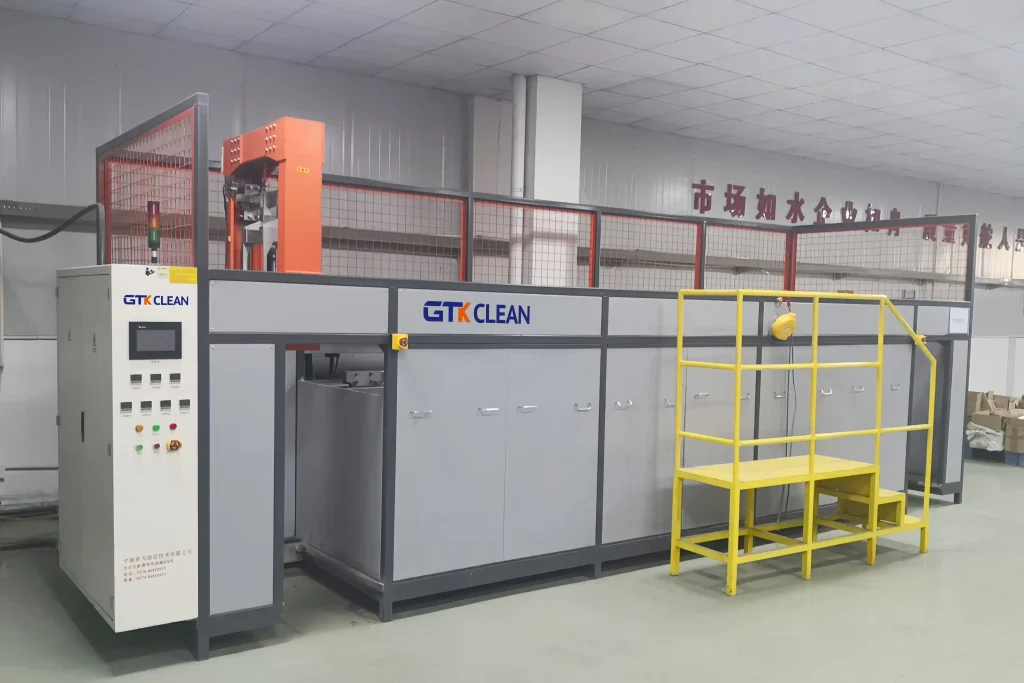
A Brief Discussion on Precision Cleaning Processes: Spray Cleaning vs. Ultrasonic Cleaning
It’s common knowledge that cleanliness in electronics manufacturing facilities has a critical impact on product reliability. Maintaining high cleanliness standards ensures consistent product quality and performance stability.
Preventing external contamination of critical electronic components during production is absolutely essential. Contaminated components face a higher risk of failures and defects, which lowers reliability and shortens service life. For this reason, cleaning processes have become an indispensable step in electronics manufacturing.
Cleaning detergents are typically divided into three categories: water-based cleaners, solvent-based cleaners, and semi-aqueous cleaners. Among these, solvent-based cleaners are mainly used in processes such as manual soak-and-scrub, ultrasonic cleaning (for non-flammable, non-explosive solvent cleaners), and vapor degreasing.
Water-based and semi-aqueous cleaners are most commonly applied through ultrasonic cleaning and spray cleaning—two standard methods in industrial cleaning. These two processes differ in cleaning mechanisms and application areas, which we briefly outline in this article.
How Ultrasonic Cleaning Equipment Works
Ultrasonic cleaning uses the cavitation effect of ultrasonic waves to effectively clean part surfaces and internal crevices. As high-frequency ultrasonic energy vibrates through the cleaning solution, millions of microscopic bubbles form and collapse rapidly. This continuous cycle creates powerful shockwaves and eddy currents that dislodge contaminants from workpiece surfaces.
Typical Applications of Ultrasonic Cleaning Equipment
Ultrasonic cleaners are widely used to clean components, instruments, tools, and machinery across industries:
Automotive manufacturing: Precision cleaning of engine parts, brake pads, and wheel hubs
Mechanical manufacturing: Removal of grease and grime from gears, bearings, pumps, and valves
Electronics manufacturing: Elimination of flux residues and oxides from electronic components and printed circuit boards (PCBs)
Food processing: Efficient, sanitary cleaning of containers, tools, and processing equipment
Key Factors Affecting Ultrasonic Cleaning Performance
Ultrasonic frequency: Frequency strongly influences cleaning results. Lower frequencies deliver strong shear forces suitable for basic surface cleaning, while higher frequencies enable precision cleaning of complex surfaces, deep holes, and blind holes.
Power density: Higher power density improves cleaning speed and effectiveness. Heavy-duty applications benefit from high power density, while delicate components require lower power to avoid damage. Excessively high power may harm fragile or sensitive parts.
Cleaning agent type: The right cleaner must be matched to the workpiece. For heavy, stubborn contaminants, use a higher cleaner concentration or a high-KB-value solvent cleaner. Adjust process parameters accordingly for optimal results.
Cleaning temperature: Ultrasonic action performs best within a specific temperature range. Moderate heat helps break down and lift contaminants, but excessive temperature reduces cleaning efficiency.
Cleaning time: Longer cleaning times generally improve results, but sensitive or complex parts require controlled durations to prevent surface or internal damage.
To achieve ideal cleaning, operators must select appropriate frequency, power density, cleaner type and concentration, temperature, and cycle time based on the specific application.
How Spray Cleaning Equipment Works
Spray cleaning uses high-pressure jets of water-based or semi-aqueous cleaning solution directed at workpiece surfaces. A high-pressure pump pressurizes the cleaning fluid, which is then sprayed through specialized nozzles. The high-impact force, combined with the cleaner’s wetting, dissolving, emulsifying, and saponifying properties, removes contaminants from surfaces and crevices for efficient cleaning.
Typical Applications of Spray Cleaning Equipment
Spray cleaning systems serve a wide range of industrial manufacturing applications:
Removal of grease and grime from machinery, industrial parts, and piping
Electronics manufacturing: Elimination of chemical residues and flux from PCBs
Food processing, pharmaceutical production, and other industries for cleaning processing equipment, pipelines, and components
Key Factors Affecting Spray Cleaning Performance
Spray pressure: Higher pressure creates stronger impact and shear forces for better cleaning. However, flexible or sensitive materials require pressure limits to avoid surface damage or reduced reliability.
Spray angle and positioning: Proper angles and placement ensure full, uniform coverage without blind spots for optimal cleaning.
Cleaner selection and concentration: Cleaner performance depends heavily on concentration. Insufficient concentration fails to remove contaminants effectively, while over-concentration leads to excessive cleaner residue and high rinse wastewater volume. GTKCLEAN meets strict cleaning requirements; our in-house labs and technical team provide testing and validation services to deliver complete solutions.
Temperature and time: Controlled temperature improves cleaning efficiency, reduces chemical consumption, and extends equipment life. Insufficient cleaning time leads to incomplete cleaning, while excessive time wastes resources.
Regular equipment maintenance: Routine upkeep, including cleaning checks for pipes and nozzles, preserves cleaning performance and extends equipment service life.
In short, spray cleaning relies on high-pressure fluid impact to remove surface contaminants. Precise process control ensures consistent cleaning results and safe equipment operation.
Comparison of Ultrasonic vs. Spray Cleaning
Ultrasonic cleaning uses ultrasonic cavitation and shockwaves to clean surfaces and deep crevices. It is widely used for electronic components, medical devices, eyeglasses, jewelry, and other precision items.
Spray cleaning uses high-pressure, uniformly distributed cleaning solution to rinse surfaces. It is commonly deployed on industrial production lines for automotive parts, machinery, and similar components.
The two methods differ fundamentally in cleaning action: ultrasonic cleaning uses physical ultrasonic effects to reach tiny gaps and complex geometries, while spray cleaning relies on high-pressure rinsing for surface cleaning.
Select the appropriate process based on your cleaning needs and part characteristics: ultrasonic cleaning is preferred for intricate parts and deep crevices, while spray cleaning is ideal for fast, high-volume cleaning of flat or simple surfaces.
 English
  German
  Spanish
  French
  Russian
  Portuguese