
Automotive manufacturing leaves no room for contamination. A single oil residue or metal chip on a transmission component can trigger warranty claims months down the line. I've seen production managers lose sleep over cleanliness specs that seemed impossible to meet with conventional methods. The reality is that modern automotive parts demand cleaning processes as sophisticated as the machining that creates them. Getting this right means fewer defects, faster throughput, and parts that actually perform as designed.
Why Automotive Cleaning Has Gotten So Much Harder
The cleaning challenges facing automotive manufacturers today would have seemed excessive a decade ago. Components now feature internal passages barely visible to the naked eye, material combinations that react differently to cleaning agents, and cleanliness specifications like ISO 16232 that measure particulate contamination in microns. Traditional spray-and-wipe approaches simply cannot reach contaminants lodged in blind holes or micro-channels.
GTKCLEAN has spent over 20 years in R&D specifically addressing these industrial cleaning problems. That experience has made one thing clear: microscopic contaminants that seem negligible during inspection can cause catastrophic failures in service.
| Contaminant Type | Common Sources | Impact on Automotive Parts |
|---|---|---|
| Machining Oils | Cutting, grinding | Adhesion issues, corrosion |
| Metal Chips | Machining | Wear, short circuits |
| Dust/Fibers | Environment | Surface defects, blockages |
| Fingerprints | Handling | Corrosion, poor adhesion |
| Flux Residues | Soldering | Electrical faults, corrosion |
These contamination sources explain why automotive parts cleaning requires such rigorous contamination control strategies. Precision cleaning becomes non-negotiable for quality control, especially when preparing surfaces for coating or final assembly.
Which Cleaning Technologies Actually Work for Automotive Components
Selecting the right cleaning technology depends entirely on what you're cleaning and what's contaminating it. There's no universal solution, but two approaches handle the majority of automotive applications effectively.
Ultrasonic cleaning works by generating microscopic cavitation bubbles that implode against surfaces, physically dislodging contaminants from areas that spray systems cannot reach. This makes ultrasonic cleaning ideal for engine blocks with internal oil galleries, machined parts with threaded holes, and any component where geometry creates cleaning shadows. Our Ultrasonic Cleaners for CNC Machined Parts run automated multi-stage cycles including high-pressure spray, ultrasonic degreasing, and DI water rinse. The combination removes cutting fluids, chips, and burrs that would otherwise compromise downstream processes.
Solvent cleaning takes a different approach, using chemical dissolution rather than mechanical action. Hydrocarbon solvents excel at removing oils and greases from sensitive electronics or components that cannot tolerate water exposure. New energy vehicle battery housings, for instance, require precise oil removal without any moisture contact. The solvent evaporates completely during vacuum vapor drying, leaving surfaces ready for assembly.
| Feature | Ultrasonic Cleaning | Solvent Cleaning |
|---|---|---|
| Mechanism | Cavitation bubbles dislodge contaminants | Chemical dissolution by solvent |
| Contaminants | Particulates, oils, greases, chips | Oils, greases, waxes, some organic residues |
| Applications | Engine blocks, complex geometries, machined parts | Sensitive electronics, precision parts, oil removal |
| Drying | Hot air, vacuum drying | Vacuum vapor drying |
| Advantages | Deep penetration, eco-friendly (water-based options) | Excellent degreasing, no water spots, fast drying |
Our Multi-Tank Hydrocarbon Ultrasonic Cleaners combine both principles for stamped parts with recessed features and blind holes. The system heats hydrocarbon solvent and applies vacuum ultrasonic cleaning for penetration that neither technology achieves alone. For continuous production, CNC Aluminum Shell Inline Cleaners provide automated inline cleaning for die-cast aluminum components without interrupting material flow.
Making Automated Cleaning Pay for Itself
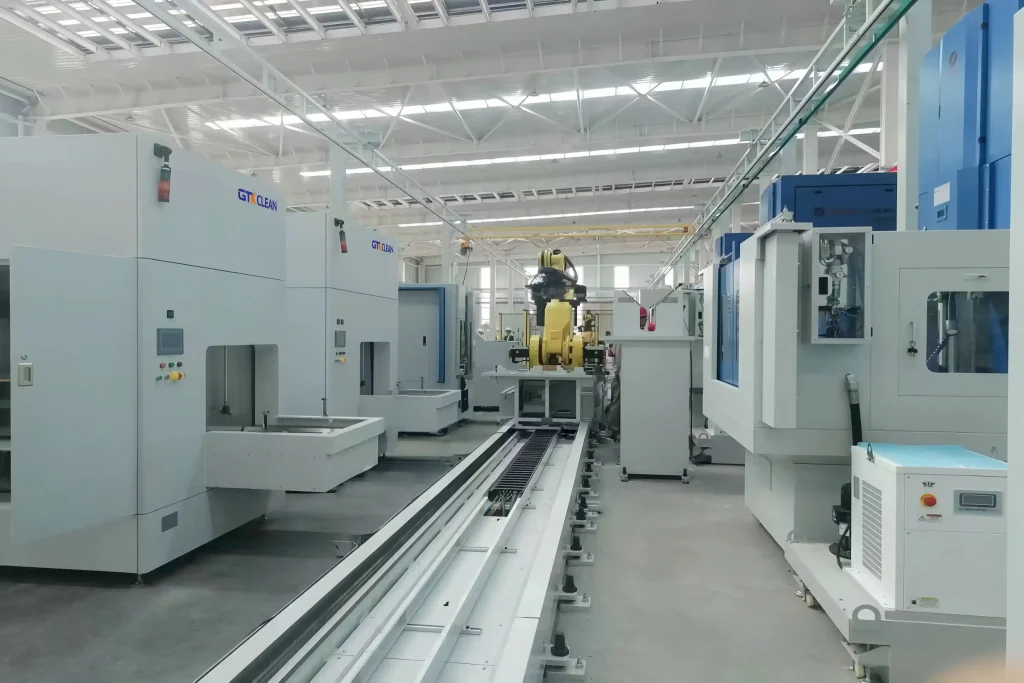
Automation in industrial cleaning isn't just about replacing manual labor. The real gains come from consistency, reduced chemical waste, and elimination of rework caused by human error. GTKCLEAN designs systems that integrate directly into production lines, supporting lean manufacturing by removing cleaning as a bottleneck.
Our Fastener Tunnel Cleaners demonstrate how automation drives cost reduction. The integrated oil-water separation system removes over 98% of surface oil from the cleaning fluid, which extends fluid life dramatically and cuts waste disposal costs. Circulation and filtration systems reduce water and detergent consumption by keeping cleaning media effective longer.
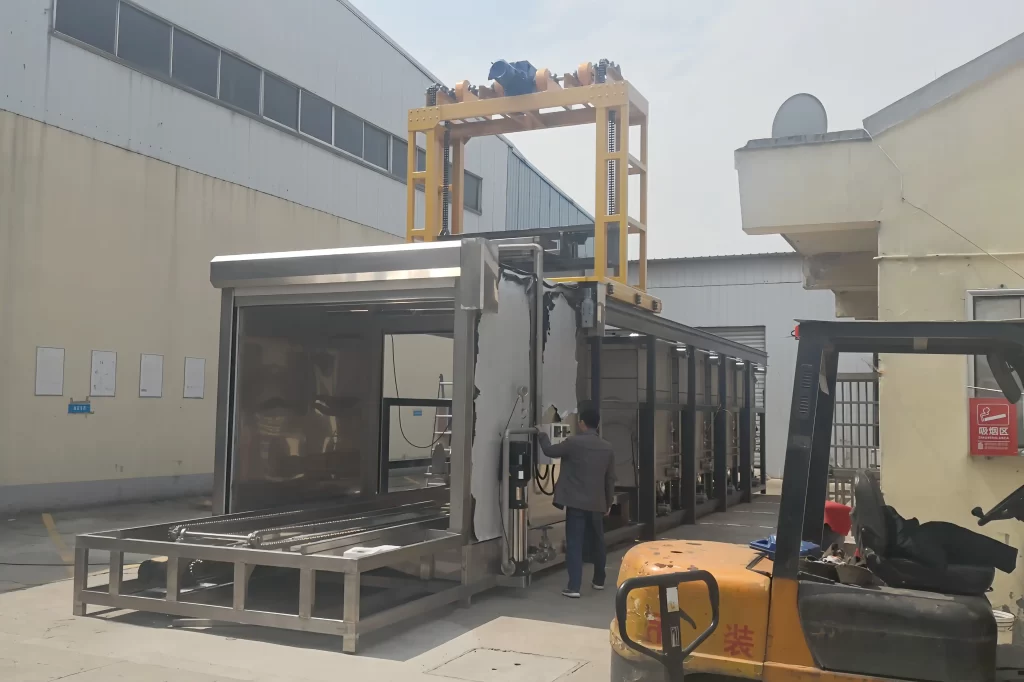
For manufacturers handling large, heavy components, our Heavy-Duty Automated Ultrasonic Cleaners manage workpieces up to 2000 kg. Robotic lifting and customized load-bearing baskets ensure reliable cleaning cycles without manual handling risks. These systems keep production running rather than waiting for cleaning to catch up.
Meeting Environmental Standards Without Sacrificing Performance
Environmental regulations around industrial cleaning have tightened considerably, and automotive manufacturers face pressure from both regulators and customers to demonstrate sustainable practices. GTKCLEAN's 28 technical patents reflect ongoing development of systems that minimize waste and resource consumption while maintaining cleaning performance.
Our Pre PVD Coating Parts Ultrasonic Cleaners incorporate ultrapure water systems achieving conductivity levels at or below 0.06 μS/cm. This prevents secondary contamination that would compromise coating adhesion, while circulation filtration reduces total water consumption. The approach addresses both regulatory compliance and practical sustainability goals.
Waste management in industrial cleaning often comes down to extending the useful life of cleaning media and capturing contaminants for proper disposal rather than releasing them. Systems designed with these principles built in make compliance straightforward rather than an ongoing struggle.
Matching Equipment to Your Actual Production Requirements
The wrong cleaning equipment creates problems that persist for years. Undersized systems become bottlenecks. Oversized systems waste energy and floor space. Equipment that cannot handle your specific contamination types delivers inconsistent results regardless of how carefully operators run it.
Several factors determine which industrial cleaning equipment fits a given application. Component material matters because some materials react poorly to certain solvents or cleaning temperatures. Required cleanliness levels dictate how many cleaning stages are necessary and what verification methods apply. Production volume determines whether batch systems or continuous inline systems make economic sense.
Physical footprint and integration capabilities often get overlooked during selection. A cleaning system that performs perfectly in isolation but cannot fit into existing material flow creates handling steps that slow everything down.
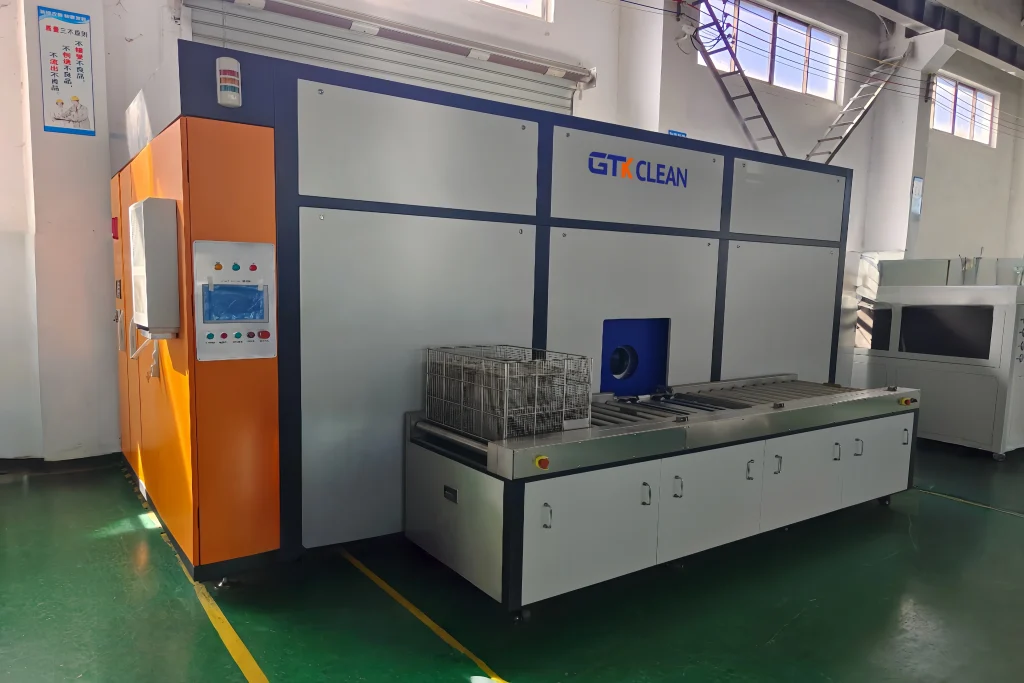
For precision parts with blind holes, Rotary Basket Ultrasonic Cleaning Systems provide 360° cleaning action that reaches every surface regardless of orientation. High-volume fastener operations benefit from Tunnel Cleaning Systems that process parts continuously without batch loading delays. GTKCLEAN works with manufacturers ranging from small specialists to Global Fortune 500 corporations, customizing solutions that address specific production line requirements.
Work with GTKCLEAN on Your Cleaning Challenges
Achieving the cleanliness levels that modern automotive manufacturing demands requires equipment designed for the task and expertise in applying it correctly. GTKCLEAN provides advanced industrial cleaning solutions backed by 28 technical patents and two decades of focused development. We help manufacturers improve their production processes while meeting the cleanliness standards their customers and regulators require.
Email: [email protected]
Phone: +86 17768507147
Frequently Asked Questions
What cleanliness standards apply to automotive component cleaning?
ISO 16232 is the primary standard for particulate contamination on automotive components. It specifies measurement methods and cleanliness levels based on particle size and count. Many OEMs also maintain internal specifications that exceed ISO requirements for critical components like fuel system parts or transmission components. The specific standard that applies depends on the component's function and the customer's requirements.
How long do industrial ultrasonic cleaning cycles typically take?
Cycle times range from 2-3 minutes for lightly contaminated parts to 15-20 minutes for heavily soiled components with complex geometries. Multi-stage systems that include pre-wash, ultrasonic cleaning, rinsing, and drying may run 30-45 minutes total. The actual time depends on contamination type, part geometry, and required cleanliness level. GTKCLEAN sizes systems to match production takt time requirements.
Can ultrasonic cleaning damage sensitive automotive components?
Ultrasonic cleaning can damage certain materials if parameters are set incorrectly. Soft metals, thin-walled parts, and some coatings require lower ultrasonic frequencies and power levels. GTKCLEAN systems include adjustable parameters and can be configured with specific recipes for sensitive components. Proper process development before production use prevents damage while achieving required cleanliness.
What maintenance do industrial cleaning systems require?
Regular maintenance includes monitoring and replacing cleaning media, cleaning or replacing filters, inspecting ultrasonic transducers, and verifying system parameters. Most systems require daily fluid level checks and weekly filter inspections. Transducer replacement intervals depend on usage but typically run 3-5 years. GTKCLEAN provides maintenance schedules and training as part of system installation.
 English
  German
  Spanish
  French
  Russian
  Portuguese