

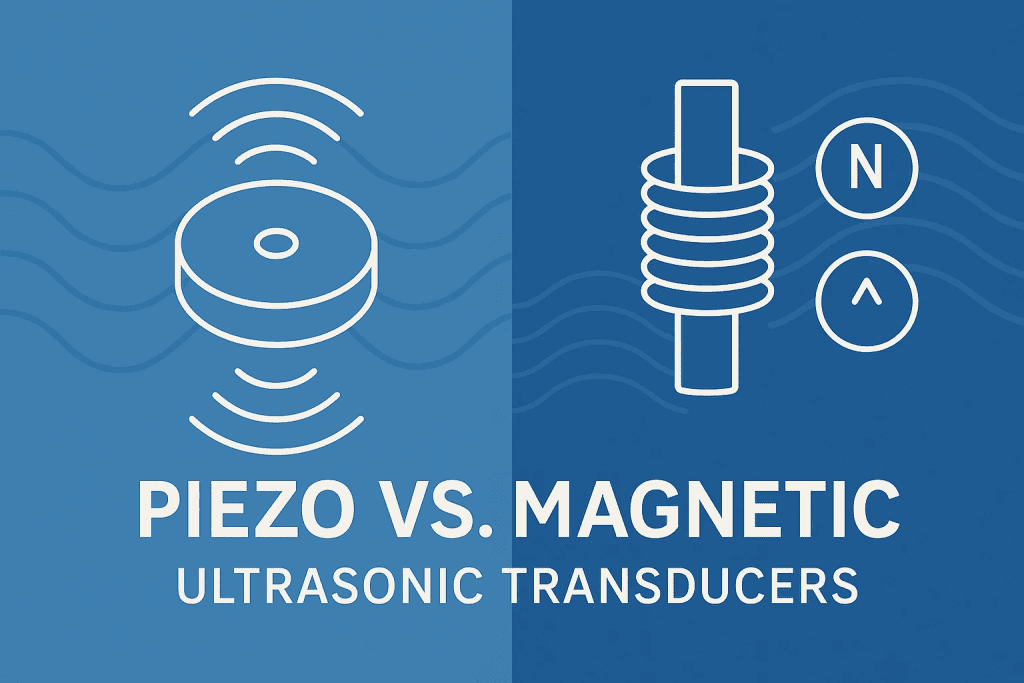
Differences Between Magnetostrictive and Piezoelectric Ultrasonic Transducers
Ultrasonic cleaners have become indispensable workhorses across modern industrial sectors, widely adopted in automotive manufacturing, aerospace engineering, medical device production and heavy machinery maintenance. They deliver fast, thorough and consistent cleaning results for all types of components. At the core of every high-performance ultrasonic cleaner lies its transducer. This critical component converts electrical energy into high-frequency mechanical vibrations, generating cavitation bubbles that strip away grease, grime and embedded contaminants from even the tightest crevices of workpieces and assemblies.
There are two primary transducer types powering industrial ultrasonic cleaners: magnetostrictive and piezoelectric. The two are by no means interchangeable. Each is engineered to tackle unique cleaning challenges, withstand distinct operating environments, and deliver tailored performance to meet specialized industrial cleaning requirements.
For plant managers, maintenance technicians and procurement professionals, grasping the core differences between these two transducers is far more than a trivial technical detail. The choice directly impacts cleaning efficiency, equipment service life, operational overheads, and ultimately the quality of finished products. This article conducts an in-depth comparison of the two technologies, with a focused look at their practical performance in industrial ultrasonic cleaning applications.
Fundamentals: How the Two Transducers Power Industrial Cleaning
Before diving into their differences, it is essential to understand the basic working principles of both transducers in ultrasonic cleaning systems. Fundamentally, both convert electrical output from the generator into mechanical vibration. These vibrations propagate through the cleaning solution — typically a blend of water and mild detergent — to create cavitation. During this process, microscopic bubbles form and implode violently in rapid succession, releasing intense localized energy capable of dislodging even the most stubborn contaminants. The fundamental distinction lies in how each transducer generates vibration, and this variance dictates nearly all performance characteristics, from cleaning intensity to long-term durability.
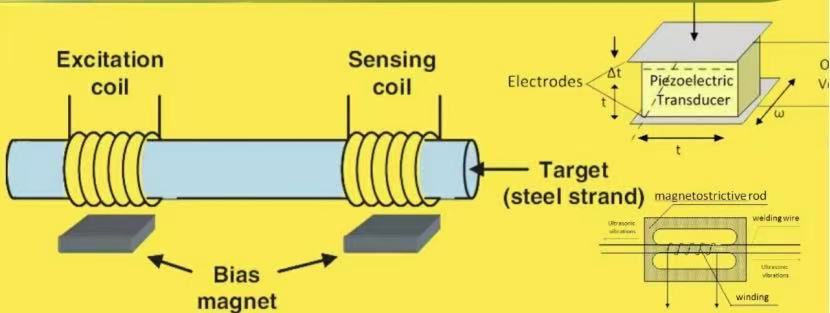
--Difference between Piezoelectric transducer and Magnetostrictive transducer--
Magnetostrictive Transducers: The Heavy-Duty Workhorse
Magnetostrictive transducers have long been a staple in industrial ultrasonic cleaning, valued for their rugged build and exceptional capability in high-power applications. They operate on the magnetostrictive effect: ferromagnetic materials such as nickel, iron alloys and specialized alloys like Terfenol-D physically expand and contract when exposed to an alternating magnetic field. In industrial ultrasonic cleaners, this physical reaction produces powerful, stable vibrations ideal for processing large, heavily soiled parts.
A typical magnetostrictive transducer consists of stacked thin ferromagnetic laminations insulated from one another to minimize energy loss from eddy currents. The lamination stack is wrapped with a copper coil, which acts as an electromagnet when supplied with alternating current from the cleaner generator. As the magnetic field alternates polarity, the ferromagnetic stack expands and contracts rhythmically, transmitting vibration to the tank wall or diaphragm and eventually into the cleaning solution. This creates large, high-energy cavitation bubbles that excel at breaking down heavy grease, machining oil and rust on robust metal components including engine blocks, gearboxes and industrial fasteners.
One standout advantage of magnetostrictive transducers in industrial settings is their outstanding durability. Built with all-metal construction, they withstand harsh operating conditions — elevated temperatures, chemical corrosion from industrial cleaning agents, and sustained vibration during heavy-duty cleaning cycles — without performance degradation. They effortlessly sustain high-power operation, making them ideal for large-volume cleaning tanks deployed in automotive and aerospace facilities that process hundreds of parts daily.
Piezoelectric Transducers: The Precision Performance Choice
Piezoelectric transducers are the preferred solution for applications demanding high precision, precise controllability and versatile performance. They rely on the piezoelectric effect first discovered by the Curie brothers in 1880, whereby certain crystalline materials — most commonly Lead Zirconate Titanate (PZT) — expand and contract under an applied electric field. This property enables fine adjustment of vibration frequency and amplitude, perfectly suiting the delicate cleaning of intricate and precision-engineered parts.
In industrial ultrasonic cleaners, a piezoelectric transducer is generally constructed as a thin circular PZT ceramic disc coated with metal electrodes on both sides. When AC voltage is applied to the electrodes, the PZT disc vibrates at high frequency and transmits acoustic energy into the cleaning solution. Unlike magnetostrictive models, piezoelectric transducers are compact and lightweight, commonly mounted directly onto the base or side walls of smaller cleaning tanks. They generate smaller, denser cavitation bubbles that deliver gentler yet highly precise cleaning action. This makes them perfect for delicate components such as medical instruments, printed circuit boards, precision gears and optical parts, which are vulnerable to damage from aggressive vibration.
Superior energy efficiency is another major benefit of piezoelectric transducers. They achieve an energy conversion efficiency of 90% or higher from electrical input to mechanical vibration, compared to just 50%–60% for magnetostrictive counterparts. For facilities running ultrasonic cleaners for extended hours, this translates to substantial savings on electricity costs. Additionally, they cover a broad frequency range from 20 kHz up to 200 kHz, allowing operators to fine-tune cleaning intensity based on workpiece material and contaminant type.
Key Differentiators Critical to Industrial Cleaning Performance
Choosing between magnetostrictive and piezoelectric transducers hinges on several decisive factors: mounting method, operating frequency, energy consumption, inherent noise level, service lifespan, cleaning power and cavitation intensity, suitability for delicate parts, environmental resistance and long-term operational costs. Below is a practical breakdown of these critical differences that directly influence real-world industrial cleaning results.
1. Mounting Method
The two transducer types adopt distinctly different installation approaches. Piezoelectric transducers are generally bonded to the cleaner housing with industrial adhesives, while magnetostrictive transducers are commonly fixed by welding their assembly directly to the cleaning tank wall.
In earlier decades, magnetostrictive transducers held a clear edge in this regard. Early-generation adhesives lacked sufficient bonding strength, often causing piezoelectric transducers to detach from the housing during operation. Today, however, the development of advanced engineered adhesives originally formulated for aerospace applications has nearly eliminated this performance gap.
2. Operating Frequency
For most standard workpieces and common contaminants, the optimal ultrasonic cleaning frequency falls between 40 kHz and 70 kHz. Some industrial cleaners operate at extended ranges, as low as 25 kHz and as high as 170 kHz or above.
Magnetostrictive transducers have a practical upper frequency limit of around 30 kHz. Raising their resonant frequency requires shortening the magnetic core lamination stack progressively. Eventually, the overall mass becomes too minimal to transmit effective vibration into the cleaning tank.
Piezoelectric transducers face no such physical limitation and can fully cover the entire optimal frequency spectrum. As a result, magnetostrictive transducers are largely confined to low-frequency cleaning tasks: typically for large-sized parts with tenacious surface contaminants where ultra-fine precision cleaning is not required.
3. Energy Consumption
Energy efficiency stands as a clear dividing line between the two designs. Piezoelectric transducers convert low-voltage electrical energy directly into mechanical motion in a single step, delivering exceptional efficiency. By contrast, magnetostrictive transducers undergo a two-stage energy conversion: electrical energy first converts to magnetic energy, then further translates into mechanical vibration. A considerable portion of energy dissipates as heat during this process, resulting in much lower overall efficiency. When delivering the same cleaning output, piezoelectric transducers consume far less power.
4. Inherent Noise Level
Operating frequency directly determines the noise profile of each transducer type. Most piezoelectric transducers operate at 40 kHz or higher, with their first harmonic exceeding 20 kHz — beyond the threshold of human hearing.
Magnetostrictive transducers run at 30 kHz or lower, placing their primary harmonic within the audible frequency range of 20 Hz to 20 kHz. The emitted sound resembles the low hum of high-voltage power lines and transformers. When multiple magnetostrictive transducers are fitted to a single cleaning tank, the noise intensity typically mandates the use of hearing protection for on-site operators.
5. Service Lifespan
The lifespan performance of the two transducer technologies has evolved significantly over time. Early piezoelectric transducers built with quartz crystals suffered gradual performance degradation and strength decay over years of use. Magnetostrictive transducers were free from this flaw, making them the default choice for ultrasonic cleaning systems for decades.
As material engineering advanced, developers created specialized semiconductor ceramic formulations for piezoelectric applications. Manufacturers discovered that controlled aging treatment of PZT raw materials before wafer fabrication eliminates up to 99% of long-term strength degradation. Thanks to this manufacturing advancement, modern piezoelectric transducers no longer suffer from age-related failure. This has erased the once-dominant lifespan advantage of magnetostrictive transducers.
6. Cleaning Power and Cavitation Intensity
Magnetostrictive transducers are engineered for brute-force heavy-duty cleaning. They generate low-frequency vibration (typically 20–100 kHz) that produces large cavitation bubbles. These bubbles implode with tremendous impact force, ideal for removing baked-on grease from engine components, surface rust from metal parts, and machining residues from large industrial tooling. They are the ideal choice for facilities cleaning massive, rugged workpieces with heavy embedded contaminants.
Piezoelectric transducers operate at higher frequencies (20–200 kHz), generating smaller yet far more numerous cavitation bubbles. Though each implosion carries less impact force, the dense bubble distribution covers a wider surface area for uniform precision cleaning. They excel at removing fine particulate dust, micro debris and light oil residues from sensitive parts like circuit boards, medical implants and optical lenses — components easily scratched or damaged by aggressive cavitation. For operations prioritizing cleaning quality over raw power, piezoelectric transducers are the superior option.
7. Durability and Harsh Environment Resistance
Industrial cleaning environments are inherently demanding, with high temperatures, corrosive chemical agents and round-the-clock operation accelerating equipment wear. Magnetostrictive transducers thrive in such harsh conditions. Their all-metal construction — ferromagnetic core, copper coil and metal housing — provides excellent resistance to chemical corrosion and high-temperature exposure. They sustain continuous high-power operation without overheating or premature failure, perfectly suited for 24/7 production environments such as automotive assembly plants and heavy machinery workshops.
Piezoelectric transducers are comparatively more delicate. Their PZT ceramic discs are brittle and prone to cracking under excessive mechanical stress or extreme temperature fluctuations. They are also more susceptible to corrosive cleaning chemicals, which can gradually degrade surface electrodes over time. While modern piezoelectric units feature sealed construction for moisture and chemical protection, they remain better suited for controlled environments — such as medical cleanrooms and electronics manufacturing facilities — with mild and stable operating conditions.
8. Cost: Initial Investment vs. Long-Term Operation
Upfront procurement cost is another key consideration. Piezoelectric transducers feature a simpler design and lower initial price tag, making them a popular choice for small to mid-sized facilities and budget-limited operations, especially those without heavy-duty high-power cleaning demands.
Magnetostrictive transducers command a higher upfront cost due to their complex laminated structure and premium ferromagnetic raw materials. However, they deliver an extended service life — often double that of standard piezoelectric models — with minimal routine maintenance required. For large industrial facilities reliant on ultrasonic cleaning as a critical production process, the higher initial investment is well justified by long-term reliability and reduced downtime costs.
9. Application Matching: Which Transducer Fits Your Facility?
To simplify selection, here is a clear guideline for common industrial cleaning scenarios:
Choose Magnetostrictive Transducers If:You clean large, heavy metal parts such as engine blocks, gearboxes and industrial tooling; you require high-power aggressive cleaning to remove heavy grease, rust and stubborn machining residues; your facility operates in harsh conditions with high temperatures and corrosive chemicals; or you prioritize long-term durability over lower upfront cost.
Choose Piezoelectric Transducers If:You process delicate precision components including medical devices, circuit boards and optical assemblies; you need adjustable frequency and gentle cleaning to avoid part damage; you aim to cut energy consumption and operational costs; or you use smaller cleaning tanks with a limited equipment budget.
Conclusion
Both magnetostrictive and piezoelectric ultrasonic transducers play vital roles in industrial cleaning, yet they are designed for entirely distinct operational purposes. Magnetostrictive transducers serve as heavy-duty workhorses, built for powerful, durable and aggressive cleaning of large, rugged components. Piezoelectric transducers stand out as precision-grade solutions, delivering energy-efficient, fully controllable and gentle cleaning for delicate high-precision parts.
The key to making the right selection lies in evaluating your facility’s specific operational needs — from workpiece types and cleaning requirements to site environmental conditions and budget constraints.
By evaluating practical performance differences including mounting method, frequency range, energy usage, noise output, service life, cleaning capacity, environmental resilience and overall cost, you can select a transducer that meets your immediate cleaning needs while delivering lasting long-term value. Whether you manage a large automotive production plant or a small precision manufacturing workshop, the right transducer ensures your ultrasonic cleaner runs at peak performance, delivering consistent, premium cleaning results day after day.
 English
  German
  Spanish
  French
  Russian
  Portuguese