

How Long Can an Ultrasonic Cleaner Run Continuously?
The continuous runtime of an ultrasonic cleaner mainly depends on its model. Below is a detailed breakdown for different types:
1. Compact Ultrasonic Cleaners
Compact ultrasonic cleaners are mostly used for laboratory applications. Always fill the tank with water or cleaning solution up to about two-thirds full before operation.If your unit has a heating function, never turn on the ultrasonic or heating feature when the tank is dry — this will permanently damage the ultrasonic transducer or heating plate.
Most compact models come with a built-in timer ranging from 0 to 30 minutes. It is recommended to run them for a maximum of 30 minutes continuously. Once the timer ends, let the unit rest for 3 to 5 minutes before restarting.
These small cleaners are fabricated from thin stainless steel sheet via one-piece stamping. Extended non-stop operation can deform or damage the tank bottom. Additionally, the ultrasonic generator is installed underneath the tank with limited heat dissipation. Prolonged continuous use may burn out the generator circuit board.
While the internal stamped tank and circuit board generator can technically handle up to 5 hours of runtime under moderate ambient temperatures, it is best not to run compact units continuously for more than 2 hours. Place the unit on a flat desktop or inside a standard laboratory space for proper ventilation.
2. Single-Tank Split-Type Ultrasonic Cleaners
For single-tank split ultrasonic cleaners, the cleaning tank and ultrasonic generator are designed as separate standalone units. The generator is fitted with a built-in cooling fan and multiple protective functions, including overheat protection, overvoltage protection, and overcurrent protection.
Thanks to the independent generator design, this type of cleaner can safely operate continuously for up to 8 hours, provided the ambient temperature remains moderate to avoid impairing cooling airflow.
The tank body is typically welded from 2mm-thick SUS304 stainless steel. When the ultrasonic generator is properly matched with the vibrating transducers, the tank will not suffer vibration damage even after months or years of non-stop operation. Liquid level also matters: keep the fluid depth above 100mm in the tank to prevent tank wear and perforation.
3. Manual & Fully Automatic Ultrasonic Cleaners
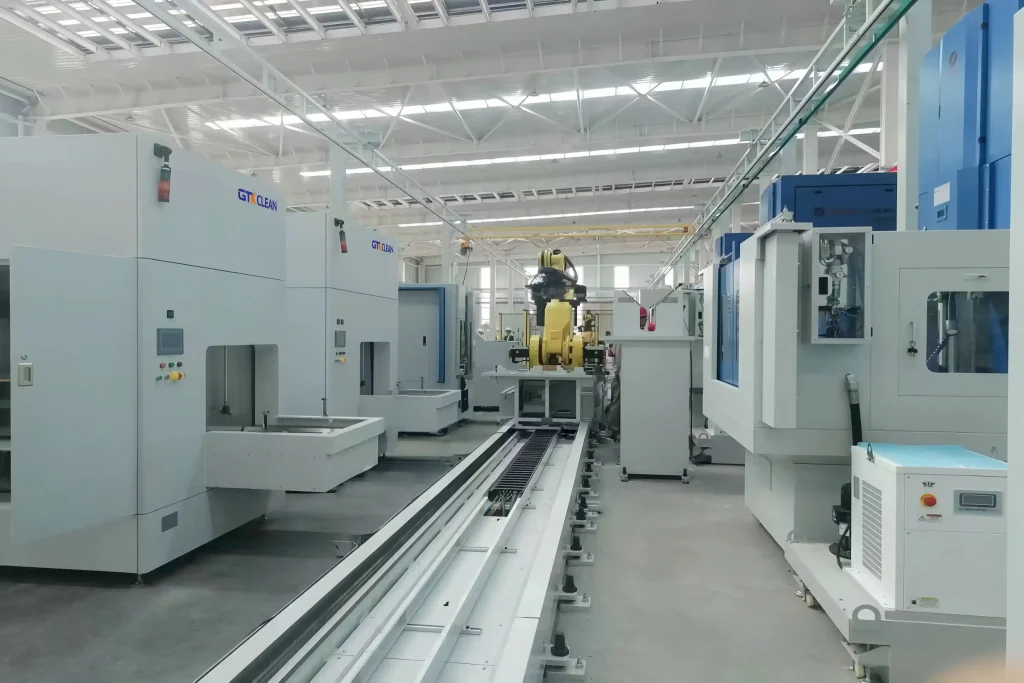
Manual and fully automatic ultrasonic cleaners share roughly the same continuous runtime performance as single-tank split models.
Service Life of Ultrasonic Cleaners
If purchased from a professional and reputable manufacturer, a standard ultrasonic cleaner can last 8 to 10 years with regular proper use.
Brand manufacturer, material quality, and daily maintenance all play key roles in service life. Keep the unit away from corrosive chemicals such as acids, which can erode the stainless steel structure. With daily 8-hour operation and proper care, the machine will easily serve over 10 years. When not in use, keep the unit clean and drain dirty cleaning solution promptly.
Essential Maintenance & Operation Tips to Extend Service Life
- Place the ultrasonic cleaner and its generator in a dry, well-ventilated area. Perform routine maintenance regularly and keep the machine and surrounding floor clean at all times.
- Ensure the input power voltage stays within 380V/220V ±5V AC; unstable voltage will easily damage internal electrical components.
- Do not install or operate the cleaner in humid areas with corrosive fumes, as this will cause transducer and circuit board malfunctions.
- Never activate the heater or ultrasonic function when the tank is empty of cleaning fluid — this will destroy heating elements and transducers.
- Prevent hard objects from striking the tank bottom and transducers. Avoid severe vibration. Do not place workpieces directly on the tank base to prevent transducer detachment.
- Do not allow cleaning liquid to overflow the tank during operation. Never hose down the machine directly with water; splashing water onto transducers, heaters or circuit boards will cause electrical faults.
- Regularly clean sediment, dirt and residue from the tank bottom and machine surface to maintain the stainless steel finish and ensure long-term stable operation.
- Replace dirty cleaning solution and clean the tank promptly once the fluid becomes contaminated. Built-up sediment will corrode the tank base and cause perforation and liquid leakage over time.
- For long-term storage or extended idle periods, drain all cleaning fluid, thoroughly clean the unit, and seal it with plastic film for protection.
- Within the warranty period, machine failures caused by improper placement, operation in corrosive environments, or human error are not covered by free warranty service. Repairs will be charged for replacement parts and materials.
 English
  German
  Spanish
  French
  Russian
  Portuguese