
How to Choose an Ultrasonic Cleaner: Important Things to Know First
When you are considering a manual or fully automatic ultrasonic cleaning system, please provide as much of the following information as possible when consulting suppliers. This helps us quickly and accurately recommend and customize a technical solution tailored to your parts and cleaning requirements.
Material, properties, dimensions and end use of your parts
Materials typically include metal, glass, plastic and others. Understanding part properties helps avoid unsuitable applications for ultrasonic energy or certain cleaning chemistries. Dimensions allow us to confirm tank size and required power. Describing the final application lets us draw on past experience to suggest proven processes for similar products.
Contaminants to be removed
Such as cutting oil and chips from machining, polishing paste, stamping oil, grinding compound from optical lenses, and more.
Preferred cleaning detergent and past experience
Whether you need a water-based cleaning system or a solvent-based machine, considering operating costs, workplace safety and environmental compliance.
Daily output and capacity of upstream/downstream equipment
Size your machine based on your current maximum production requirements, not unrealistic long-term projections. Oversized high-capacity machines waste water and energy, take up more floor space and require higher investment, resulting in poor overall economic performance during their service life.
Choice of cleaning and drying processes
Select based on your own experience, industry best practices, and improved process recommendations from your supplier.
Equipment cost and total life-cycle cost analysis
Total life-cycle costs include power consumption, water usage, consumables and maintenance. Even machines with similar process designs can vary greatly in ongoing costs due to differences in engineering and build quality.
Waste discharge and environmental regulations
Export-oriented manufacturers should also take into account local regulatory restrictions in target markets.
Cleaning trials before ordering
If your cleaning process is not fully established, always conduct on-site or lab cleaning tests with your supplier to verify results. This step is essential.
About GTKCLEAN Ultrasonic Cleaners
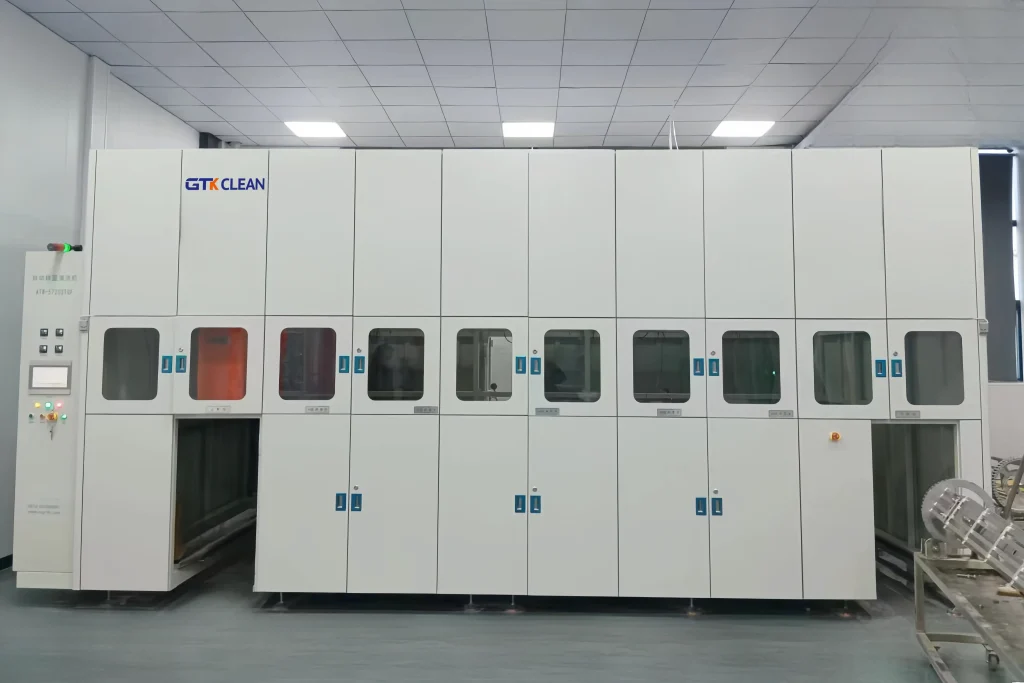
Prices of ultrasonic cleaning equipment vary by manufacturer. Our machines stand out in the industry for their outstanding cost-effectiveness.The performance and cleaning quality of an ultrasonic cleaner directly correlate with its price. While we maintain strict quality standards, we also offer competitive pricing. We never cut corners on specifications to lower prices at the cost of our reputation.
As the saying goes: you get what you pay for, and quality is always worth investing in.Choose us with confidence — our reliable equipment will support your business growth and help you achieve greater success.
We enforce extremely rigorous quality control to build high-performance ultrasonic cleaning systems. Our goal is to deliver an excellent user experience and add real value to your operations as you scale your business.
Frequently Asked Questions
Q: How much does an ultrasonic cleaning machine cost? What is the typical budget?
A: Small benchtop units start at a few hundred dollars/pounds/euros. Manual industrial machines range from several thousand. Fully automatic systems typically cost tens of thousands to over a hundred thousand, depending on configuration.
Q: How do I choose the right power and frequency?
A: Ultrasonic frequencies generally range from 28 kHz to 120 kHz. Lower frequencies around 28–40 kHz provide stronger cavitation action for heavy-duty cleaning with water-based solutions.
Q: Are ultrasonic cleaning machines harmful to humans?
A: No, ultrasonic cleaning equipment is safe for operators. Ultrasonic sound starts at 20 kHz, while the human hearing range is only 20 Hz to 20,000 Hz.
Q: Are “ultrasonic cleaner” and “ultrasound cleaner” the same?
A: Yes, they refer to exactly the same equipment. “ultrasound” is a common term used in Taiwan and some Asian markets.
Q: Is an ultrasonic cleaning machine easy to operate?
A: Very simple. Add cleaning solution, place parts inside, switch on the power, and follow the supplied operating manual.
Q: Can ultrasonic cleaners wash clothes?
A: Yes, but only small, specially designed household ultrasonic cleaners. Industrial ultrasonic machines are not intended for fabric cleaning.
 English
  German
  Spanish
  French
  Russian
  Portuguese