

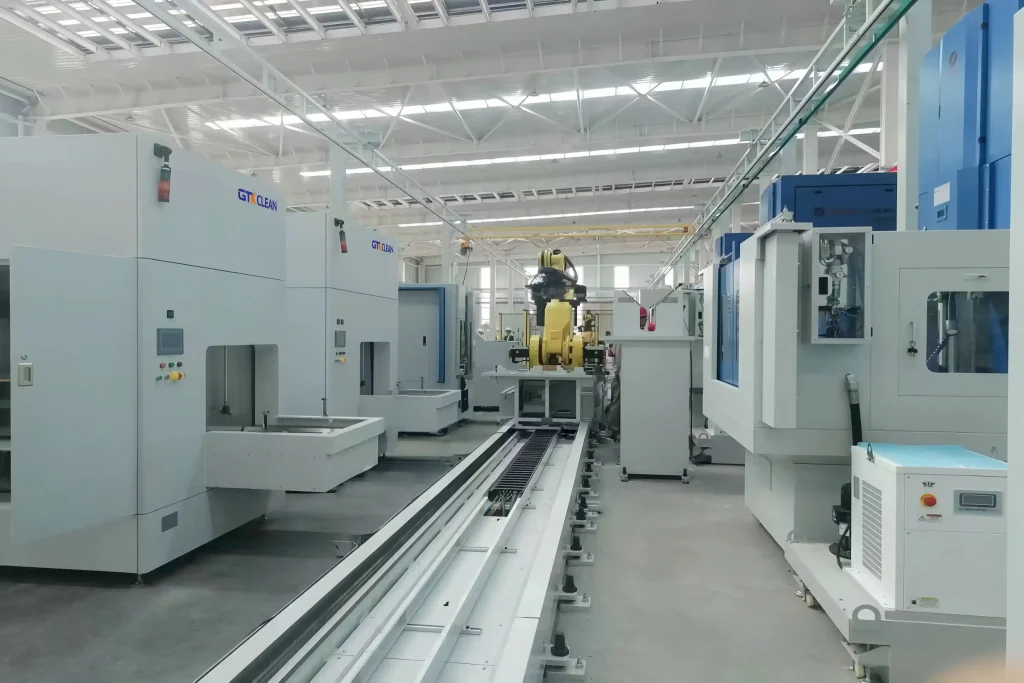
How to Remove Oil Contamination from Mechanical Parts?
Oil contaminants on mechanical parts are mainly composed of non-saponifiable oil, dust and solid impurities. Non-saponifiable oils do not react with strong alkalis. Common types such as mineral oil and lubricating oil are insoluble in water but soluble in organic solvents.
Two mainstream solutions are available to remove such oil contaminants: chemical cleaning and electrochemical cleaning. The most commonly used cleaning agents include organic solvents, alkaline solutions and specialized chemical detergents.
1. Manual Wiping & Brushing
Place the parts in a container filled with diesel, kerosene or other cleaning solutions, then wipe with cotton yarn or scrub with soft brushes.This method features simple operation and low equipment requirements, yet with low cleaning efficiency. It is ideal for small-sized parts in small-batch production.Gasoline is not recommended for regular use, as it dissolves grease, causes health hazards and carries a high fire risk.
2. Hot Dipping Cleaning
Prepare the designated cleaning solution and place it together with contaminated parts into a custom steel welded cleaning tank. Heat the solution to 80~90℃ with an external heating stove. Soak the parts for 10 to 15 minutes.After soaking, take out the parts, rinse off alkaline residue with clean water, and dry thoroughly with compressed air.During operation, avoid direct skin contact with alkaline solution to prevent chemical burns.
3. High-Pressure Spray Cleaning
Spray heated cleaning solution at controlled pressure onto part surfaces to strip heavy oil buildup.This method delivers excellent cleaning results and high production efficiency. It requires professional spraying equipment and is suitable for parts with simple structures and heavy surface oil grime.
4. Ultrasonic Vibration Cleaning
Place parts on the cleaning basket or rack of an ultrasonic cleaner, and fully submerge them in cleaning liquid.Oil stains are removed through the combined action of ultrasonic cavitation and high-frequency vibration inside the solution.When ultrasonic waves propagate in liquid, microscopic bubbles collapse violently and generate powerful shockwaves. This process creates instant high temperatures of hundreds of degrees and extreme pressure up to thousands of atmospheres, defined as the cavitation effect.Ultrasonic cleaning relies on these high-energy shockwaves to strip contaminants and thoroughly clean both internal and external surfaces of workpieces.
Important Notes
Select the most suitable cleaning method based on the type and characteristics of oil contamination. Proper selection ensures stable service life of mechanical parts, prevents chemical corrosion and surface damage, and avoids environmental pollution as well as secondary contamination of components.
It is essential to choose the right ultrasonic metal cleaning detergent for your application scenario.
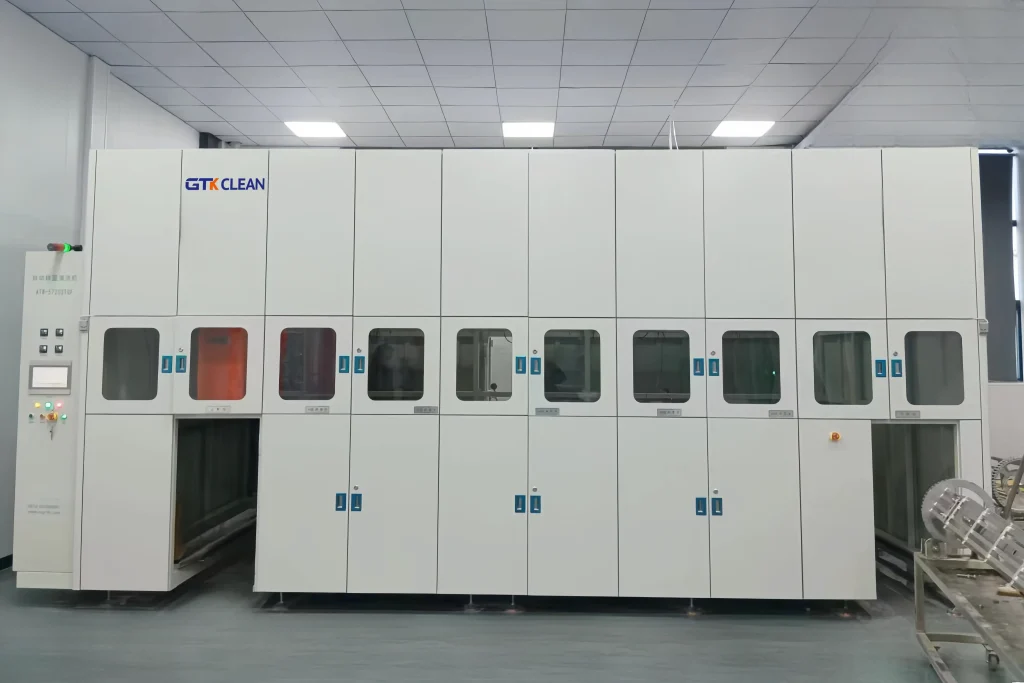
Full Automatic Ultrasonic Cleaner
We appreciate your trust and support. We’re ready to communicate openly and partner with you on all your equipment needs. You may contact us by email ([email protected]) or WhatsApp (+86 17768507147) for custom ultrasonic cleaning solutions.
Q&A About Ultrasonic Cleaners & Mechanical Parts
Q1: What are the common types of mechanical basic components?
- Inclined plane machinery: inclined surface, screw and wedge
- Lever-based machinery: lever, pulley, wheel axle and gear
- Meshing rotating components: gears, mixing rollers, etc.
- Rotating shaft parts: couplings, spindles, chucks, lead screws and connecting rods
Q2: What are the common repair methods for mechanical parts?
Mechanical repair methods rely on physical connection structures to restore worn, cracked or damaged components, including thread fastening, key connection, riveting and interference fit.Common practical processes include inlay repair and metal locking. These techniques only require basic workshop equipment and can fix most types of component damage.
Q3: How to check the performance of ultrasonic transducers?
Without professional testing instruments, you can visually inspect the transducer surface for cracks or damage, and monitor operating current to judge working conditions.
Q4: Why apply heat treatment to mechanical parts?
Heat treatment eliminates internal residual stress of raw materials, optimizes machining performance for easier processing, improves overall mechanical properties and increases surface hardness of metal materials.
Q5: What are the alternative names for ultrasonic transducers?
They are generally referred to as ultrasonic transducers or ultrasonic vibration sensors.
Q6: What processes are included in mechanical processing?
Common mechanical processing services cover filament winding, laser cutting, heavy-duty machining, metal bonding, wire drawing, plasma cutting, precision welding, roll forming, sheet metal bending, die forging and waterjet cutting.
 English
  German
  Spanish
  French
  Russian
  Portuguese