
Metal parts cleaning sits at the center of nearly every manufacturing operation I've encountered. Get it wrong, and you're looking at coating failures, weak welds, and assembly problems that trace back to contamination nobody caught in time. The challenge isn't just removing dirt—it's matching the right chemistry and equipment to your specific metals, contaminants, and production demands. GTKCLEAN brings over 20 years of R&D work and 28 technical patents to these problems, covering industrial cleaning equipment, metal parts cleaning, and precision cleaning applications.
What's Actually on Your Metal Surfaces
Before picking any metal parts cleaning solution, you need to know what you're fighting. Contaminants behave differently, and a solution that strips cutting oil beautifully might do nothing against oxide scale.
The usual suspects include:
- Oils and Greases: Lubricants, cutting fluids, and protective coatings that accumulate during machining and handling.
- Oxides: Rust and corrosion products that form when metal meets air and moisture.
- Particulate Matter: Metal chips, dust, and abrasive particles embedded in surfaces.
- Fingerprints and Residues: Organic and inorganic films left from handling or earlier manufacturing steps.
Each contaminant type demands specific cleaning chemistry. Residual oils cause paint adhesion failures—I've seen entire batches rejected because someone assumed a quick wipe would handle stamping oil. Oxides compromise weld integrity by creating weak points in the joint. Understanding these metal surface contaminants determines whether your degreasing metal parts and oxide removal efforts actually work.
| Contaminant Type | Examples | Recommended Pre-Treatments |
|---|---|---|
| Oils & Greases | Cutting fluids, stamping oils, lubricants | Alkaline degreasing, solvent wipe |
| Oxides | Rust, tarnish | Acidic pickling, mechanical brushing |
| Particulates | Metal chips, dust, abrasive media | High-pressure spray, air blow |
| Films | Fingerprints, light residues | Mild alkaline wash, ultrasonic agitation |
Industrial Metal Parts Cleaning Solutions and Where They Work Best
Metal parts cleaning solutions break into distinct categories, each with specific strengths. The right choice depends on your metal type, contaminant profile, and cleanliness targets for precision cleaning applications. GTKCLEAN builds equipment around these technologies, including ultrasonic cleaning systems and solvent cleaning systems.
Aqueous Metal Parts Cleaning Solutions
Water-based systems use water as the primary solvent, enhanced with detergents, surfactants, and other additives. These water-based degreasers tend toward environmental friendliness and biodegradable cleaning agents, which explains their popularity. They handle oils, greases, and many particulate contaminants effectively. GTKCLEAN's water treatment systems support efficient and sustainable aqueous metal parts cleaning processes.
What works well:
- Lower environmental impact from reduced VOC emissions.
- Non-flammable formulations improve workplace safety.
- Cost-effective for many standard applications.
- Compatible with most metals when corrosion inhibitors are included.
Where they fall short:
- Drying takes longer than solvent alternatives.
- Heavy oils or specialized contaminants may resist water-based chemistry.
- Sensitive metals can corrode without proper formulation or thorough rinsing.
Solvent Metal Parts Cleaning Systems
Solvent systems use organic solvents to dissolve contaminants directly. They excel at precision cleaning and handling water-sensitive materials. Hydrocarbon solvents and non-flammable solvents cover most applications. GTKCLEAN's solvent cleaning systems, including vapor degreasing equipment, deliver superior performance for demanding specifications.
What works well:
- Excellent at removing heavy oils, greases, and waxes.
- Fast drying with no residue left behind.
- Reaches into complex geometries, including blind holes.
- Achieves very high cleanliness levels.
Where they fall short:
- Environmental and safety concerns around emissions and flammability.
- Higher operational costs from solvent consumption and recovery needs.
- Material compatibility requires careful evaluation.
For deeper understanding of cleaning mechanisms, this article covers the fundamentals: 《What Is The Technical Principle Of Hydrocarbon(Solvent) Cleaning Machines?》.
Selecting the Right Metal Parts Cleaning Solution
Choosing the optimal metal parts cleaning solution means evaluating several factors systematically. GTKCLEAN guides clients through this selection process, balancing effectiveness, efficiency, material compatibility, cleanliness standards, environmental impact, and cost-effectiveness of cleaning.
Material Compatibility Prevents Expensive Mistakes
Metal alloy cleaning compatibility matters more than many realize. Different metals react unpredictably to cleaning agents. Strong alkaline solutions etch aluminum surfaces, leaving them pitted and discolored. Certain acids attack stainless steel's protective oxide layer. Testing and understanding material reactions prevents damage like etching, discoloration, or corrosion. GTKCLEAN ensures surface integrity by recommending solutions formulated specifically for your materials.
Cleanliness Standards Vary by Industry
Cleanliness requirements differ dramatically across sectors. Aerospace component cleaning demands ultra-high precision—any particulate matter or residue can affect component reliability in flight-critical applications. Medical device cleaning standards focus on sterility and biocompatibility, with contamination potentially affecting patient safety. Automotive parts cleaning typically involves removing heavy oils and chips while preparing surfaces for painting or coating. GTKCLEAN designs metal parts cleaning systems meeting these stringent requirements.
Automated Equipment Amplifies Metal Parts Cleaning Results
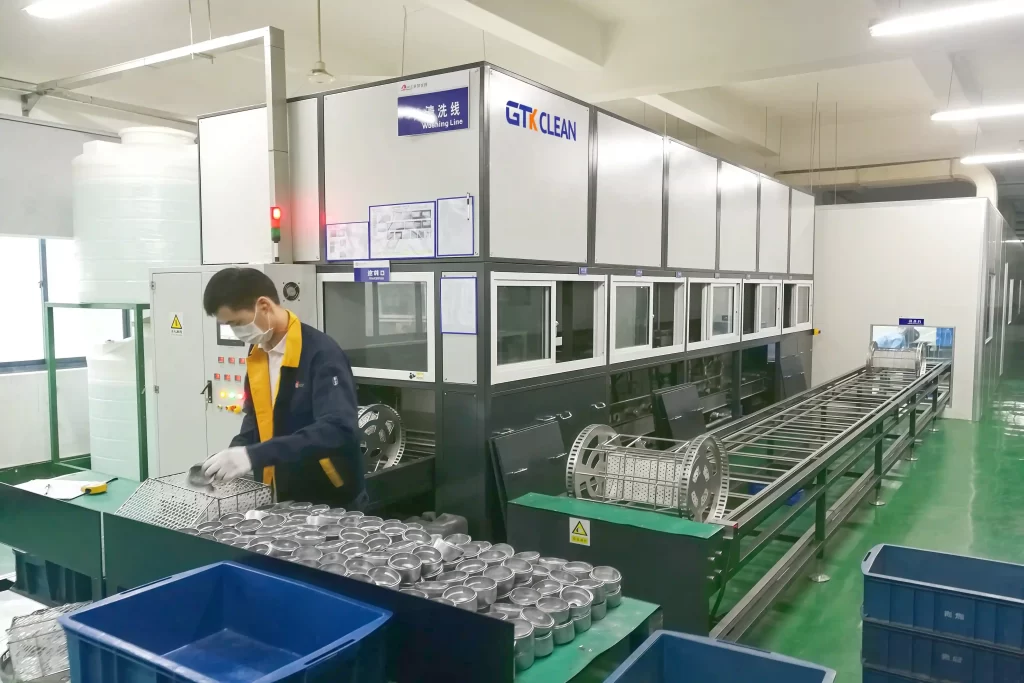
Any metal parts cleaning solution performs better when paired with appropriate automated cleaning equipment. GTKCLEAN's industrial parts washers—including ultrasonic cleaning systems, conveyor belt cleaning systems, and solvent cleaning systems—deliver consistency and efficiency that manual methods cannot match.
Our CNC Aluminum Shell Inline Cleaners feature automated inline cleaning with continuous conveyor systems. Parts move through spray degreasing, rinsing, and drying stages automatically. This removes release agents, cutting oils, and surface oxides from complex-shaped aluminum parts reliably. Our Fastener Tunnel Cleaners provide continuous cleaning, rinsing, and drying for screws, bolts, and nuts, stripping drawing oil and metal powders. These systems handle high-volume production while maintaining consistent quality. For fastener applications, our Tunnel Cleaning Systems achieve impressive throughput.
Heavy-Duty Automated Ultrasonic Cleaners handle large components up to 2000 kg—engine blocks, gearboxes, and similar heavy parts. They feature automated multi-stage cleaning including ultrasonic degreasing, rinsing, rust prevention, and drying. High-load engineering includes custom load-bearing Cleaning Baskets and reinforced tanks for reliable industrial-scale metal parts cleaning.
Parts with complex geometries benefit from our Rotary Basket Ultrasonic Cleaning Systems, which provide 360° rotary cleaning. This reaches blind holes, cracks, and recesses thoroughly while preventing scratches. Full automation covers loading through drying, suitable for automotive and CNC machined components.
Environmental Compliance and Safety Considerations
Environmental regulations and safety protocols shape every metal parts cleaning decision. GTKCLEAN prioritizes eco-friendly cleaning solutions and safe practices throughout system design. Advanced water treatment systems and solvent recovery systems minimize waste and environmental impact.
Our solutions comply with strict environmental regulations through waste treatment systems for aqueous solutions and solvent recycling systems for hydrocarbon cleaners. This sustainability focus lets clients achieve superior cleanliness while maintaining responsible industrial practices. Safety protocols for chemicals are built into system designs, protecting operators and the environment.
Partner with GTKCLEAN for Metal Parts Cleaning Solutions
GTKCLEAN's two decades of R&D work and patented technologies support industrial cleaning processes across industries. Whether you need advanced ultrasonic cleaning systems, precise solvent cleaning, or comprehensive water treatment solutions, our team delivers cleanliness and efficiency. Contact us for a personalized consultation to see how our expertise can optimize your operations. Reach our specialists at +86 17768507147 or [email protected] to discuss your specific challenges and explore our metal parts cleaning solutions.
Frequently Asked Questions About Metal Parts Cleaning Solutions
What is the best way to clean heavily oxidized metal parts?
Heavily oxidized metal parts typically need multi-stage metal parts cleaning. Start with pre-cleaning to remove loose debris, then apply acidic or specialized alkaline cleaning solution designed to dissolve oxides without attacking the base metal. Automated Ultrasonic Cleaners boost effectiveness significantly—cavitation dislodges stubborn oxidation that chemical action alone might miss. After cleaning, corrosion inhibitors prevent re-oxidation during storage. GTKCLEAN offers specialized solutions and equipment for efficient oxide removal.
How do I prevent corrosion after cleaning metal components?
Post-cleaning corrosion prevention protects your work. Several approaches work well: adding corrosion inhibitors to final rinse water, applying protective coatings or oils immediately after drying, or storing parts in controlled environments with dry air or inert gas. Aqueous cleaning demands thorough drying—trapped moisture accelerates corrosion. GTKCLEAN recommends and integrates post-cleaning corrosion prevention strategies matched to your specific metal parts and operational conditions.
Are there eco-friendly alternatives for industrial metal degreasing?
Effective eco-friendly alternatives exist for industrial metal degreasing. Aqueous metal parts cleaning solutions with biodegradable surfactants and low VOC content perform well for many applications. Bio-based solvents and advanced water treatment systems reduce environmental impact further. GTKCLEAN develops sustainable cleaning technologies, including advanced water-based systems and waste treatment solutions, helping companies meet environmental regulations while achieving superior cleanliness.
 English
  German
  Spanish
  French
  Russian
  Portuguese