
When you run the numbers on a cleaning system purchase, the spreadsheet tells one story. The production floor tells another. I've watched facilities agonize over six-figure equipment decisions, only to realize eighteen months later that the real cost of their old manual process was hiding in overtime hours, rejected batches, and maintenance calls nobody tracked properly.
The ROI calculation itself is simple enough. Getting the inputs right is where most people stumble.
The Real Shape of a Cleaning System Investment
Buying industrial cleaning equipment isn't like buying a forklift. A forklift moves pallets. A cleaning system touches every part that passes through your production line, which means it touches your quality metrics, your labor allocation, your utility bills, and your compliance paperwork.
Modern manufacturing tolerances don't leave much room for "clean enough." Parts headed for coating, assembly, or precision measurement need consistent surface preparation. When that consistency comes from automated equipment rather than a worker with a spray bottle and a judgment call, the downstream effects ripple through operations in ways that take months to fully appreciate.
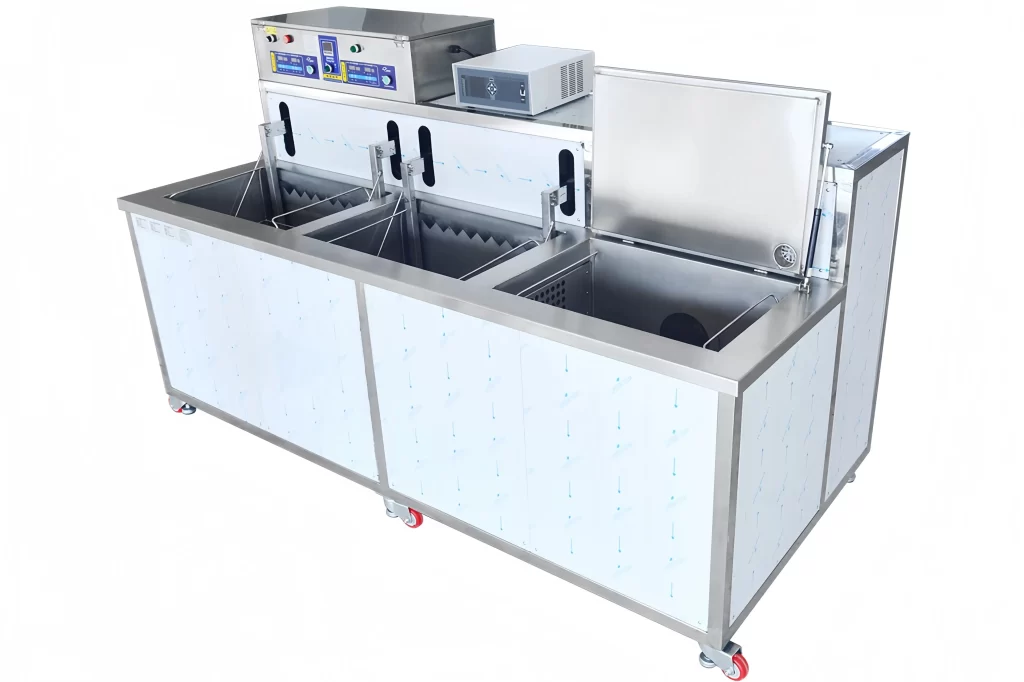
GTKCLEAN builds systems across the full spectrum of industrial cleaning needs, from ultrasonic cleaners and solvent systems to conveyor lines and water treatment equipment. Twenty years of R&D and 28 technical patents went into making these machines do one thing well: deliver repeatable results without constant babysitting.
Running the Numbers on Cleaning Equipment
The basic ROI formula is straightforward:
ROI = (Gain from Investment – Cost of Investment) / Cost of Investment
The challenge is identifying what actually goes into each side of that equation. Most facilities undercount their current costs and overestimate the complexity of calculating future savings.
A proper industrial cleaning cost analysis needs to capture the full picture. Payback period tells you when the investment breaks even. Net present value accounts for the fact that a dollar saved next year is worth less than a dollar saved today. Both metrics matter, but neither means much if you're missing line items.
Breaking Down What Goes Into the Calculation
Direct costs are easy to spot: equipment price, installation, utility connections. Indirect costs hide better. Maintenance contracts, waste disposal fees, the consumables that seem cheap until you add up a year's worth.
Cost and Benefit Factors for Industrial Cleaning Systems
| Category | Cost Factors | Benefit Factors |
|---|---|---|
| Direct | Equipment purchase, installation, utilities | Reduced labor, lower chemical consumption |
| Indirect | Maintenance, waste disposal | Improved product quality, extended asset lifespan |
| Operational | Downtime, consumables | Increased throughput, enhanced safety |
On the benefit side, labor savings from automation tend to be the headline number. But the second-order effects often matter more. Consistent cleaning quality means fewer rejected parts. Fewer rejected parts means less rework labor, less wasted material, and fewer customer complaints. Extended component lifespan from proper cleaning reduces replacement costs for the parts you're cleaning, not just the cleaning equipment itself.
Circulation filtration systems, standard on many GTKCLEAN ultrasonic and solvent cleaners, extend solution life significantly. That means less frequent chemical purchases and less waste to dispose of. Water treatment systems cut both consumption and discharge costs, which matters more every year as utility rates climb and environmental regulations tighten.
What Actually Moves the ROI Needle
Several variables determine whether a cleaning system pays for itself in eighteen months or five years. Some are obvious. Others only become clear after you've operated the equipment for a while.
Technology selection matters enormously. A multi-stage ultrasonic system with ultrapure water capability, like GTKCLEAN's Pre-PVD cleaners that achieve conductivity below 0.06 μS/cm, prevents water spotting and secondary contamination. That precision eliminates an entire category of defects that would otherwise require rework or scrapping.
Scale of operation determines which system makes sense. A shop running small batches of varied parts might get the best return from a bench-top rotary cleaner. A facility pushing high volumes through continuous production needs inline systems with automated loading. GTKCLEAN's CNC aluminum shell inline cleaners handle that kind of throughput without creating bottlenecks.
Maintenance costs separate good equipment from headaches. Systems with intelligent controls, Siemens or Mitsubishi PLCs with touchscreen interfaces, provide automatic alarms and fault diagnostics. When something goes wrong, you know immediately and can often diagnose the issue before calling for service. That cuts both downtime and repair bills.
Energy consumption adds up over years of operation. Heat recovery systems, now common in well-designed cleaning equipment, capture waste heat and put it back to work. The efficiency gain compounds over the equipment's lifetime.
Environmental compliance has become a cost center in its own right. Systems that minimize waste and recover solvents, like GTKCLEAN's hydrocarbon vacuum cleaners with built-in distillation, reduce both disposal costs and regulatory exposure. The solvent recovery alone can pay for itself within the first year of operation.
Manual vs. Automated Cleaning: Where the Differences Show Up
| Feature | Manual Cleaning | Automated Cleaning |
|---|---|---|
| Labor Costs | High, prone to human error | Significantly reduced, consistent performance |
| Cleaning Quality | Inconsistent, dependent on operator | High, repeatable, precise |
| Throughput | Low, limited by human speed | High, continuous, scalable |
| Resource Usage | Often inefficient | Optimized, with recycling and filtration |
| Safety | Higher risk of chemical exposure | Enhanced, reduced human interaction with hazards |
| Long-Term Costs | Higher rework, potential asset damage | Lower, due to consistent quality and protection |
If you're curious about the physics behind why ultrasonic cleaning works so well on complex geometries, the article on ultrasonic cleaning principle covers the fundamentals.
The Case for Automation Beyond Labor Savings
Automated cleaning delivers benefits that don't fit neatly into a labor cost reduction calculation. Consistency is the big one. When every part receives identical treatment, quality becomes predictable. Predictable quality means fewer surprises in downstream processes.
GTKCLEAN's ultrasonic cleaners for CNC machined parts run automated multi-stage cycles that remove cutting fluids, chips, burrs, and fingerprints from complex geometries. Deep holes, blind holes, intricate internal passages—the cavitation process reaches surfaces that manual cleaning simply cannot address reliably. That thoroughness shows up in coating adhesion, assembly fit, and measurement accuracy.
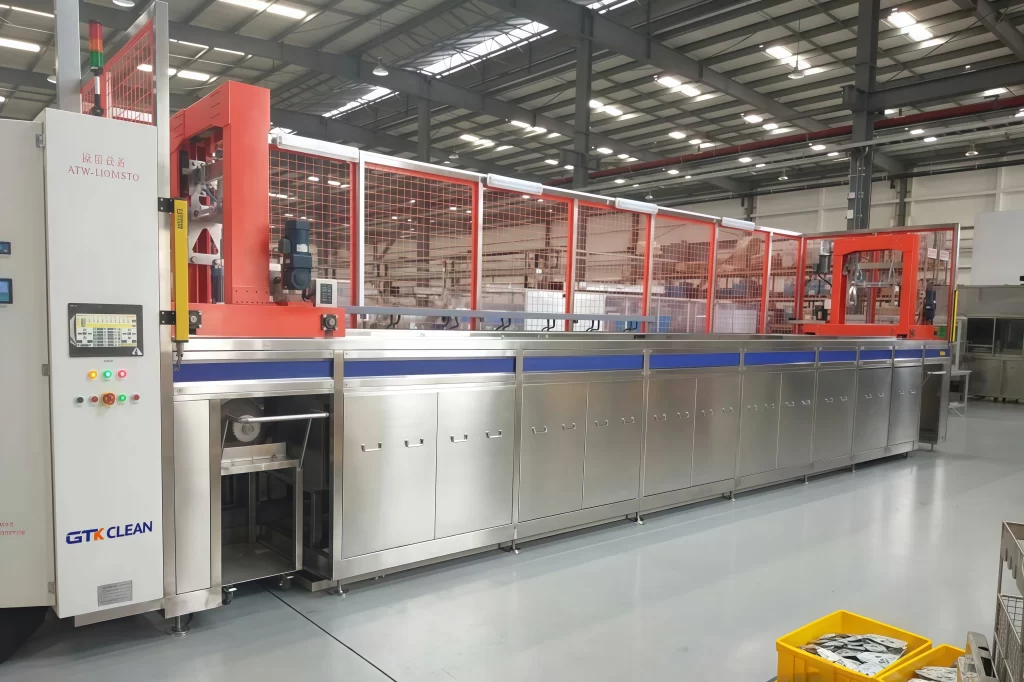
Throughput gains can be dramatic. Fastener tunnel cleaners processing over two tons per hour represent a completely different production paradigm than manual cleaning stations. The labor savings are real, but the capacity increase often matters more for facilities constrained by cleaning bottlenecks.
Workplace safety improvements don't always make it into ROI calculations, but they should. Automated systems reduce human exposure to solvents and cleaning chemicals. Fewer repetitive motion injuries. Lower insurance costs over time. These benefits are harder to quantify but no less real.
Solvent recovery systems deserve special attention. GTKCLEAN's multi-tank hydrocarbon ultrasonic cleaners include distillation-based recovery that reclaims solvent, removes impurities, and dramatically reduces consumption. The environmental benefit is obvious. The cost benefit becomes clear when you stop ordering solvent every few weeks.
Making the Case to Decision Makers
Getting approval for capital equipment requires translating operational benefits into financial language. The people signing off on six-figure purchases need to see numbers, not just promises of "better cleaning."
Start by documenting current state costs with uncomfortable precision. Labor hours spent on cleaning, including the time supervisors spend checking work and the rework hours when cleaning fails. Material consumption: chemicals, water, energy. Waste disposal costs. Reject rates traceable to cleaning issues. Maintenance and repair on existing equipment.
Then project the future state with the proposed system. Be conservative on the benefits and realistic about implementation costs. Include training time, installation downtime, and the learning curve before the system runs at full efficiency.
GTKCLEAN works with facilities to compile these analyses. We've seen enough implementations to know where the savings actually materialize and where optimistic projections fall short. Our heavy-duty automated ultrasonic cleaners, handling workpieces up to 2000 kg, deliver measurable advantages in labor reduction and cleaning consistency. But the specific ROI depends on your current process, your production volumes, and your quality requirements.
Getting the Most From Your Cleaning Investment
Maximizing ROI requires matching the right technology to your specific application. A system that's perfect for one facility might be overkill or underpowered for another.
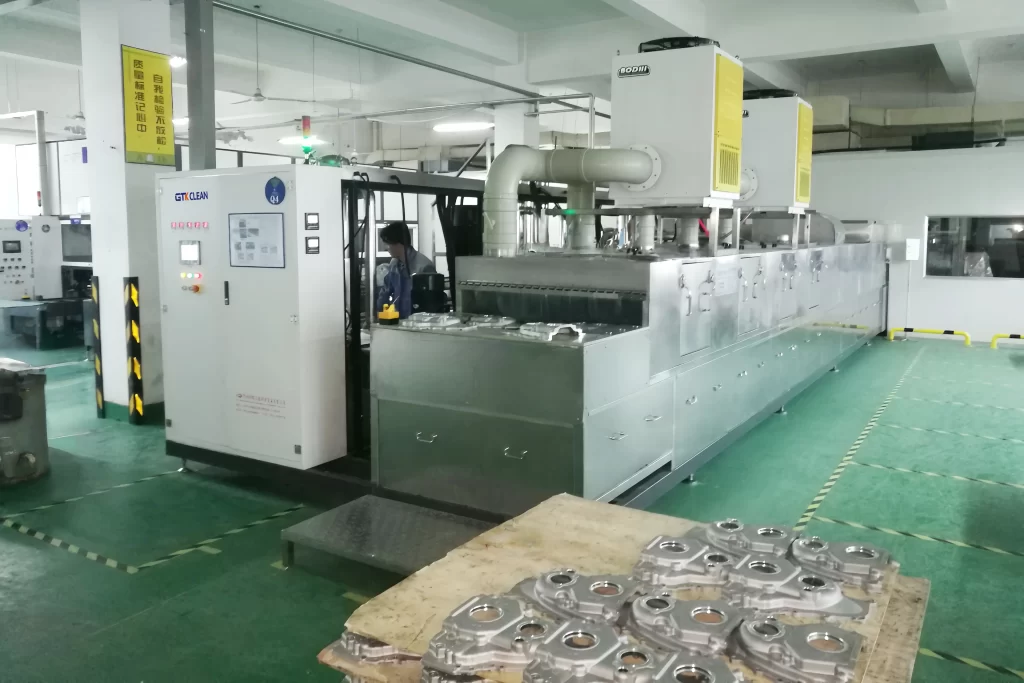
GTKCLEAN's ultrasonic systems use cavitation to penetrate blind holes and microscopic gaps that spray washing can't reach. For stamping parts with complex geometries, this capability eliminates contaminants that would otherwise cause problems in subsequent processing. The precision translates directly to reduced scrap and rework.
Solvent cleaning systems with vacuum capability and built-in recovery handle precision cleaning for parts that can't tolerate water residue. The multi-tank hydrocarbon systems combine ultrasonic cleaning with solvent recycling, delivering both cleaning effectiveness and operational economy.
Conveyor belt systems address high-volume continuous production. The inline cleaners for CNC aluminum shells use multi-directional spray nozzles to eliminate dead angles, ensuring consistent results regardless of part orientation. For facilities running thousands of parts per shift, this consistency is worth more than the labor savings.
Water treatment systems often get overlooked in ROI discussions, but they can significantly impact operating costs. Reducing fresh water consumption, enabling recycling, and minimizing discharge costs all contribute to the financial picture. Environmental compliance becomes easier when your system is designed to minimize waste from the start.
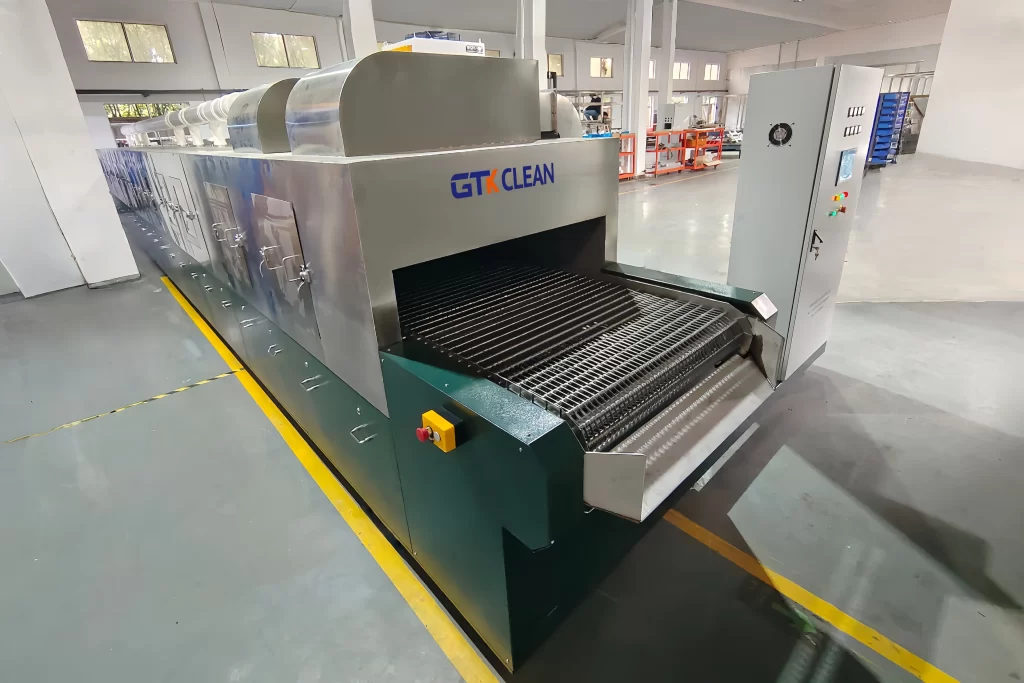
Custom solutions matter when standard configurations don't fit your requirements. Part dimensions, production capacity, cleanliness specifications, and integration with existing processes all influence the optimal system design. GTKCLEAN's engineering team works through these variables to ensure the final solution actually delivers the projected returns.
Start the Conversation About Your Cleaning Requirements
Suzhou Grintek Environmental Technology Co., Ltd. brings two decades of industrial cleaning expertise to every project. Our 28 technical patents represent real innovations in ultrasonic, solvent, conveyor, and water treatment systems, not marketing claims.
We work with operations ranging from small specialty shops to Global Fortune 500 facilities. The scale changes, but the approach stays the same: understand your current process, identify where improvements will have the greatest impact, and design a system that delivers measurable returns.
Contact us at +86 17768507147 or [email protected] to discuss your specific situation. We'll help you build the ROI case that makes sense for your operation.
Common Questions About Cleaning System Returns
What financial benefits show up over the long term with upgraded cleaning technology?
The immediate savings come from labor reduction and lower consumable costs. The long-term benefits run deeper. Energy and water consumption drop with modern efficient designs. Waste disposal costs decrease when systems include recycling and recovery. Asset lifespan extends when parts receive consistent, thorough cleaning rather than variable manual treatment. Product quality improvements reduce warranty claims and customer complaints. These effects compound over years of operation, often exceeding the initial labor savings that justified the purchase.
How does GTKCLEAN's technical background translate to better ROI?
Twenty years of R&D and 28 patents mean our systems incorporate solutions to problems that only become apparent after years of field experience. Efficient filtration extends solution life. Intelligent controls minimize downtime. Heat recovery reduces energy consumption. Solvent recovery cuts chemical costs. These aren't features added for marketing purposes. They're engineering responses to the real costs our customers face. The result is equipment that delivers faster payback and greater total returns over its operating life.
Does water treatment really move the needle on overall cleaning operation ROI?
More than most facilities expect. Water costs include both incoming supply and outgoing disposal, and both keep rising. A well-designed water treatment system reduces fresh water consumption, enables recycling within the cleaning process, and minimizes discharge volumes. For facilities in areas with high water costs or strict environmental regulations, the treatment system can pay for itself independently of the cleaning equipment it supports. It's also increasingly relevant for sustainability reporting and customer requirements around environmental performance.
 English
  German
  Spanish
  French
  Russian
  Portuguese