
Picking the right cleaning method for your production line isn't something you figure out once and forget about. The parts get more complex, the tolerances tighter, and suddenly what worked five years ago leaves you with reject rates that make accounting nervous. Most facilities we talk to are still running some version of what they've always done, which isn't necessarily wrong, but it does mean they're often missing options that could solve problems they've learned to live with.
What Makes Industrial Cleaning So Difficult in the First Place
Getting parts clean sounds straightforward until you're staring at a machined component with internal channels, cross-drilled holes, and a surface finish that can't be scratched. The contaminants vary wildly too. Cutting oils behave differently than polishing compounds, and both are stubborn in their own ways. Chips wedge themselves into places you can't see, let alone reach with a brush or spray nozzle.
The real pressure comes from consistency. Cleaning one part well is manageable. Cleaning ten thousand parts to the same standard, shift after shift, while meeting whatever cleanliness spec your customer or industry requires, that's where things get complicated. Traditional approaches often deliver acceptable results on simple geometries but fall apart when complexity increases or production volumes climb.
At GTKCLEAN, we've spent over two decades working through these exact problems. Our 28 technical patents didn't come from theoretical exercises. They came from manufacturers telling us what wasn't working and us figuring out how to fix it. The goal isn't just removing contamination. It's making sure the next step in your process, whether that's coating, assembly, or final inspection, goes smoothly because the cleaning actually did its job.
How Cavitation Actually Cleans Parts
The physics behind ultrasonic cleaning is genuinely interesting once you understand what's happening in the tank. High-frequency sound waves travel through the cleaning solution and create millions of tiny bubbles through a process called cavitation. These bubbles form and collapse rapidly, and each collapse generates a localized implosion with enough force to knock contaminants loose from surfaces.
What makes this useful for industrial applications is where the cleaning happens. Those cavitation bubbles form everywhere the solution can reach, including inside blind holes, along internal passages, and in surface features too small to see without magnification. A spray nozzle can only clean what it can hit directly. Cavitation cleans anything the liquid touches.
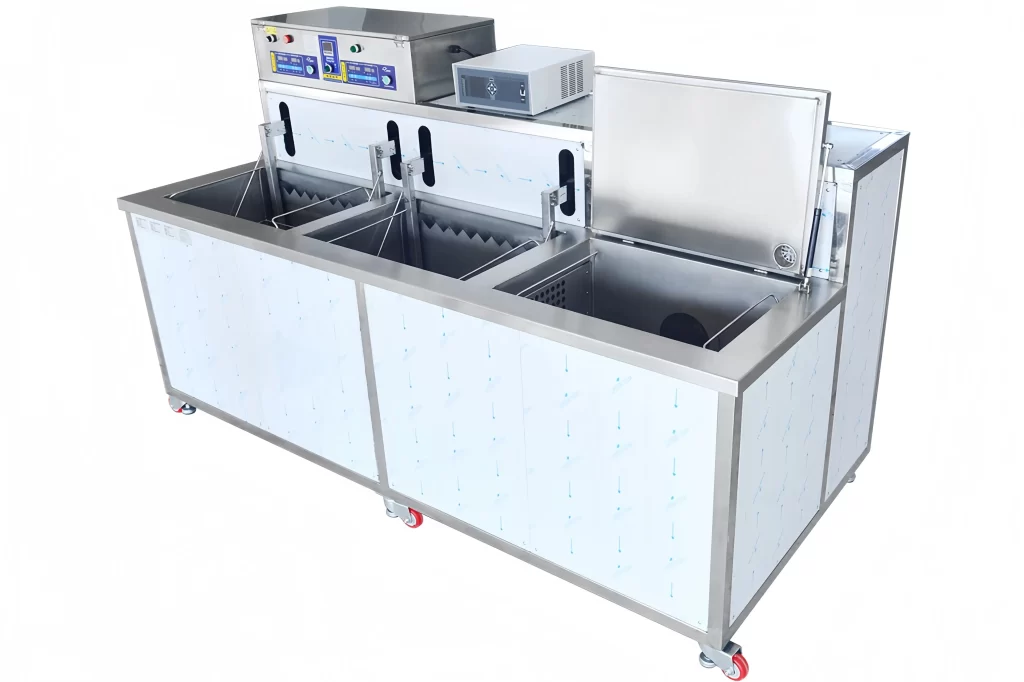
Our Pre PVD Coating Parts Ultrasonic Cleaners demonstrate how this works in practice. The process combines hydrojet spray with ultrasonic cleaning, followed by multiple stages of ultrapure water rinsing and controlled drying. The result is conductivity readings at or below 0.06 μS/cm, which matters enormously when you're trying to prevent water spots or contamination that would ruin a coating application. For Ultrasonic Cleaners for CNC Machined Parts, we use similar multi-stage approaches to remove cutting fluids, metal chips, and burrs from components with complex features.
Why does ultrasonic cleaning produce better results than manual or spray methods?
The difference comes down to access. Manual cleaning depends on what a person can reach and see. Spray cleaning depends on nozzle placement and fluid pressure. Ultrasonic cleaning works on every surface the solution contacts, including internal features and microscopic surface irregularities that other methods miss entirely. The cavitation effect is uniform across the entire part, which eliminates the variability you get with manual effort or spray coverage. For parts with intricate geometries, this isn't a marginal improvement. It's the difference between meeting spec and not meeting spec.
Where Traditional Methods Still Make Sense and Where They Don't
Traditional cleaning approaches aren't worthless. They've been around this long because they work for certain applications. The problems show up when you push them beyond what they were designed to handle.
Manual cleaning is the obvious example. It's flexible, requires minimal equipment, and works fine for simple parts in low volumes. But the results depend entirely on who's doing the work, how much time they have, and whether they can actually reach every surface that needs cleaning. For complex geometries or high-volume production, the inconsistency becomes a quality control problem.
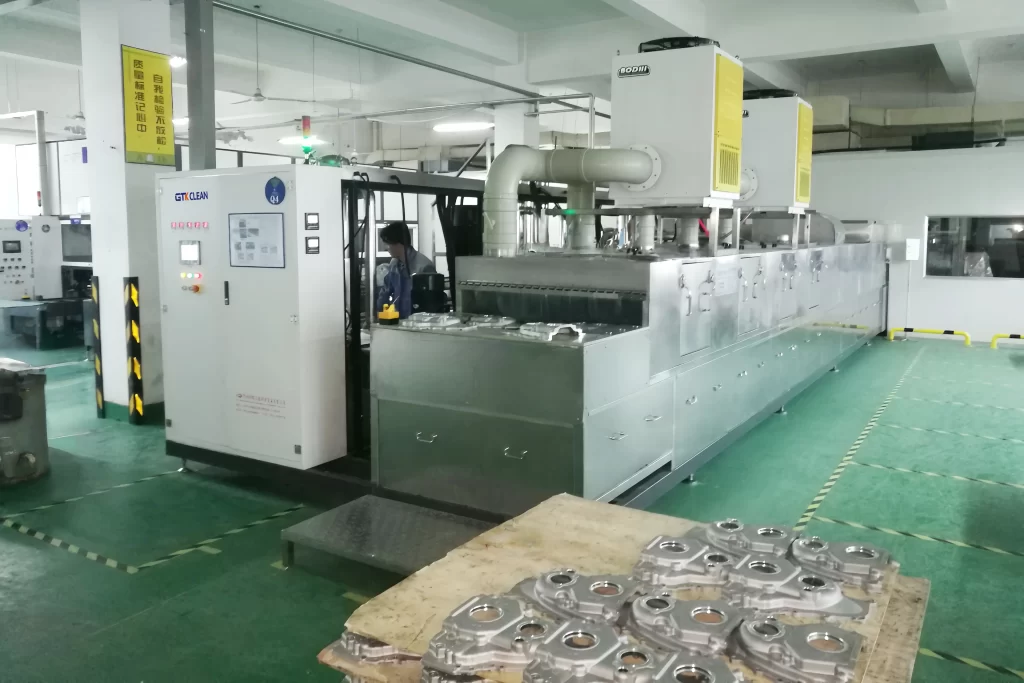
Spray washing handles higher volumes better than manual methods, but it has its own limitations. Our CNC Aluminum Shell Inline Cleaners use multi-directional spray nozzles, and even with optimized nozzle placement, there are always shadowed areas where fluid can't reach effectively. Internal features and deep recesses are particularly problematic.
Solvent cleaning remains effective for certain contaminants, but the regulatory and safety considerations have changed the calculation. Ventilation requirements, disposal costs, and worker exposure limits all add up. Aqueous cleaning avoids most of those concerns but often struggles with heavily soiled parts unless you add mechanical action to help it along.
Comparing the Two Approaches Side by Side
The practical differences between ultrasonic and traditional cleaning show up in several areas that affect your operation.
Cleaning efficiency is the most obvious. Ultrasonic systems handle complex parts and precision components better than any traditional method. The cavitation effect reaches places that spray nozzles and manual effort simply cannot access. For straightforward parts with simple geometries, the advantage is smaller, but it's still measurable.
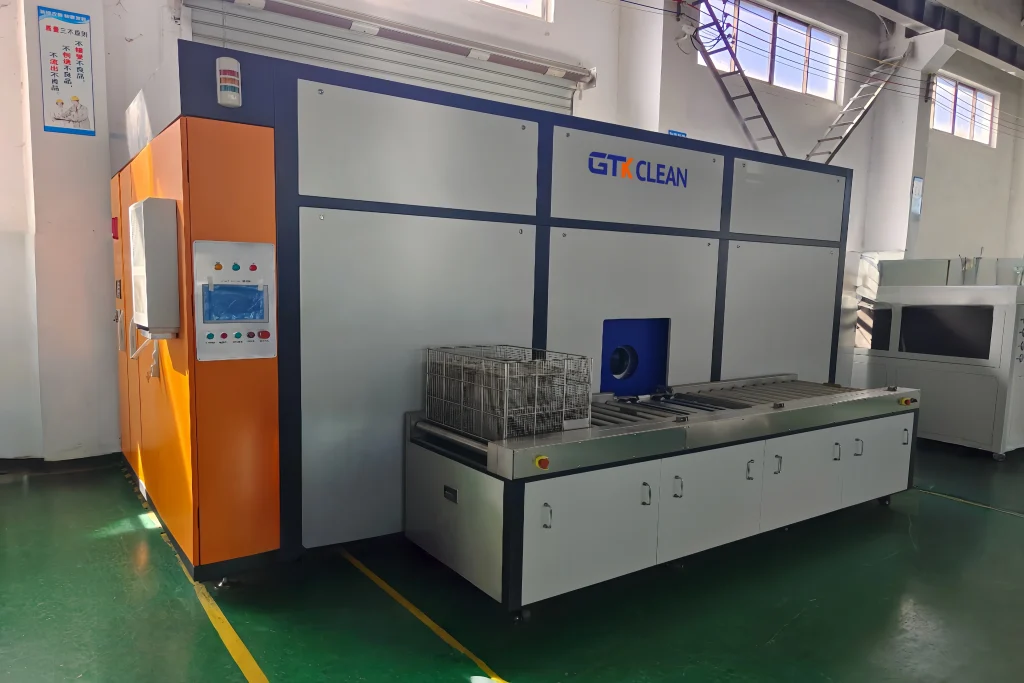
Cost analysis requires looking at the full picture. Ultrasonic systems cost more upfront. That's not debatable. But the ongoing costs tell a different story. Labor requirements drop because the process is automated. Chemical consumption decreases because solutions can be filtered and reused. Cycle times are often shorter for thorough cleaning. Whether the long-term savings justify the initial investment depends on your specific situation, but for high-volume precision cleaning, the math usually works out.
Environmental impact has become a bigger factor in recent years. Ultrasonic systems typically use water-based or hydrocarbon solutions that can be recycled and filtered. Traditional solvent methods often generate more hazardous waste and require more elaborate disposal procedures. This affects both your operating costs and your regulatory compliance burden.
| Feature | Industrial Ultrasonic Cleaning | Traditional Cleaning Methods |
|---|---|---|
| Cleaning Efficiency | Superior for precision, complex geometries, blind holes | Variable, often struggles with intricate parts, inconsistent |
| Operational Cost | Higher initial investment, lower long-term labor/chemical costs | Lower initial investment, higher ongoing labor/chemical costs |
| Environmental Impact | Generally lower, often uses water-based/recyclable solutions | Can be higher, potential for hazardous waste disposal |
| Consistency | High, automated, repeatable results | Lower, dependent on manual effort or spray coverage |
| Speed | Faster cycle times for thorough cleaning | Slower, especially for detailed or large-batch cleaning |
| Safety | Reduced exposure to chemicals, often automated | Higher risk of chemical exposure, manual handling |
Does the investment in ultrasonic cleaning pay off over time?
For most precision manufacturing applications, yes. The savings accumulate from several directions. Automation reduces labor costs. Extended solution life through filtration cuts chemical expenses. Faster cycle times increase throughput. Better cleaning quality reduces rework and scrap rates. The timeline for payback varies depending on your production volume and the complexity of your parts, but facilities running high-volume precision cleaning typically see returns within a reasonable period.
Building Cleaning Systems That Fit Your Production
The value of any cleaning system depends on how well it integrates with your existing workflow. A technically superior solution that disrupts your production line or requires constant manual intervention isn't actually superior in practice.
Our approach at GTKCLEAN focuses on designing systems that fit specific operational requirements. The range includes Ultrasonic Cleaning Systems, Hydrocarbon Ultrasonic Cleaners, and conveyor belt systems, each configured for particular applications. Solution chemistry gets customized based on what contaminants you're removing and what materials you're cleaning.
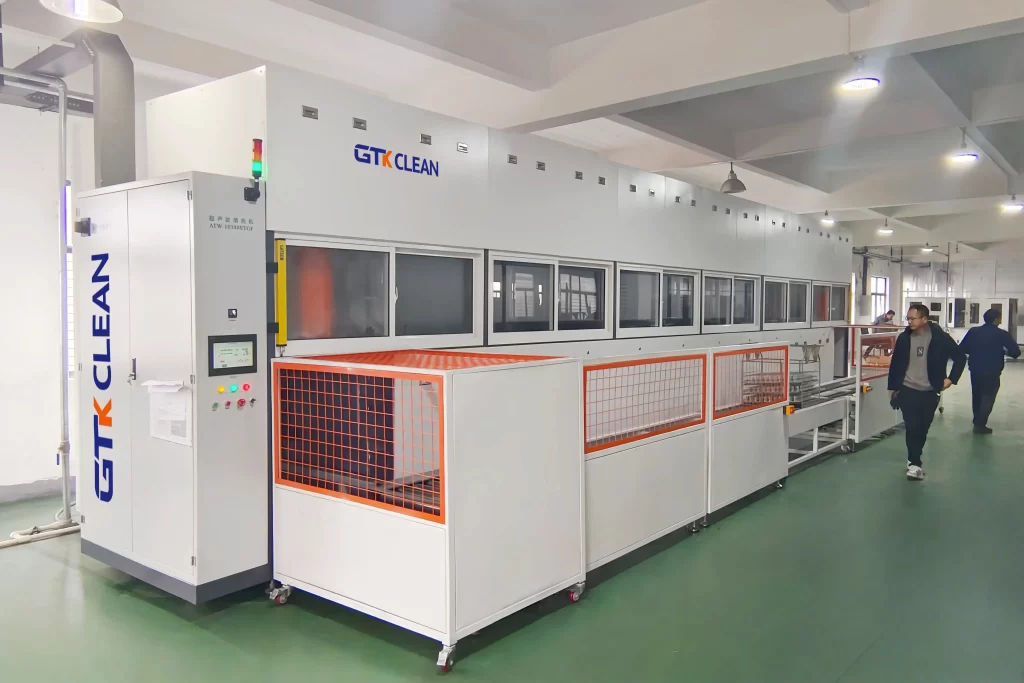
The Pre PVD (Coating) Parts Ultrasonic Cleaners illustrate how this works for demanding applications. Multi-stage cleaning with ultrapure water systems achieves conductivity at or below 0.06 μS/cm, which prevents the secondary contamination that would compromise coating adhesion. The Ultrasonic Cleaners for CNC Machined Parts are fully automated and designed for high-volume production, with stable cleaning quality and remote program upgrade capability. Our Fastener Tunnel Cleaners incorporate oil-water separation that removes over 98% of surface oil with minimal water content in the finished parts.
Will ultrasonic cleaning work for the specific parts we manufacture?
The honest answer is that it depends on your parts and your requirements. Material compatibility matters. Component geometry affects how well cavitation can reach all surfaces. The type and amount of contamination influences solution selection and process parameters. We analyze these factors before recommending a system because the goal is solving your actual cleaning problem, not selling equipment that doesn't fit your application. For most industrial components, including metals, plastics, and delicate optical parts, ultrasonic cleaning can be configured to work effectively.
What's Coming Next in Industrial Cleaning
The direction of cleaning technology is moving toward greater automation, tighter integration with production systems, and reduced environmental impact. Water and energy consumption are getting more attention, both for cost reasons and sustainability requirements. Cleaning agents are evolving to be more effective while generating less waste.
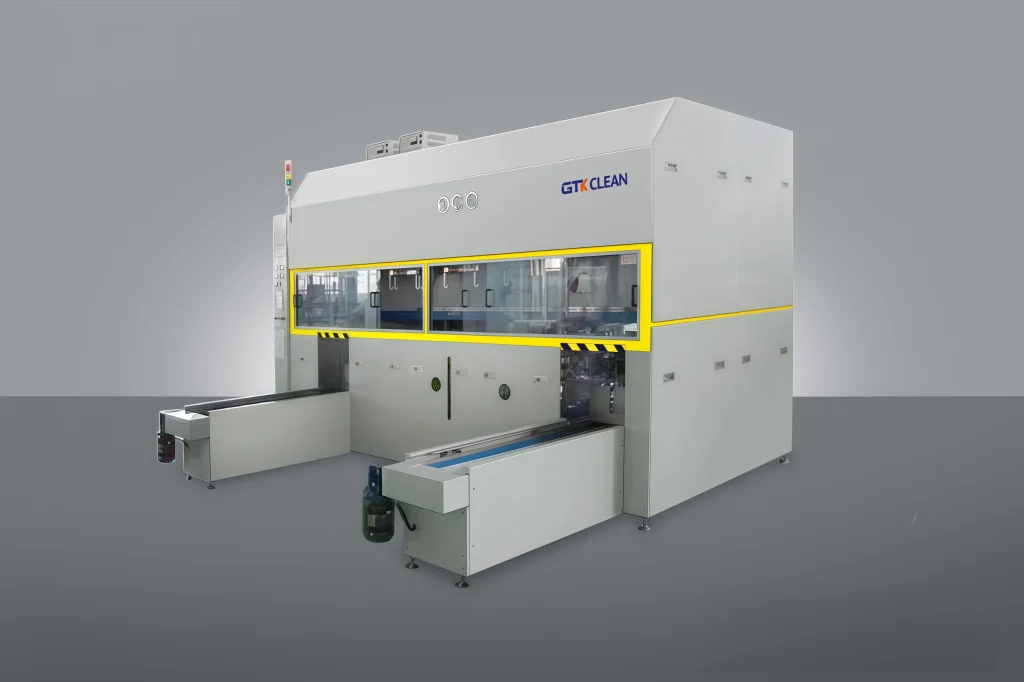
Our R&D work reflects these trends. We're developing more efficient Hydrocarbon Solvent Ultrasonic Cleaning Systems with advanced solvent recycling capabilities. The automation side continues to expand, with systems designed to communicate with production management software and adapt to changing requirements. The goal is cleaning systems that are intelligent enough to maintain consistent results while minimizing resource consumption.
Working with GTKCLEAN
Suzhou Grintek Environmental Technology Co.,Ltd. has been solving industrial cleaning problems for over 20 years. Our 28 technical patents represent real solutions to real manufacturing challenges. We work with companies ranging from small specialized manufacturers to Global Fortune 500 corporations, and the approach is the same regardless of scale. We figure out what you actually need and design systems that deliver it.
If your current cleaning process isn't meeting your requirements, or if you're planning production that will need better cleaning capability than you currently have, we should talk. Contact us at +86 17768507147 or [email protected].
Common Questions About Industrial Cleaning
What gives ultrasonic cleaners an advantage for precision parts?
The cavitation effect reaches surfaces and features that other cleaning methods cannot access. For parts with complex geometries, internal passages, or tight tolerances, this means actually achieving the cleanliness standard rather than hoping for the best. Our Automated Ultrasonic Cleaners are built specifically for applications where "close enough" isn't acceptable.
How do ultrasonic systems compare environmentally to traditional cleaning?
Most ultrasonic systems use water-based solutions rather than harsh solvents, which reduces both chemical waste and worker exposure concerns. Advanced filtration extends solution life, which means less frequent disposal. The environmental advantage isn't absolute, but for most applications, ultrasonic cleaning has a smaller footprint than traditional solvent-based methods.
Can your systems be added to production lines that are already running?
Yes. We design Ultrasonic Cleaning Systems with integration in mind. The specifics depend on your layout, throughput requirements, and existing equipment, but we've successfully integrated systems into a wide variety of production environments. The goal is improving your cleaning capability without disrupting everything else.
What maintenance do these systems require?
Routine maintenance is straightforward. Solution monitoring and replacement, transducer inspection, and tank cleaning are the main items. We provide detailed guidance and support to keep systems running at optimal performance. Downtime for maintenance is minimal when the schedule is followed.
Which industries get the most value from ultrasonic cleaning?
Aerospace, medical devices, automotive, electronics, and optics are the sectors where we see the strongest demand. These industries share a common requirement for consistent, verifiable cleanliness on parts where contamination causes real problems. Our Custom Ultrasonic Cleaners are designed to meet the specific standards and requirements of each industry.
 English
  German
  Spanish
  French
  Russian
  Portuguese