
Selecting the right ultrasonic cleaning system carries real weight for industrial operations. We’ve seen how this choice influences cleaning quality, day-to-day efficiency, and total cost over time. Understanding how manual and automated systems differ in practice helps ensure the investment fits specific production needs now and supports long-term business goals.
Understanding Industrial Ultrasonic Cleaning Fundamentals
Ultrasonic cleaning uses high-frequency sound waves to generate microscopic bubbles in a liquid, a phenomenon known as cavitation. Those bubbles form and collapse in rapid cycles; the resulting implosions dislodge contaminants from component surfaces. This approach reaches intricate parts, blind holes, and internal geometries that conventional methods struggle to clean. Industrial use spans automotive, aerospace, medical, and electronics manufacturing. Performance depends on precise control of ultrasonic frequency, power, temperature, and cleaning solution chemistry. GTKCLEAN has over 20 years of R&D experience in this field, holding 28 technical patents. This expertise allows us to deliver superior cleaning performance in diverse industrial settings.
If you’re interested, check 《What Is Ultrasonic Cavitation Effect?》.
Key Evaluation Criteria for Cleaning System Selection
Choosing the appropriate ultrasonic cleaning system requires a thorough evaluation of several factors. We consider cleaning process requirements, such as the type and level of contaminants, and the required cleanliness standards. Throughput demands set the necessary speed and capacity of the system. Operational costs, including labor, utilities, and consumables, shape long-term economic viability. Labor availability and skill sets influence whether manual intervention or automated solutions make sense. The complexity and geometry of parts, along with material composition, can call for specific cleaning technologies. Safety for operators and the environment should guide every equipment decision.
| Feature | Manual System Considerations | Automated System Considerations |
|---|---|---|
| Throughput | Low to Medium | High to Very High |
| Labor Cost | High (direct labor) | Low (supervision, maintenance) |
| Consistency | Variable (operator-dependent) | High (programmed, repeatable) |
| Initial Cost | Lower | Higher |
| Part Complexity | Flexible (operator adapts) | Requires specialized fixturing/programming |
| Safety | Higher operator exposure to chemicals/heat | Lower operator exposure, enclosed processes |
Manual Ultrasonic Cleaning Systems Pros and Cons
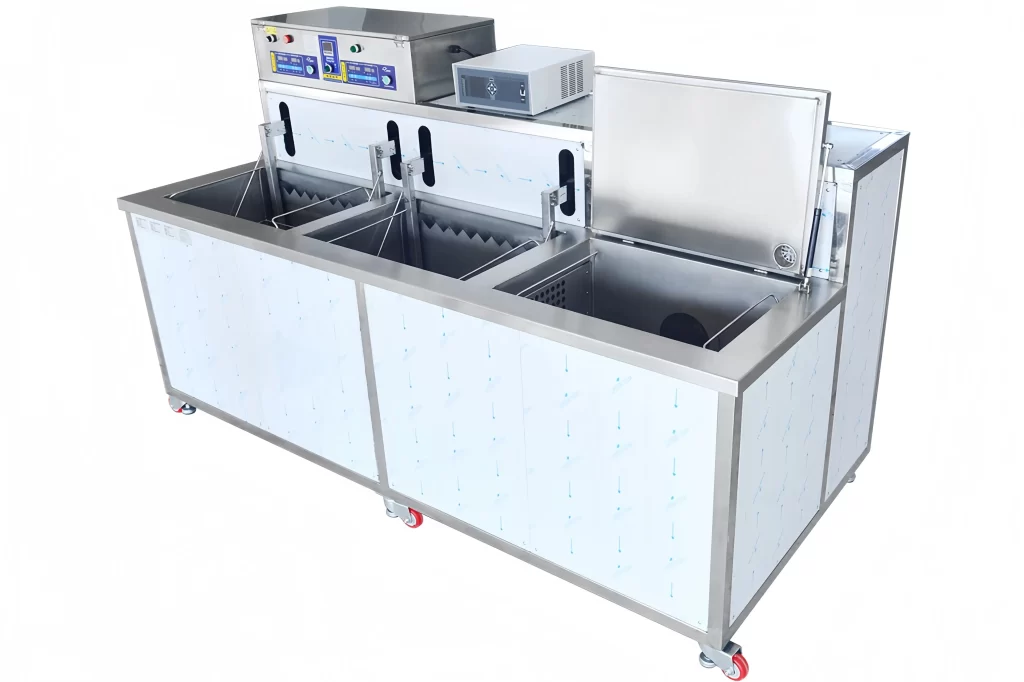
Manual ultrasonic cleaning systems offer flexibility and a lower initial investment. These systems, such as GTKCLEAN's Benchtop Ultrasonic Cleaners, are commonly multi-tank ultrasonic cleaners where operators manually transfer parts between stages. That setup supports adaptable cleaning for low volume cleaning or varied part batches. Operators can adjust parameters in real time. The trade-offs include inconsistent results due to human error and higher labor costs. They are less suited to high-volume production or applications that demand stringent cleanliness standards.
Automated Ultrasonic Cleaning Systems Pros and Cons
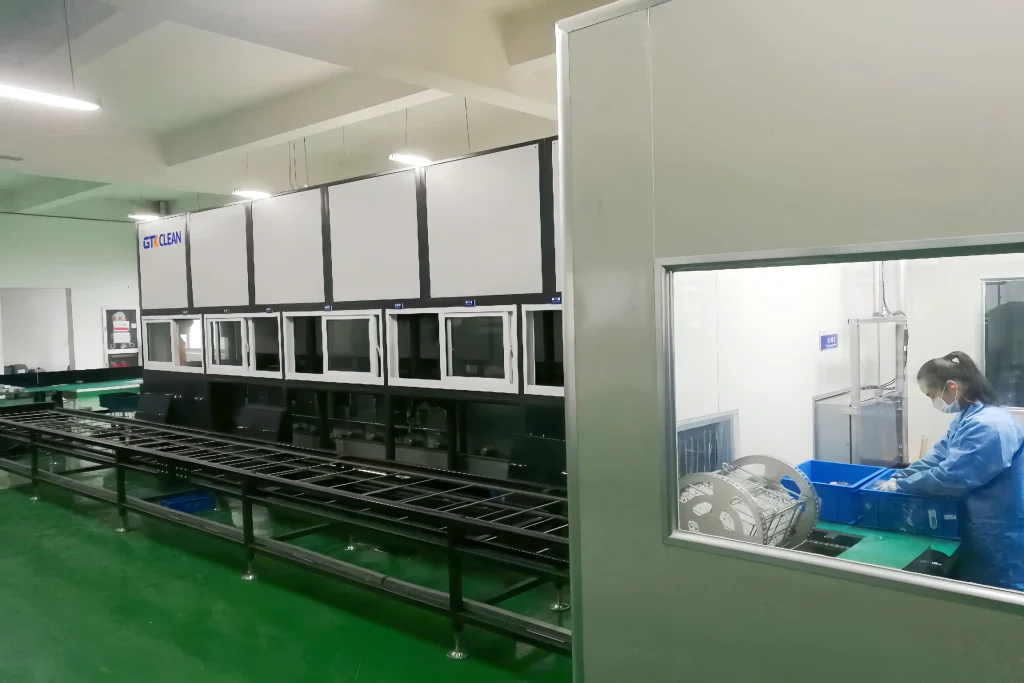
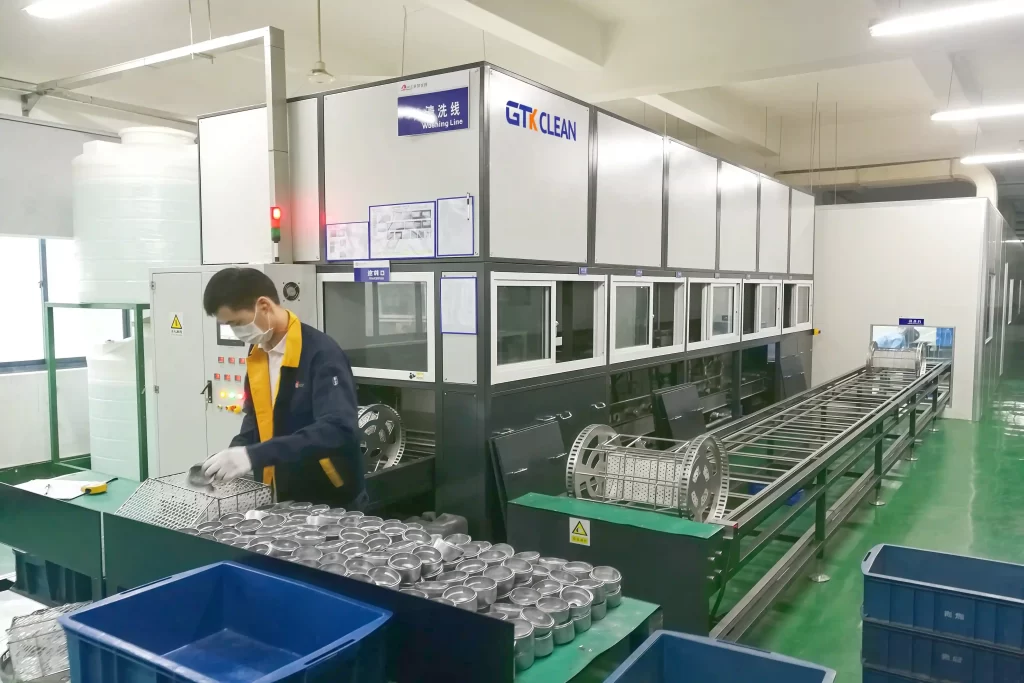
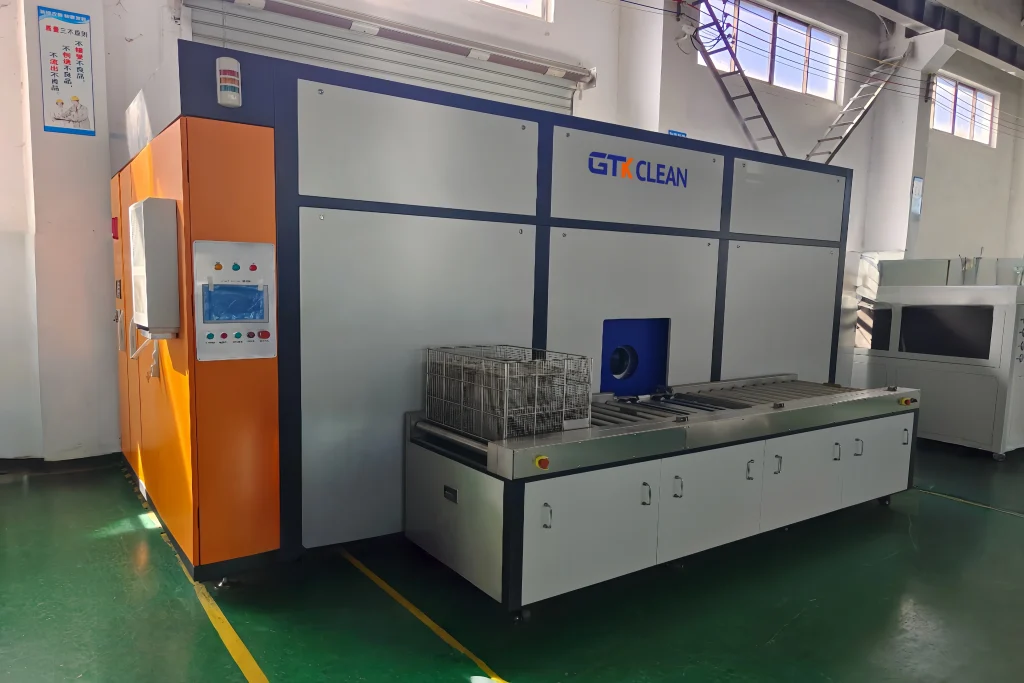
Automated ultrasonic cleaning systems deliver strong consistency and efficiency, making them a good fit for high volume cleaning. Systems like GTKCLEAN's Ultrasonic Cleaners for CNC Machined Parts integrate multi-stage processes, including ultrasonic degreasing, rinsing, and drying. Automated cleaning brings reduced labor costs, enhanced safety, and repeatable precision cleaning automation. These systems can be customized for complex parts with deep holes or blind holes, with options such as rotary baskets. The drawbacks are a higher initial investment and less flexibility when sudden process changes arise.
Strategic Decision Making: Choosing Your Ideal System
Selecting ultrasonic cleaning equipment comes down to matching system capabilities with real operational needs. For high-volume production of complex parts, automated systems like GTKCLEAN's Heavy-Duty Automated Ultrasonic Cleaners or Rotary Basket Ultrasonic Cleaners can deliver strong ROI through reduced labor and consistent quality. Smaller batches or diverse part types may benefit more from the agility of a manual system. Consider future proofing by anticipating growth and evolving cleanliness requirements. GTKCLEAN provides custom ultrasonic solutions, designing systems tailored to specific part dimensions, production capacities, and cleanliness standards. Our engineers assess your unique challenges to recommend the most efficient and cost-effective system.
Partner with GTKCLEAN for Advanced Cleaning Solutions
GTKCLEAN specializes in industrial cleaning equipment, offering both manual and automated ultrasonic systems. We leverage over 20 years of R&D experience and 28 technical patents to provide superior cleaning performance. Contact us today to discuss your specific cleaning challenges and discover how our solutions can optimize your operations. Reach us at [email protected] or +86 17768507147.
FAQs
What is the primary cost difference between manual and automated ultrasonic cleaning systems?
Manual systems generally have a lower initial investment. Automated cleaning ROI is often higher over time due to reduced labor costs, increased throughput, and consistent cleaning quality. By minimizing human intervention, automated systems can drive significant operational savings.
How does cleaning consistency compare between manual and automated ultrasonic processes?
Automated systems provide superior consistency. Programmed cycles deliver the same treatment every time. Manual processes depend on the operator, which can lead to variability and less predictable ultrasonic cleaning results.
Can automated ultrasonic cleaning systems be customized for specific industrial applications?
Yes. Automated ultrasonic cleaning systems are highly customizable. GTKCLEAN designs systems tailored to specific part dimensions, material types, and contamination levels. This can include specialized baskets, multi-stage processes, and integrated drying solutions to meet unique industrial cleaning solutions requirements.
 English
  German
  Spanish
  French
  Russian
  Portuguese