

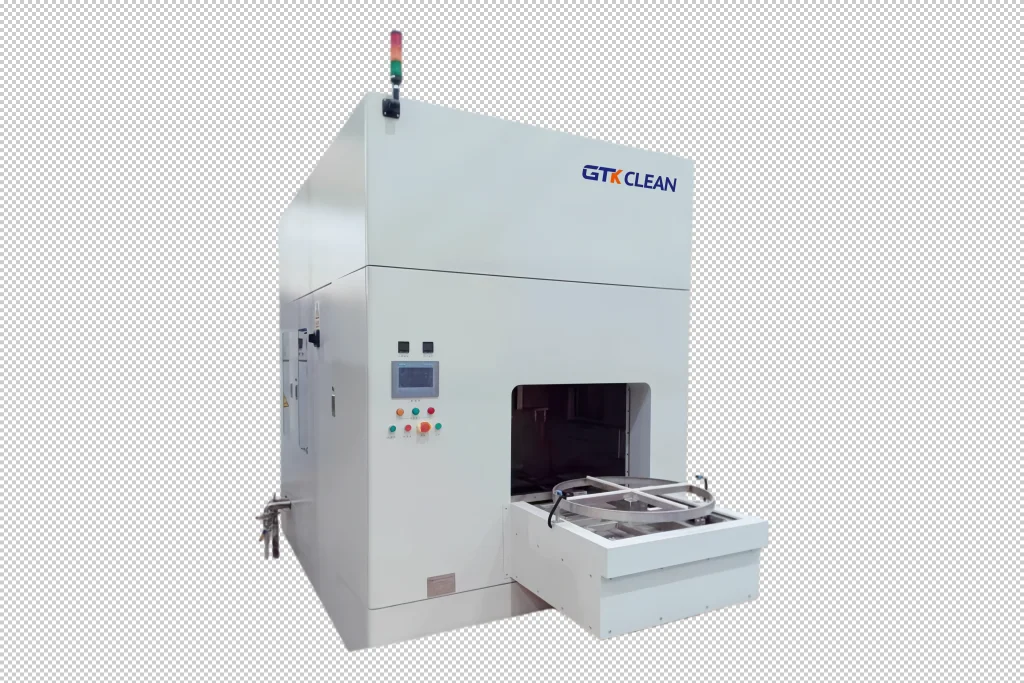
Manufacturers explain the working principle of ultrasonic cleaning and its potential impacts.
Ultrasonic Cleaning Principle
1. What is Ultrasound (Ultrasonic)?
To understand how ultrasonic cleaners operate, we first need to define ultrasound. Human hearing covers sound frequencies from 20 Hz to 20,000 Hz. Sound waves above 20,000 Hz are classified as ultrasound.
Ultrasound travels as a longitudinal sinusoidal wave, alternating between high- and low-pressure zones. In low-pressure regions, a negative pressure forms in the liquid, creating tiny vacuum bubbles. In high-pressure regions, positive pressure collapses these bubbles violently.
Research confirms that the sudden collapse of each bubble releases an intense shock wave, generating localized temperatures of hundreds of degrees Celsius and pressures of more than 1,000 atmospheres in an instant. This effect is known as cavitation. Ultrasonic cleaning relies on these shockwaves to scrub and remove contaminants from both external and internal surfaces of parts.
2. How an Ultrasonic Cleaner Works
Ultrasonic cleaners use high-frequency signals above 20 kHz, converted by transducers into high-frequency mechanical vibrations that transfer into the cleaning solution.
Ultrasound radiates through the liquid in alternating compression and rarefaction waves, creating countless micro-bubbles. These bubbles form and grow in low-pressure zones and collapse rapidly in high-pressure zones — a process called cavitation.
When bubbles collapse, they produce instantaneous pressure exceeding 1,000 atmospheres. Repeated high-pressure bursts act like tiny explosions, bombarding the surface of parts and quickly stripping away contaminants, even from deep crevices.
As sound pressure reaches a threshold, bubbles expand rapidly then collapse abruptly. This collapse creates shockwaves with pressures ranging from 10¹² to 10¹³ Pa and extreme local temperature spikes. The intense pressure breaks down insoluble contaminants into the solution. Combined with repeated impact from vapor-phase cavitation, this is the core mechanism of ultrasonic cleaning.
3. Main Forms of Ultrasonic Cavitation
- Micro-bubbles (cavitation nuclei) in the liquid vibrate under sound waves. When pressure is sufficient, they expand then collapse suddenly, producing shockwaves of thousands of atmospheres that break down insoluble dirt.
- Direct, repeated impact of vapor-phase cavitation weakens the adhesion between contaminants and part surfaces, causing fatigue failure and detachment.
- Vibrating gas bubbles scrub solid surfaces. If cracks exist, bubbles penetrate and vibrate inside them, loosening and removing layers such as oxide films.
- For solid particles trapped in oil, cavitation rapidly separates and emulsifies the oil interface, releasing particles from the surface.
- Cavitation bubble vibration causes secondary effects including acoustic streaming — bulk liquid movement or high-speed micro-streaming near bubble surfaces. Strong shear forces (often exceeding 100 Pa) disrupt and remove surface contaminants.
- High-speed micro-jets formed at solid–liquid interfaces remove or weaken boundary layers, enhance agitation, accelerate dissolution, and boost the effectiveness of chemical cleaning agents.
4. Operating Characteristics
- Cavitation breaks the bond between dirt and substrates, causes fatigue detachment, scrubs surfaces, penetrates crevices, emulsifies oils, and releases particles.
- Alternating sound pressure creates jets that impact parts; nonlinear effects produce acoustic streaming and micro-streaming.
- Cleaning occurs wherever liquid and ultrasound reach, making it ideal for complex-shaped components.
- Ultrasonic cleaning reduces chemical solvent usage, greatly lowering environmental pollution.
As the liquid and tank vibrate at ultrasonic frequencies, a faint humming noise may be heard. Visible bubbles in the solution are typically air bubbles, which reduce cavitation efficiency. Only when dissolved air is fully removed can vacuum cavitation bubbles perform optimally.
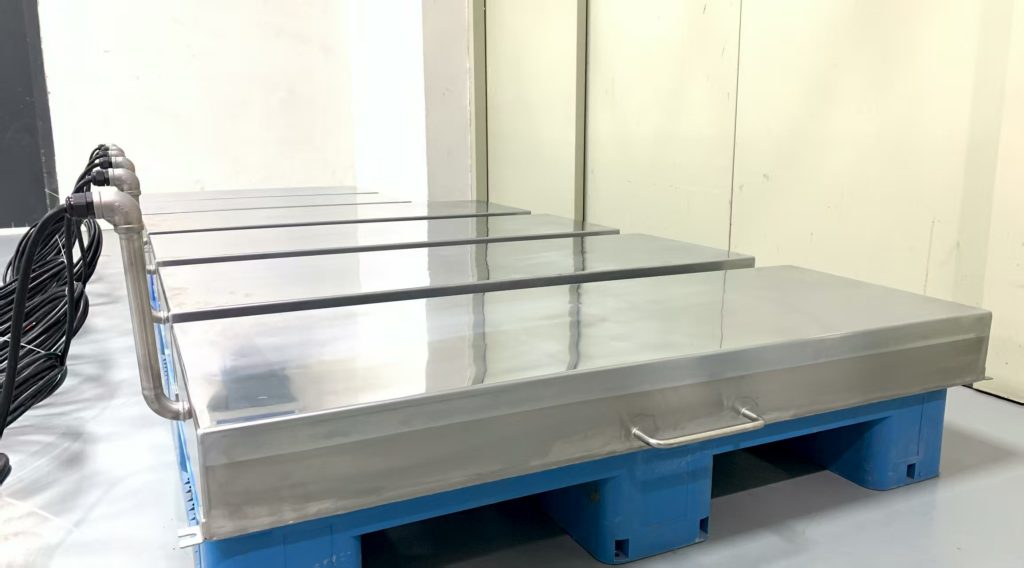
In a typical transducer assembly, a stainless steel plate vibrates with bonded transducers driven by the ultrasonic generator. As the plate moves upward, it pushes water; as it moves downward rapidly, a vacuum gap forms between the plate and water, creating cavitation bubbles. These bubbles strike submerged parts with thousands of atmospheres of force, dislodging contaminants.
5. Potential Effects of Ultrasound
Extended exposure to ultrasound can cause mild heating in human tissue. At higher frequencies and intensities, heating intensifies, potentially affecting water molecules and damaging surrounding tissue with prolonged exposure.
High-power, continuous ultrasound can be harmful to the human body.By contrast, low-power, intermittent ultrasound is generally considered harmless and even beneficial — similar to gentle tapping feeling comfortable, while strong, repeated blows cause pain or injury.
 English
  German
  Spanish
  French
  Russian
  Portuguese