
Industrial parts arrive coated in machining oils, protective greases, and residual waxes that compromise downstream processes. Hydrocarbon solvent cleaning systems strip these contaminants completely, leaving surfaces ready for coating, assembly, or inspection. The technology works particularly well on components with blind holes, tight tolerances, and complex internal passages where water-based methods struggle to reach or dry properly.
How Hydrocarbon Solvents Remove Industrial Contaminants
Hydrocarbon solvent cleaning systems use petroleum-derived organic solvents to dissolve non-polar substances from metal and plastic parts. The chemistry is straightforward: like dissolves like. Oils, greases, and waxes share a similar molecular structure with hydrocarbon solvents, so they mix readily and lift away from surfaces.
The cleaning process often relies on vapor degreasing technology. Parts enter a chamber where solvent vapors rise from a heated sump. When these vapors contact the cooler part surfaces, they condense into liquid, dissolving contaminants as they flow downward. Fresh vapor continuously replaces the condensed solvent, so the part always contacts clean solvent rather than contaminated liquid.
This vapor condensation mechanism explains why hydrocarbon solvent cleaning systems handle complex geometries so effectively. The vapor penetrates every crevice, channel, and blind hole because gases naturally fill enclosed spaces. Liquid immersion alone cannot match this penetration, especially on parts with intricate internal features.
Surface tension also plays a role. Hydrocarbon solvents have lower surface tension than water, allowing them to wet surfaces more completely and creep into microscopic gaps. This property matters for precision cleaning applications where even trace residues affect product performance.
Engineering Behind Modern Hydrocarbon Cleaning Equipment
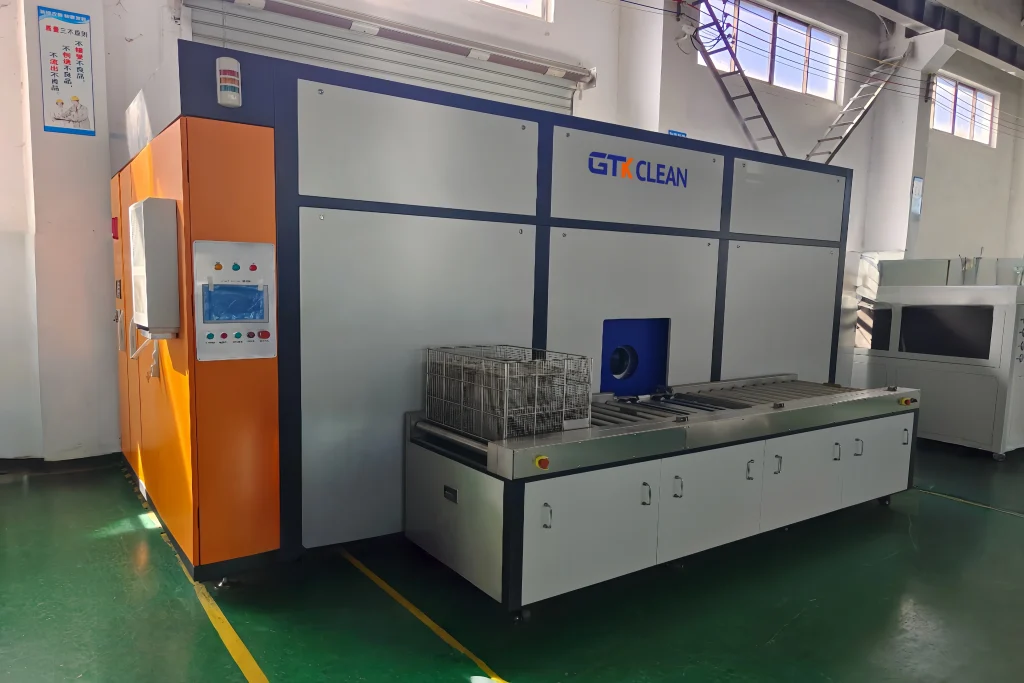
Advanced hydrocarbon solvent cleaning systems combine multiple cleaning mechanisms in a single automated sequence. GTKCLEAN has developed these systems over 20 years of R&D, accumulating 28 technical patents that address the practical challenges of industrial solvent cleaning.
A typical system moves parts through several stages. Initial immersion loosens bulk contamination. Ultrasonic cleaning integration adds mechanical agitation through high-frequency sound waves that create microscopic cavitation bubbles. These bubbles collapse against part surfaces, dislodging particles that chemical action alone might miss. Final vapor degreasing removes the last traces of contamination and rinses away any loosened debris.
Closed-loop cleaning systems capture and recycle the solvent continuously. A distillation unit separates clean solvent from dissolved contaminants, returning purified solvent to the cleaning tanks while concentrating waste for disposal. This solvent recovery approach reduces consumption dramatically and keeps cleaning quality consistent over time.
Vacuum drying accelerates the final stage. Reducing chamber pressure lowers the solvent's boiling point, so residual liquid evaporates quickly at moderate temperatures. Parts emerge completely dry and ready for the next manufacturing step.
Regular degreasing equipment maintenance keeps these systems performing at specification. Filters require periodic replacement, distillation units need cleaning, and sensors demand calibration. Neglecting maintenance degrades cleaning quality and increases solvent consumption.
What Are the Key Advantages of Using Hydrocarbon Solvents for Industrial Cleaning?
Hydrocarbon solvents excel at removing non-polar contaminants because their molecular structure matches the contamination they target. They work on a wide range of materials without causing damage, including aluminum alloys, stainless steel, copper, and many engineering plastics.
The low surface tension of hydrocarbon solvents lets them penetrate complex part geometries that aqueous cleaners cannot reach effectively. This penetration capability produces high surface finish quality and consistent cleaning results across production batches.
The article 《What Is The Technical Principle Of Hydrocarbon(Solvent) Cleaning Machines?》 explains the operational mechanics and thermodynamic principles that make these systems effective.
Safety Systems and Environmental Controls
Hydrocarbon solvents are flammable, and their vapors can accumulate to dangerous concentrations. Responsible system design addresses these hazards through multiple engineering controls.
GTKCLEAN builds hydrocarbon solvent cleaning systems with explosion-proof electrical components, continuous gas monitoring, and automated exhaust systems. If vapor concentrations approach hazardous levels, the system responds before operators need to intervene. Fire suppression systems provide backup protection.
Worker safety protocols extend beyond equipment design. Operators wear appropriate PPE, including chemical-resistant gloves and respiratory protection when servicing equipment. Training covers emergency procedures and the specific hazards of the solvents in use.
Environmental compliance requires controlling emissions and managing waste properly. Closed-loop systems capture solvent vapors rather than venting them to atmosphere. Distillation concentrates contaminants for proper disposal while recovering clean solvent for reuse. These practices satisfy EHS compliance requirements for industrial cleaning operations and reduce the environmental footprint of manufacturing processes.
How Do Closed-Loop Hydrocarbon Cleaning Systems Improve Efficiency and Reduce Environmental Impact?
Closed-loop hydrocarbon solvent cleaning systems recirculate solvent through continuous distillation and filtration. This solvent recycling technology recovers 95% or more of the solvent that would otherwise be lost to evaporation or disposal.
The environmental benefits are substantial. Reduced solvent consumption means fewer raw materials extracted and processed. Emission control systems capture vapors that would otherwise contribute to air pollution. Concentrated waste streams are easier and cheaper to dispose of properly than dilute contaminated solvent.
Operating costs drop correspondingly. Solvent purchases decrease, waste disposal fees shrink, and regulatory compliance becomes simpler when emissions stay well below permitted levels.
Calculating Return on Investment
Hydrocarbon solvent cleaning systems require significant capital investment, but operating costs often justify the expense within a few years. The calculation depends on production volume, current cleaning costs, and the specific system configuration.
Solvent consumption provides the clearest cost comparison. Systems with integrated distillation and vacuum drying can operate on less than 200 liters of makeup solvent per month, even with continuous production. Compare this to open systems that might consume that amount in a week.
Labor costs factor in as well. Automated cleaning processes run with minimal operator attention, freeing workers for other tasks. Consistent cleaning quality reduces rework and rejects downstream.
Maintenance best practices protect the investment over time. Scheduled filter changes, periodic distillation unit cleaning, and sensor calibration cost less than emergency repairs and production interruptions.
| Feature Type | Single-Stage Cleaning | Multi-Stage Cleaning |
|---|---|---|
| Cleaning Power | Moderate | High |
| Contaminant Range | Limited | Broad |
| Complexity | Simple | Advanced |
| Solvent Usage | Higher per cycle | Lower per cycle |
| Cost | Lower initial | Higher initial |
Multi-stage hydrocarbon solvent cleaning systems cost more upfront but deliver lower per-part cleaning costs at production volumes. Single-stage systems make sense for lower volumes or less demanding cleanliness specifications.
Matching Equipment to Application Requirements
Selecting the right hydrocarbon solvent cleaning system starts with understanding what needs cleaning. Part geometry, material composition, contamination type, cleanliness specification, and production volume all influence the optimal configuration.
Parts with blind holes and internal passages need vapor degreasing capability. Heavy contamination benefits from ultrasonic agitation. High production volumes justify multi-tank systems that process parts continuously rather than in batches.
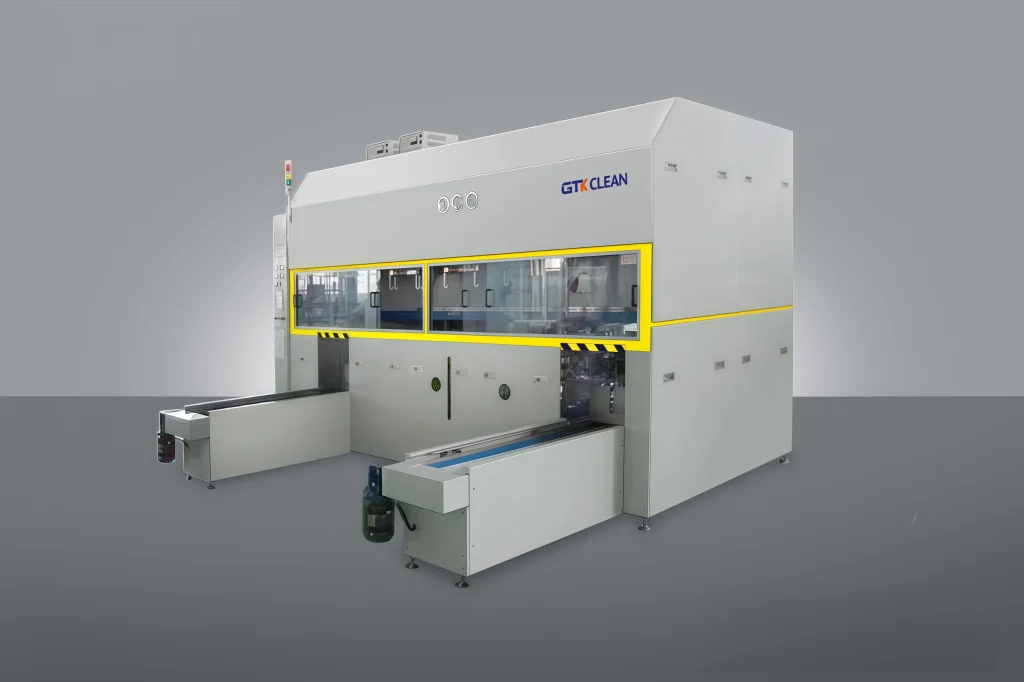
GTKCLEAN's Multi-Tank Hydrocarbon Ultrasonic Cleaners address demanding applications like new energy vehicle battery housings and stamped components. These systems provide 360-degree cleaning that reaches blind holes and recessed features. Tank dimensions and throughput capacity can be customized to match specific workpiece sizes and production requirements.
Hydrocarbon solvent selection matters too. Different solvents have different flash points, evaporation rates, and solvency characteristics. The right choice balances cleaning effectiveness against safety requirements and material compatibility.
What Safety Considerations Are Paramount When Operating Hydrocarbon Solvent Cleaning Equipment?
Ventilation prevents vapor accumulation in the work area. Even with closed-loop systems, some vapor escapes during loading and unloading. Adequate airflow keeps concentrations well below flammable limits.
Explosion-proof electrical components eliminate ignition sources. Standard electrical equipment can spark during normal operation, creating a fire hazard in the presence of solvent vapors.
Operators need chemical-resistant gloves to prevent skin contact and respiratory protection when vapor exposure is possible. Clear emergency procedures ensure everyone knows how to respond if something goes wrong.
Partner with GTKCLEAN for Advanced Cleaning Solutions
GTKCLEAN brings over 20 years of R&D experience and 28 technical patents to hydrocarbon solvent cleaning system design. Our equipment serves manufacturers worldwide who need precision cleaning, operational efficiency, and regulatory compliance.
Contact Suzhou Grintek Environmental Technology Co.,Ltd. at +86 17768507147 or [email protected] to discuss your specific cleaning requirements and explore system configurations that match your production needs.
Frequently Asked Questions About Hydrocarbon Solvent Cleaning Systems
How Do Hydrocarbon Solvent Cleaning Systems Work for Precision Industrial Parts?
Hydrocarbon solvent cleaning systems operate in a closed-loop, multi-stage sequence. Parts first enter heated solvent baths, often with ultrasonic agitation that creates cavitation bubbles to dislodge particles mechanically. The solvent dissolves oils, greases, and waxes through direct chemical action.
After immersion cleaning, vapor degreasing provides a final rinse with pure solvent condensate. Distillation continuously separates clean solvent from dissolved contaminants, maintaining cleaning quality and minimizing waste. Vacuum drying removes residual solvent quickly, leaving parts completely dry.
This combination of mechanisms handles complex geometries effectively. Vapor penetrates blind holes and internal passages that liquid immersion cannot reach reliably.
What Are the Primary Benefits of Using Hydrocarbon Solvents Over Aqueous or Chlorinated Solvents?
Hydrocarbon solvents dissolve non-polar contaminants more effectively than water-based cleaners because their molecular structure matches the contamination. They wet surfaces completely due to low surface tension, reaching into microscopic gaps and complex features.
Material compatibility is broad. Most metals and engineering plastics tolerate hydrocarbon solvents without damage, discoloration, or dimensional change. Parts dry quickly without the water spots, corrosion concerns, or energy-intensive drying that aqueous cleaning requires.
Compared to chlorinated solvents, hydrocarbons present fewer health hazards and face less regulatory restriction. Closed-loop systems make them practical for continuous production while meeting environmental standards.
Are Hydrocarbon Solvent Cleaning Systems Environmentally Friendly and Safe for Workers?
Modern hydrocarbon solvent cleaning systems address environmental and safety concerns through engineering controls. Closed-loop designs capture and recycle solvent continuously, reducing emissions to a fraction of what open systems produce. Integrated distillation recovers solvent that would otherwise become waste.
Safety features include explosion-proof electrical components, continuous vapor monitoring, automated exhaust systems, and fire suppression. These controls keep vapor concentrations well below hazardous levels during normal operation.
Proper training, appropriate PPE, and clear emergency procedures complete the safety picture. When operated according to manufacturer guidelines, these systems meet strict EHS compliance requirements while delivering effective precision cleaning.
 English
  German
  Spanish
  French
  Russian
  Portuguese