
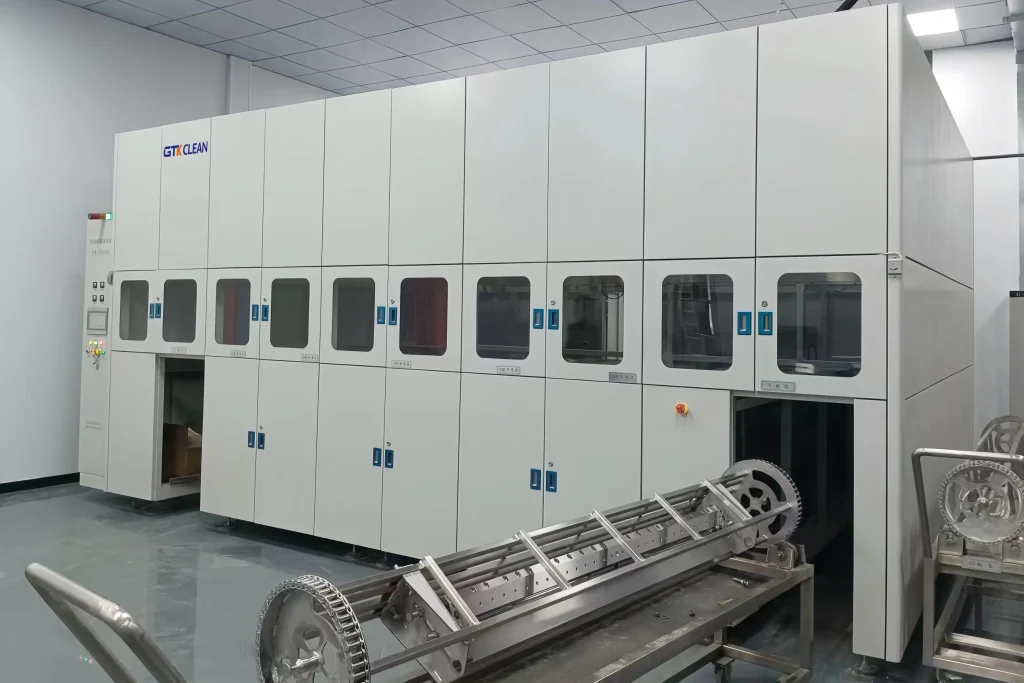
Multi-tank ultrasonic cleaning systems solve a problem that single-stage units simply cannot address: how do you clean a part thoroughly when contamination varies across surfaces, when residues hide in blind holes, and when even trace cleaning agent left behind becomes a defect? The answer lies in sequential processing—separate tanks for washing, rinsing, and drying—each optimized for its specific task. After two decades of designing these systems and holding 28 technical patents in the field, we have seen firsthand how proper multi-tank configuration transforms cleaning outcomes for manufacturers dealing with complex geometries and tight cleanliness specifications.
How Multi-Tank Ultrasonic Systems Achieve Precision Cleaning
Multi-tank ultrasonic cleaning systems move beyond the limitations of single-stage processing by dedicating each tank to a specific function. The underlying mechanism remains consistent: ultrasonic transducers convert electrical energy into high-frequency sound waves that travel through the cleaning liquid. These waves create millions of microscopic bubbles through a process called cavitation. When these bubbles collapse near part surfaces, they generate intense localized energy that dislodges contaminants without mechanical contact.
What makes multi-tank ultrasonic cleaning systems particularly effective is the separation of functions. A wash tank removes bulk contamination. Subsequent rinse tanks eliminate cleaning chemistry residues. Drying stages prepare parts for the next manufacturing step. This separation prevents the fundamental problem with single-tank approaches: redeposition of contaminants and cross-contamination between cleaning and rinsing.
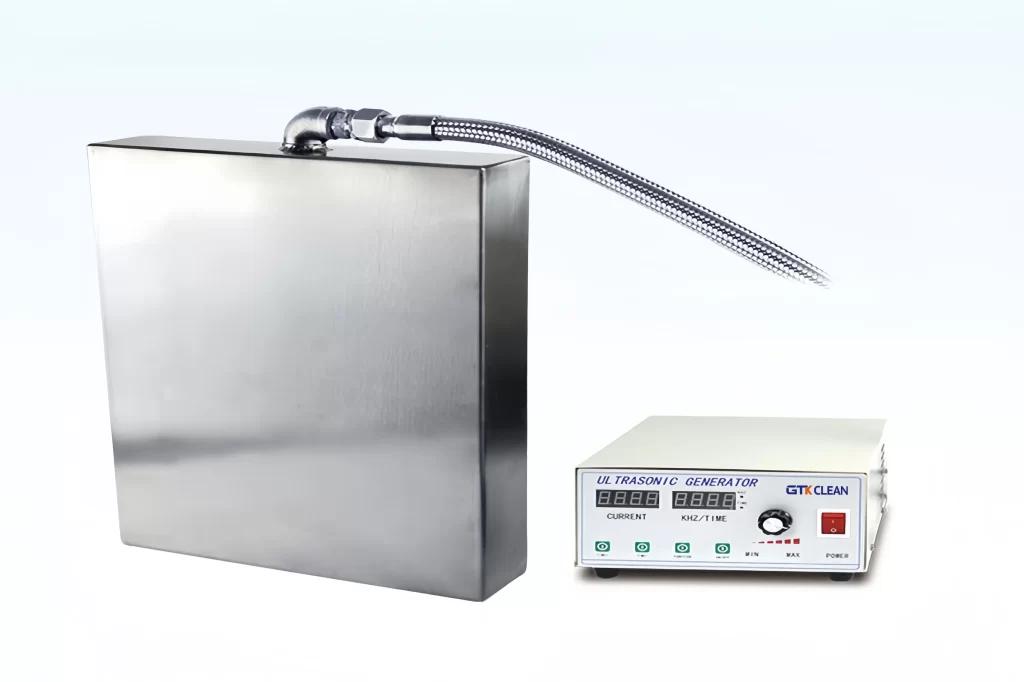
The core components of any multi-tank ultrasonic cleaning system include transducers that generate the ultrasonic energy, generators that control frequency and power output, and the tanks themselves. Tank construction typically uses SUS304 or SUS316 stainless steel, chosen for chemical resistance and durability under continuous ultrasonic exposure. Each component must work together—transducer placement, generator tuning, and tank geometry all influence cleaning performance.
Why Multi-Stage Processing Outperforms Single-Tank Approaches
The strategic value of multi-stage ultrasonic cleaning processes becomes clear when you consider what happens during actual cleaning operations. In a single tank, you wash parts in a solution that progressively accumulates contaminants. Rinse water mixes with cleaning chemistry. Parts emerge cleaner than they started, but far from the precision standards many industries require.
Multi-tank ultrasonic cleaning systems address this by isolating each process step. The wash tank handles the heavy lifting—removing oils, greases, particulates, and other contaminants. The cleaning solution in this tank can be optimized for aggressive contaminant removal without concern for what happens next. Rinse tanks then systematically remove cleaning chemistry from part surfaces. Multiple rinse stages, often using progressively purer water, ensure that no residue remains.
The advantages extend beyond cleanliness. Process efficiency improves because each tank operates at optimal conditions for its specific function. Consistency increases because variables are controlled at each stage. For manufacturers running high volumes, these multi-tank ultrasonic cleaning systems deliver repeatable results that single-stage approaches cannot match.
Matching Transducer Frequency to Cleaning Requirements
Transducer frequency selection represents one of the most consequential decisions in multi-tank ultrasonic cleaning system design. The physics are straightforward: lower frequencies produce larger cavitation bubbles with more aggressive implosion energy, while higher frequencies generate smaller bubbles with gentler cleaning action.
Low frequency ultrasonics in the 20-40 kHz range work well for removing heavy contamination from robust parts. The larger bubbles penetrate effectively into recesses and deliver substantial cleaning energy. However, this aggressive action can damage delicate surfaces or dislodge loosely bonded coatings.
High frequency ultrasonics in the 68-80 kHz range produce finer cavitation suitable for precision cleaning applications. The smaller bubbles clean effectively without the mechanical stress of low-frequency operation. This makes higher frequencies appropriate for semiconductor components, optical elements, and other sensitive parts where surface integrity matters as much as cleanliness.
Many multi-tank ultrasonic cleaning systems incorporate different frequencies in different tanks. A low-frequency wash tank handles initial contamination removal, while higher-frequency rinse tanks provide gentle final cleaning. This frequency staging optimizes each process step for its specific purpose.
Ultrasonic power density and cavitation intensity control also factor into performance optimization. Degassing the cleaning solution before use improves cavitation efficiency by removing dissolved air that can dampen bubble formation. These details matter when cleanliness specifications leave no margin for error.
Automation and Integration in Modern Multi-Tank Systems
Production demands have pushed multi-tank ultrasonic cleaning systems toward increasing automation. Manual transfer of parts between tanks introduces variability and limits throughput. Automated systems using robotics or conveyor mechanisms move parts through the cleaning sequence with consistent timing and handling.
Integration extends beyond the cleaning system itself. Solvent recovery systems capture and recycle cleaning agents. Water treatment equipment maintains rinse water quality. Process monitoring tracks cleaning parameters and flags deviations before they affect part quality. These integrated multi-tank ultrasonic cleaning systems function as complete cleaning ecosystems rather than standalone equipment.
For complex parts requiring thorough coverage, automated rotation during cleaning ensures that all surfaces receive adequate ultrasonic exposure. Our Rotary Basket Ultrasonic Cleaning Systems provide 360-degree cleaning action for parts with intricate geometries that would otherwise shadow portions of the surface from ultrasonic energy.
Industry 4.0 connectivity allows multi-tank ultrasonic cleaning systems to communicate with broader manufacturing execution systems. Cleaning data becomes part of the production record, supporting traceability requirements in regulated industries and enabling process optimization based on actual performance data.
Maintenance Practices That Protect System Performance
Multi-tank ultrasonic cleaning systems represent significant capital investments, and their performance depends on consistent maintenance. Cleaning solutions degrade over time as they accumulate contaminants and their active chemistry depletes. Regular solution replacement—typically weekly or bi-weekly depending on usage intensity—maintains cleaning effectiveness.
Tank inspection should occur daily. Look for leaks, sediment accumulation, and any damage to tank surfaces or transducer mounting. Transducers themselves require monthly verification to ensure they are producing adequate ultrasonic output. Filtration systems need attention ranging from daily to weekly depending on contamination loading.
Quarterly calibration checks verify that temperature controls, power output, and frequency settings remain accurate. Drift in any of these parameters affects cleaning results, sometimes subtly enough that problems go unnoticed until parts fail downstream quality checks.
| Task | Frequency | Description |
|---|---|---|
| Solution Replacement | Weekly/Bi-weekly | Change cleaning and rinse solutions based on usage. |
| Tank Inspection | Daily | Check for leaks, sediment, or damage. |
| Transducer Check | Monthly | Verify transducer performance and integrity. |
| Filter Cleaning | Daily/Weekly | Clean or replace filtration system components. |
| System Calibration | Quarterly | Ensure temperature, power, and frequency are accurate. |
Environmental compliance adds another dimension to maintenance planning. Waste water from multi-tank ultrasonic cleaning systems requires proper treatment before discharge. Spent cleaning solutions may need specialized disposal depending on their chemistry. Safety protocols protect workers from chemical exposure and noise hazards associated with ultrasonic operation.
Determining the Right Configuration for Your Application
Selecting the appropriate multi-tank ultrasonic cleaning system configuration requires matching system capabilities to application requirements. Part material determines which cleaning chemistries are safe to use. Contaminant type influences frequency selection and cleaning solution formulation. Cleanliness specifications dictate how many rinse stages are necessary. Production volume affects throughput requirements and automation level.
The number of tanks in a multi-tank ultrasonic cleaning system typically ranges from three to seven, covering wash, rinse, and drying functions. More complex parts or stringent cleanliness standards push toward higher tank counts. Aerospace component cleaning and medical device manufacturing often require extended rinse sequences to ensure complete removal of both contaminants and cleaning agents.
Cleaning chemistry selection deserves careful attention. The solution must be compatible with part materials, effective against target contaminants, and suitable for ultrasonic cavitation. It must also rinse cleanly in subsequent stages without leaving residues. Environmental regulations and worker safety considerations further constrain chemistry choices.
We approach each multi-tank ultrasonic cleaning system project as a consultation rather than a catalog selection. Understanding your specific parts, contaminants, and quality requirements allows us to recommend configurations that deliver results without unnecessary complexity or cost.
Partner with GTKCLEAN for Advanced Cleaning Solutions
Your industrial cleaning challenges deserve solutions built on real engineering expertise. With 20+ years of R&D and 28 technical patents, Suzhou Grintek Environmental Technology Co.,Ltd. (GTKCLEAN) designs and manufactures advanced multi-tank ultrasonic cleaning systems tailored to your specific requirements. Contact our team at [email protected] or +86 17768507147 for a consultation focused on your application needs.
What is the optimal number of tanks for a multi-stage ultrasonic cleaning process?
The right number of tanks depends on your parts, contamination levels, and cleanliness requirements. Most multi-tank ultrasonic cleaning systems use three to seven tanks covering wash, rinse, and drying stages. Intricate components with blind holes or internal passages typically need more rinse stages to ensure complete removal of both contaminants and cleaning chemistry. Parts with heavy initial contamination may benefit from multiple wash stages with progressively cleaner solutions. We can help determine the appropriate configuration based on your specific application parameters.
What are the critical considerations for selecting cleaning chemistries in multi-tank ultrasonic configurations?
Chemistry selection for multi-tank ultrasonic cleaning systems involves balancing several factors. The solution must be compatible with your part materials—some chemistries attack certain metals or plastics. It needs to effectively address your specific contaminants, whether oils, greases, particulates, or other residues. The chemistry should work well with ultrasonic cavitation rather than dampening it. Environmental regulations and worker safety requirements may limit your options. Finally, the solution must rinse cleanly without leaving residues that become defects on finished parts.
How do multi-tank ultrasonic systems compare to single-tank systems for industrial applications?
Single-tank ultrasonic systems work adequately for basic cleaning where precision is not critical. Multi-tank ultrasonic cleaning systems become necessary when you need to prevent cross-contamination between washing and rinsing, when parts have complex geometries requiring thorough sequential processing, or when cleanliness specifications demand complete removal of both contaminants and cleaning agents. The multi-stage approach also delivers more consistent results at production volumes because each tank maintains optimal conditions for its specific function rather than compromising between competing requirements.
 English
  German
  Spanish
  French
  Russian
  Portuguese