

Piezoelectric vs Magnetostrictive Ultrasonic Transducers: A Technical Comparison
Ultrasonic transducers are fundamental components in modern sensing and actuation systems, enabling precise control, measurement and communication across a wide range of industries. They are widely applied and highly reliable, covering industrial automation, robotic control, medical imaging, ultrasonic cleaning and fluid flow monitoring.
Among all types of ultrasonic transducers, piezoelectric and magnetostrictive designs stand out as the two mainstream technologies. Each features unique working principles, inherent advantages and ideal application scenarios. In this article, we dive into the technical fundamentals behind both solutions, compare their performance characteristics, and explain why piezoelectric transducers are generally the superior choice for most engineering applications.
Understanding the Technologies
What Is a Piezoelectric Ultrasonic Transducer?
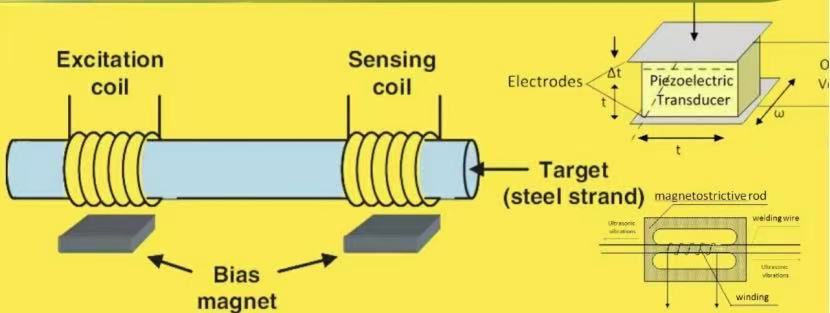
Piezoelectric ultrasonic transducers operate based on the piezoelectric effect — a physical phenomenon where certain materials generate electric charge under mechanical stress, and conversely deform mechanically when exposed to an electric field.
Common materials are piezoelectric ceramics such as PZT (Lead Zirconate Titanate), which can function as both ultrasonic transmitters and receivers. This bidirectional energy conversion delivers extremely high efficiency and ultra-fast response speed, making piezoelectric transducers ideal for applications demanding rapid signal response, high precision and flexible frequency adaptability.
Piezoelectric materials can be manufactured into various shapes and thicknesses, allowing engineers to customize performance parameters including resonant frequency, displacement amplitude and directional sensitivity. Thanks to these merits, they are widely adopted in medical ultrasound devices, automotive sensors, bubble detectors, flow meters and more.
What Is a Magnetostrictive Ultrasonic Transducer?
In contrast, magnetostrictive transducers rely on the magnetostrictive effect. Materials such as nickel, iron-based alloys and advanced rare-earth metals like Terfenol-D deform physically when exposed to a magnetic field.
When an alternating magnetic field is applied, the magnetic core material expands and contracts at ultrasonic frequencies, creating mechanical vibrations that propagate as sound waves. A typical magnetostrictive transducer consists of excitation coils, a magnetostrictive core and coupling media.
While magnetostrictive devices are robust and capable of high-power output, their energy conversion introduces mechanical and magnetic inertia. Compared with piezoelectric counterparts, they typically feature slower response, narrower frequency range and lower energy efficiency.
Piezoelectric vs Magnetostrictive: Key Comparison Table
| Feature | Piezoelectric Transducer | Magnetostrictive Transducer |
| Working Principle | Piezoelectric effect (electromechanical effect) | Magnetostrictive effect (magnetomechanical effect) |
| Material | PZT ceramics or piezoelectric crystals | Nickel, Terfenol-D and other alloy materials |
| Frequency Range | Broad bandwidth (kHz to tens of MHz) | Limited frequency range (typically below 100 kHz) |
| Response Time | Extremely fast response | Moderate to slow response |
| Energy Efficiency | High efficiency | Moderate to low efficiency |
| Size & Form Factor | Compact structure with customizable dimensions | Larger and bulkier due to built-in coils and core components |
| Temperature Stability | Reliable performance, customizable via material selection | Excellent adaptability to extreme operating environments |
| Manufacturing Cost | Unit cost drops significantly with mass production | Higher overall cost due to structural complexity and expensive raw materials |
| Application Fields | Imaging inspection, fault diagnosis, sensing devices, atomizers | Industrial ultrasonic cleaning, metal welding, sonar detection systems |
Why Piezoelectric Transducers Deliver Better Overall Performance
Although magnetostrictive transducers have their own unique strengths, piezoelectric ultrasonic transducers remain the preferred option for most sensing and actuation applications. The key reasons are summarized below:
1. Wider Frequency Response
Piezoelectric transducers operate across a broad frequency spectrum from several kilohertz to multiple megahertz. This wide bandwidth supports high-resolution medical imaging and high-precision detection, making them invaluable for advanced diagnostic and control systems.
2. Superior Compactness and Miniaturization
The intrinsic properties of piezoelectric ceramics enable ultra-thin, compact designs. They are perfectly suited for modern embedded systems, handheld medical probes, micro fluid control modules and smart factory sensors.
3. Energy Saving and Stable Performance
With minimal energy loss during conversion, piezoelectric systems perform exceptionally well in power-constrained scenarios such as wireless devices, battery-powered instruments and portable detectors. High energy efficiency reduces heat generation, enhances operational stability and extends service life.
4. Customizable Material Properties & Engineering Flexibility
Piezoelectric materials can be precisely doped to meet specific application requirements — such as high mechanical quality factor for improved power handling, or high piezoelectric constant for maximum sensitivity. Engineers can flexibly adjust dielectric constant, mechanical compliance and resonant frequency to match design needs.
5. Mature Supply Chain & Cost-Effective Mass Production
The global supply chain for piezoelectric ceramics is well-established with obvious economies of scale, greatly lowering production costs. This advantage is particularly prominent in mass-produced products like automotive sensors, consumer electronics and wearable medical devices.
6. Clear Waveform for Higher Measurement Accuracy
Piezoelectric sensors generate sharp waveform signals with low harmonic distortion. In non-destructive testing and precision metrology, this signal clarity delivers a higher signal-to-noise ratio and more reliable defect detection results.
When to Choose a Magnetostrictive Solution
While piezoelectric transducers lead in overall performance metrics, magnetostrictive technology excels in certain specialized scenarios:
- Extreme environmental conditions: Magnetostrictive cores withstand severe mechanical shock, wide temperature fluctuations and corrosive chemicals.
- Heavy-duty industrial applications: Their rugged structure fits ultrasonic welding, cavitation cleaning systems and applications requiring continuous high-power output.
- Specialized sonar and marine systems: Due to their magnetic characteristics, they are adopted in certain underwater and sonar systems where signal reflection through dense media is critical.
Even so, these are only niche use cases compared with the wide adaptability and versatility of piezoelectric designs.
Final Verdict: Piezoelectric Technology Leads Modern Ultrasonic Solutions
When choosing between piezoelectric and magnetostrictive ultrasonic transducers, prioritize your core requirements:
- Need high frequency precision? → Choose piezoelectric type.
- Need compact integrated design? → Choose piezoelectric type.
- Pursuit of optimal cost efficiency? → Choose piezoelectric type.
Magnetostrictive sensors are only the better alternative under extremely harsh or special operating conditions that demand ultra-high mechanical robustness.
For the vast majority of applications — especially medical equipment, smart sensors, energy-saving systems and next-generation automation — piezoelectric ultrasonic transducers deliver outstanding performance, cost advantages and unmatched design flexibility。
 English
  German
  Spanish
  French
  Russian
  Portuguese