
Microscopic contaminants have a way of revealing themselves at the worst possible moments—during final assembly, customer inspection, or worse, in the field. After years of working with precision components, I've learned that cleanliness isn't just a specification to meet; it's the foundation that determines whether everything else you've engineered actually performs as intended.
The challenge with precision parts cleaning goes beyond simply removing visible dirt. We're dealing with particles measured in micrometers, residual films invisible to the naked eye, and contamination sources that seem to multiply the moment you think you've eliminated them. Getting this right requires understanding not just the cleaning technologies available, but the standards that define "clean enough" and the validation methods that prove you've achieved it.
Why Precision Cleaning Determines Component Survival
The relationship between surface contamination and component failure is more direct than many manufacturers initially expect. A particle lodged in a hydraulic valve seat doesn't just reduce efficiency—it creates a wear pattern that accelerates over time. Residual machining oils left on bearing surfaces prevent proper lubrication film formation. These aren't theoretical concerns; they're failure modes I've seen documented in root cause analyses across automotive, aerospace, and medical device applications.
What makes precision cleaning particularly demanding is the gap between visual inspection and actual cleanliness. A component can look perfectly clean under standard lighting while harboring contamination levels that exceed specifications by orders of magnitude. This reality drives the need for systematic cleaning processes backed by quantitative validation rather than subjective assessment.
The economic argument for precision parts cleaning extends beyond avoiding warranty claims. Contamination-related failures during assembly create rework costs, schedule delays, and the kind of quality reputation damage that takes years to rebuild. Investing in proper industrial cleaning equipment and processes typically costs far less than dealing with the consequences of inadequate cleaning.
ISO 16232 and VDA 19 Define What Clean Actually Means
International standards exist because "clean" means different things to different people without a common framework. ISO 16232 and VDA 19 provide that framework for automotive and fluid power applications, establishing extraction methods, analysis procedures, and reporting formats that enable meaningful communication between suppliers and customers.
ISO 16232 originated from the fluid power industry's need to quantify particulate contamination in hydraulic and pneumatic components. The standard specifies how to extract contaminants from parts using methods like pressure rinsing, ultrasonic agitation, and spray techniques. It then defines how to analyze those extracted contaminants through optical microscopy and gravimetric measurement, ultimately expressing results in cleanliness classes based on particle size distributions.
VDA 19 emerged from German automotive manufacturers' requirements for technical cleanliness and shares significant overlap with ISO 16232 while adding automotive-specific considerations. Part 1 of VDA 19 addresses cleanliness inspection itself, while Part 2 covers technical cleanliness in assembly environments. The standard places particular emphasis on fiber contamination—a concern that reflects the automotive industry's experience with failures caused by fibrous particles in fuel systems and electronic assemblies.
| Feature | ISO 16232 | VDA 19 |
|---|---|---|
| Focus Industry | Fluid power systems, general automotive | Automotive components, technical cleanliness |
| Key Metrics | Particle size, number, gravimetric analysis | Particle size, number, fiber count, gravimetric analysis |
| Extraction Methods | Pressure rinsing, ultrasonics, agitation, spray | Pressure rinsing, ultrasonics, spray |
| Analysis Methods | Optical microscopy, gravimetry | Optical microscopy, gravimetry, SEM/EDX |
| Reporting | Cleanliness classes based on particle size | Cleanliness codes based on particle attributes |
The practical value of these standards lies in their reproducibility. When a customer specifies a cleanliness level according to ISO 16232 or VDA 19, both parties understand exactly what extraction method will be used, how particles will be counted and sized, and what the acceptance criteria mean. This eliminates the ambiguity that previously made cleanliness specifications difficult to verify and enforce.
Matching Cleaning Technology to Contamination Type
Selecting cleaning technology requires understanding both what you're trying to remove and what constraints your parts impose. The three primary approaches—ultrasonic, solvent, and aqueous cleaning—each excel in different situations, and the choice often determines whether you achieve specifications efficiently or struggle with repeated cleaning cycles.
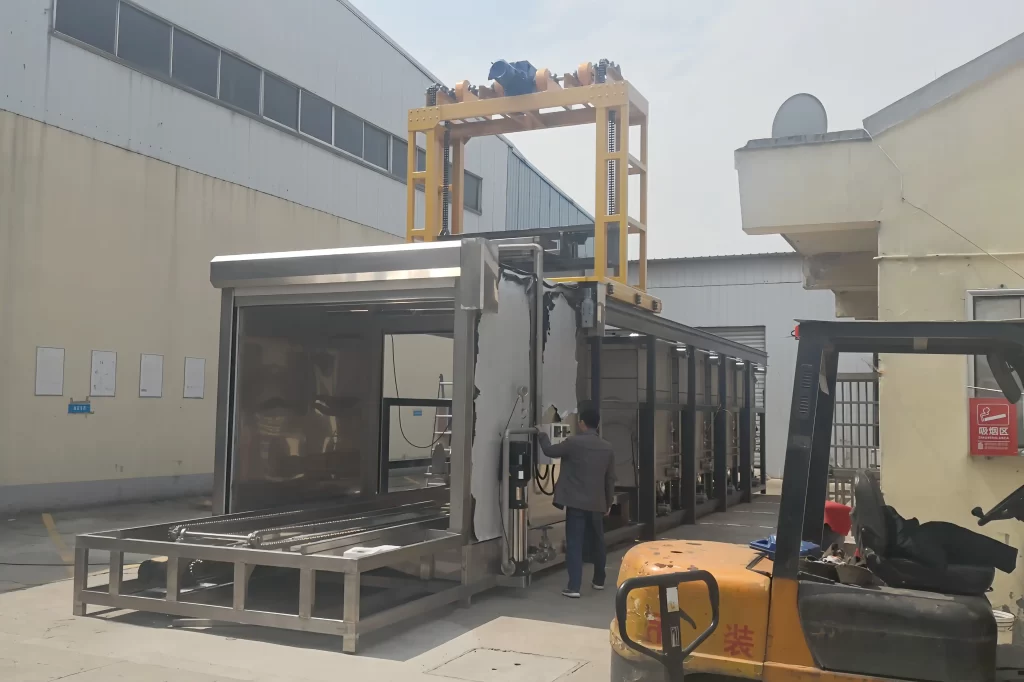
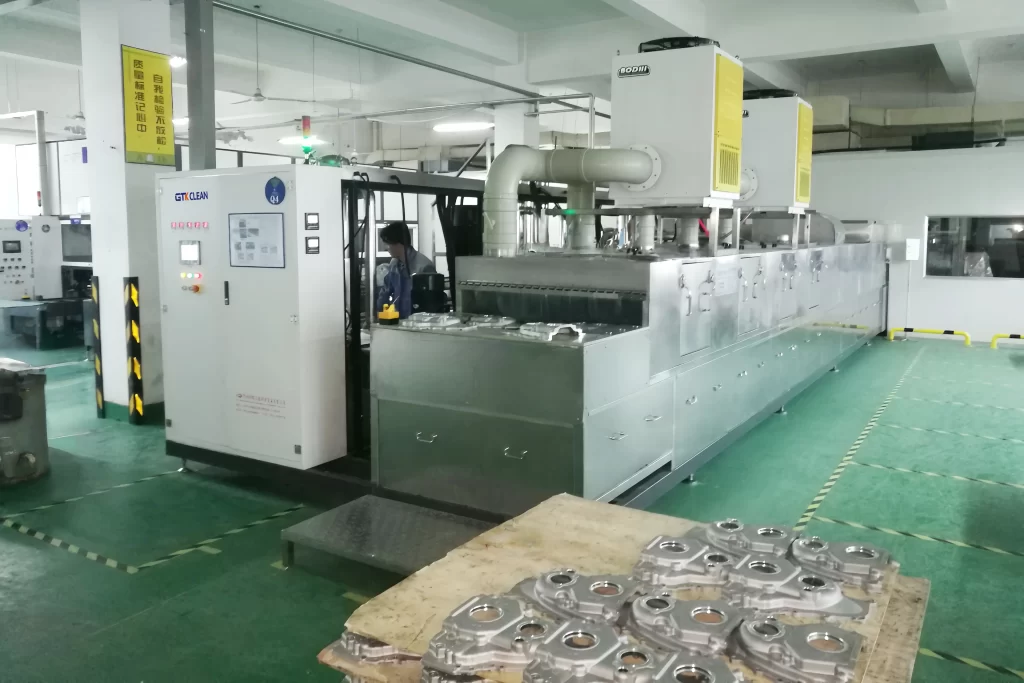
Ultrasonic cleaning systems work by generating high-frequency sound waves in a liquid medium, creating microscopic cavitation bubbles that implode with enough force to dislodge contaminants from surfaces. The mechanism proves particularly effective for complex geometries where direct mechanical action can't reach—blind holes, internal passages, and intricate surface features that would trap contamination in other cleaning methods. Precision optics cleaning and medical device cleaning protocols frequently rely on ultrasonic technology because it removes particles without the mechanical contact that could damage sensitive surfaces.
Solvent cleaning systems use hydrocarbon or modified alcohol solutions to dissolve oils, greases, and other organic contamination. The chemistry works through solvation rather than mechanical action, making solvent cleaning the preferred choice for industrial degreasing processes where heavy machining fluids or protective coatings must be removed. Solvents also dry quickly without heating, which matters for temperature-sensitive components. The tradeoff involves stricter environmental controls and safety requirements, as many effective cleaning solvents require vapor containment and worker exposure monitoring.
Aqueous cleaning solutions represent the most environmentally favorable option for many applications. Water-based cleaners with carefully formulated detergents can handle a surprising range of contamination types, and modern aqueous systems achieve results that rival solvent cleaning for many applications. The approach requires more attention to drying—water doesn't evaporate as readily as solvents—and some materials don't tolerate aqueous exposure well. But for applications where aqueous cleaning works, it simplifies regulatory compliance and reduces operating costs.
Aqueous Versus Solvent Cleaning Involves Real Tradeoffs
The choice between aqueous and solvent cleaning for precision parts rarely has an obvious answer. Aqueous systems offer broader material compatibility and simpler environmental compliance, but they consume more energy for heating wash solutions and drying parts. Solvent systems provide excellent degreasing performance and fast drying cycles, but require investment in vapor containment, solvent recovery, and worker safety systems.
The decision often comes down to contamination type and production volume. Heavy oils and greases dissolve more readily in solvents, making solvent cleaning more efficient for parts coming directly from machining operations. Lighter contamination or water-soluble residues favor aqueous approaches. High-volume production lines sometimes justify running both technologies in sequence—solvent cleaning for initial degreasing followed by aqueous cleaning for final particle removal.
Proving Cleanliness Through Systematic Validation
Achieving cleanliness specifications means nothing without the ability to prove it. Cleanliness validation methods provide the evidence that your cleaning process actually works, and they form the basis for process control that ensures consistent results over time.
Particle counting techniques quantify the number and size distribution of particulate contamination extracted from cleaned parts. Optical microscopy remains the standard method, with automated particle counters scanning filter membranes to identify and measure individual particles. The results directly map to cleanliness specifications expressed in ISO 16232 or VDA 19 formats, making particle counting the primary validation tool for most precision parts cleaning applications.
Gravimetric analysis measures the total mass of contamination rather than counting individual particles. The method involves weighing a filter membrane before and after filtering the extraction solution, with the mass difference representing total contamination. Gravimetric results complement particle counting by capturing very fine particles that optical methods might miss and by detecting non-particulate residues like dried films.
Residue testing procedures address contamination that particle counting and gravimetric analysis don't capture well—thin films, ionic contamination, and organic residues that affect surface properties without adding significant mass. Techniques range from simple water break tests that reveal hydrophobic films to sophisticated surface analysis methods that identify specific chemical species.
Building a Validation Protocol That Satisfies Auditors
Validating precision component cleanliness to meet industry standards follows a logical sequence that auditors expect to see documented.
Start by defining cleanliness specifications based on the applicable standard and your customer's requirements. The specification should include particle size limits, maximum particle counts per size class, gravimetric limits if applicable, and any special requirements for fiber contamination or chemical residues.
Select an extraction method appropriate for your part geometry and contamination type. Pressure rinsing works well for external surfaces and accessible internal passages. Ultrasonic extraction reaches contamination in blind holes and complex features. The extraction method must be validated to demonstrate that it actually removes the contamination you're trying to measure—an extraction that leaves contamination behind produces misleadingly good results.
Perform the analysis using calibrated equipment and trained personnel. Particle counting requires proper filter handling, consistent lighting, and operator training to distinguish actual particles from artifacts. Gravimetric analysis demands analytical balances with appropriate precision and environmental controls that prevent moisture absorption from skewing results.
Interpret results against your specifications and document everything. The documentation should trace from raw analysis data through calculations to the final cleanliness determination, with enough detail that someone could reproduce your analysis and reach the same conclusion.
For a deeper technical understanding of how sound waves contribute to cleaning, consider reading 《What Is Ultrasonic Wave?》.
Balancing Cleaning Performance Against Operating Costs
Optimizing precision parts cleaning processes requires looking beyond initial equipment cost to consider the total cost of achieving and maintaining cleanliness specifications. Chemistry consumption, energy use, water treatment, and labor all contribute to operating costs that often exceed equipment depreciation over the system's lifetime.
Reducing chemical consumption starts with proper solution maintenance. Filtration systems that remove extracted contamination extend bath life significantly. Concentration monitoring ensures you're using enough chemistry to clean effectively without wasting expensive cleaning agents. Some modern systems include automatic dosing that maintains optimal concentration as solution is lost to dragout and evaporation.
Water treatment systems address both incoming water quality and wastewater discharge. Precision cleaning often requires deionized or reverse osmosis water to prevent mineral deposits on cleaned parts. Wastewater from aqueous cleaning may require treatment before discharge to meet environmental regulations, and the treatment system design affects both compliance and operating cost.
Energy efficiency in cleaning systems comes from multiple sources. Heat recovery systems capture thermal energy from hot rinse water or drying air and return it to the process. Optimized cleaning cycles eliminate unnecessary heating and agitation time. Variable frequency drives on pumps and blowers match energy consumption to actual process requirements rather than running at full power continuously.
Automation Changes the Economics of Precision Cleaning
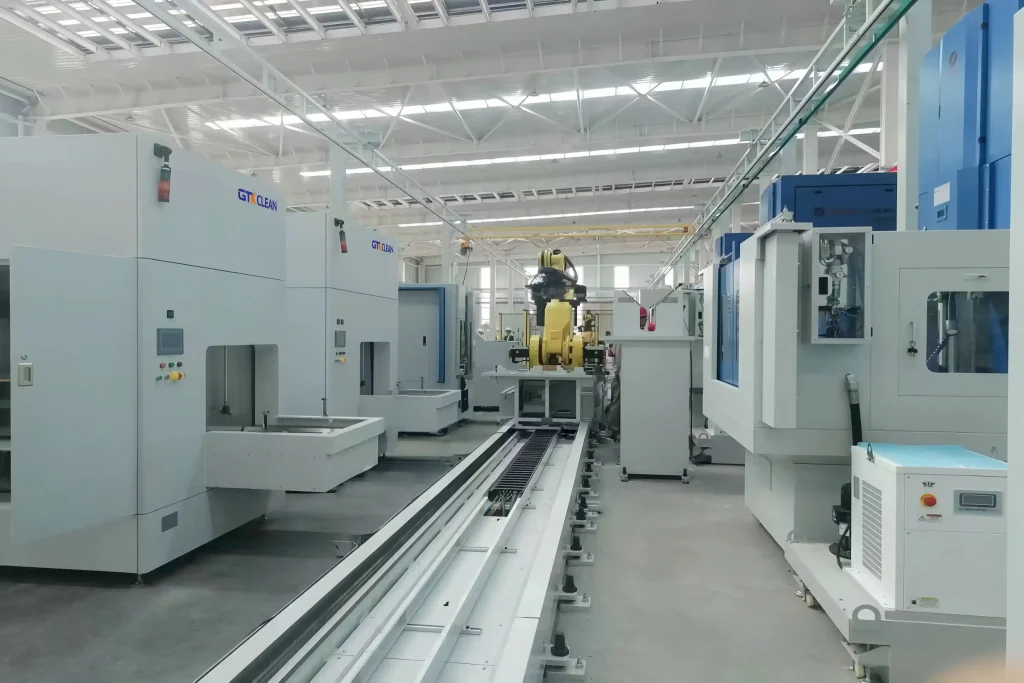
The trajectory of industrial cleaning points clearly toward increased automation and system integration. Manual cleaning processes struggle to achieve the consistency that precision parts cleaning demands, and labor costs in most manufacturing regions make automation economically attractive even before considering quality improvements.
Automated cleaning systems deliver consistent results by eliminating the variability inherent in manual operations. Every part receives the same cleaning cycle with the same parameters, removing the operator-dependent variation that makes manual cleaning results unpredictable. This consistency proves particularly valuable when cleanliness specifications leave little margin for process variation.
Integration extends beyond the cleaning system itself. Modern automated cleaning equipment connects to plant-level manufacturing execution systems, providing real-time process data and enabling traceability that links specific cleaning parameters to individual parts or batches. Water treatment systems integrate with cleaning equipment to maintain solution quality automatically. Conveyor systems link cleaning operations to upstream and downstream processes, eliminating manual part handling that could recontaminate cleaned components.
Automated Systems Pay Back Through Multiple Channels
The return on investment from automated precision cleaning systems accumulates through several mechanisms that compound over time.
Cleaning process consistency improves first-pass yield and reduces the rework cycles that consume capacity without adding value. When every part meets specifications after a single cleaning cycle, throughput increases even without running faster.
Reduced labor costs reflect both the direct savings from fewer operators and the indirect benefits of redeploying skilled workers to higher-value activities. Automated systems typically require monitoring rather than constant attention, allowing one operator to oversee multiple cleaning lines.
Enhanced operational safety removes workers from exposure to cleaning chemicals and eliminates ergonomic injuries from repetitive manual cleaning tasks. These benefits show up in reduced workers' compensation costs and improved employee retention.
Scalability matters as production volumes change. Automated systems handle increased demand by running additional shifts rather than hiring and training additional operators. The learning curve for new production requirements shortens dramatically when the process knowledge resides in the equipment rather than in operator skill.
Better data collection enables continuous improvement that manual processes can't support. When every cleaning cycle generates parameter data linked to cleanliness results, you can identify optimization opportunities and detect process drift before it causes quality problems.
Common Questions About Precision Parts Cleaning
How does ultrasonic cleaning technology achieve cleanliness on parts with complex internal features?
Ultrasonic cleaning creates cavitation throughout the liquid medium, including inside blind holes and internal passages that other cleaning methods can't reach effectively. The microscopic bubbles form and collapse wherever the cleaning solution contacts contaminated surfaces, providing mechanical cleaning action without requiring direct access for spray nozzles or brushes. For delicate parts, frequency selection matters—higher frequencies produce smaller cavitation bubbles with gentler cleaning action, while lower frequencies generate more aggressive cleaning for stubborn contamination. The key is matching ultrasonic parameters to both the contamination type and the part's tolerance for mechanical stress.
What determines whether a cleaning system can be customized for specific cleanliness requirements?
Customization capability depends on the equipment manufacturer's engineering depth and willingness to move beyond standard configurations. Meaningful customization addresses the specific contamination challenge, part geometry, material compatibility, and production requirements rather than simply offering options from a catalog. The process should start with understanding your cleanliness specifications and the contamination sources you're dealing with, then work backward to cleaning technology selection, cycle parameter development, and system configuration. Manufacturers with in-house engineering teams and application testing facilities can validate proposed solutions before committing to equipment design.
How do cleaning equipment suppliers help customers stay current with evolving cleanliness standards?
Standards like ISO 16232 and VDA 19 undergo periodic revision, and customer requirements often exceed published standards. Equipment suppliers that maintain active involvement in standards development and industry technical committees can provide early visibility into upcoming changes. Practical support includes training programs that help operators understand both current requirements and the technical basis behind them, technical support for interpreting new specifications, and equipment upgrade paths that accommodate tighter cleanliness requirements without complete system replacement. The relationship should feel like a partnership in maintaining compliance rather than a transaction that ends at equipment delivery.
Working With GTKCLEAN on Precision Cleaning Challenges
Manufacturing quality depends on cleaning processes that deliver consistent, verifiable results. GTKCLEAN brings over 20 years of research and development experience to precision parts cleaning challenges, with 28 technical patents reflecting continuous innovation in ultrasonic cleaning systems, solvent cleaning systems, and automated conveyor belt cleaning systems. Our equipment operates in more than 20 countries, supporting manufacturers who need cleaning solutions that meet international standards while fitting their specific production requirements.
Whether you're establishing a new cleaning process or improving an existing one, we can help you understand the options and develop a solution matched to your cleanliness specifications and operational constraints. Contact Suzhou Grintek Environmental Technology Co.,Ltd. at +86 17768507147 or [email protected] to discuss your precision cleaning requirements.
 English
  German
  Spanish
  French
  Russian
  Portuguese