

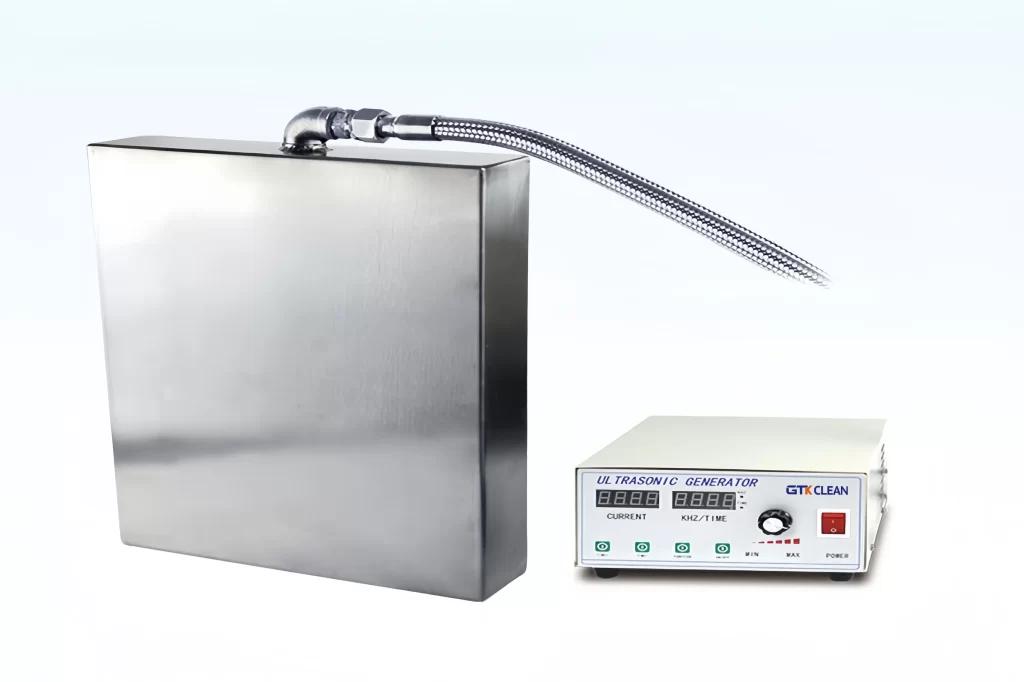
Manufacturing cleanliness keeps getting harder to achieve. Parts are smaller, tolerances are tighter, and what passed inspection five years ago might fail today. Ultrasonic cleaning has become the go-to solution for many operations, but the technology itself has evolved considerably. This piece walks through how cavitation actually works, what makes modern systems different from older designs, and where ultrasonic cleaning fits across different manufacturing sectors. The practical side matters too, so we'll cover selection criteria and what's coming next in the field.
How Cavitation Actually Cleans Industrial Parts
The cleaning action in ultrasonic systems comes from cavitation, which is essentially the creation and violent collapse of tiny bubbles in liquid. Sound waves in the 20 kHz to 80 kHz range generate these bubbles by creating alternating pressure zones in the cleaning solution. When pressure drops, bubbles form. When it rises, they implode. That implosion produces micro-jets of liquid powerful enough to blast contaminants off surfaces.
Several variables determine how well this works. Frequency matters a lot. Power density, temperature, and solution chemistry all play roles too. Lower frequencies around 20-30 kHz create bigger bubbles with more aggressive implosion energy. These work well for heavy contamination on robust parts. Higher frequencies in the 40-80 kHz range produce smaller, gentler bubbles that can reach into tiny crevices without damaging delicate surfaces. Piezoelectric transducers do the actual work of converting electrical energy into mechanical vibrations. Where you place them in the tank and how you configure them determines whether cavitation happens uniformly throughout the bath or leaves dead spots. Getting this right is foundational to any effective cleaning system.
Matching Frequency to the Cleaning Challenge
Frequency selection can make or break a cleaning application. Different frequencies target different contaminants and part characteristics, and getting this wrong wastes time and potentially damages parts.
Low-frequency systems in the 20-30 kHz range excel at removing stubborn contamination. Heavy greases, cutting oils, metal chips, and similar residues respond well to the larger, more forceful cavitation bubbles these frequencies produce. Parts need to be durable enough to handle the energy.
Higher frequencies between 60-80 kHz take a different approach. The bubbles are smaller and more numerous, which lets them penetrate blind holes and microscopic crevices that lower frequencies miss entirely. This makes high-frequency cleaning the right choice for precision components in electronics or medical applications where surface integrity cannot be compromised. Some systems incorporate multi-frequency capabilities, which provides flexibility when a facility handles diverse parts and contamination types.
System Designs That Actually Work in Production
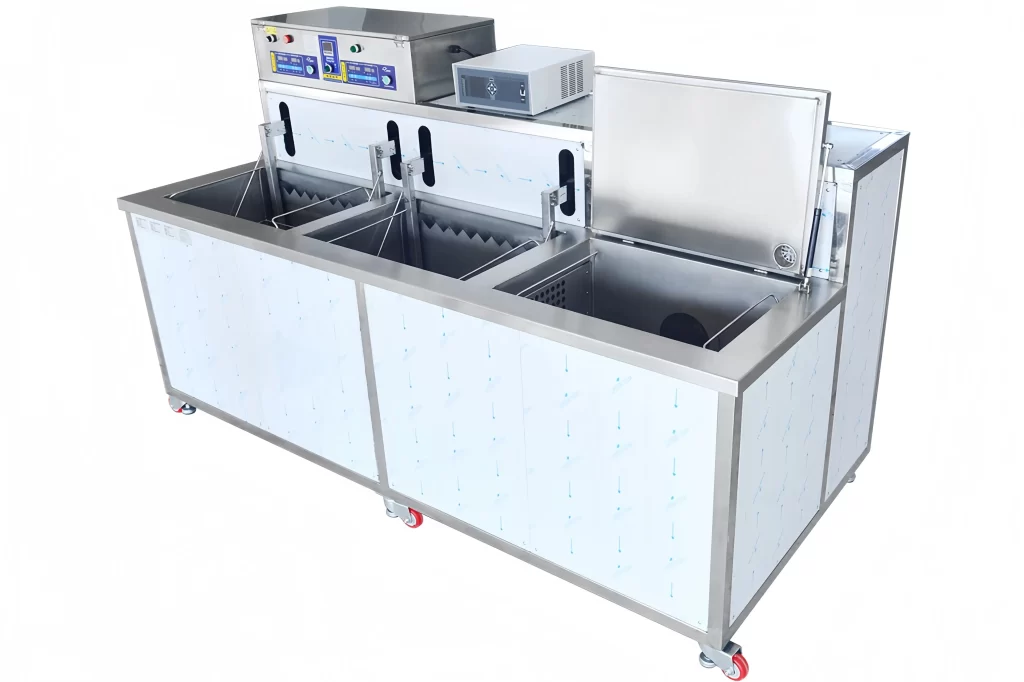
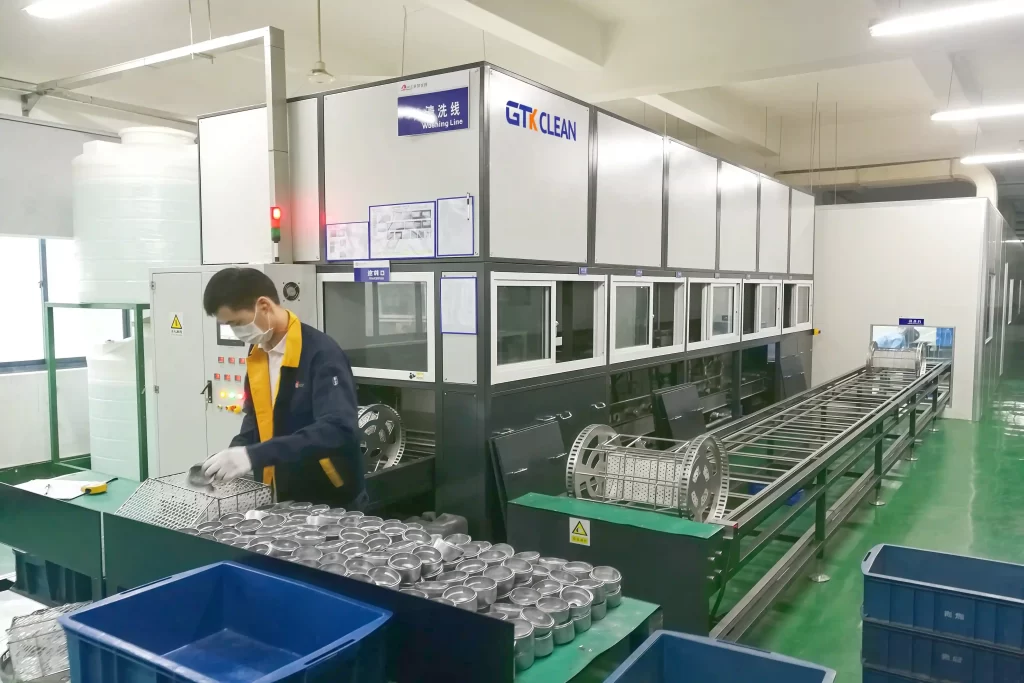
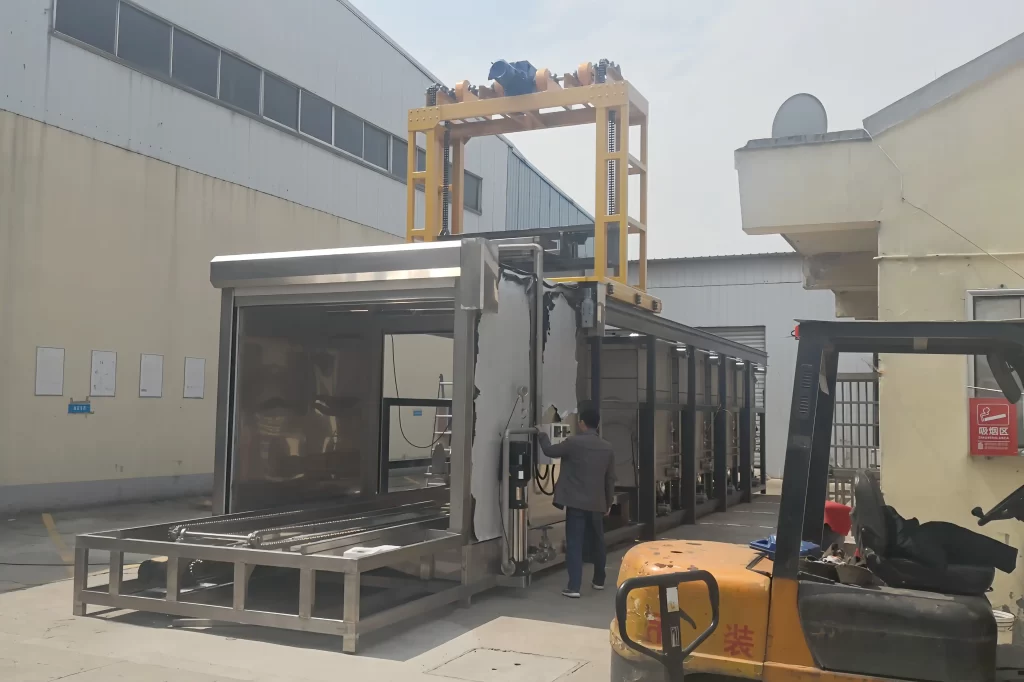
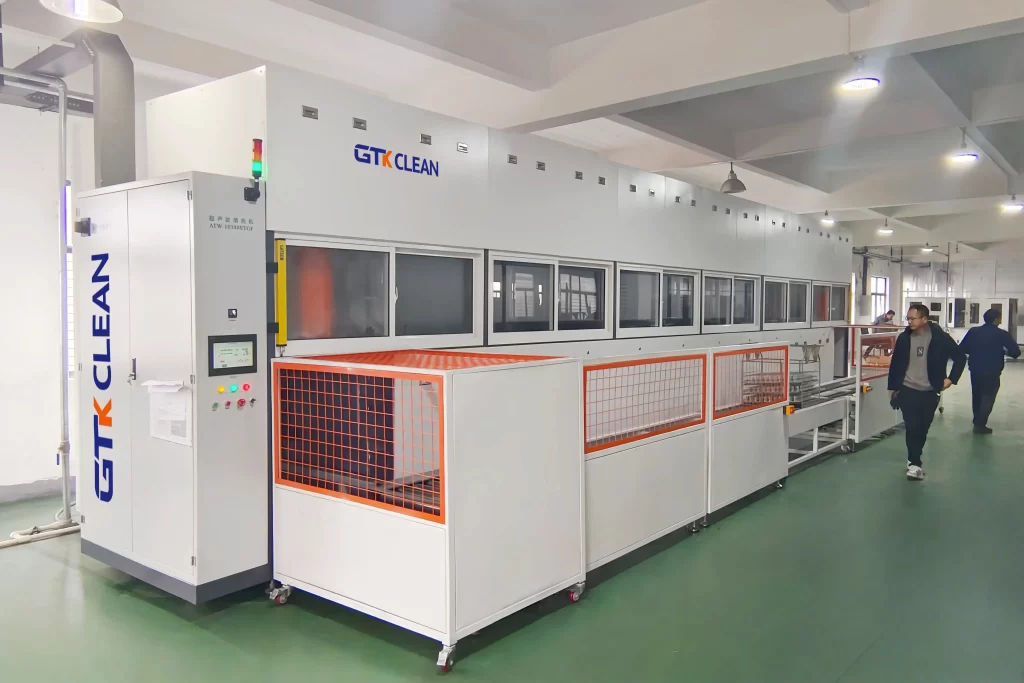
Production environments need cleaning systems that fit into existing workflows without creating bottlenecks. The range of available designs spans from single-tank benchtop units to multi-stage inline systems with dozens of stations. Multi-stage configurations typically combine ultrasonic cleaning with rinsing and drying, often adding ultrapure water systems and vacuum drying for applications demanding the highest cleanliness levels. The goal is always matching system capability to part geometry, contamination type, and production volume.
Where Efficiency Gains Come From
The efficiency improvements from ultrasonic cleaning show up in several places. Automation removes the variability that comes with manual cleaning. Parts come out consistent, batch after batch, which prevents downstream problems in coating, assembly, or other processes that depend on clean surfaces. Cycle times typically beat traditional methods, which helps throughput. Reduced rework and scrap rates follow from consistent cleaning quality. These systems can also integrate with existing production lines rather than requiring separate handling, which keeps material flow smooth.
Where Ultrasonic Cleaning Gets Used
The technology finds applications across manufacturing sectors with very different requirements. Automotive operations use it to remove cutting fluids, chips, and carbon deposits from engine and transmission components. Aerospace work demands precision that removes microscopic debris without affecting critical surfaces. Medical device manufacturing requires absolute cleanliness, with biological residues and manufacturing contaminants eliminated completely from surgical instruments and implants. Electronics benefit from high-frequency systems that clean PCBs and delicate components without damage.
| Industry Sector | Common Contaminants | GTKCLEAN Ultrasonic Solution |
|---|---|---|
| Automotive | Oils, greases, chips | CNC Machined Parts Cleaners |
| Aerospace | Dust, fine particles | Pre PVD Parts Cleaners |
| Medical Devices | Biological residues | Multi-Tank Ultrasonic Cleaners |
| Electronics | Fluxes, solder paste | Benchtop Ultrasonic Cleaners |
| Stamping | Stamping oils, burrs | Ultrasonic Cleaners For Stamping Parts |
The technology's adoption continues because it delivers results that other methods struggle to match for industrial parts cleaning. For those interested in the underlying physics, What Is the Principle of an Ultrasonic Cleaning Machine? covers the fundamentals.
What You Actually Get From Ultrasonic Cleaning
The benefits extend well beyond getting parts clean. Precision cleaning capabilities reach sub-micron contaminants in complex geometries, which matters for high-performance components where reliability and lifespan depend on surface condition. The process is non-abrasive, so delicate parts come through without damage. Repeatability is excellent, with consistent results across production runs.
Operational benefits add up too. Reduced chemical usage simplifies waste disposal and helps with environmental compliance. Automation lowers labor costs. Thorough surface preparation improves adhesion for subsequent coating, painting, or bonding operations. These advantages compound over time in production environments.
The Practical Advantages
Ultrasonic cleaning handles contaminants that give other methods trouble. Oils, greases, chips, fluxes, buffing compounds, particulates, and sub-micron contamination all respond to cavitation. The action reaches areas that spray washing or manual cleaning simply cannot access. Parts with complex internal features or intricate geometries clean uniformly. Material compatibility is broad when frequency and solution chemistry are matched to the application.
Picking the Right System
System selection starts with understanding what you're actually trying to accomplish. Part type, contaminant characteristics, cleanliness requirements, and production volume all factor in. Material composition matters because some combinations of frequency and chemistry work better than others. Space constraints and integration requirements with existing processes need consideration too. Getting this assessment right prevents expensive mistakes and ensures the system actually solves the problem it was purchased to solve.
Working Through the Selection Process
Start with the basics. What are the parts made of? What geometry are you dealing with? What contamination needs removal, and how tenacious is it? What cleanliness level does the application require? How many parts need cleaning per day? Where will the system go, and how will it connect to existing material flow? Working through these questions with someone who has seen a lot of applications helps avoid common pitfalls and leads to solutions that actually fit the operation.
What's Coming Next
Ultrasonic cleaning technology continues developing in response to tighter cleanliness requirements and sustainability pressures. Multi-frequency capabilities are becoming more sophisticated, offering greater precision and versatility in single systems. Automation and robotic integration are advancing to meet Industry 4.0 expectations. New cleaning chemistries with better environmental profiles are emerging alongside advanced filtration systems. The field is not standing still.
Working With GTKCLEAN
GTKCLEAN brings 20+ years of R&D experience and 28 technical patents to ultrasonic cleaning system design. The focus is on comprehensive automated solutions matched to specific manufacturing requirements. For operations looking to improve cleaning performance and meet demanding cleanliness standards, a conversation with specialists can clarify options and identify the right approach. Reach the team at +86 17768507147 or [email protected].
Common Questions About Ultrasonic Cleaning
What contaminants respond well to ultrasonic cleaning?
The range is broad. Common manufacturing residues like oils, greases, chips, and fluxes clean effectively. Buffing compounds, particulates, and sub-micron contamination also respond to cavitation. This versatility makes ultrasonic systems useful across applications where thorough contaminant removal matters.
Will ultrasonic cleaning damage delicate parts?
When configured correctly, no. Cavitation provides non-abrasive cleaning that removes contaminants without mechanical damage. The action reaches complex geometries and internal features uniformly. Matching frequency and solution chemistry to the specific material ensures safe, effective cleaning for precision components.
How does GTKCLEAN build reliability into its equipment?
Robust design and quality components form the foundation. Durable materials and sound engineering go into every unit. Comprehensive support and maintenance guidance help maximize uptime and extend operational lifespan.
Can these systems integrate with existing production lines?
Yes. Custom solutions are engineered to match production line requirements and throughput needs. This allows continuous processing with minimal manual intervention, keeping material flow optimized.
 English
  German
  Spanish
  French
  Russian
  Portuguese