

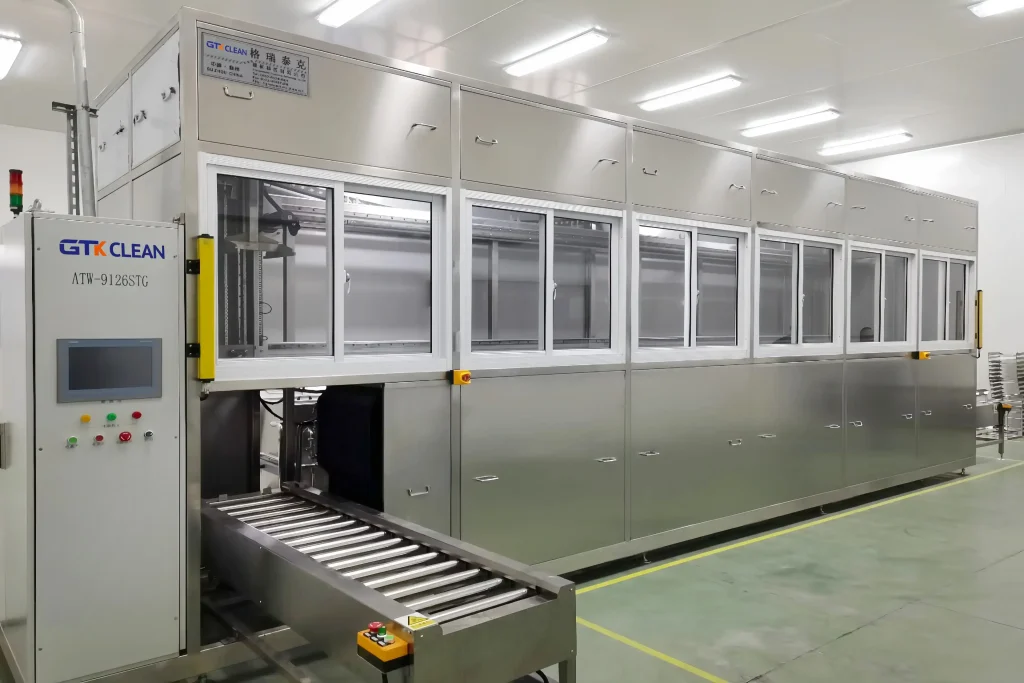
Spray vs Ultrasonic Cleaners/Washers: How to Choose for Industrial Parts Cleaning
With decades of experience in manufacturing industrial cleaning equipment, we have observed countless costly operational errors caused by inappropriate cleaning process selection. Many manufacturers adopt spray cleaning for precision valve bodies, which leaves irreversible scratches inside bore holes. Others apply ultrasonic cleaning for cast components, only to face frequent filter clogging, shortened consumable service life and reduced production efficiency.
There is no universal “one-size-fits-all” industrial cleaning machine. The most reliable cleaning solution is always customized to specific workpiece conditions, contamination levels and production demands. From a practical end-user perspective, this article elaborates on the working principles, core advantages, applicable scenarios and limitations of spray and ultrasonic cleaning systems, helping you avoid common selection pitfalls and optimize your cleaning workflow.
Core Differences: Working Principles & Functional Advantages
Industrial Ultrasonic Cleaning Machine — Precision Cleaning with Zero Dead Spots
Working Principle: High-frequency ultrasonic sound waves generate countless microscopic cavitation bubbles in the cleaning liquid. These bubbles continuously form, expand and implode violently, producing powerful micro-jets that strip off oil, dust, fine particles and other contaminants thoroughly from workpiece surfaces and internal structures.
Key Advantages: The non-contact cleaning mode effectively eliminates surface abrasion and damage, fully protecting delicate and high-precision components. It can penetrate deep holes, narrow gaps, tiny grooves and intricate microstructures that conventional cleaning methods cannot reach, delivering comprehensive and consistent cleaning results. Adopting water-based cleaning solutions, the equipment features eco-friendly operation, low environmental compliance costs and no additional explosion-proof configuration investment, ensuring safe and sustainable production.
Ideal Applications: Suitable for high-precision, structurally complex parts with light to moderate contamination, including new energy battery cooling plates, hydraulic manifolds, connector terminals, optical fixtures, medical device components and precision electronic parts.
Unsuitable Scenarios: Not recommended for workpieces with heavy sludge or bulky iron scraps, as such contaminants will rapidly pollute the cleaning liquid and drastically reduce cleaning efficiency. It is also uneconomical for simple flat workpieces, where high-precision ultrasonic cleaning leads to unnecessary cost waste.
Spray Cleaning Machine — High-Efficiency, Heavy-Duty Degreasing Solution
Working Principle: The system pressurizes the cleaning liquid and sprays high-pressure, high-speed fluid jets onto workpiece surfaces, which instantly flush away heavy grease, thick dirt, oxide layers and bulk contaminants through strong impact and scouring force.
Key Advantages: It boasts ultra-fast cleaning speed, perfectly matching high-volume mass production lines. It delivers outstanding degreasing and decontamination performance for flat surfaces and heavily soiled workpieces. Featuring simple structure and stable operation, it can be seamlessly integrated into automated production lines to significantly improve overall production efficiency and reduce manual intervention.
Ideal Applications: Ideal for large-sized, regular-shaped components requiring heavy degreasing and batch processing, such as new energy battery trays, motor housings, gearbox casings, engine blocks, production turnover bins and various flat structural parts.
Unsuitable Scenarios: Ineffective for parts with deep holes, narrow crevices and complex hidden structures, as high-pressure spray may push contaminants into blind corners and cause secondary pollution. It is also not applicable for fragile precision parts, as the strong jet impact may cause surface scratches, deformation or component damage.
Hybrid Integrated Cleaning Solution — Preferred by Leading Manufacturers
With the upgrading of industrial manufacturing standards, single cleaning technology can no longer meet the ultra-high cleanliness requirements of the new energy, semiconductor and high-precision machinery industries. The optimized mainstream process flow adopted by premium manufacturers is: Spray Pre-cleaning → Ultrasonic Fine Cleaning → Spray/Ultrasonic Rinsing → Vacuum Drying.
The spray pre-cleaning procedure removes bulk heavy dirt and grease in advance, preventing large particulate contaminants from polluting the precision ultrasonic cleaning tank and extending the service life of cleaning agents and equipment. The subsequent ultrasonic fine cleaning eliminates micro-scale particles and hidden contaminants in complex gaps that pre-cleaning cannot remove. The multi-stage rinsing process completely flushes away residual cleaning agents and ionic impurities on workpieces. Finally, vacuum drying achieves spot-free, water-mark-free and fully dry finished parts. This hybrid solution delivers superior cleaning quality at a lower operational cost, serving as a cost-effective alternative to expensive hydrocarbon cleaning processes.
Quick Selection Cheat Sheet
- Structurally complex parts with light/medium contamination → Ultrasonic Cleaning Machine
- Large flat parts with heavy grease and batch processing demands → Spray Cleaning Machine or Basic Combined System
- Complex-structured parts with heavy contamination and ultra-high cleanliness standards → Custom Hybrid Cleaning Process
If you are still uncertain about the most suitable cleaning equipment for your production needs, feel free to share your workpiece parameters, contamination conditions and cleanliness requirements with us for professional customized consultation. Our experienced engineering team will tailor a exclusive, cost-efficient industrial cleaning solution for your project.
Contact Us
WhatsApp: +8617768507147
Email: [email protected]
 English
  German
  Spanish
  French
  Russian
  Portuguese