

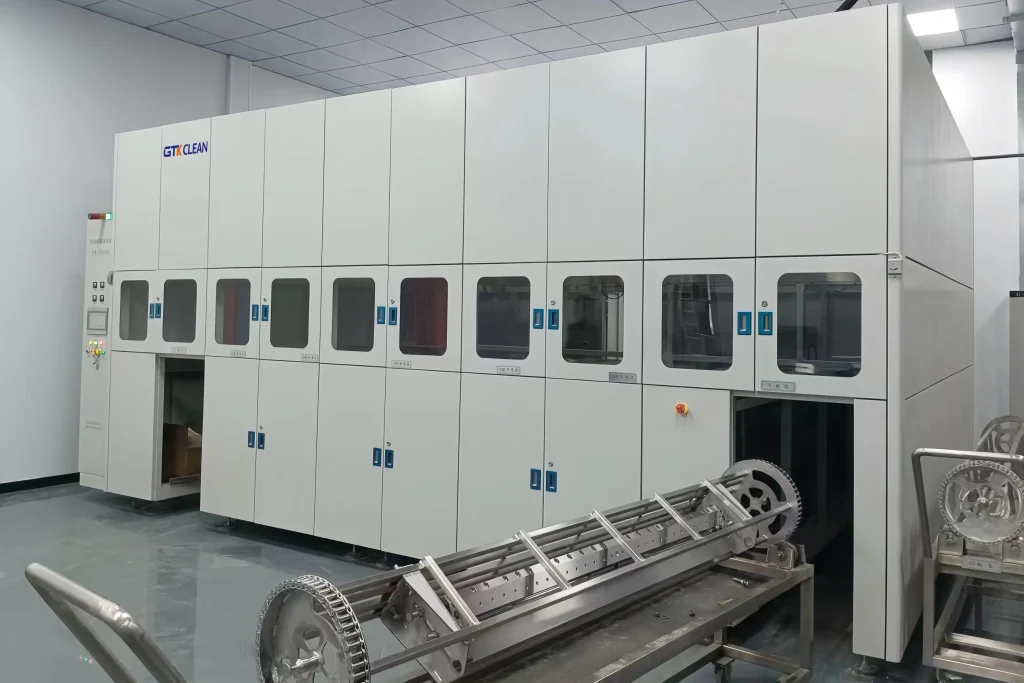
Why Your Ultrasonic Cleaning Line Defines Your Coating Quality
In the world of high-performance thin-film deposition—whether you are running a PVD (Physical Vapor Deposition) or CVD (Chemical Vapor Deposition) plant—the vacuum chamber is often blamed for coating failures. However, as engineers at GTKCLEAN, we know the truth: the battle for adhesion is won or lost in the cleaning tank.
If you are a facility owner in Europe or North America, you aren't just looking for an industrial ultrasonic cleaner; you are looking for a repeatable, validated process. Here is the technical breakdown of how we engineer our systems to eliminate delamination and pinhole defects.
- Achieving Molecular Cleanliness: Beyond "Visually Clean"
For a coating to bond, the substrate must be free of organic contaminants (cutting oils, coolants) and inorganic particles. We measure success through surface energy (Dyne levels).
- The GTKCLEAN Standard: Our multi-stage ultrasonic degreasing lines are designed to achieve surface tension levels exceeding 40 mN/m.
- Process Engineering: We utilize cascading DI (Deionized) water rinsing stations. By using 15-18 MΩ.cm high-purity water, we ensure that no ionic residues remain on the part to interfere with the plasma in your coating chamber.
- Cavitation Physics: Frequency Sweeping & Power DensityOne common issue in precision parts cleaning is "shadowing" or "standing waves," where certain areas of a complex part aren't cleaned, or worse, are eroded by overly aggressive cavitation.
- Frequency Selection: We often recommend a multi-frequency ultrasonic generator setup. We use 28kHz for initial heavy-duty scrubbing of polishing pastes and 40kHz or 68kHz for fine-particle removal in blind holes.
- Frequency Sweep Technology: GTKCLEAN generators include a digital sweep function that fluctuates the frequency slightly. This shifts the standing waves, ensuring uniform cavitation throughout the entire stainless steel ultrasonic tank.
- Automation and Data Traceability (Industry 4.0)Western markets, particularly in the medical and aerospace sectors, require strict process validation. If a batch of coated tools fails, you need to prove the cleaning parameters were correct.
- PLC-Controlled Automation: Our automated ultrasonic cleaning systems feature robotic transfer arms that eliminate human error.
- Data Logging: Our systems track and log critical parameters: ultrasonic power density, bath temperature, and immersion time. This data is exportable via Ethernet, making your facility "audit-ready" for ISO or Nadcap certifications.
- Environmentally Conscious Engineering (CE & EPA Compliance)Reducing your "Cost per Part" involves managing consumables.
- Oil-Water Separators: To extend the life of your chemistry, we integrate high-efficiency oil skimmers.
- Vacuum Drying Systems: To prevent "water spots" or oxidation before parts enter the coating chamber, we utilize vacuum dryers. This is significantly more energy-efficient and effective than standard hot-air blowing.
Technical Specifications at a Glance
| Feature | GTKCLEAN Precision Series | Industry Standard |
| Tank Material | SUS316L (2.0mm - 2.5mm) | SUS304 (1.5mm) |
| Filtration Precision | 0.5 - 1.0 Micron | 10 - 20 Micron |
| Drying Technology | Pulse Vacuum Drying | Hot Air Recirculation |
| Control Interface | Siemens/Schneider PLC | Analog Manual Control |
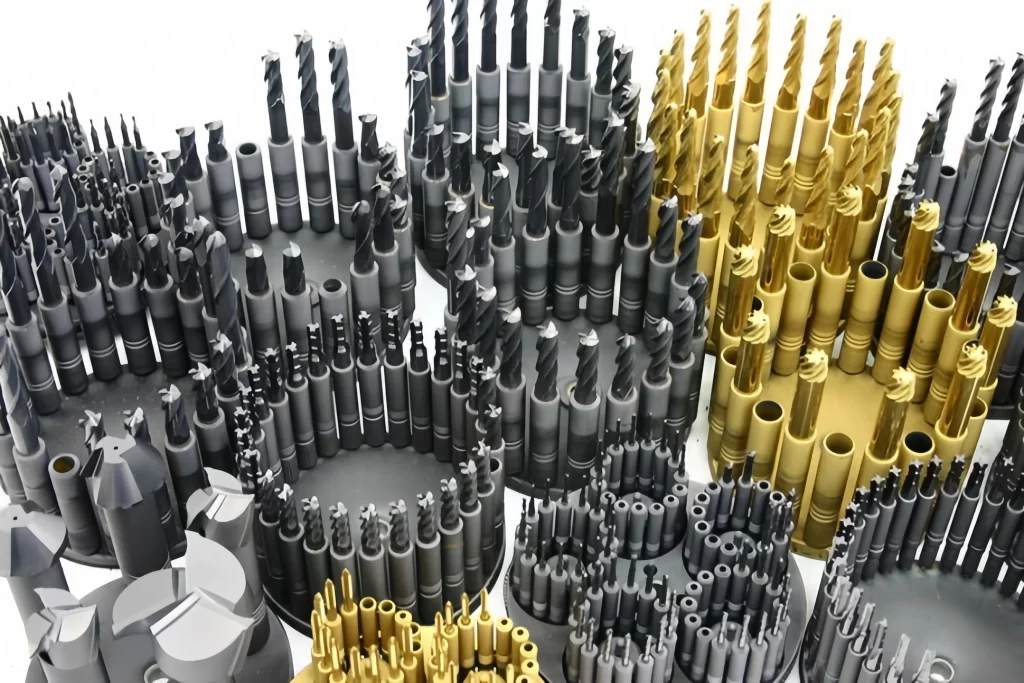
Why Partner with GTKCLEAN?
As engineers, we understand that a PVD coating pretreatment system is a long-term investment. That’s why we focus on modular design—allowing you to scale your cleaning line as your coating throughput increases.
We provide full FAT (Factory Acceptance Testing) via high-definition video and offer comprehensive technical documentation in English to ensure your maintenance team has zero downtime.
Are you troubleshooting a specific adhesion issue? Our engineering team is available for a Technical Consultation. We can analyze your current process and provide a customized cleaning validation report for your specific substrates.Would you like us to run a free cleaning trial on your sample parts to verify Dyne level results?
 English
  German
  Spanish
  French
  Russian
  Portuguese