
Getting parts truly clean in an industrial setting takes more than good intentions. It requires understanding how ultrasonic cleaning actually works and knowing which variables matter most for your specific application. After years of working through countless cleaning challenges, certain patterns emerge about what separates adequate results from genuinely clean parts. This guide walks through the technical considerations and practical steps that make the difference.
Fundamental Principles of Ultrasonic Cleaning
Ultrasonic cleaning relies on high-frequency sound waves to create microscopic bubbles in liquid through the cavitation process. These bubbles form and collapse rapidly, releasing significant acoustic energy. The implosion generates powerful microjets that knock contaminants loose from component surfaces. Several factors determine how well this works, including frequency selection and transducer technology. Lower frequencies in the 20-40 kHz range produce larger, more energetic implosion bubbles that work well for robust parts and heavy contamination. Higher frequencies at 80 kHz and above generate smaller, gentler bubbles better suited for delicate items or precision cleaning of intricate geometries. GTKCLEAN's 20+ years of R&D experience and 28 technical patents in industrial cleaning reflect deep familiarity with these fundamental principles, translating to superior cleaning performance. Expertise in transducer technology allows for precise control over acoustic energy distribution.
Pre Cleaning Stages and Part Preparation
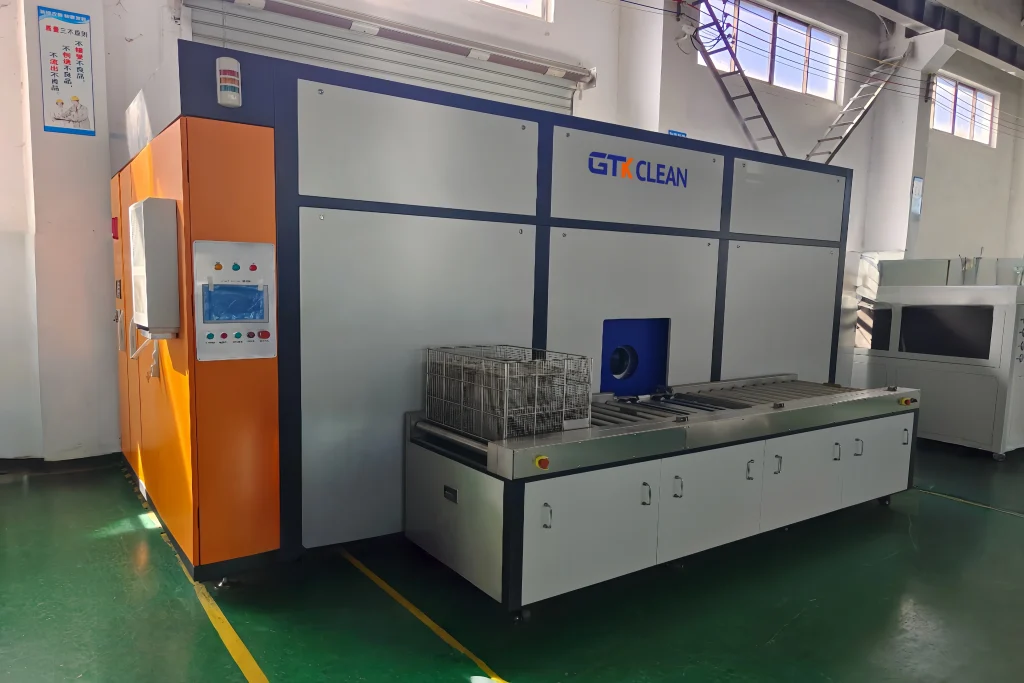
Proper pre-cleaning stages matter more than many people realize for maximizing ultrasonic cleaning efficiency. This initial phase removes gross contaminants that would otherwise overload the ultrasonic bath. Common degreasing methods include spray washing, immersion, or solvent wiping. Thorough part inspection identifies areas of heavy soil or potential damage. Effective fixture design ensures all surfaces get exposed to the ultrasonic waves while preventing part-to-part contact. Contaminant analysis helps select the appropriate cleaning chemistry and ultrasonic parameters. A pre-rinse stage often follows initial degreasing to remove loose debris before the main ultrasonic process. GTKCLEAN's comprehensive range of automated cleaning equipment includes systems designed for efficient pre-cleaning, setting the stage for high-performance ultrasonic cleaning. The CNC Aluminum Shell Inline Cleaners, for example, incorporate automated multi-stage cleaning with high-pressure spray degreasing and DI water rinsing.
| Method | Primary Contaminants Removed | Application Example |
|---|---|---|
| Spray Washing | Heavy oils, chips, loose debris | Large machined parts, automotive components |
| Solvent Immersion | Greases, waxes, cutting fluids | Precision components, parts with complex geometries |
| Alkaline Soak | Oils, carbonized residues | Stamping parts, engine components |
| Manual Wiping | Light oils, fingerprints | Delicate optics, final touch-up |
| Pre-rinse | Loose particles, residual chemicals | All parts after initial cleaning stages |
If you're interested in the scientific basis behind this cleaning method, explore 《What Is Ultrasonic Cavitation Effect?》
How does ultrasonic cavitation effectively remove contaminants?
Ultrasonic cavitation removes contaminants through a combination of physical forces. The implosion of cavitation bubbles generates powerful microjetting that directly impacts the part surface, dislodging particles. Acoustic streaming, a bulk fluid movement induced by ultrasonic waves, helps carry away loosened debris. This process breaks down the boundary layer between the contaminant and the surface. Surface tension plays a role too, as the dynamic forces overcome adhesive bonds. GTKCLEAN's patented technologies enhance cavitation efficiency, ensuring thorough removal of even sub-micron contaminants from complex geometries.
Optimizing Ultrasonic Cleaning Parameters
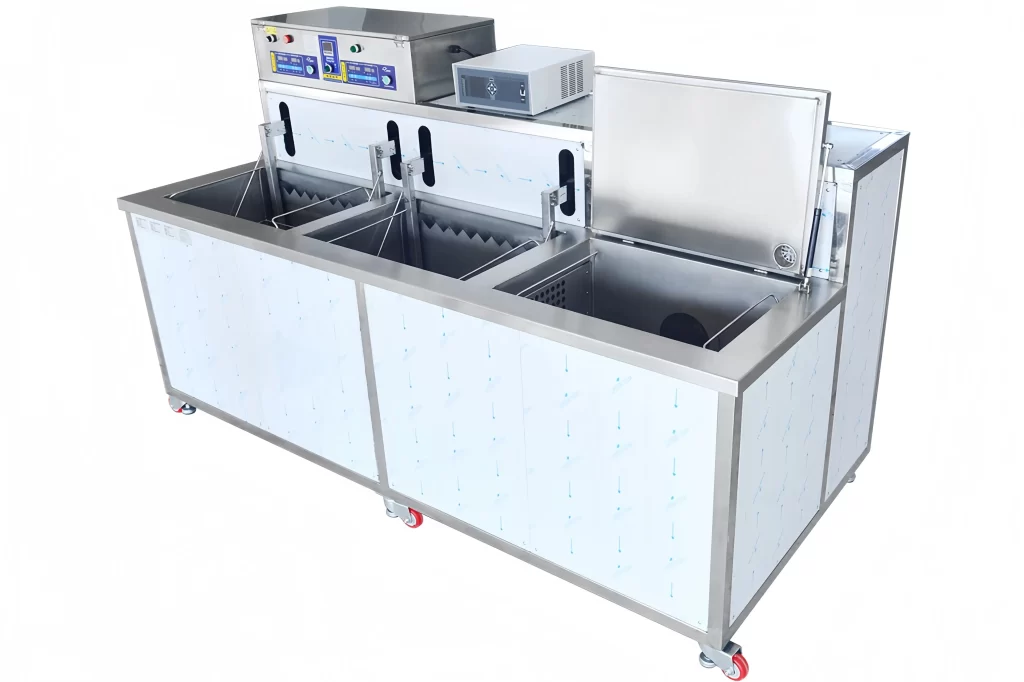
Achieving optimal cleaning results requires precise control over several key parameters. Cleaning solution chemistry must be compatible with both the parts and the contaminants. Temperature control significantly impacts cleaning efficacy. Higher temperatures generally reduce solution viscosity and increase cavitation intensity. The ultrasonic frequency chosen dictates the size and energy of the cavitation bubbles. Power density, or the ultrasonic power per unit volume of liquid, influences cleaning aggression. Adjusting the cleaning cycle duration ensures sufficient exposure for thorough contaminant removal. Process optimization involves fine-tuning these variables for maximum effectiveness and efficiency. GTKCLEAN's expertise in designing automated cleaning equipment allows for precise control and optimization of all critical ultrasonic cleaning parameters, tailored to specific cleanliness requirements. The Multi-Tank Ultrasonic Cleaners offer adjustable temperature and time per tank.
What factors influence the choice of ultrasonic cleaning frequency?
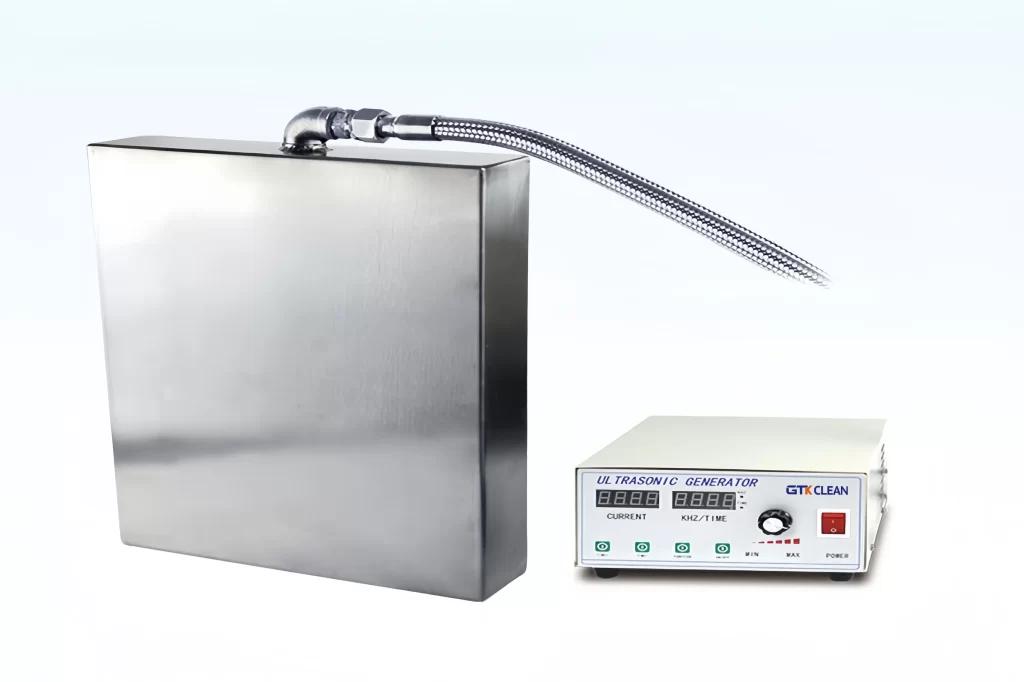
The choice of ultrasonic cleaning frequency depends on part geometry, contaminant type, material sensitivity, and desired cleaning speed. Lower frequencies in the 22-40 kHz range work well for robust parts with heavy contamination or blind holes, producing larger, more aggressive cavitation bubbles. Higher frequencies between 68-170 kHz suit delicate materials, precision cleaning of intricate parts, or fine particle removal, generating smaller, gentler bubbles. GTKCLEAN's R&D provides insights into selecting optimal frequencies for diverse materials and contamination types, a key aspect of superior cleaning performance. Ultrasonic vibration plates are available with various frequency options including 20kHz, 28kHz, 40kHz, and 80kHz.
Post Cleaning Procedures and Quality Assurance
The post-cleaning phase carries as much weight as the cleaning itself for ensuring parts meet cleanliness specifications. Effective rinsing techniques remove residual cleaning agents and loosened contaminants. Drying methods like hot air or vacuum drying prevent water spots and corrosion. Cleanliness verification involves various inspection techniques to confirm the removal of all target contaminants. Filtration systems are vital in maintaining the purity of rinse water and extending its lifespan. These post cleaning procedures are integral to a complete and effective cleaning process. GTKCLEAN's comprehensive systems often integrate post-cleaning solutions, including advanced drying and inspection, ensuring the highest quality output for clients. The Pre PVD (Coating) Parts Ultrasonic Cleaners feature multi-stage ultrapure water rinsing and various drying options.
| Technique | Detects | Application |
|---|---|---|
| Visual Inspection | Gross contamination, residues, defects | General quality control, initial assessment |
| Particle Count | Microscopic particulate matter | Precision parts, optics, medical devices |
| Water Break Test | Hydrophobic residues (oils, greases) | Surface energy assessment, coating preparation |
| Gravimetric Analysis | Total non-volatile residue (NVR) | Critical cleanliness, aerospace components |
| Fourier-Transform Infrared Spectroscopy (FTIR) | Organic residues, specific chemical contaminants | Material analysis, process validation |
For a deeper dive into how ultrasonic technology works, consider reading 《What Is Ultrasonic Wave?》
What are the critical steps for maintaining an ultrasonic cleaning system?
Maintaining an ultrasonic cleaning system involves several critical steps to ensure longevity and consistent performance. Regular preventative maintenance includes inspecting transducers and tanks for wear or damage. Solution replacement schedules depend on contamination levels and cleaning volume. Filtration systems require routine cleaning or cartridge replacement to prevent re-deposition of contaminants. Calibration of temperature and power settings ensures consistent cleaning results. GTKCLEAN provides expert guidance and support for maintaining industrial cleaning equipment, ensuring longevity and consistent superior performance. Automated systems like the Rotary Basket Ultrasonic Cleaners feature filtration and circulation systems that extend fluid life.
Advanced Applications and Future Trends in Ultrasonic Cleaning
Ultrasonic cleaning continues to evolve, finding new applications and integrating with emerging technologies. In precision optics cleaning, ultrasonic methods achieve contaminant removal without scratching delicate surfaces. Medical device sterilization increasingly relies on ultrasonic technology for thorough cleaning of complex instruments. Aerospace component cleaning benefits from the ability to clean intricate parts with high reliability. Future trends include sustainable cleaning solutions, reducing environmental impact through advanced filtration and solvent recovery. Industry 4.0 integration will see ultrasonic systems incorporating smart sensors and AI for predictive maintenance and optimized performance. GTKCLEAN's continuous innovation and 28 technical patents position the company at the forefront of developing advanced ultrasonic cleaning solutions for evolving cleanliness requirements in various industries. Specialized solutions like Hydrocarbon Solvent Ultrasonic Cleaning Systems address high-purity applications.
Raise Your Industrial Cleaning Standards with GTKCLEAN
As a globally leading manufacturer with over 20 years of R&D experience and 28 technical patents, Suzhou Grintek Environmental Technology Co.,Ltd. (GTKCLEAN) serves as a trusted partner for superior industrial cleaning solutions. From automated ultrasonic cleaning systems to solvent and water treatment systems, the company engineers precision and performance for clients worldwide, from small enterprises to Fortune 500 corporations. Contact us today at +86 17768507147 or [email protected] to discuss your specific cleanliness requirements and discover how this expertise can optimize your processes.
Frequently Asked Questions About Ultrasonic Cleaning
What types of contaminants can ultrasonic cleaning effectively remove?
Ultrasonic cleaning excels at removing a wide range of contaminants, including oils, greases, waxes, metal chips, polishing compounds, dust, and even microscopic particles. The cavitation process reaches into blind holes and intricate geometries where traditional cleaning methods fail, making it ideal for precision parts across various industries.
Is ultrasonic cleaning safe for all materials and components?
While generally safe, the suitability of ultrasonic cleaning depends on the material, component design, and selected parameters. Soft materials, certain plastics, and components with bonded or plated layers may require specific frequencies, power levels, and cleaning solutions to prevent damage. GTKCLEAN's experts can advise on optimal settings for your specific applications.
How does GTKCLEAN ensure the longevity and efficiency of its ultrasonic cleaning systems?
GTKCLEAN designs its ultrasonic cleaning systems with robust materials and advanced transducer technology, backed by 20+ years of R&D. The company provides comprehensive maintenance guidelines, offers technical support, and ensures systems are built for continuous, high-performance industrial operation, minimizing downtime and maximizing cleaning efficiency.
 English
  German
  Spanish
  French
  Russian
  Portuguese