

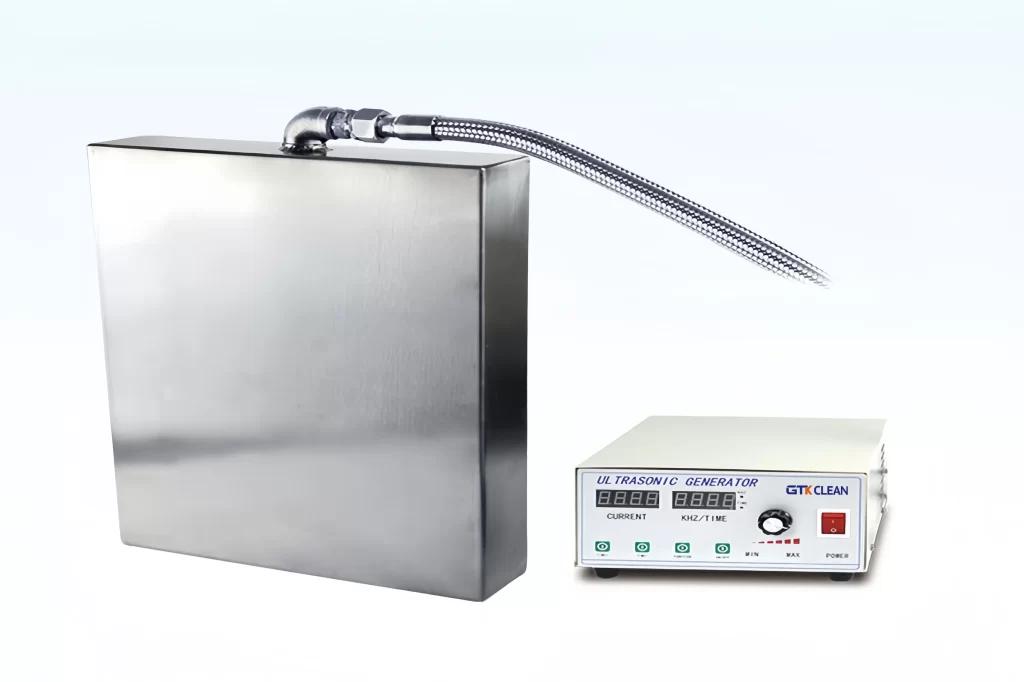
Getting ultrasonic cleaning right comes down to understanding how each component actually works together. After two decades of building these systems and holding 28 patents in the space, we've learned that the difference between adequate cleaning and exceptional results usually traces back to component selection and integration. At GTKCLEAN, we design and manufacture industrial cleaning equipment that puts this knowledge into practice across demanding applications.
What Makes Industrial Ultrasonic Cleaning Work
Industrial cleaning equipment depends on several components working in concert. Each piece handles a specific job: generating ultrasonic energy, transmitting it through liquid, and applying it to contaminated surfaces. The challenge lies in getting these elements to cooperate rather than just coexist. When integration is done well, you get consistent cleaning across batches. When it's not, you get frustrating variability.
Transducer Technology and Cavitation Dynamics
Transducers sit at the center of any ultrasonic cleaning system. They take electrical energy and convert it into high-frequency sound waves. Those waves create microscopic bubbles in the cleaning liquid through a process called cavitation. Piezoelectric transducers specifically use the piezoelectric effect to generate these vibrations, and how well they're integrated determines whether your system performs or just runs.
How do ultrasonic cleaning systems achieve optimal cavitation?
Getting cavitation right requires precise control over frequency and power density. Lower frequencies in the 20-40 kHz range produce larger, more energetic bubbles that work well for robust parts with heavy contamination. Higher frequencies between 68-170 kHz create smaller, gentler bubbles better suited for delicate components and fine particulate removal. The real work happens in modulating these parameters to match specific cleaning challenges.
Ultrasonic Generator Power and Control Systems
The ultrasonic generator feeds electrical energy to the transducers. This component controls power output and operating frequency. A well-designed generator delivers stable, adjustable power that lets you tailor cleaning processes to specific needs. Ultrasonic Generator designs that prioritize energy efficiency and precise control make a measurable difference in results and operating costs.
What are the critical factors in selecting an ultrasonic generator?
Generator selection involves balancing several variables. Power output, operating frequency, and transducer compatibility form the technical foundation. But the type of contamination you're removing, what materials you're cleaning, and your throughput requirements all shape the decision. There's no universal answer here. The right generator for precision optics looks nothing like the right generator for heavy machined parts.
| Generator Power (W) | Typical Application |
|---|---|
| 750 | Benchtop Cleaners |
| 1200 | Multi-Tank Systems |
| 2400 | Heavy-Duty Systems |
| >2400 | Custom Industrial |
If you're interested, check 《What Is Ultrasonic Wave?》.
Cleaning Tank Design and Material Science
The cleaning tank holds both the solution and the parts being cleaned. Its design and material composition affect how ultrasonic waves propagate and how long the system lasts. Tanks are typically fabricated from stainless steel for corrosion resistance, but the specific grade matters more than most people realize.
How does tank design impact cleaning efficiency and longevity?
Tank geometry shapes how ultrasonic waves distribute through the cleaning volume. Poor design creates standing waves and dead zones where cleaning is inconsistent. Material selection determines whether your tank survives years of exposure to cleaning agents or degrades prematurely. SUS304 handles most applications well. SUS316 becomes necessary when you're working with harsh chemicals or in medical and food industry environments.
| Material Type | Advantages | Disadvantages | Typical Use Cases |
|---|---|---|---|
| SUS304 Stainless Steel | Good corrosion resistance, cost-effective | Less resistant to strong acids/chlorides | General industrial cleaning, water-based |
| SUS316 Stainless Steel | Superior corrosion resistance | Higher cost | Harsh chemicals, medical, food industry |
| Polypropylene (PP) | Chemical resistance, lightweight | Lower temperature limit, less durable | Acidic/alkaline solutions, delicate parts |
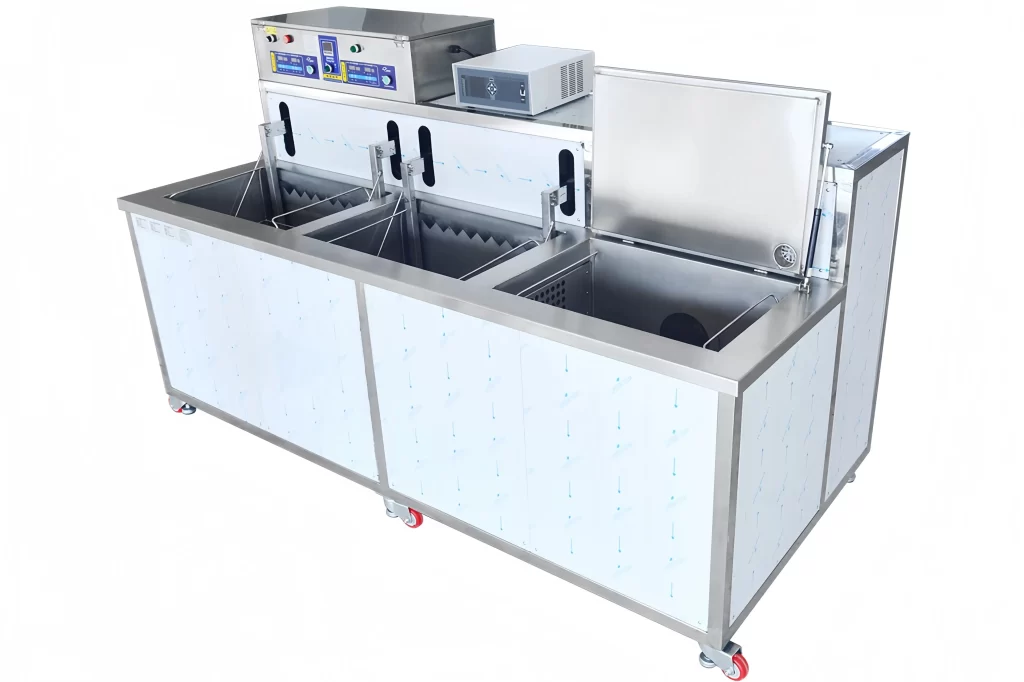
Filtration and Rinsing Systems for Enhanced Cleanliness
The ultrasonic action loosens contaminants, but filtration and rinsing systems actually remove them from the equation. Without these auxiliary systems, you're just redistributing contamination rather than eliminating it. For precision applications, this distinction matters enormously.
Our Pre PVD (Coating) Parts Ultrasonic Cleaners demonstrate what a complete approach looks like: Hydrojet spray → Ultrasonic cleaning → Multi-stage ultrapure water rinsing → Air knife / Hot air / Vacuum drying. This sequence achieves conductivity ≤ 0.06 μS/cm, preventing water spots and secondary contamination. Ultrasonic Cleaners for CNC Machined Parts follow a similar logic: High-pressure spray → Ultrasonic degreasing → RO water rinse → DI water rinse → Hot air or vacuum drying. This effectively removes cutting fluids, chips, burrs, dust, and fingerprints. Ultrasonic Cleaners For Stamping Parts use automated multi-stage cleaning including rough ultrasonic → fine ultrasonic → tap/pure/DI water rinse → hot air or vacuum drying for thorough contaminant removal.
Partner with GTKCLEAN for Advanced Ultrasonic Cleaning Solutions
If you're looking to improve your industrial cleaning processes, we'd welcome the conversation. With 20+ years of R&D and 28 technical patents behind us, we design and manufacture ultrasonic cleaning systems matched to specific operational demands. Our customers range from small companies to Global Fortune 500 corporations. Contact us at +86 17768507147 or [email protected] to discuss what you're trying to accomplish.
Frequently Asked Questions About Ultrasonic Cleaning Systems
What role does ultrasonic frequency play in cleaning different materials?
Frequency selection shapes the entire cleaning dynamic. Lower frequencies in the 20-40 kHz range generate larger, more aggressive cavitation bubbles that handle robust parts and heavy contamination well. Higher frequencies between 68-170 kHz produce smaller, gentler bubbles appropriate for delicate components and fine particulate removal. The right choice depends on what you're cleaning and what you're trying to remove.
How do I ensure the longevity and maintenance of my ultrasonic cleaning system components?
Keeping Ultrasonic Cleaning Systems running well requires attention to a few basics. Regular inspection of transducers and generators catches problems early. Maintaining proper fluid levels prevents damage. Replacing filtration media on schedule keeps contamination from cycling back through the system. Chemical selection matters too. The wrong cleaning agent can shorten component life significantly.
Can ultrasonic cleaning systems be integrated into automated production lines?
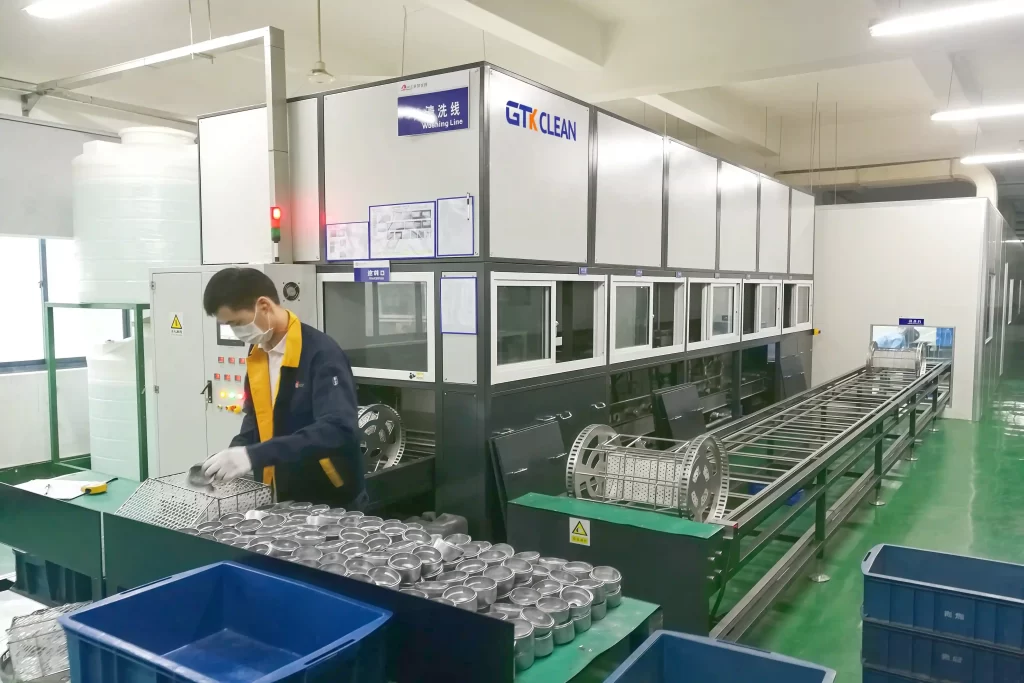
They can, and for high-volume manufacturing, they probably should be. Modern ultrasonic systems accommodate robotic handling, conveyor integration, and advanced process controls. This kind of automation reduces manual labor, improves consistency, and makes it possible to maintain cleaning quality across thousands of parts. The integration work requires planning, but the operational benefits tend to justify the effort.
 English
  German
  Spanish
  French
  Russian
  Portuguese