

What Is the Ultrasonic Cleaning Process for Automotive Brake Pads?
Brake pads, also known as brake shoes, stand as the most critical safety component within a vehicle’s braking system. They play a decisive role in overall braking performance, making high-quality brake pads an essential safeguard for drivers, passengers and vehicles alike.
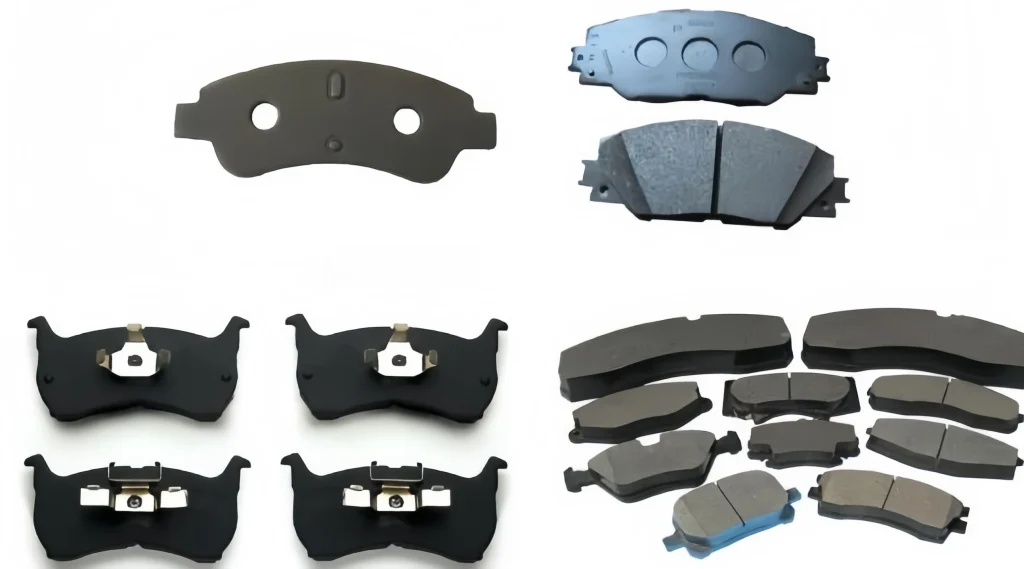
A standard brake pad consists of a steel backing plate, a bonded heat insulation layer and a friction block. The heat insulation layer is made of non-heat-conductive materials to block heat transfer effectively. The friction block is composed of friction compounds and bonding agents. When braking, it presses tightly against the brake disc or brake drum to generate friction, which slows down or brings the vehicle to a complete stop.
Continuous friction gradually wears down the friction block. Generally speaking, brake pads with lower production costs tend to wear out much faster. It is vital to replace brake pads promptly once the friction material is fully worn. Without timely replacement, the steel plate will make direct contact with the brake disc, leading to total brake failure and permanent damage to the brake disc.
Brake shoes are installed on brake drums. In daily usage, the term “brake pads” is commonly used as a general reference covering both disc brake pads and drum brake shoes. To avoid confusion, disc brake pads is the specific term for parts fitted to disc brake assemblies — these are separate components from brake discs.
Ultrasonic Cleaning Process for Automotive Brake Pads
Rough ultrasonic cleaning → Precision ultrasonic cleaning → Medium-pressure spray rinsing → Bubble rinsing → Secondary bubble rinsing → Passivation treatment → Air knife dewatering → Tunnel oven drying → Unloading
Equipment Composition
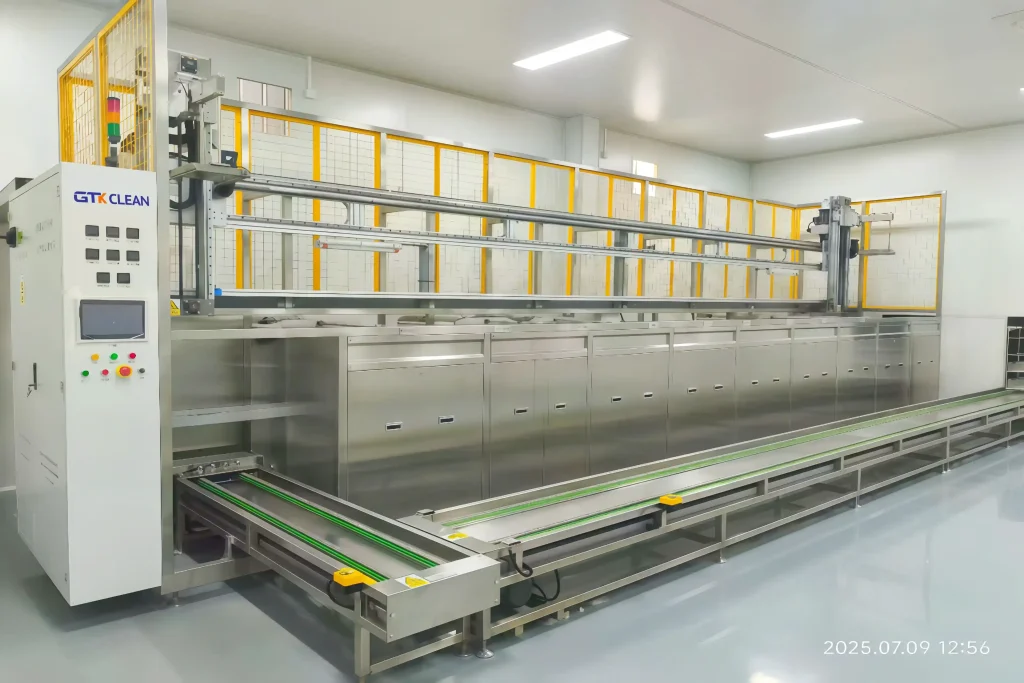
This custom ultrasonic cleaning system for brake pads is equipped with two ultrasonic cleaning tanks, one spray rinsing tank, two bubble rinsing tanks and one passivation tank, paired with a complete tunnel hot air drying unit.
It also comes with supporting auxiliary systems: filtration and circulation devices, automatic air exhaust units, central monitoring system, air purification system, ultrasonic generating modules and integrated electrical control components.
The entire cleaning section features a fully enclosed structural design with removable inspection and maintenance access doors for easy upkeep. Operators first place unwashed brake pads into custom tooling baskets, then set the baskets on the automatic feeding conveyor. A multi-axis robotic arm transports the baskets through each processing station in sequence, completing cleaning, rinsing, passivation, dewatering and drying step by step. Once the full cycle finishes, the finished parts are transferred to the automatic discharge conveyor for operators to collect and forward to the next production process.
Key Equipment Features
- Fitted with PLC control and human-machine touch interface for fully automatic operation, simple to operate and easy to manage.
- Conveyor mesh belt and chain are fabricated from SUS304 stainless steel, delivering excellent corrosion resistance and long service life.
- Premium electrical components deliver precise control and an extended operational service life.
- Equipped with vertical spray pumps for stable rinsing performance.
We greatly appreciate your trust and sincerely look forward to open communication and business cooperation regarding our industrial cleaning equipment. Please feel free to contact us via email ([email protected]) or WhatsApp at +86 17768507147 for direct inquiries and customized quotations for ultrasonic cleaning machines.
Frequently Asked Questions
Q1: What are the main types of automotive brake pads?
A: Modern brake pads are categorized into six main types: asbestos brake pads (largely phased out), semi-metallic brake pads, low-metallic brake pads, NAO (Noneasbestos Organic) formula brake pads, ceramic brake pads, and NAO ceramic composite brake pads.
Q2: What is the difference between brake discs and brake pads?
A: Brake discs and brake pads work in tandem to create frictional resistance, which reduces vehicle speed or stops the car entirely. The brake disc is the rotating metal rotor, while brake pads are the friction components mounted inside the brake caliper.
Q3: Are ultrasonic cleaners and ultrasound cleaners the same device?
A: Yes, they refer to the exact same industrial cleaning equipment, only with different naming conventions. The term “ultrasound cleaner” is widely used by customers in some countries.
Q4: What is the function of small holes on brake pads?
A: The vent holes on brake pads are specially designed for heat dissipation, to lower operating temperature and prevent brake fading.
Q5: How are brake pads manufactured by hot pressing?
A: The production process uses a hot press machine. Adhesive is first coated on the steel backing plate, then friction materials are positioned in place. Heat and high pressure are applied to permanently bond the friction block and steel plate together. Two mainstream hot pressing methods are adopted: positive mold hot pressing and plate mold hot pressing.
 English
  German
  Spanish
  French
  Russian
  Portuguese