

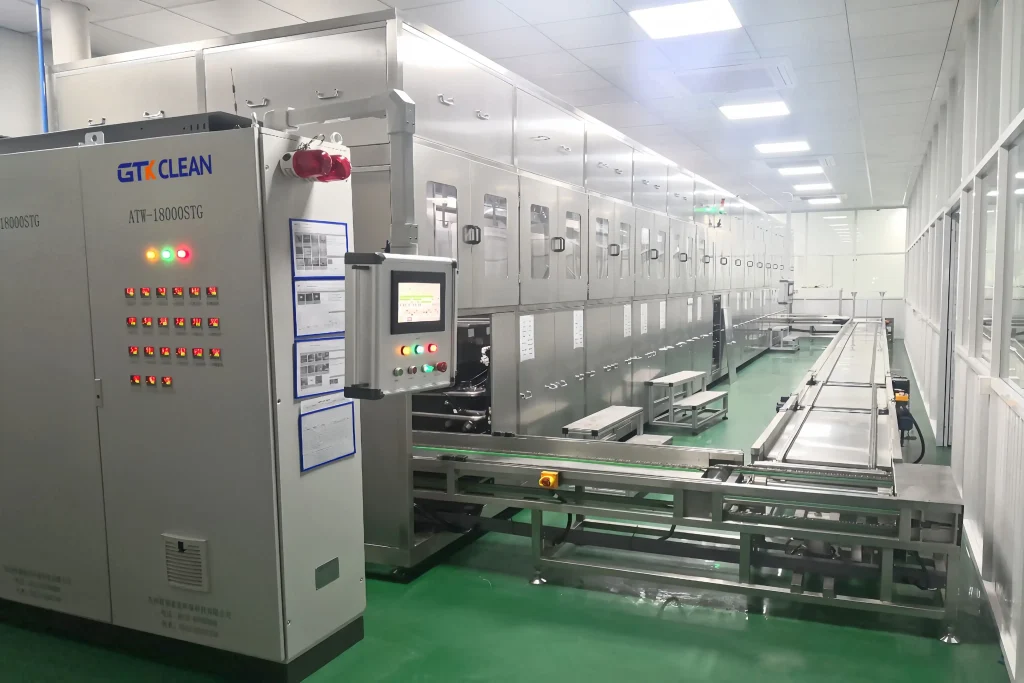
Why Industrial Parts Need Ultrasonic Cleaning
It’s easy to understand why ultrasonic cleaning machines deliver exceptional cleaning efficiency and results once you grasp their working principle. When ultrasonic waves within a specific frequency range act on a liquid medium, they effectively clean workpieces. Since its launch, this cleaning technology has gained widespread popularity across all industrial sectors.
Ultrasonic cleaning equipment drastically boosts work efficiency and cleaning precision. Hard-to-reach spots like dead corners, blind holes and hidden crevices that trap dirt have long been a major hassle for traditional cleaning methods. The introduction of ultrasonic technology has made tackling these difficult areas effortless.
In recent years, driven by rapid advancements in electronic technology, ultrasonic cleaning machines have undergone multiple generations of upgrades—much like smartphones we rely on daily. They now feature more sophisticated technology and far superior cleaning performance. Meanwhile, their price points have become widely affordable, leading to growing adoption and extensive application across industries.
Here is how it works: The transducer converts high-frequency electrical energy into mechanical energy, generating high-frequency micro-vibrations that transmit into the cleaning solution inside the tank. Under the transducer’s action, countless tiny bubbles continuously form and instantly collapse within the liquid. Each bubble collapse releases temperatures of several hundred degrees Celsius and shockwaves of nearly 1,000 atmospheres, thoroughly blasting away dirt and contaminants from workpieces.
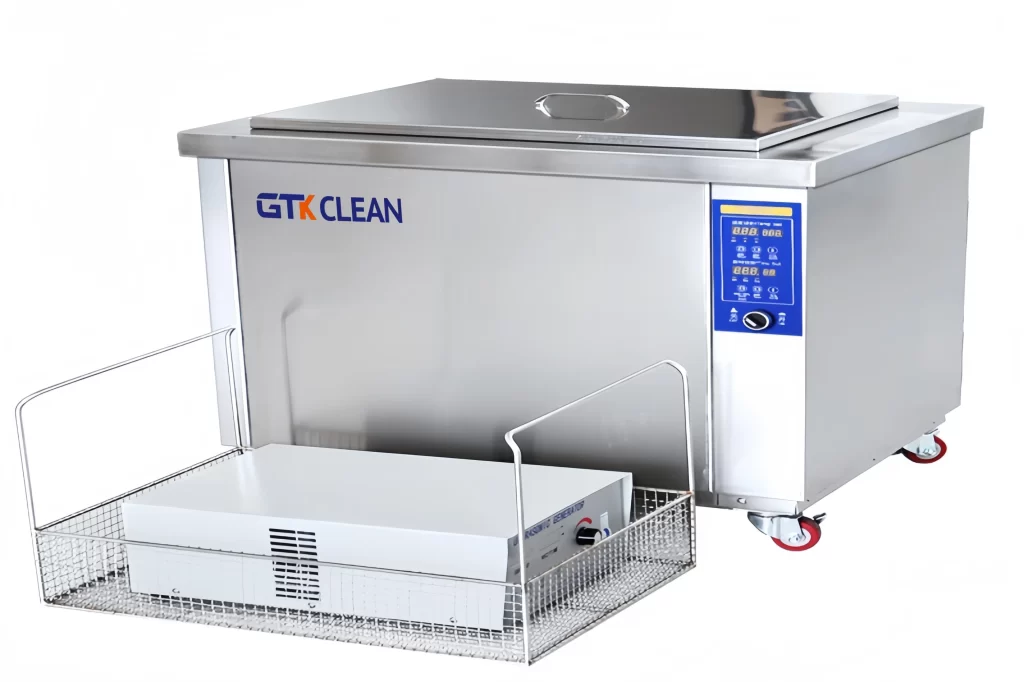
----Single-Tank Ultrasonic Cleaning Machine Core Advantages----
- Regardless of complex workpiece geometry, ultrasonic cleaning reaches every surface that comes into contact with the cleaning liquid.
- Bubbles generated in the liquid distribute evenly during operation, delivering consistent, uniform cleaning results across the entire workpiece.
- When paired with specialized cleaning detergents, it accelerates contamination separation and dissolution, while effectively preventing chemical corrosion to workpieces.
- Fully eliminates manual scrubbing, avoiding workpiece damage caused by hand cleaning and freeing workers from heavy, dirty manual labor.
Ultrasonic cleaning machines are applied in nearly every industry, including machinery processing, surface treatment, medical equipment, instrumentation, electromechanical & electronics, optics, semiconductors, education & research, watch & jewelry manufacturing, petrochemicals, textile printing and dyeing, and more.
Cleaning is a routine part of daily life—almost everyone uses facial cleanser, soap, laundry detergent, shampoo and other cleaning products daily. However, industrial ultrasonic cleaning remains unfamiliar to most people.
In core industrial sectors such as petrochemicals, steel, power generation and food processing, new production equipment and pipelines inevitably develop mill scale, oil sludge, sand residue, welding slag, surface coatings and various oxides during manufacturing, transportation, storage, installation and operation.
Additionally, in-service equipment including towers, pipeline heat exchangers, storage tanks, jacketed vessels and reaction kettles accumulates severe fouling such as polymer residues, coking deposits, limescale, oil grime, sediment and rust corrosion.
Failure to clean equipment promptly before commissioning or after 1–2 years of operation will lead to material deterioration, disrupted production processes and compromised product quality. In severe cases, it causes equipment and pipeline failure, higher energy consumption, reduced operational efficiency, process blockages and unplanned plant shutdowns. Worst of all, neglected fouling may trigger hazardous incidents such as fluid leakage and explosions.
Industrial cleaning mainly falls into two categories: chemical cleaning and physical cleaning. Pipeline systems are mostly concealed structures. Chemical cleaning uses one or more specialized chemical detergents to chemically transform, dissolve and strip surface contaminants, achieving effective degreasing, rust removal and descaling. It delivers thorough cleaning results and accounts for around 60% of industrial cleaning applications. Physical cleaning primarily includes mechanical cleaning and hydro jet cleaning, making up the remaining 40% of the market.
Over the last two decades, the industrial parts cleaning industry across developed nations has seen profound transformation. Stricter environmental regulations, rising precision requirements and widespread automation have reshaped the whole sector.
Conventional solvent cleaning has gradually been replaced by water-based, ultrasonic, laser and dry ice cleaning technologies, greatly cutting exhaust emissions and industrial waste. Automation and intelligent monitoring have become industry norms, improving cleaning consistency and production efficiency while reducing labor expenses.
Stringent quality standards in automotive, aerospace and electronics have driven the wide adoption of micron-level ultra-precision cleaning. Sustainability has turned into a core priority, with biodegradable detergents, closed-loop recycling systems and energy-saving equipment design now widely mainstream.
In essence, the industry has evolved from a simple chemical-dependent process into a high-precision, automated and eco-friendly specialized technical field.
Ultrasonic Cleaning Machine FAQ
Q: What adhesive should be used for bonding ultrasonic transducers?
A: Special AB glue dedicated for ultrasonic transducers is the optimal choice; Singapore-sourced adhesive is the most commonly used option in the industry.
Q: How to verify if a transducer is properly bonded?
A: Professional instruments like an impedance analyzer can analyze the admittance curve for assessment, though this requires rich practical experience for accurate judgment.
Q: How to check if an ultrasonic transducer is in good condition?
A: Without professional testing equipment, inspect visually for cracks or damage, and monitor operating current for abnormalities.
Q: How to measure the technical parameters of an ultrasonic transducer?
A: Parameter testing and analysis require the use of an impedance analyzer.
Q: What other names are there for ultrasonic transducers?
A: It is generally referred to as an ultrasonic transducer or ultrasonic vibration plate.
Q: Where is the ideal mounting position for ultrasonic transducers?
A: Transducers can be installed on any flat metal surface in most application scenarios.
 English
  German
  Spanish
  French
  Russian
  Portuguese