
Choosing industrial ultrasonic cleaning equipment feels straightforward until you realize how many variables actually shape the outcome. Frequency, tank geometry, automation level, chemical compatibility—each decision ripples through your cleaning results, maintenance costs, and long-term ROI. After working through hundreds of these configurations, the pattern becomes clear: the right equipment isn't about chasing specifications, it's about matching real production conditions to proven engineering. GTKCLEAN brings over 20 years of R&D experience to this process, and that depth shows in how we approach each client's unique cleaning challenges.
Frequency and Power Shape Every Cleaning Outcome
Ultrasonic frequency and power output form the technical foundation of any cleaning system. These parameters determine cavitation behavior, which directly controls how contaminants release from surfaces.
Low frequencies in the 20-30 kHz range generate larger cavitation bubbles with aggressive implosion energy. This works well for heavy-duty applications where robust parts carry stubborn deposits like carbon buildup, thick oils, or rust. The mechanical action is intense enough to dislodge tenacious contamination without requiring extended cycle times.
Higher frequencies between 40-80 kHz produce smaller, more numerous bubbles. The cleaning action becomes gentler but more thorough at the microscopic level. Precision components—electronic assemblies, optical elements, medical instruments—benefit from this approach because surface integrity remains intact while fine particles lift away cleanly.
Power output matters just as much as frequency selection. Insufficient power creates dead zones where cavitation intensity drops, leaving parts inconsistently cleaned. Excessive power wastes energy and can damage sensitive workpieces. GTKCLEAN's technical patents in industrial ultrasonic cleaning equipment address this balance through optimized transducer placement and power distribution across the tank volume.
Matching Frequency to Your Specific Cleaning Task
The optimal ultrasonic frequency depends on three factors: material properties, contamination type, and part geometry. Heavy contamination on durable substrates calls for low frequency ultrasonic cleaning in the 20-30 kHz range. Precision parts cleaning involving delicate surfaces or fine particulates responds better to high frequency ultrasonic systems between 40-80 kHz.
GTKCLEAN offers frequencies spanning 20kHz to 80kHz specifically because real production environments rarely fit a single specification. A machining operation might need aggressive degreasing for cast housings and gentle cleaning for finished bearing surfaces—sometimes within the same facility.
| Frequency Range | Application Type | Cavitation Intensity | Typical Contaminants |
|---|---|---|---|
| 20-30 kHz | Heavy-duty, Robust Parts | Aggressive | Heavy oils, carbon, rust |
| 40-60 kHz | General Industrial | Moderate | Light oils, dust, particles |
| 60-80 kHz | Precision, Delicate Parts | Gentle | Fine particles, fingerprints |
Tank Construction Determines Long-Term Performance
Physical tank attributes influence both immediate cleaning effectiveness and equipment lifespan. Size, material selection, and internal geometry all play measurable roles.
Tank dimensions must accommodate your largest parts while maintaining uniform cavitation distribution. Undersized tanks force compromises—either cleaning fewer parts per cycle or accepting inconsistent results at the edges. Oversized tanks waste energy and cleaning solution without improving outcomes.
Material compatibility becomes critical when aggressive cleaning chemicals enter the picture. SUS304 stainless steel handles most industrial applications well, offering solid corrosion resistance at reasonable cost. SUS316 provides enhanced protection against chloride-containing solutions and more aggressive chemistries, making it the better choice for demanding environments.
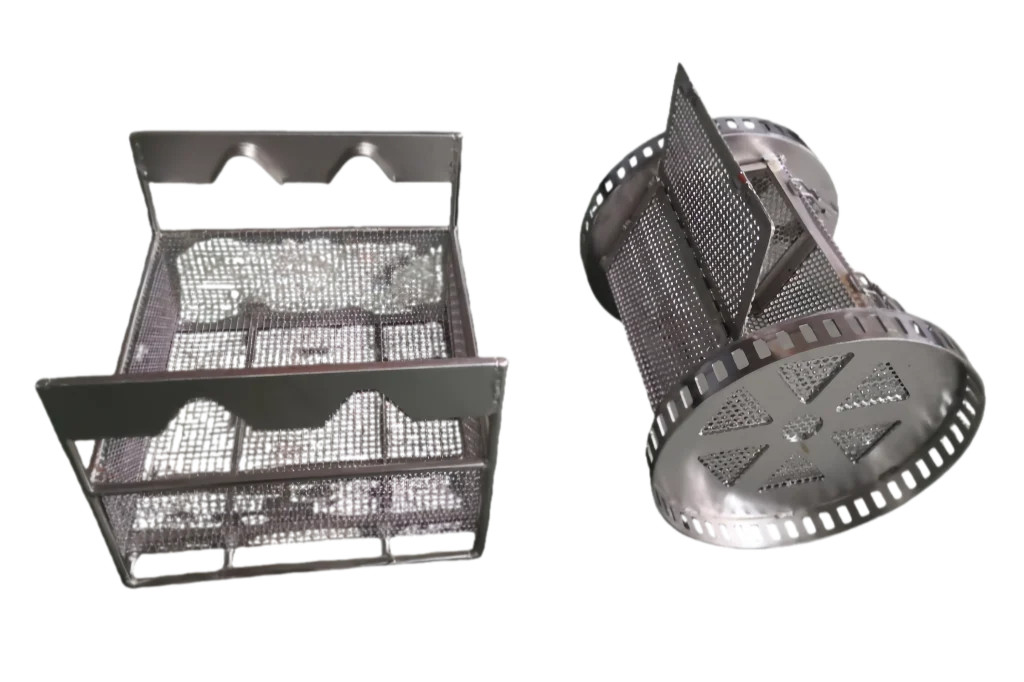
Internal fixtures matter more than many buyers initially realize. Rotary baskets expose all surfaces to cavitation energy, eliminating shadowed areas that trap contamination. Custom fixtures position complex geometries optimally within the cavitation field. GTKCLEAN designs these elements as integrated systems rather than afterthoughts, ensuring the tank works as a complete cleaning solution.
Why Tank Size and Material Selection Matter
Tank size directly affects ultrasonic bath capacity and energy distribution uniformity. An appropriately dimensioned tank prevents the "hot spots" and "dead zones" that compromise cleaning consistency. Parts positioned in low-energy areas emerge with residual contamination while those in high-energy zones may experience unnecessary stress.
Material choice determines how long the equipment resists the corrosive effects of cleaning solutions. Stainless steel remains the standard because it balances durability, chemical resistance, and cost. The specific grade—SUS304 versus SUS316—depends on your cleaning chemistry and expected service life requirements.
GTKCLEAN designs industrial ultrasonic cleaning equipment with these factors engineered in from the start. Our tank dimensions optimize cavitation uniformity for cleaning large parts, and our material selections ensure the equipment withstands harsh industrial environments over extended operational periods.
Automation Transforms Cleaning Economics
Modern manufacturing demands more than basic ultrasonic cleaning capability. Process integration, automation, and advanced features determine whether equipment becomes a productivity asset or an operational bottleneck.
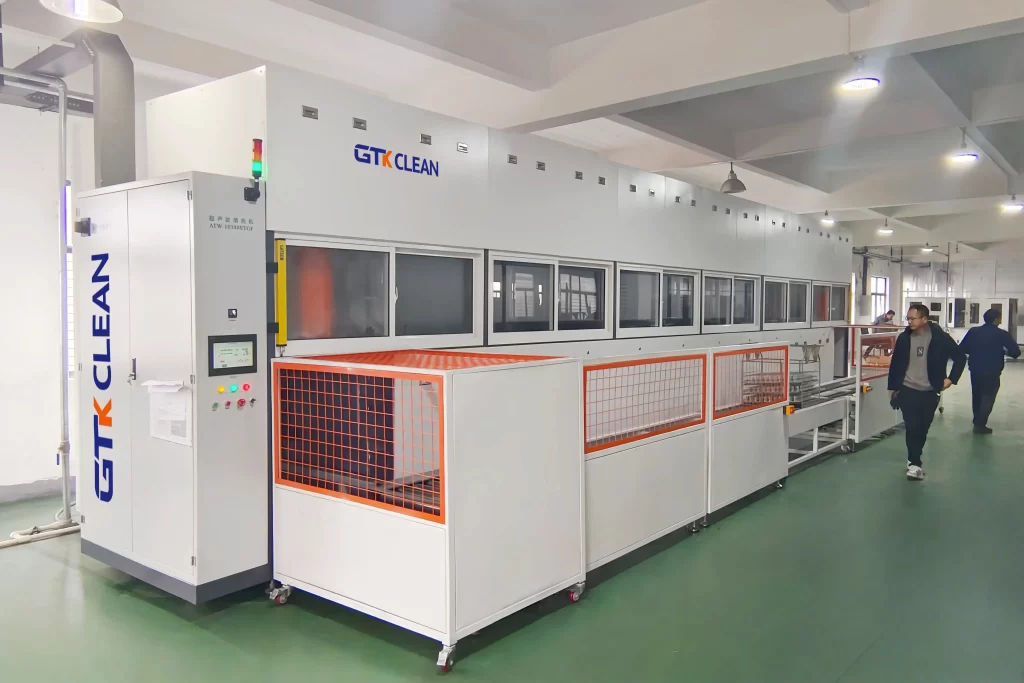
Automated cleaning equipment delivers consistency that manual operations cannot match. Robotic handling eliminates variation in part positioning and cycle timing. Multi-stage ultrasonic cleaning sequences address different contamination types without operator intervention. Integrated filtration maintains solution quality across extended production runs.
Drying systems complete the cleaning process. Hot air drying works for many applications, while vacuum drying removes moisture from blind holes and complex internal passages more effectively. The right drying approach depends on part geometry and downstream process requirements.
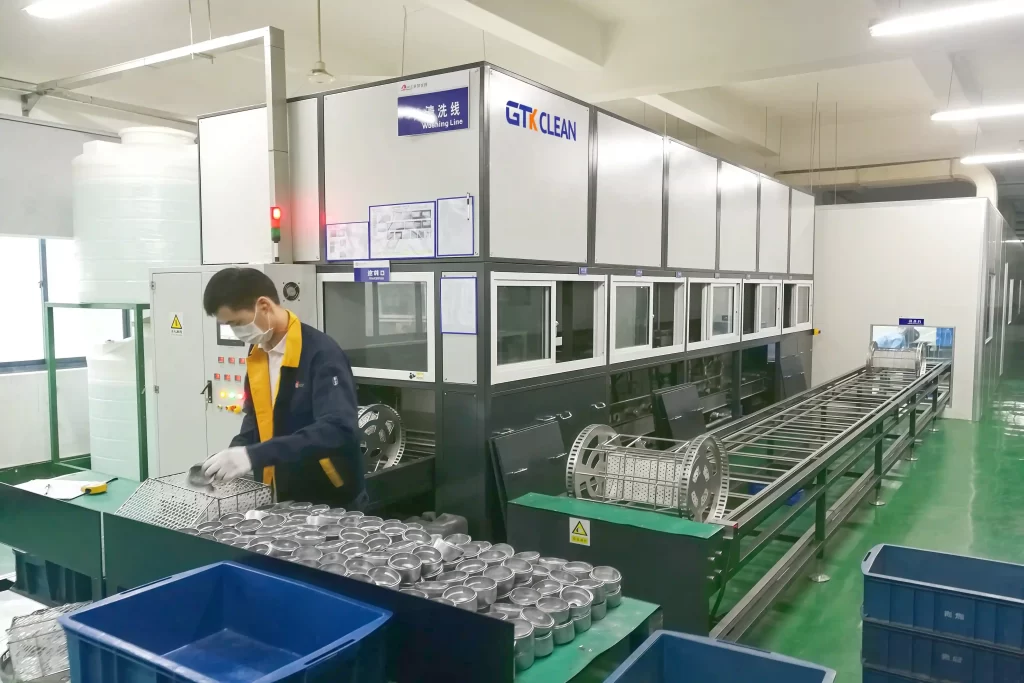
GTKCLEAN independently designs automated systems incorporating these capabilities. Our Ultrasonic Cleaners for CNC Machined Parts feature automated multi-stage cleaning with high-pressure spray, ultrasonic degreasing, and RO/DI water rinses followed by hot air or vacuum drying. This sequence ensures effective contaminant removal and high cleanliness for precision-machined components. Our Rotary Basket Ultrasonic Cleaners support heavy-load capabilities up to 2000 kg with automated loading, cleaning, rinsing, and drying cycles.
These systems align with Industry 4.0 integration principles, reducing manual labor while improving throughput and process control. Conveyor belt cleaning systems and solvent cleaning systems extend these benefits to high-volume continuous operations.
If you are interested, check 《Semi Automated vs Fully Automated Ultrasonic Cleaning Systems》.
Chemical Selection and Environmental Responsibility
Cleaning chemistry interacts with both workpiece materials and equipment components. Getting this relationship wrong leads to damaged parts, degraded equipment, or ineffective cleaning—sometimes all three simultaneously.
Cleaning agents must dissolve or emulsify target contaminants without attacking substrate materials. Alkaline solutions work well for organic soils on ferrous metals but may damage aluminum or certain coatings. Solvent-based systems handle heavy oils effectively but require careful attention to compatibility with seals and tank materials.
Environmental compliance adds another dimension to chemical selection. Waste water treatment requirements, VOC regulations, and worker safety standards all influence which cleaning approaches remain viable for a given facility. Sustainable operations increasingly favor water-based systems with proper treatment capabilities over solvent-heavy alternatives.
GTKCLEAN addresses these concerns through integrated water treatment systems and expert guidance on degreasing agents that meet regulatory compliance and safety standards. Our Pre PVD Coating Parts Ultrasonic Cleaners utilize ultrapure water systems to prevent secondary contamination while minimizing water and detergent usage. Our Multi-Tank Hydrocarbon Ultrasonic Cleaners feature solvent recycling systems for hydrocarbon recovery, reducing both waste and operational costs.
Total Cost of Ownership Reveals True Equipment Value
Purchase price represents only the starting point for evaluating industrial ultrasonic cleaning equipment. Total cost of ownership encompasses energy consumption, maintenance requirements, consumables, and operational labor over the equipment's useful life.
Energy costs accumulate continuously. Ultrasonic generators, heating elements, pumps, and drying systems all draw power throughout production cycles. Efficient designs reduce these ongoing expenses without compromising cleaning performance.
Maintenance requirements vary significantly between equipment designs. Accessible components, durable construction, and quality transducers minimize both scheduled servicing and unexpected repairs. Downtime costs often exceed direct maintenance expenses when production schedules suffer.
Return on investment calculations should account for productivity improvements, labor reduction, quality gains, and waste minimization. Equipment that cleans faster, requires less supervision, produces fewer rejects, and extends solution life delivers value beyond its specification sheet.
GTKCLEAN positions durable, efficient equipment like Heavy-Duty Automated Ultrasonic Cleaning Systems as long-term investments rather than simple capital purchases. Our designs emphasize energy efficiency and reduced maintenance specifically to improve ROI over extended service life.
Understanding Long-Term Operational Expenses
Operational costs extend well beyond electricity bills. Cleaning chemicals require regular replenishment, though filtration and circulation systems can extend fluid life substantially. Water consumption adds up, particularly in multi-rinse processes. Filters need replacement on predictable schedules.
Labor costs depend heavily on automation level. Manual loading and unloading, cycle monitoring, and quality inspection all require operator time. Automated systems reduce these requirements while improving consistency.
Parts replacement eventually becomes necessary even with quality equipment. Transducers, heating elements, pumps, and seals all have finite service lives. Equipment designed for easy access and standard components minimizes both replacement costs and associated downtime.
| Cost Factor | Description | Impact on TCO | GTKCLEAN Advantage |
|---|---|---|---|
| Energy Consumption | Electricity for ultrasonics, heating, pumps | Significant | Energy-efficient designs, optimized cycles |
| Consumables | Cleaning chemicals, water, filters | Moderate to High | Filtration/circulation systems extend fluid life |
| Maintenance | Routine servicing, spare parts | Moderate | Durable components, accessible design for easy service |
| Labor | Operation, supervision, loading/unloading | Moderate | Automated systems reduce manual intervention |
| Waste Disposal | Chemical waste, contaminated water | Variable | Water treatment, solvent recovery systems |
| Downtime | Production loss due to equipment malfunction | High | Reliable equipment, proactive maintenance support |
Supplier Partnership Extends Beyond Equipment Purchase
Selecting an industrial cleaning equipment manufacturer means choosing a long-term partner, not just a vendor. R&D capability, global operational experience, and support infrastructure all affect your success with the equipment.
GTKCLEAN brings over 20 years of R&D experience and 28 technical patents in industrial ultrasonic cleaning equipment to every client engagement. We operate in over 20 countries, serving diverse industries with varying requirements and regulatory environments.
Customization capabilities matter when standard configurations don't quite fit your application. Tank dimensions, frequency selection, automation level, and process integration all benefit from engineering flexibility. Our design team works with clients to develop solutions matched to specific industrial cleaning systems requirements.
After-sales support determines how quickly problems get resolved and how effectively equipment performs over time. Warranty coverage, technical assistance, and spare parts availability all contribute to operational continuity. GTKCLEAN provides robust warranty and guarantees along with dedicated technical support to ensure long-term success.
Start Your Cleaning Equipment Conversation
Optimizing industrial cleaning processes requires a partner who understands both the technology and the application. GTKCLEAN offers advanced industrial ultrasonic cleaning equipment backed by comprehensive support tailored to your specific needs.
Contact us to discuss your requirements and explore how our solutions can enhance operational efficiency and product quality. Reach out via email at [email protected] or call us at +86 17768507147.
Frequently Asked Questions About Ultrasonic Cleaning Equipment
What advantages does industrial ultrasonic cleaning offer over manual or spray methods?
Industrial ultrasonic cleaning reaches surfaces that manual scrubbing and spray systems cannot access effectively. Cavitation energy penetrates blind holes, internal passages, and complex geometries where direct mechanical action fails. The process removes microscopic contaminants consistently across large batches while reducing both labor requirements and chemical consumption. GTKCLEAN's systems deliver these benefits through optimized frequency selection and tank design matched to specific industrial applications.
How should I calculate the right tank size for my production volume?
Start with your largest part dimensions, then consider batch quantities and cycle frequency. The tank must provide adequate clearance around parts for uniform cavitation—typically several inches on all sides. Production throughput requirements determine whether a single large tank or multiple smaller tanks better serves your operation. GTKCLEAN's engineering team can help you model these factors and select or design industrial ultrasonic cleaning equipment that matches your actual production conditions.
Which materials require special consideration during ultrasonic cleaning?
Soft metals like aluminum and brass may suffer surface erosion at aggressive frequencies. Coated parts need frequency and chemistry combinations that clean without attacking the coating. Certain plastics and elastomers absorb ultrasonic energy differently than metals, requiring adjusted parameters. Porous materials may trap cleaning solution that becomes difficult to remove during drying. GTKCLEAN provides detailed guidance on material compatibility to ensure your cleaning process achieves results without damaging workpieces.
 English
  German
  Spanish
  French
  Russian
  Portuguese