
Modern manufacturing runs on clean parts. Contaminants left behind from machining, forming, or handling create real problems downstream—coating failures, assembly issues, premature wear. Aqueous parts cleaning has become the standard approach for removing these contaminants without the safety and environmental headaches that come with solvent-based methods. The technology has matured considerably over the past two decades, and the systems available today bear little resemblance to the basic wash tanks of earlier generations. GTKCLEAN has spent over 20 years developing industrial cleaning equipment, accumulating 28 technical patents along the way, with a focus on sustainable cleaning solutions that actually work in production environments.
How Aqueous Cleaning Systems Actually Work
Aqueous cleaning systems use water-based solutions combined with detergents to strip contaminants from part surfaces. The approach differs fundamentally from solvent cleaning. Water-based agents are non-flammable and non-toxic, which changes everything about how a cleaning operation can be designed and run. The cleaning action itself combines three forces: chemical action from the detergent breaking down soils, thermal energy from heated solutions that accelerate reactions and soften contaminants, and mechanical energy delivered through spray pressure, agitation, or ultrasonic cavitation.
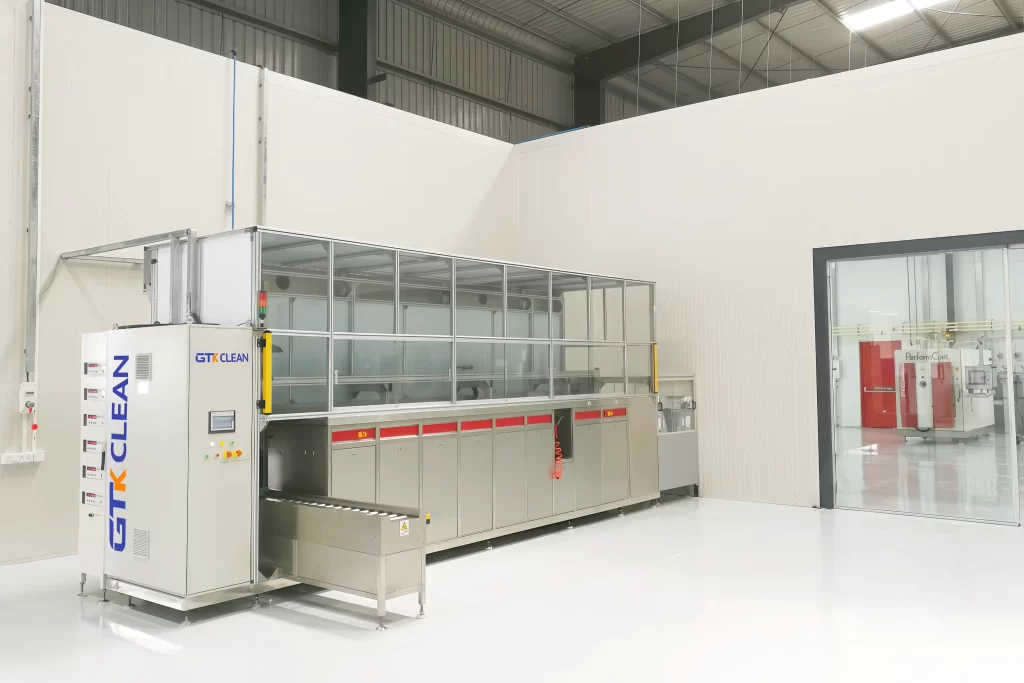
GTKCLEAN has developed cleaning solutions across a wide range of applications, each requiring different combinations of these forces. The Pre PVD (Coating) Parts Ultrasonic Cleaners illustrate how multiple stages work together. The process moves parts through hydrojet spray, ultrasonic cleaning, multi-stage ultrapure water rinsing, then air knife, hot air, and vacuum drying. This sequence achieves the cleanliness levels required for metals, molds, electronic components, and optical parts, including those with deep blind holes or complex internal features. The ultrapure water system maintains conductivity at ≤ 0.06 μS/cm, which prevents water spots and secondary contamination that would ruin a coating process.
The Ultrasonic Cleaners for CNC Machined Parts take a similar multi-stage approach but target different contaminants. These systems integrate high-pressure spray, ultrasonic degreasing, RO water rinse, DI water rinse, and hot air or vacuum drying. The combination effectively removes cutting fluids, chips, burrs, dust, and fingerprints from complex geometries. Rotary or square baskets keep parts positioned for thorough cleaning, rinsing, and drying, which matters especially for blind holes and deep features that trap contamination. These systems run fully automatic, which eliminates the variability that comes with manual handling and maintains stable cleaning quality across high-volume production. Process programs can be remotely upgraded when optimization opportunities emerge.
What Are the Different Types of Aqueous Cleaning Agents?
Aqueous cleaning agents fall into three categories based on pH levels and chemical properties. Alkaline cleaners run at pH above 7 and excel at removing oils, greases, and heavy soils. They see heavy use on metal parts where petroleum-based contaminants dominate. The high pH saponifies oils, converting them into water-soluble soaps that rinse away cleanly. Acidic cleaners operate below pH 7 and target rust, scale, and inorganic residues. They work through chemical dissolution of oxide layers and mineral deposits. Neutral detergents sit around pH 7 and suit delicate materials or light contamination. Their mild chemistry offers broad material compatibility when aggressive cleaning action is not required. Selecting the correct agent determines both cleaning effectiveness and whether parts survive the process undamaged.
| Cleaning Agent Type | Primary Application | Material Compatibility | Key Characteristics |
|---|---|---|---|
| Alkaline Cleaners | Oils, greases, heavy soils | Metals (steel, iron) | High pH, strong degreasing, often heated |
| Acidic Cleaners | Rust, scale, inorganic residues | Stainless steel | Low pH, corrosion removal, requires careful rinsing |
| Neutral Detergents | Light soils, delicate materials | Wide range | Mild, minimal material impact, often used with Ultrasonic Cleaning Systems |
Building an Aqueous Cleaning Process That Works
Effective aqueous parts cleaning follows a logical sequence: pre-cleaning, main cleaning, rinsing, and drying. Each stage serves a specific purpose, and skipping or shortchanging any of them creates problems. Pre-cleaning removes gross contaminants, which reduces the load on the main cleaning stage and extends the life of the primary cleaning solution. The main cleaning phase applies specific agents and mechanical action to achieve the target cleanliness level. Rinsing removes residual cleaning agents along with loosened contaminants. Drying prepares parts for whatever comes next, whether that is coating, assembly, or packaging.
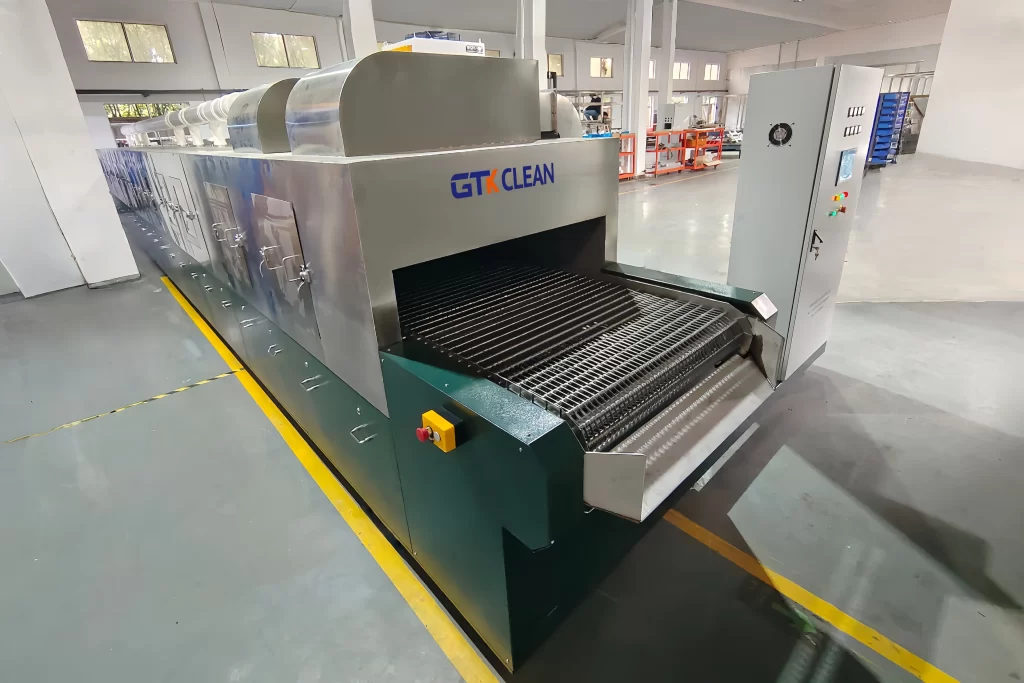
GTKCLEAN builds automated cleaning equipment designed around these stages. The Fastener Tunnel Cleaners provide automated inline cleaning for screws, bolts, and nuts. These parts arrive contaminated with drawing oil, cutting fluids, and metal powders from manufacturing. The system includes an oil-water separation system achieving greater than 98% oil removal, which keeps the cleaning fluid effective over extended production runs. A no-cross-contamination buffer zone with high-pressure air knives protects rinse water quality from carryover.
The Turnover Box Inline Cleaners handle a different challenge: continuous cleaning of plastic and metal containers. Two rotary air nozzles deliver powerful air drying for efficiency. These systems adapt to different product sizes and materials, making them suitable for high-throughput industries including food, pharmaceutical, and automotive manufacturing.
How Does Aqueous Cleaning Affect Part Material Compatibility?
Material compatibility requires careful attention in aqueous cleaning. Three factors drive the risk of corrosion or surface alteration: pH, temperature, and exposure time. Highly alkaline or acidic solutions can etch sensitive metals like aluminum or brass because these metals form amphoteric oxides that dissolve in both acidic and basic conditions. High temperatures accelerate chemical reactions, which increases material degradation risk even with solutions that would be safe at room temperature. Longer exposure times compound these effects. Testing cleaning agents and parameters on representative parts before production use prevents expensive damage. GTKCLEAN develops customized solutions that account for material properties, ensuring cleaning processes remain both effective and safe.
Making Aqueous Cleaning Work in Automated Production
Integrating aqueous cleaning into automated production lines delivers measurable benefits: higher efficiency, better consistency, and lower labor costs. Manual cleaning introduces variability that automated systems eliminate. GTKCLEAN designs automated solutions for seamless integration with existing production flows.
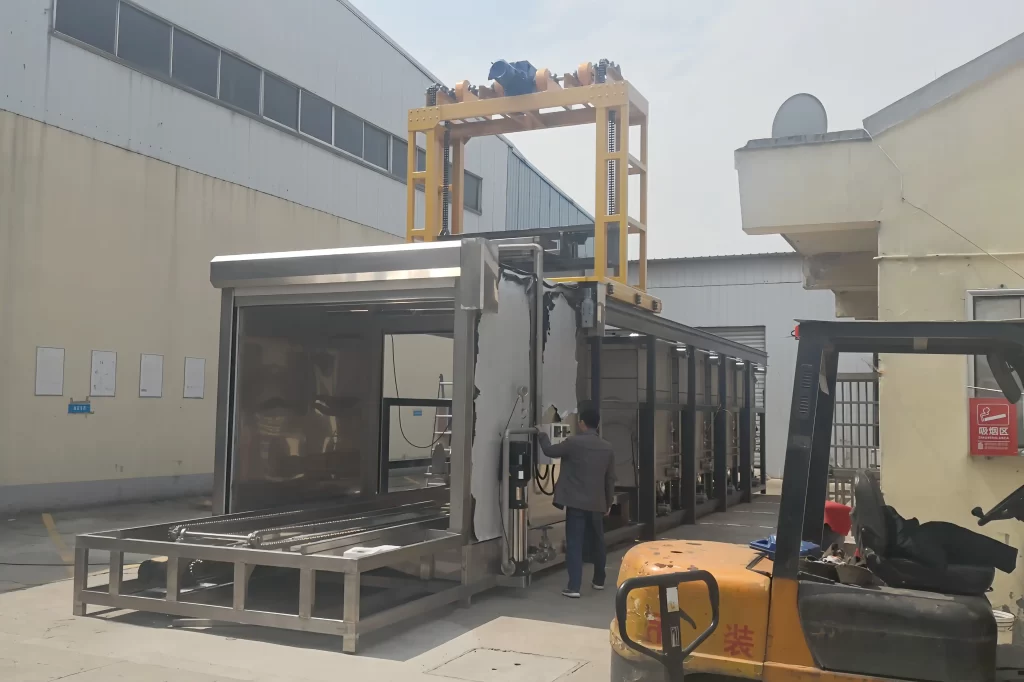
The Heavy-Duty Automated Ultrasonic Cleaners handle large, heavy components weighing up to 2000 kg. Engine blocks and gearboxes fall into this category. These systems run automated multi-stage cleaning sequences: ultrasonic degreasing, rinsing, rust prevention, and drying. Custom load-bearing baskets and robotic handling move parts safely and efficiently through the process. The CNC Aluminum Shell Inline Cleaners take a different approach with continuous conveyor-based cleaning for die-cast aluminum parts. These parts arrive contaminated with release agents, cutting oils, and burrs. Multi-directional spray nozzles ensure complete coverage without dead angles, and DI water rinsing prevents watermarks. Both system types reduce labor requirements while maintaining consistent quality.
For more detail on how ultrasonic cleaning works at a fundamental level, see 《What Is the Principle of an Ultrasonic Cleaning Machine?》.
Environmental Compliance and Managing Cleaning Waste
Environmental compliance and responsible waste management have become non-negotiable in industrial aqueous parts cleaning. Regulations specify effluent discharge limits and waste disposal protocols that carry real penalties for violations. GTKCLEAN addresses these requirements through advanced water treatment systems and sustainable operating practices.
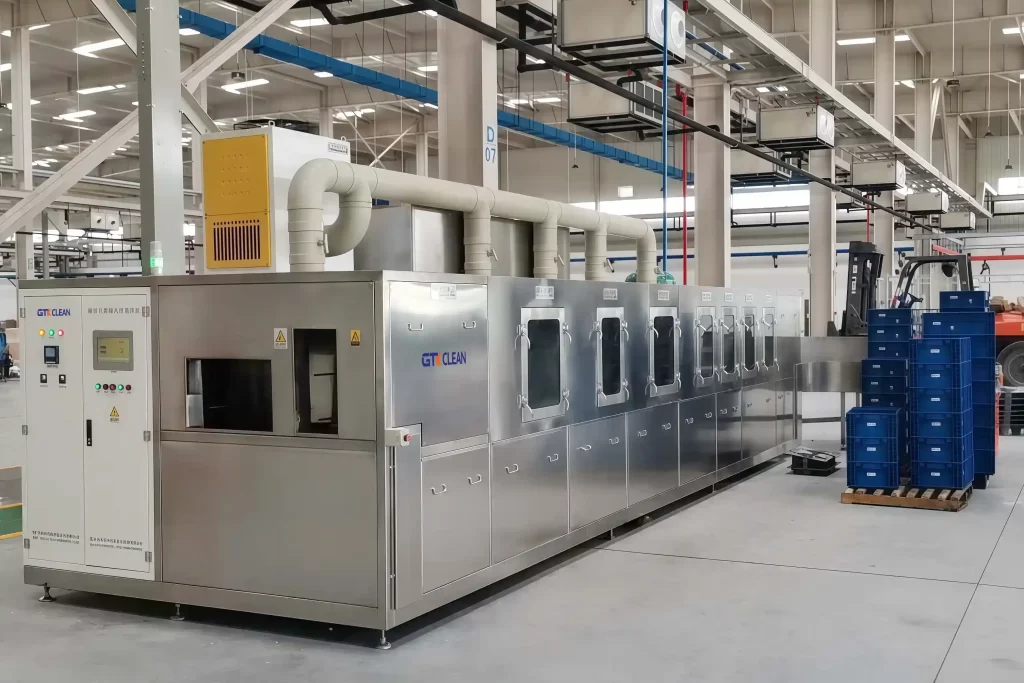
Circulation filtration extends cleaning solution life and reduces both water and detergent consumption. The Pre PVD (Coating) Parts Ultrasonic Cleaners incorporate overflow rinsing and circulation systems that minimize resource usage while maintaining cleaning performance. GTKCLEAN also provides wastewater treatment solutions that bring effluent into compliance with local and national environmental regulations.
What Are the Regulatory Requirements for Aqueous Parts Cleaning Waste?
Regulatory requirements for aqueous parts cleaning waste vary by jurisdiction but share common concerns. Most regulations address pH levels, heavy metal concentrations, oil and grease content, and biological oxygen demand (BOD) in discharged effluent. Manufacturers must implement wastewater treatment before discharge. Typical treatment involves filtration to remove particulates, pH neutralization to bring effluent within acceptable ranges, and oil-water separation to remove petroleum-based contaminants. Spent cleaning solutions containing regulated substances require disposal as hazardous waste under specific protocols. Meeting these requirements protects the environment and avoids penalties that can be substantial.
The Economics of Aqueous Cleaning
Aqueous cleaning solutions deliver significant long-term cost advantages over solvent-based alternatives. Initial investment in advanced automated systems runs higher, but operational costs typically come in lower. Aqueous detergents cost less than solvents and require less stringent handling protocols, which reduces both direct costs and overhead. GTKCLEAN systems like the Fastener Tunnel Cleaners include oil-water separation and filtration that extend fluid life and cut disposal costs. The automation built into Rotary Basket Ultrasonic Cleaning Systems and Heavy-Duty Automated Ultrasonic Cleaning Systems reduces labor expenses and increases throughput. These factors combine to improve return on investment over the system lifetime.
| Feature | Aqueous Cleaning Systems | Solvent Cleaning Systems |
|---|---|---|
| Operational Costs | Lower (reduced chemical and water consumption) | Higher (expensive solvents, stricter disposal) |
| Environmental Impact | Lower (biodegradable detergents, easier waste treatment) | Higher (VOC emissions, hazardous waste) |
| Safety | Non-flammable, lower toxicity | Flammable, toxic fumes, health risks |
| Cleaning Power | Excellent for various contaminants, customizable | Strong for oils/greases, limited for inorganic soils |
| Maintenance | Regular filter changes, solution monitoring | Frequent solvent distillation, strict safety protocols |
Work with GTKCLEAN on Your Cleaning Challenges
Selecting the right aqueous cleaning solution affects production quality, operating costs, and environmental compliance. GTKCLEAN provides industrial cleaning equipment built on 20+ years of R&D experience and 28 technical patents. The product range includes ultrasonic cleaning systems, conveyor belt cleaning systems, and water treatment systems. Each solution can be customized to match specific production requirements.
Contact us today to optimize your cleaning processes. Email: [email protected] | Phone: +86 17768507147
 English
  German
  Spanish
  French
  Russian
  Portuguese