

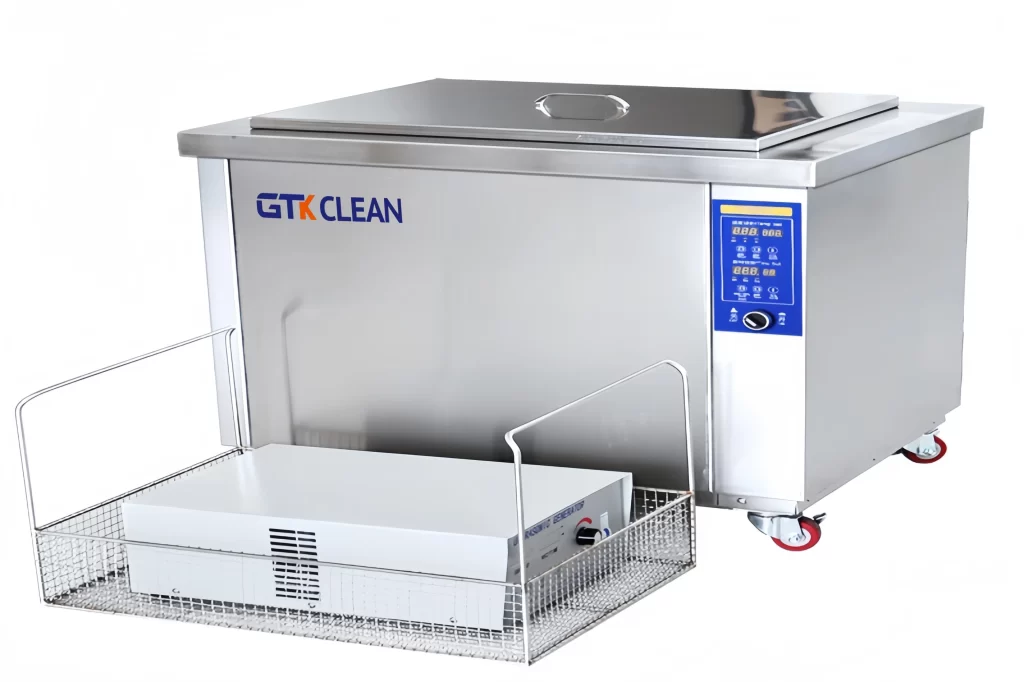
Choosing the right ultrasonic cleaning system comes down to matching equipment capability to your actual cleaning demands. The split between benchtop and industrial ultrasonic cleaners involves more than tank size. Power architecture, automation depth, and process integration all shift when you move from lab-scale work to production-floor throughput. Getting this decision wrong means either overspending on capacity you will never use or bottlenecking a production line with equipment that cannot keep pace. This guide breaks down what separates these two categories and where each one fits.
How Benchtop and Industrial Ultrasonic Cleaners Actually Differ
The gap between benchtop and industrial ultrasonic cleaners shows up in construction, power delivery, and operational continuity. Benchtop units run compact, portable, and sized for intermittent use. They slot into existing workspaces without major facility changes. Industrial systems assume continuous duty cycles, high part volumes, and the mechanical stress that comes with production environments. Tank walls are thicker, frames are reinforced, and process stages multiply.
Transducer configuration drives much of the performance difference. A benchtop cleaner might carry one or two transducers generating frequencies in the 20 kHz to 80 kHz range. Industrial systems stack multiple high-power piezoelectric ceramic transducers across the tank floor and walls, sustaining intense cavitation over hours of continuous operation. Cavitation, the rapid formation and collapse of microscopic bubbles in the cleaning fluid, does the actual work. Each bubble implosion creates localized pressure spikes that scrub contaminants off surfaces, including blind holes and undercuts that spray washing cannot reach. Industrial units give operators control over frequency and power density, which matters when the same line handles both hardened steel tooling and thin-wall aluminum housings.
| Feature | Benchtop Ultrasonic Cleaners | Industrial Ultrasonic Cleaners |
|---|---|---|
| Capacity | 30L to 187L | Hundreds to thousands of liters |
| Power | 750W to 2400W | Multi-kW, often 5kW+ per stage |
| Operation | Manual or semi-automatic | Fully automated, multi-stage |
| Construction | Standard stainless steel | Reinforced SUS304/316, heavy-gauge frames |
| Applications | Lab, small parts, R&D | High-volume production, heavy parts |
Where Benchtop Cleaners Make Sense
Benchtop ultrasonic cleaners fit applications where part volumes stay modest and cleaning cycles happen on demand rather than continuously. Jewelry shops, dental clinics, optical labs, and electronics prototyping benches all fall into this category. The parts are small, often delicate, and the cleaning requirement is precision rather than throughput.
A university materials lab cleaning metallographic samples does not need a 500-liter tank with robotic loading. A 30L benchtop unit with selectable frequency handles the job, and the footprint stays small enough to share bench space with other equipment. The same logic applies to watch repair, where ultrasonic cleaning removes polishing compound from case recesses without disassembling the movement. Benchtop Ultrasonic Cleaners in the 30L to 187L range cover most of these scenarios, with frequency selection allowing operators to match cavitation intensity to workpiece material.
The trade-off is duty cycle. Benchtop transducers are not built for eight-hour continuous runs. Heat accumulates, and without the cooling systems found in industrial units, extended operation risks transducer degradation. If your cleaning demand creeps past a few hours per day or part volumes start stacking up, the benchtop category stops being the right fit.
Where Industrial Systems Become Necessary
Industrial ultrasonic cleaners exist because production environments impose constraints that benchtop equipment cannot meet. Tank capacity is the obvious one. Cleaning engine blocks, transmission housings, or large injection molds requires tanks measured in hundreds of liters, with basket systems rated for loads that would collapse a benchtop frame.
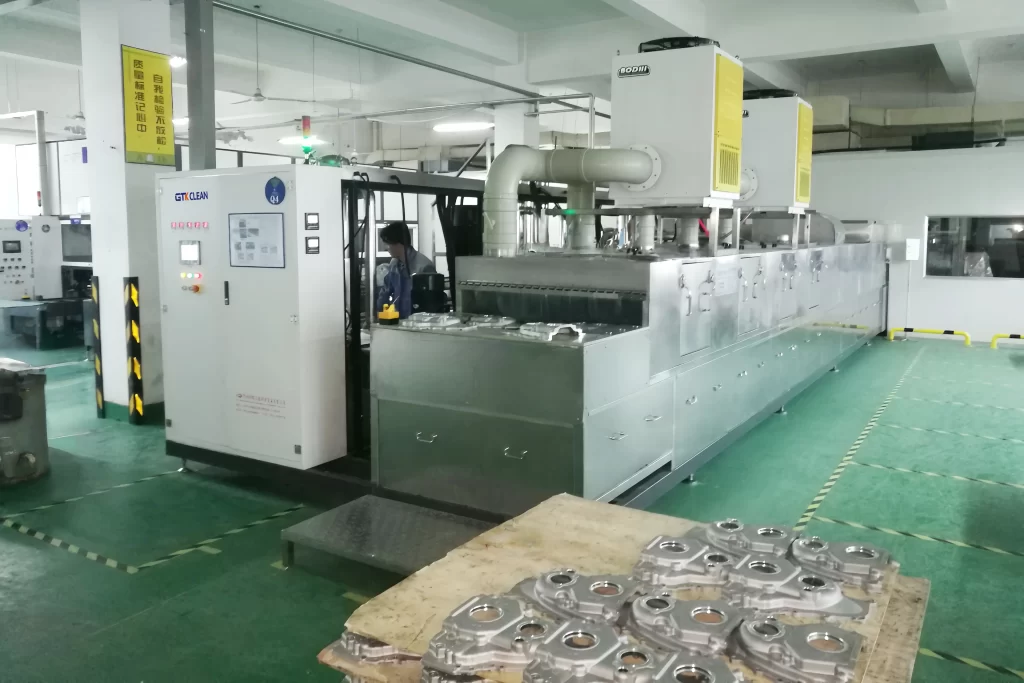
Automation is the second driver. A CNC machining cell producing 500 parts per shift cannot pause for manual loading and unloading of cleaning baskets. Industrial systems integrate conveyor feeds, robotic transfer arms, and programmable multi-stage sequences. Ultrasonic Cleaners for CNC Machined Parts, for example, incorporate rotary baskets that tumble parts during the cleaning cycle, ensuring cutting fluid and chips clear from blind holes without operator intervention. The system handles the full sequence, from ultrasonic cleaning through rinsing and drying, while the operator monitors rather than participates.
Process complexity also scales up. Pre-coating cleanliness standards for PVD or CVD deposition require conductivity levels below 0.1 μS/cm. Hitting that target means multi-stage cleaning with cascading rinse tanks, deionized water final rinse, and controlled drying. Pre PVD (Coating) Parts Ultrasonic Cleaners chain together hydrojet spray, ultrasonic cleaning, ultrapure water rinsing, and hot-air or vacuum drying in a single automated line. Cycle time runs 5 to 6 minutes per tank, and the system maintains conductivity at or below 0.06 μS/cm. Trying to replicate that process with benchtop equipment would require manual transfers between separate units, introducing contamination risk at every step.
Matching Equipment to Contaminant Type and Part Geometry
Contaminant chemistry and part geometry together determine what cleaning approach works. Aqueous cleaning handles water-soluble soils and many emulsifiable oils, but hydrocarbon solvents become necessary when dealing with heavy greases, waxes, or residues that aqueous chemistry cannot break down. Hydrocarbon Solvent Ultrasonic Vacuum Cleaners combine ultrasonic cleaning with vacuum vapor degreasing, which is particularly effective for precision parts with blind holes or complex internal passages. The vacuum stage pulls solvent vapor through geometries that would trap liquid in an atmospheric system.
Part geometry influences frequency selection as well. Lower frequencies around 25 kHz generate larger cavitation bubbles with more aggressive implosion energy, which suits heavy contaminant loads on robust parts. Higher frequencies in the 40 kHz to 80 kHz range produce smaller bubbles with gentler action, appropriate for polished surfaces or thin-wall components where aggressive cavitation could cause erosion. Industrial systems with variable frequency capability let operators dial in the right balance for each part family.
Surface finish requirements add another layer. Parts heading into electroplating or coating processes need surfaces free of both contaminants and cleaning residue. Multi-stage systems address this by separating the cleaning function from the rinsing function, with dedicated tanks for each stage and filtration systems that prevent cross-contamination. Stamping Parts Ultrasonic Cleaners incorporate this architecture, with filtration and circulation systems that extend fluid life while maintaining consistent cleanliness across production runs.
Throughput Calculations That Drive Equipment Sizing
Throughput requirements translate directly into equipment specifications. A batch process that cleans 50 parts per hour in a benchtop unit cannot scale to 500 parts per hour by running the same unit faster. The math does not work. Tank capacity, basket loading density, and cycle time all impose hard limits.
Continuous-flow systems bypass batch constraints entirely. Fastener Tunnel Cleaners move parts through the cleaning zone on a conveyor belt, with production capacity exceeding 2 tons per hour. The parts never stop moving, and the system maintains cleaning consistency across the entire run. One automotive fastener manufacturer I worked with had been running a batch process that required constant operator attention and still could not keep pace with their stamping line. Switching to a tunnel system eliminated the bottleneck and freed the operator for other tasks.
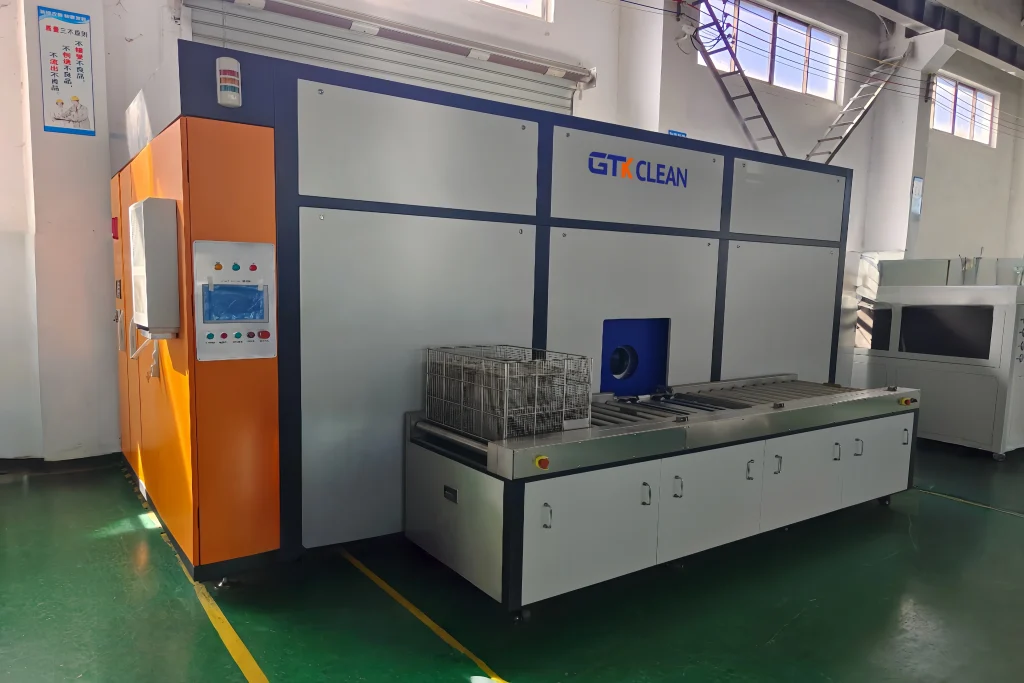
For batch processes that cannot convert to continuous flow, multi-basket systems offer a middle path. Heavy-Duty Automated Ultrasonic Cleaners handle baskets loaded with up to 2000 kg of parts, with automated transfer between cleaning, rinsing, and drying stations. The system processes one basket while the next is being loaded, which keeps effective throughput high even though each individual basket goes through a batch cycle.
Fluid Management and Operating Cost Implications
Cleaning fluid represents a recurring cost that accumulates over the life of the equipment. Benchtop systems typically use simple drain-and-fill fluid management. When the solution becomes too contaminated, the operator drains the tank, disposes of the spent fluid, and refills with fresh chemistry. This approach works at low volumes but becomes expensive and wasteful at industrial scale.
Industrial systems incorporate filtration and circulation that extend fluid life significantly. Particulate filters remove chips and debris, oil skimmers pull floating contaminants off the surface, and some systems include coalescers that separate emulsified oils from the aqueous phase. Multi-Tank Hydrocarbon Ultrasonic Cleaners go further with distillation-based solvent recovery. The system continuously reclaims hydrocarbon solvent, removes dissolved contaminants, and returns clean solvent to the process tanks. Solvent consumption drops, waste disposal costs fall, and the environmental footprint shrinks.
The calculation changes when you factor in labor. A benchtop system that requires an operator to load, unload, and transfer parts between stages carries a labor cost per part that industrial automation eliminates. The higher capital cost of an automated system often pays back within months when labor savings and throughput gains are included.
Safety and Environmental Considerations
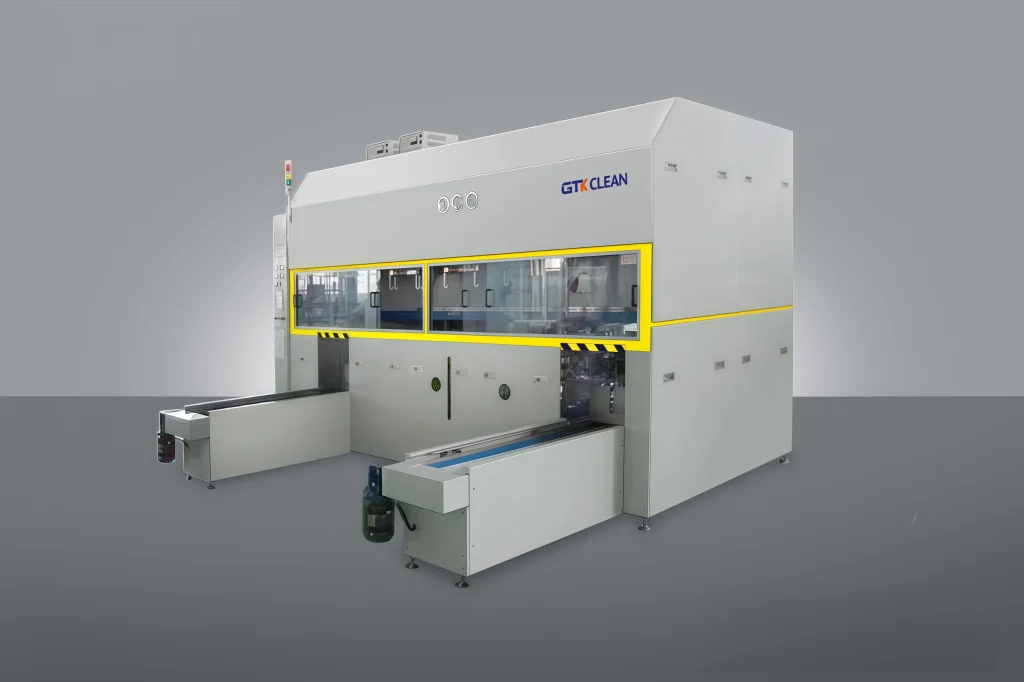
Industrial ultrasonic cleaning introduces safety requirements that benchtop operation rarely encounters. Hydrocarbon solvents are flammable. Alkaline cleaning solutions can cause chemical burns. High-temperature processes create burn hazards. Industrial systems address these risks with interlocked enclosures, ventilation systems, and automated controls that minimize operator exposure.
Solvent-based systems require particular attention. Hydrocarbon vapor must be contained to prevent both fire risk and worker exposure. Vacuum cleaning systems operate below atmospheric pressure, which keeps solvent vapor inside the process chamber and eliminates fugitive emissions. The vacuum also accelerates drying, since solvent evaporates at lower temperatures under reduced pressure.
Environmental compliance increasingly shapes equipment decisions. Regulations on volatile organic compound emissions, wastewater discharge, and hazardous waste disposal all apply to industrial cleaning operations. Closed-loop systems that recover and recycle cleaning fluids simplify compliance by reducing both emissions and waste volumes. The capital cost of a solvent recovery system often compares favorably to the ongoing cost of waste disposal and regulatory reporting for a drain-and-discharge process.
Maintenance Patterns and Long-Term Reliability
Maintenance requirements scale with equipment complexity. A benchtop cleaner needs periodic fluid changes, occasional transducer inspection, and not much else. Industrial multi-stage systems add filtration elements, pump seals, conveyor drives, robotic actuators, and control system components to the maintenance schedule.
The trade-off is that industrial systems are built for maintainability. Tanks are accessible for cleaning. Transducers are mounted for replacement without major disassembly. Filtration elements are sized for reasonable change intervals. Heavy-Duty Automated Ultrasonic Cleaners use reinforced tank construction and load-bearing basket systems specifically because the alternative, frequent repairs from overstressed components, costs more in downtime than the heavier initial construction.
Preventive maintenance programs matter more as system complexity increases. Scheduled inspections catch wear before it causes failure. Vibration monitoring on transducers can identify degradation early. Control system diagnostics flag anomalies that might indicate developing problems. Stamping Parts Ultrasonic Cleaners include remote program upgrade capability, which allows software updates and troubleshooting support without waiting for a service technician to arrive on site.
Making the Selection Decision
The decision framework starts with your cleaning requirements and works backward to equipment specifications. What parts are you cleaning? What contaminants need to come off? What cleanliness standard must the finished parts meet? How many parts per shift, and how does that volume trend over the next few years?
Benchtop equipment fits when volumes are low, parts are small, and cleaning happens intermittently. The capital cost is modest, the footprint is minimal, and the operational simplicity suits environments without dedicated cleaning operators.
Industrial equipment becomes necessary when any of those conditions change. High volumes demand automation. Large or heavy parts require tank capacity and basket systems that benchtop frames cannot support. Stringent cleanliness standards need multi-stage processes with controlled rinsing and drying. Continuous production schedules require equipment built for sustained duty cycles.
If your current situation sits at the boundary, consider where your operation is heading. A benchtop system that barely meets today's demand will become a bottleneck when volumes increase. Sizing for anticipated growth often makes more sense than buying twice.
To discuss specific requirements for your cleaning application, contact us at [email protected] or +86 17768507147.
Frequently Asked Questions
What is cavitation in ultrasonic cleaning?
Cavitation refers to the formation and violent collapse of microscopic bubbles in a liquid under the influence of high-frequency sound waves. When an ultrasonic transducer vibrates the cleaning fluid, it creates alternating high-pressure and low-pressure zones. Bubbles form during the low-pressure phase and implode during the high-pressure phase. Each implosion generates a localized shockwave that dislodges contaminants from part surfaces, including recesses and blind holes that mechanical scrubbing cannot reach. The process is non-abrasive in the sense that no physical contact occurs, but the energy release is substantial enough to remove tenacious soils.
Can ultrasonic cleaners damage delicate parts?
Damage risk depends on frequency, power density, and part material. Lower frequencies produce larger bubbles with more aggressive implosion energy, which can erode soft metals or damage thin-wall structures. Higher frequencies generate smaller bubbles with gentler action. Industrial systems with adjustable frequency and power settings allow operators to match cleaning intensity to part requirements. Proper fixturing also matters, since parts that rattle against each other or against the basket can suffer mechanical damage unrelated to the ultrasonic action itself.
What types of contaminants can ultrasonic cleaners remove?
Ultrasonic cleaning handles a broad range of contaminants, including cutting oils, greases, machining chips, polishing compounds, carbon deposits, flux residues, fingerprints, and particulate contamination. Effectiveness depends on matching the cleaning solution chemistry to the contaminant type. Alkaline solutions work well for oils and greases. Acidic solutions remove oxide scale and mineral deposits. Solvent-based systems handle waxes and heavy hydrocarbons that aqueous chemistry cannot dissolve.
How often should the cleaning solution be changed?
Change intervals depend on contamination loading, solution chemistry, and whether the system includes filtration. A benchtop unit cleaning lightly soiled parts might run several days on a single fill. An industrial system processing heavily contaminated machined parts could exhaust its solution capacity within a shift without filtration. Systems with particulate filters, oil skimmers, and circulation extend solution life significantly. Monitoring solution condition through visual inspection, pH measurement, or conductivity testing provides better guidance than fixed time intervals.
Are industrial ultrasonic cleaners environmentally friendly?
Modern industrial systems incorporate features that reduce environmental impact compared to older cleaning technologies. Closed-loop solvent recovery eliminates solvent disposal and reduces emissions. Multi-stage filtration extends aqueous solution life, cutting both water consumption and wastewater discharge. Vacuum drying systems capture solvent vapor rather than venting it. The net effect is lower chemical consumption, reduced waste generation, and simplified regulatory compliance. If environmental performance matters to your operation, discussing specific requirements with us at [email protected] can help identify the right system configuration.
如果您有兴趣,可以阅读以下相关文章:
How to Choose the Right Ultrasonic Cleaning Machine for Your Needs
How Ultrasonic Cleaning Machines Work: A Complete Guide
Ultrasonic Cleaning Machines: The Complete Buyer's Guide
Ultrasonic Cleaning Machine Maintenance: Best Practices for Longevity
How to Select the Frequency for Ultrasonic Cleaning Equipment ?
How to Ensure Perfect Coating Adhesion Without Water Spots or Stains?
Leasing Versus Buying Industrial Cleaning Equipment Strategic Guide
Ultrasonic Pre-Cleaning Machine for Flawless PVD/DLC Coating Pre-Treatment
 English
  German
  Spanish
  French
  Russian
  Portuguese